Key takeaways
-
The primary intended use: sleeping, reading, or leg elevation.
-
Full width, length, and maximum height.
-
Actual incline profile, not just maximum rise.
-
Whether the pillow supports the required portion of the torso.
-
Compatibility with the user’s normal sleeping position.
-
Solid, folding, or modular construction.
-
Folded dimensions if storage is important.
-
Foam firmness and comfort-layer description.
-
Whether the cover is removable and washable.
-
Exact cleaning requirements for the foam core.
-
Replacement-cover availability and return conditions.
Choose a wedge pillow for small spaces with the right incline, dimensions, foam support, foldable design, and storage features for compact bedrooms.
A wedge pillow for small spaces should provide useful upper-body support without overwhelming a twin bed, blocking bedroom walkways, or creating another bulky item to store. The right choice depends on how you plan to use it, the available mattress width, the length of the incline, and whether the pillow can be stored conveniently. This guide explains how to compare wedge shapes, foam construction, folding designs, cleaning requirements, and everyday practicality in apartments and compact bedrooms.
Start With the Purpose of Your Wedge Pillow
A wedge pillow is a triangular or otherwise inclined support cushion designed to elevate part of the body. Although many models look similar in product photographs, they can serve quite different purposes. Some are intended to elevate the upper torso during rest, some help support a seated reading position, and others are shaped specifically for leg elevation. Choosing the wrong design can create an uncomfortable sleeping arrangement and waste valuable space in a small bedroom.
For small-space shoppers, identifying the intended use is especially important because there may be room for only one additional support pillow. A multipurpose design can be useful, but only when its configurations genuinely suit the activities you plan to perform. A steep reading backrest should not automatically be treated as an appropriate sleeping wedge, and a leg-elevation cushion is not necessarily suitable for upper-body support.
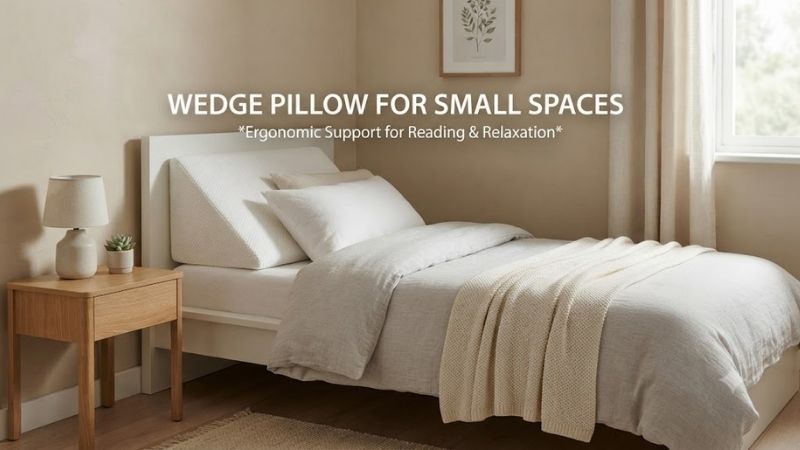
Upper-Body Elevation for Sleeping
A sleeping wedge should provide a sufficiently long, continuous surface beneath the upper body. This helps distribute support across the back instead of lifting only the head and neck. A short cushion that ends abruptly beneath the shoulders may create an uncomfortable transition, particularly when used for several hours.
For adults seeking positional relief from nighttime reflux, upper-body elevation may be helpful. Clinical guidance supports head-of-bed elevation as one possible measure for nighttime GERD symptoms, although the evidence does not establish that a particular retail wedge will work for everyone. A wedge should not replace evaluation of persistent reflux, swallowing difficulty, or other concerning symptoms.
In a compact bedroom, a longer wedge may seem inconvenient at first, but adequate support length can matter more than saving a few inches. Choose the smallest product that still supports the intended body area comfortably.
Inclined Support for Reading and Relaxing
A reading wedge is often designed to hold the back more upright than a conventional sleeping wedge. This can make it more comfortable for watching television, reading, or using a tablet while sitting in bed. The additional elevation may reduce the need to stack several ordinary pillows, potentially making a small bedroom feel less cluttered.
However, a steep backrest may encourage sliding downward or create pressure near the lower back when used as an overnight sleeping arrangement. If reading is your primary purpose, prioritize a stable backrest shape and a comfortable surface. If sleeping is the main purpose, evaluate the incline and body support separately rather than assuming one position works for both.
Leg Elevation and Multipurpose Positioning
Some wedge systems include removable or rearrangeable cushions intended for the knees and legs. This can be attractive in a studio apartment because the same set may provide different resting configurations. Yet multiple components also require storage, and their combined footprint can exceed that of one conventional triangular wedge.
When leg elevation is medically recommended, the appropriate height and position depend on the individual situation. Do not select a wedge solely because its product description mentions circulation, swelling, or postoperative recovery. Follow the instructions of the relevant healthcare professional, particularly after surgery or when a vascular condition is involved.
Wedge Pillow Dimensions: What Actually Fits in a Small Bedroom?
The most useful space-saving decision is not necessarily purchasing the shortest pillow. Instead, compare the wedge’s width, length, maximum height, and shape to the available sleeping area. A product that fits beneath the head may still be too narrow for the shoulders, while a compact wedge can become uncomfortable if its incline stops too abruptly beneath the upper back.
Measure the intended sleeping area and the space available beside the bed. If a wedge needs to be removed every morning, consider where it will go and whether its dimensions will make that daily task inconvenient.
Compare Common Wedge Sizes
| Wedge dimension | Smaller configuration | Larger configuration | Why the difference matters |
|---|---|---|---|
| Width | Approximately 20–24 inches | Approximately 28–30 inches or more | Wider models provide more room for shoulder movement |
| Length | Approximately 20–24 inches | Approximately 30–36 inches | Longer models distribute the incline over more of the torso |
| Maximum height | Approximately 6–7 inches | Approximately 10–12 inches | Height affects elevation but not independently of length |
| Construction | Single foam triangle | Folding or modular system | Determines storage and adjustment options |
These are illustrative shopping ranges, not standardized product categories. Actual dimensions vary by manufacturer, and individual wedge models should be measured against the room and the user.
Twin and Twin XL Beds
A typical twin or twin XL mattress measures approximately 38 inches wide. A 24-inch-wide wedge would leave about 14 inches of nominal mattress width uncovered, while a 30-inch-wide wedge would leave approximately 8 inches. These calculations illustrate why an apparently modest change in wedge width can significantly alter the usable surface of a narrow bed.
The extra mattress space is not necessarily wasted. It may allow an arm to rest comfortably alongside the wedge. However, a very narrow wedge may be unsuitable for a side sleeper who turns during the night. The sleeper’s shoulder width and movements matter more than maximizing the remaining mattress area.
For a dorm bed, remember that a twin XL mattress is longer than a standard twin but generally has the same nominal width. More bed length does not solve a wedge-width problem.
Full Beds in Studio Apartments
A standard full mattress is approximately 54 inches wide. Two adults sharing a full bed may have limited room for individual sleeping accessories. A broad wedge intended for one person can interfere with the other person’s pillow area, even when the wedge technically fits within the mattress dimensions.
Before purchasing, determine whether the wedge will be used by one person or across the entire bed. A single-user wedge is easier to position independently, but it may create a height difference across the mattress. A larger shared incline changes the sleeping arrangement for both occupants and should not be chosen without considering both people’s comfort.
Measure Floor Space, Not Just Mattress Space
A wedge may spend more time stored beside the bed than lying on it. A single-piece foam triangle that measures 24 inches long cannot necessarily be compressed into a small drawer. If you remove it every morning, it may block a narrow walkway or consume part of the available closet shelf.
Measure the height, width, and depth of the proposed storage location before ordering. When evaluating a folding model, check its actual folded dimensions rather than assuming the word foldable means it becomes compact enough for a standard dresser drawer.
How Incline Height and Length Work Together
Many shoppers compare wedge pillows by maximum height alone. That approach overlooks one of the most important design differences: the slope depends on both height and length. A taller wedge with a short base creates a steeper incline than a wedge with the same height spread over a longer surface.
This is especially important in smaller bedrooms because a shopper may choose a short wedge to conserve space without realizing that its resulting angle is considerably steeper.
Comparing Two Hypothetical Wedges
Consider two idealized straight-slope wedges:
| Example | Maximum rise | Horizontal run | Approximate incline angle |
|---|---|---|---|
| Wedge A | 7 inches | 24 inches | 16° |
| Wedge B | 7 inches | 32 inches | 12° |
| Wedge C | 10 inches | 24 inches | 23° |
| Wedge D | 10 inches | 32 inches | 17° |
These angles are approximate geometric calculations for simple straight ramps. They are not verified specifications of particular products, and curved or stepped foam profiles behave differently.
The comparison demonstrates why two wedges advertised as 10 inches high may provide very different resting experiences.
Why a Gentler Incline Can Feel Different
A longer wedge distributes elevation across a greater part of the torso. This can reduce the feeling of being abruptly lifted near the shoulders, although the result also depends on body proportions and foam compression.
The trade-off is a larger physical footprint. For a compact bedroom, a long wedge may be harder to store, but a smaller product that feels uncomfortable does not offer useful value. When sleeping is the goal, prioritize correct body support over minimum dimensions.
Why a Steeper Wedge Is Not Always Better
More elevation does not necessarily produce greater comfort. A steep wedge may make a person slide downward, flex the neck awkwardly when combined with an additional head pillow, or experience concentrated pressure beneath the back.
For reflux-oriented positioning, do not assume the highest available wedge is the best medical choice. A suitably fitted, continuous upper-body incline and any individualized clinical instructions are more relevant than maximizing height.
Folding Wedges Versus Solid Foam Wedges
Storage design is one of the clearest distinctions between wedges suited to compact bedrooms and those better left permanently on a large bed. Solid foam models are straightforward, while folding and modular products may fit into smaller storage areas or provide several resting configurations.
Neither construction is universally superior. The correct choice depends on how frequently the product will be used and whether it needs to be stored between uses.
Solid Foam Wedges
A single-piece wedge offers a stable, consistent shape without folding joints. This can simplify setup because there are no separate components to arrange each night. Solid foam can be particularly convenient for someone who uses the same incline continuously and has enough room to leave the wedge in place.
The main limitation is storage. A solid wedge occupies essentially the same three-dimensional shape when it is not in use. Although some foam can compress, that does not mean the manufacturer permits long-term compressed storage. Excessive folding or compression may damage the material or alter its shape.
Choose solid foam if the wedge will remain on the bed most nights and the intended incline is already known.
Folding Wedge Pillows
Folding wedges can reduce their stored length or allow alternative arrangements. This may be useful in a studio apartment where the bed functions as a seating area during the day.
However, folding designs introduce hinges, seams, or sections that may affect comfort. The joint must remain stable during use, and the resulting surface should not develop an uncomfortable ridge beneath the torso.
A folding model is worth considering when its folded dimensions fit an actual storage location. Avoid buying it merely because it appears more versatile in promotional images.
Modular Wedge Systems
Modular systems consist of two or more cushions that can be rearranged to support different body regions. They may serve reading, reclining, or leg-resting purposes. For someone using several supported positions during the day, this flexibility can be useful.
The drawback is that every module must be stored. A set of four cushions can occupy substantially more closet space than one folding wedge, even if the product is advertised as space-saving.
If you only need nighttime upper-body elevation, a single well-fitting wedge may be simpler and more practical.
Foam Construction: Support, Comfort, and Durability
Wedge pillows commonly combine supportive polyurethane foam with a comfort-oriented surface layer. Some designs use a single foam type, while others incorporate memory foam near the top. The distinction matters because the structural foam determines how the wedge maintains its shape, while the upper layer influences how it feels against the back and shoulders.
A pillow that is too soft throughout may compress significantly and lose its intended incline. Conversely, a very firm surface may create pressure discomfort. The goal is stable elevation with enough cushioning for the intended duration of use.
Support Foam
Conventional polyurethane support foam can provide a relatively stable triangular structure. Its firmness and density depend on the formulation, which manufacturers do not always disclose in sufficient detail for meaningful comparisons.
A wedge marketed as high-density is not automatically superior. Density describes mass per unit volume, while firmness reflects resistance to compression. The two are related to different material characteristics and should not be treated as interchangeable.
Look for clear construction information and a realistic return policy rather than relying solely on broad claims such as medical-grade support foam.
Memory-Foam Comfort Layers
A memory-foam surface layer can contour to the shoulders and upper back. This may make a firm support wedge feel less abrupt against the body.
However, memory foam may respond slowly to position changes and can alter how much the user’s weight compresses the surface. An excessively thick comfort layer may reduce the consistency of the intended incline.
For side sleepers, cushioning around the shoulder can be particularly important, but the entire wedge must still fit the sleeping position appropriately.
Foam Temperature and Ventilation
Dense foam can feel warm, especially when used with a thick cover or placed beneath several bedding layers. Ventilated designs may create additional air pathways, but perforations do not guarantee that the finished wedge remains cooler throughout the night.
In a small bedroom with limited ventilation, consider the entire bedding arrangement. A wedge cannot compensate for an excessively warm room, and adding a heavily insulating pillowcase may change its surface comfort.
Wedge Pillow Covers and Cleaning in Apartments
A removable washable cover is particularly useful when a wedge is used every night. Body oils, sweat, dust, and ordinary household spills can accumulate on the surface, yet large foam wedges are rarely as easy to clean as traditional pillows.
The cleaning requirements should be evaluated before purchase, especially when the household relies on shared laundry or a compact washing machine.
Removable Covers
A removable cover allows routine washing without immersing the foam. Check the closure design and whether the cover can be removed and replaced without damaging its seams.
Some wedges use fitted specialty covers that are not interchangeable with ordinary pillowcases. Replacement availability can affect long-term ownership value.
Why Foam Cores Need Different Care
Many foam cores should not be placed in a washing machine. Water saturation and mechanical agitation can damage their structure or make thorough drying difficult.
Follow the specific manufacturer’s cleaning instructions. If spot cleaning is permitted, avoid using excessive liquid and ensure the material is completely dry before use.
Compact Laundry Considerations
A large wedge cover may fit into a small washing machine more easily than a full duvet cover, but product size and fabric weight still matter.
Avoid washing with abrasive garments that contain exposed zippers or hooks. Specialty backing materials or coatings may require a gentle cycle or specific drying method.
Choosing a Wedge for Different Small-Space Living Arrangements
College Dorm Rooms
A twin XL bed provides a narrow sleeping area, and dorm rooms often have limited space for storage. A relatively narrow folding wedge may be practical for reading, provided it is comfortable and fits the bed.
However, a wedge intended for nighttime reflux positioning should not be selected solely because it folds. Adequate torso length and appropriate incline are more important.
Check residence rules when bringing bulky bedding accessories or positioning devices into student housing.
Studio Apartments
In a studio, a wedge may be used as a backrest during the day and stored before nighttime sleep. A folding or modular design can be useful when it genuinely replaces multiple ordinary pillows.
But if the wedge will be used for sleeping every night, constantly moving and reassembling it may become inconvenient. A simple solid wedge left in position could ultimately be the better choice.
Guest Bedrooms
A guest room may not need permanent inclined bedding. A folding wedge stored in a closet could provide optional comfort for guests who prefer elevated reclining.
Do not position a wedge as default medical support for every guest. Some people may have conditions or preferences that make an incline inappropriate.
Adjustable Beds
An adjustable bed already provides certain positioning functions. Adding a wedge may create excessive elevation or uncomfortable bending.
Check the bed manufacturer’s recommendations before combining a wedge with an adjustable base, particularly when a specific position has been medically prescribed.
Buying Checklist: A Wedge That Fits the Room and the User
Before ordering, verify the following:
-
The primary intended use: sleeping, reading, or leg elevation.
-
Full width, length, and maximum height.
-
Actual incline profile, not just maximum rise.
-
Whether the pillow supports the required portion of the torso.
-
Compatibility with the user’s normal sleeping position.
-
Solid, folding, or modular construction.
-
Folded dimensions if storage is important.
-
Foam firmness and comfort-layer description.
-
Whether the cover is removable and washable.
-
Exact cleaning requirements for the foam core.
-
Replacement-cover availability and return conditions.
A product that satisfies the storage requirements but fails to provide comfortable support is not a good small-space purchase.
Common Buying Mistakes That Waste Bedroom Space
Choosing the Shortest Wedge Without Considering Its Slope
A short wedge can save mattress space, but if it has the same maximum rise as a longer model, its incline will usually be steeper. That may create an uncomfortable resting angle or increase pressure beneath the upper back.
Before buying, compare height and length together. A longer model may be more suitable for sustained reclining even if it requires slightly more storage space. The correct choice should be based on the intended support area rather than the product’s smallest exterior measurement.
Assuming a Reading Wedge Is Suitable for Overnight Sleep
A steep reading wedge is designed around a relatively upright posture. It may feel supportive during a short period of reading but uncomfortable after several hours.
If you want to sleep on an incline, select a product intended for that purpose and consider how it supports the torso, head, and neck. Do not use marketing descriptions such as multiuse orthopedic pillow as substitutes for practical fit evaluation.
Ignoring the Space Needed to Pull the Wedge Out
A pillow may fit neatly beneath a bed or inside a closet but still be difficult to retrieve. Narrow walkways, heavy furniture, and inaccessible storage compartments can make daily use frustrating.
Measure both the storage space and the path used to move the pillow. If retrieval requires shifting furniture every night, a different storage arrangement or smaller design may offer better everyday value.
Frequently Asked Questions
What Size Wedge Pillow Is Best for a Twin Bed?
A wedge approximately 20–24 inches wide may leave useful room on a 38-inch-wide twin mattress, but width alone does not determine suitability. Check shoulder support, torso length, maximum height, and whether the user sleeps on the back or side. A wider wedge may be more appropriate if the sleeper frequently moves across the mattress.
Is a Folding Wedge Better for a Small Apartment?
A folding wedge may be more convenient if it needs to be stored each morning. However, confirm its actual folded measurements and whether the joints create pressure points during use. A solid wedge can be the better option when it remains on the bed and provides a more comfortable uninterrupted support surface.
Can a Wedge Pillow Help With Nighttime Acid Reflux?
Upper-body elevation may help some adults experiencing nighttime reflux, but the benefit depends on the positioning arrangement and individual circumstances. A suitable wedge should support the torso rather than merely stacking height beneath the head. Persistent or worsening symptoms need medical evaluation, and the wedge should not replace prescribed treatment.
Should I Put a Regular Pillow on Top of a Wedge?
Some people find an additional head pillow comfortable, especially when sleeping on their side. However, combining a tall wedge with a thick regular pillow can produce excessive neck flexion. Evaluate the combined height in your normal sleeping position and avoid arrangements that create uncomfortable pressure or head positioning.
Can I Store a Foam Wedge in a Vacuum Bag?
Do not assume a foam wedge can be vacuum-compressed safely. Some materials may deform or fail to recover their original shape after prolonged compression. Follow the manufacturer’s storage instructions and choose a folding design if compact storage is a major requirement.
Are Wedge Pillows Safe for Infants?
No adult wedge pillow should be placed in an infant’s sleep space or used to incline an infant for reflux or congestion. Infants should sleep on a separate, firm, flat, non-inclined surface with only the appropriate fitted sheet. Adult positioning recommendations do not apply to infant sleep.
Conclusion
The best wedge pillow for small spaces is one that provides the right body support without creating unnecessary storage or floor-space problems. Choose a long, gradual incline when comfortable upper-body elevation is the priority, a folding design when storage is essential, and a steeper backrest only when its intended use is upright reclining. Compare actual dimensions, foam construction, cleaning requirements, and sleeping-position compatibility before buyin