Use this wedge pillow buying guide to compare incline angles, foam materials, sizes, sleeping positions, reflux support, cleaning, and practical buying choices.
A wedge pillow buying guide should help you choose more than a particular height or foam brand. The correct wedge depends on whether you need elevated sleeping, an upright reading position, or leg support, as well as your body proportions, mattress, and preferred sleeping position. This guide explains wedge geometry, material construction, pressure distribution, and practical ownership so you can compare designs without relying on exaggerated orthopedic claims.
Understanding Wedge Pillow Designs
A wedge pillow creates an inclined support surface. The shape may be a simple triangle, a longer ramp, a folding backrest, or a modular set of cushions.
Although these products share the word wedge, their geometry can produce different body positions. A short, steep wedge may work well as a backrest, while a long, gradual design may be more comfortable beneath the torso during sleep.
The first purchasing decision should therefore be the intended function. Material quality matters, but the most expensive foam cannot compensate for a shape that does not match the activity.
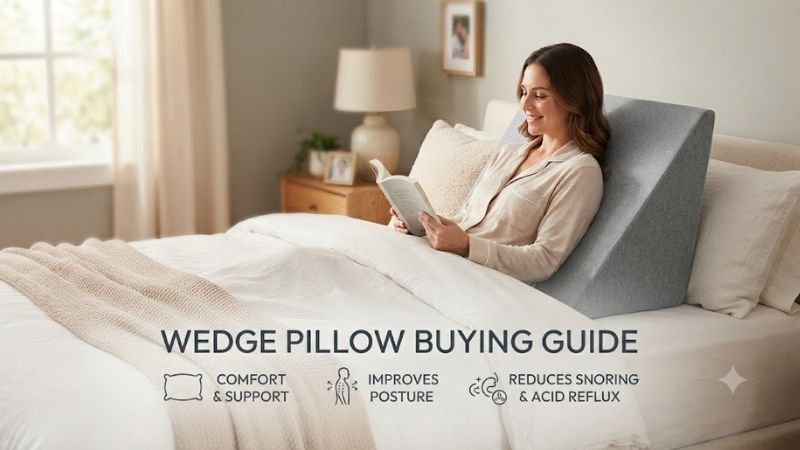
Traditional Triangular Wedges
A conventional triangular wedge has a lower edge and a higher edge connected by an inclined surface. This simple design offers predictable geometry and does not require assembly.
For back sleepers, a well-fitted wedge may distribute support across the upper back and shoulders. However, the length must be sufficient for the user’s torso, and the head needs to remain comfortably positioned.
A short wedge can create an abrupt transition under the back, particularly when used for several hours. Before buying, compare not only maximum height but also the length of the supporting surface.
Extended Torso Wedges
Extended wedges spread the incline across a longer portion of the body. This can be useful for adults who find short designs uncomfortable or who need upper-body elevation rather than head-only support.
The longer shape can reduce the abruptness of the transition, although actual comfort depends on foam firmness, body length, and sleeping position.
The principal trade-off is size. Long wedges require more mattress space and can be difficult to store. They are most appealing when sustained reclining is the primary purpose and the product can remain on the bed.
Folding and Modular Wedges
Folding designs can be stored more conveniently and may offer several supported arrangements. Modular systems add flexibility by allowing cushions to be repositioned beneath different body areas.
However, this flexibility requires careful evaluation. Joints, seams, and changes in cushion height may create pressure points. A modular system also should not be assumed suitable for overnight reflux positioning merely because the pieces can be arranged into an incline.
Choose a folding or modular design when the flexibility addresses a real use case, not simply because it offers more configurations.
Wedge Pillow Height, Length, and Angle
Maximum wedge height is one of the most prominent specifications in product listings. Unfortunately, it is rarely sufficient for comparing comfort.
A 10-inch wedge can be relatively gradual or quite steep depending on its length. The correct incline also depends on whether the surface is straight, curved, or constructed from several foam layers.
How Wedge Angle Is Calculated
For a simple straight wedge, the incline angle can be approximated from the maximum vertical rise and horizontal run.
A wedge with a 7-inch rise and 24-inch horizontal run has an approximate incline of 16 degrees. Increasing the run to 32 inches while keeping the same rise lowers the angle to about 12 degrees.
This example demonstrates why height alone is misleading. A longer wedge may feel less abrupt even though the head reaches the same maximum elevation.
Comparing Common Shopping Configurations
| Example dimensions | Approximate angle | Practical implication |
|---|---|---|
| 6-inch rise, 24-inch run | 14° | Relatively gradual incline |
| 7-inch rise, 24-inch run | 16° | Moderate elevation |
| 10-inch rise, 24-inch run | 23° | Steeper positioning |
| 10-inch rise, 32-inch run | 17° | Similar height with a gentler slope |
| 12-inch rise, 24-inch run | 27° | More upright arrangement |
These are mathematical examples, not verified angles of specific retail products.
Why Higher Is Not Always Better
A steeper incline can change pressure distribution and make some users slide downward. It may also create uncomfortable neck positioning when combined with an ordinary head pillow.
The appropriate elevation depends on the intended function and individual comfort. For medically directed positioning, follow clinical instructions rather than selecting the tallest available wedge.
Wedge Pillows for Acid Reflux and GERD
One reason adults purchase wedge pillows is to elevate the upper body during sleep. The American College of Gastroenterology suggests head-of-bed elevation as an option for nighttime GERD symptoms. This is a conditional recommendation, not a promise that all patients will benefit or that any particular wedge is sufficient treatment.
A crucial distinction is the difference between elevating the upper torso and stacking several ordinary pillows beneath the head. A tall stack of pillows can bend the neck without establishing a consistent incline across the upper body.
Why Body Position Matters
Gravity influences the movement of stomach contents during rest. Elevating the upper body may help reduce nighttime reflux exposure for some adults.
However, the precise positioning matters. A wedge that supports only the head can leave the torso comparatively flat, reducing the intended effect.
Look for a surface long enough to support the appropriate upper-body area rather than relying solely on the advertised height.
Wedge Pillow Versus Under-Mattress Elevation
An under-mattress wedge raises the mattress surface itself, while an above-mattress wedge supports the body directly.
The two arrangements may feel different because the mattress, bedding, and pillow interact differently with the incline.
Under-mattress elevation also requires compatibility with the mattress and foundation. Avoid bending or modifying a mattress in ways its manufacturer does not permit.
Side Sleeping With Reflux
Some adults prefer side sleeping while elevated. A sufficiently wide wedge and appropriately positioned head support can be important.
Left-side positioning has been associated with different reflux exposure from right-side positioning in clinical research, but individuals should not treat this as a substitute for medical advice.
If a wedge makes side sleeping uncomfortable, a different incline design or an appropriately supported alternative may be preferable.
Recognize When a Wedge Is Not Enough
Persistent heartburn, swallowing difficulty, unexplained weight loss, gastrointestinal bleeding, or other concerning symptoms require medical attention.
A wedge is a positioning aid, not a diagnosis or comprehensive GERD treatment.
Foam Construction and Its Effect on Support
Foam terminology can make wedge shopping unnecessarily confusing. Listings often use phrases such as high-density, orthopedic, memory foam, and premium support without providing measurements that allow fair comparison.
The important distinction is between the structural layer that holds the incline and the comfort layer that contacts the user.
Conventional Polyurethane Support Foam
Support foam is commonly used to form the wedge’s triangular base. A suitable core should maintain the intended shape under the loads for which the product is designed.
However, density and firmness are different measurements. Density describes material mass per volume, while firmness describes resistance to compression under specified conditions.
A high-density claim does not establish a particular firmness or guarantee that the wedge will fit every body type.
Memory-Foam Comfort Layers
A memory-foam top layer can conform around shoulders and the upper back, potentially reducing the sensation of lying directly on a firm support core.
The trade-off is greater compression and a different response when repositioning. If the comfort layer is thick and soft, the user may sink farther than expected, changing the effective incline.
For someone who prefers firmer support, a thinner comfort layer may feel more stable. Personal preference and body position matter more than simply maximizing memory-foam thickness.
Why All-Foam Wedges Can Feel Different
Two wedges using polyurethane foam can differ in density, firmness, cut profile, surface texture, and layering.
Their removable covers may also influence the feel. A thick padded cover creates a different contact surface from a thin stretch-knit cover.
Without comparable manufacturer specifications or independent testing, avoid assuming one foam wedge is more durable solely because of its price.
Choosing by Sleeping Position
A wedge’s comfort should be evaluated in the position actually used during sleep. A design that works well for a back sleeper may feel too narrow or too firm for a side sleeper.
Back Sleepers
Back sleepers often use conventional triangular wedges because the upper body can rest relatively evenly along the slope.
The key is supporting the shoulders and upper back without forcing excessive head elevation. If a separate pillow is used on top, its height must be considered as part of the entire arrangement.
A wedge that ends abruptly beneath the back may create pressure discomfort. Longer designs can be worth comparing when sustained sleeping support is the goal.
Side Sleepers
Side sleepers place more concentrated pressure around one shoulder and hip. A narrow wedge can leave part of the shoulder unsupported or create a feeling of sliding toward the edge.
A wider wedge with a suitable comfort surface may feel more accommodating. However, wider is not necessarily better when the user shares a narrow bed.
If an additional head pillow is used, choose its loft carefully to avoid unwanted sideways neck tilt.
Stomach Sleepers
Stomach sleeping involves head rotation and a different body-pressure pattern. Conventional upper-body wedges may be uncomfortable or unsuitable for this position.
A product promoted as universal should not override that practical limitation. Consider whether a different sleeping arrangement is appropriate rather than forcing the body to adapt to an unfamiliar incline.
Combination Sleepers
People who change positions frequently need sufficient width and stable support. A compact wedge that works in one fixed posture may become uncomfortable after rolling onto the side.
When evaluating a wedge for a combination sleeper, examine the entire usable surface rather than only the central head area.
Wedge Pillow Width and Mattress Compatibility
A wedge can technically fit on a mattress but still interfere with normal sleeping.
Consider both dimensions and the user’s position within the bed.
Single Sleeper on a Twin Bed
A typical twin mattress is 38 inches wide. A wedge measuring 24 inches wide leaves approximately 14 inches of nominal mattress width uncovered.
That may be enough for some back sleepers, but a person who rolls or moves frequently may prefer greater shoulder coverage.
Shared Queen Bed
A standard queen mattress is approximately 60 inches wide. One broad wedge may affect the other person’s sleeping area or create an uneven sleeping surface.
Choose based on whether one or both occupants need elevation.
Adjustable Bed Frames
An adjustable base already changes mattress position. Combining it with a foam wedge can create more elevation than intended.
Follow the adjustable-bed manufacturer’s guidance and any relevant medical positioning instructions.
Covers, Cleaning, and Long-Term Maintenance
A wedge used every night needs realistic cleaning procedures. Foam cores are often more difficult to wash than ordinary pillows, so the removable cover deserves attention.
Removable and Washable Covers
A removable cover allows the surface fabric to be cleaned separately from the foam. Check the closure placement, care label, and availability of replacement covers.
Specialty wedge shapes may not fit generic pillowcases. A product with an unusual profile can be more expensive to maintain if replacement covers are difficult to obtain.
Foam-Core Care
Many foam cores should not be machine-washed or fully immersed. Excessive moisture can damage the material and make complete drying difficult.
Use only the cleaning method permitted by the manufacturer and allow the core to dry thoroughly.
When to Replace the Wedge
A wedge may need replacement when it becomes permanently compressed, develops damaged foam, or no longer maintains a comfortable incline.
An exact replacement interval is less useful than assessing its actual condition.
How to Compare Value Across Price Levels
A higher-priced wedge may offer a longer incline, specialized contouring, removable covers, or more elaborate foam construction.
Those features can justify additional expense when they solve a genuine problem.
However, an inexpensive solid wedge may be sufficient for someone who already knows the support height and shape they prefer.
Budget Wedges
Prioritize clear dimensions, appropriate construction, and basic removable-cover practicality. Avoid products with vague measurements or unsupported therapeutic guarantees.
Midrange Wedges
Additional comfort layers, more height choices, or folding designs may be available. Compare whether the differences meaningfully affect fit.
Premium Positioning Systems
Specialized multi-component systems may appeal to people with particular side-sleeping or positioning needs. They also tend to require more bed space, storage, and maintenance.
Premium pricing should not be interpreted as clinical proof of effectiveness.
A Practical Pre-Purchase Decision Table
| Your main need | Prioritize | Avoid assuming |
|---|---|---|
| Nighttime upper-body elevation | Continuous torso support, suitable incline | Tallest wedge is best |
| Reading in bed | Stable upright backrest | Reading angle is suitable for sleeping |
| Side sleeping | Width, shoulder comfort, head support | Any triangle fits side sleepers |
| Small apartment | Folded dimensions and storage | Folding always means compact |
| Warm sleeping environment | Cover material and foam construction | Gel guarantees cooling |
| Easy laundering | Removable washable cover | Entire foam wedge is washable |
| Long-term use | Construction, return terms, care | Higher price proves durability |
Common Mistakes That Reduce Comfort
Buying by Height Alone
A maximum height does not reveal the incline angle or support length. A short, tall wedge can produce a much steeper sleeping position than expected.
Compare full dimensions and, when possible, the manufacturer’s intended sleeping configuration. If the goal is torso elevation, look for sufficient length beneath the upper body rather than simply choosing a 10- or 12-inch product.
Adding Too Many Ordinary Pillows
Stacking multiple pillows on top of a wedge may lift the head excessively. This can produce uncomfortable neck flexion even when the wedge’s underlying incline is appropriate.
Start with the intended wedge configuration. Add separate head support only if needed and permitted, and evaluate the resulting position rather than assuming more cushioning is always better.
Believing Every Wedge Is Medically Equivalent
A foam backrest, leg cushion, and reflux-oriented sleeping wedge serve different purposes. Retail marketing sometimes uses the same orthopedic terminology for all three.
Check the actual intended use, shape, and compatibility. Medical claims should be considered only when supported by appropriate evidence.
Frequently Asked Questions
What Height Wedge Pillow Should I Buy?
There is no universal height. The appropriate choice depends on the wedge’s length, intended use, body proportions, sleeping position, and any medical guidance. Compare the full incline profile rather than selecting the highest available model.
Is a Wedge Pillow Better Than Stacking Pillows for Reflux?
For nighttime reflux positioning, a continuous upper-body incline or appropriately elevated bed is generally more consistent with clinical guidance than stacking pillows only beneath the head. The wedge must still fit comfortably, and persistent symptoms require medical evaluation.
Are Memory-Foam Wedges Better Than Regular Foam?
Memory foam can improve surface contouring, while conventional support foam maintains the wedge’s overall structure. Many designs combine both. The best construction depends on whether you prioritize cushioning or a firmer feel.
Can Side Sleepers Use a Wedge Pillow?
Yes, some adults can use a suitable wedge while side sleeping. Width, shoulder cushioning, torso support, and the height of any additional head pillow are important. A narrow wedge may be uncomfortable for someone who moves frequently.
Is a Folding Wedge as Supportive as a Solid Wedge?
It can be, depending on its construction and intended use. However, hinges and seams may affect the contact surface. Evaluate stability and comfort rather than assuming every folding design performs like a solid foam wedge.
Can Adults Use a Wedge Pillow Every Night?
Some adults use appropriate wedge pillows regularly, but the arrangement should remain comfortable and suited to its intended purpose. If it causes worsening pain, restricted breathing, or pressure problems, discontinue that configuration and seek appropriate guidance.
Conclusion
The best wedge pillow provides the right incline and body support for its intended purpose rather than simply offering the greatest height. Choose a longer, continuous slope for comfortable upper-body elevation, a stable steeper backrest for reading, and a suitably wide design for side sleeping. Compare full dimensions, foam firmness, removable covers, and maintenance requirements before purchasing. When using a wedge for medical positioning, follow appropriate clinical guidance rather than relying on orthopedic marketing claims.