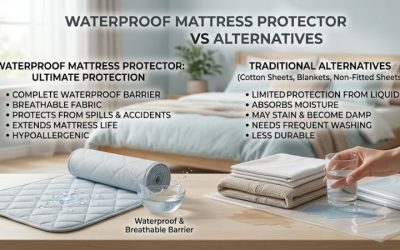
Key takeaways
-
Best Overall: Protect-A-Bed AllerZip Mattress Encasement — Six-sided waterproof protection with a specialized bed bug barrier.
-
Best Budget-Friendly Option: Utopia Bedding Premium Waterproof Zippered Mattress Encasement — A straightforward polyester design with waterproof TPU backing on all sides.
-
Best for Bed Bug Protection: Bargoose BedBug Solution Elite Zippered Mattress Encasement — An independently researched bed bug barrier with a patented zipper-end seal.
-
Best for Easy Cleaning: CleanRest PRESTO! Zip-Off Top Mattress Encasement — A removable top panel simplifies laundering without lifting the entire mattress.
-
Best for Everyday Mattress Protection: Protect-A-Bed Essential Mattress Encasement — Full zippered coverage with a waterproof sleeping surface.
-
Best for Stretch Fit: CleanRest PRO Mattress Encasement — Stretch construction and a specialized zipper closure designed for protective coverage.
Find the best mattress encasement for bed bugs, allergens, and spills. Compare six zippered options by waterproof coverage, mattress fit, and cleaning ease.
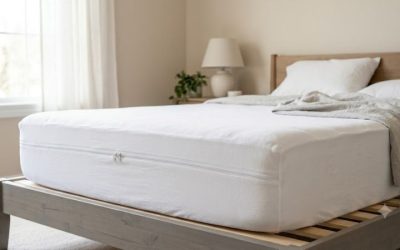
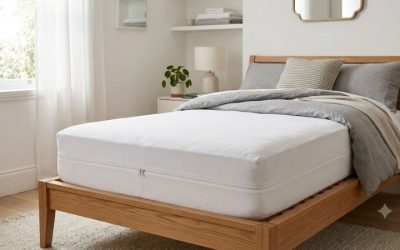
The best mattress encasement protects more than the sleeping surface. A properly fitted, fully zippered cover surrounds your mattress to help block bed bugs, dust mites, allergens, and moisture. This guide compares six mattress encasements, highlighting their protective features, practical limitations, and suitability for different households.
Quick Verdict: Best Mattress Encasements at a Glance
For most households seeking comprehensive mattress protection, the Protect-A-Bed AllerZip Mattress Encasement is our best overall choice. Its six-sided waterproof construction, specialized zipper closure, and depth-specific sizing address several of the most important requirements for a protective mattress cover.
However, the right choice depends on whether you prioritize pest protection, spill resistance, easy laundering, or affordability.
-
Best Overall: Protect-A-Bed AllerZip Mattress Encasement — Six-sided waterproof protection with a specialized bed bug barrier.
-
Best Budget-Friendly Option: Utopia Bedding Premium Waterproof Zippered Mattress Encasement — A straightforward polyester design with waterproof TPU backing on all sides.
-
Best for Bed Bug Protection: Bargoose BedBug Solution Elite Zippered Mattress Encasement — An independently researched bed bug barrier with a patented zipper-end seal.
-
Best for Easy Cleaning: CleanRest PRESTO! Zip-Off Top Mattress Encasement — A removable top panel simplifies laundering without lifting the entire mattress.
-
Best for Everyday Mattress Protection: Protect-A-Bed Essential Mattress Encasement — Full zippered coverage with a waterproof sleeping surface.
-
Best for Stretch Fit: CleanRest PRO Mattress Encasement — Stretch construction and a specialized zipper closure designed for protective coverage.
These recommendations reflect documented construction, manufacturer specifications, and practical purchasing considerations rather than first-hand product testing.
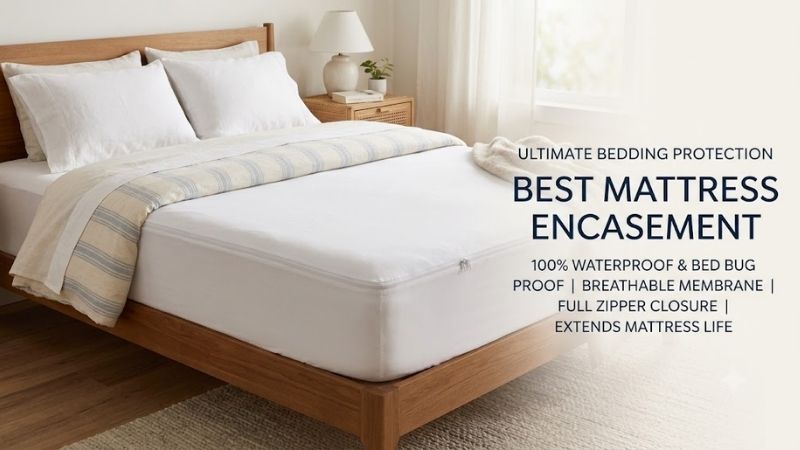
Quick Comparison Table
| Mattress Encasement | Best For | Key Specifications | Main Advantage | Trade-Off |
|---|---|---|---|---|
| Protect-A-Bed AllerZip | Best Overall | Six-sided waterproof protection; 6–11″ and 11–18″ depth options | BugLock zipper closure and full waterproof coverage | More specialized than basic covers |
| Utopia Bedding Premium Waterproof Zippered Encasement | Budget-Friendly Protection | Polyester; six-sided TPU-backed waterproof design | Full waterproof coverage in a straightforward construction | Exact size and depth must be checked |
| Bargoose BedBug Solution Elite | Bed Bug Protection | Six-sided waterproof barrier; BugStop seal; 6″, 9″, 12″, and 16″ depths | Documented third-party bed bug barrier testing | Depth-specific purchase requires careful measuring |
| CleanRest PRESTO! Zip-Off Top | Easy Cleaning | Removable top; waterproof top and upper sides; stretch bottom | Washable top without removing the entire encasement | Not waterproof across all six sides |
| Protect-A-Bed Essential | Everyday Protection | Six-sided zippered enclosure; waterproof top | Full enclosure with a moisture-resistant sleeping surface | Bottom and sides are not advertised as fully waterproof |
| CleanRest PRO | Stretch Fit | Polyester construction; stretch sides and bottom; waterproof top | Adaptable installation and protective zipper closure | Waterproofing focuses on the top surface |
How We Selected These Mattress Encasements
Mattress encasements perform a different job from conventional fitted mattress protectors. A fitted protector generally covers the sleeping surface, while an encasement surrounds the mattress and closes with a zipper.
For that reason, our selection emphasizes six practical considerations.
Complete enclosure: Every recommended product uses a zippered design that surrounds the mattress. The closure matters particularly when preventing bed bugs from entering or escaping.
Waterproof coverage: We distinguish fully waterproof, six-sided products from encasements with waterproof top panels. Both designs can be useful, but they do not provide identical protection against liquid exposure.
Mattress compatibility: A cover must match mattress width, length, and thickness. We prioritized identifiable products with available sizing information or clearly defined fit options.
Allergen barriers: Closely woven or membrane-backed materials may reduce the movement of dust mite allergens and other particles between the mattress and sleeping environment.
Cleaning and installation: Machine-wash instructions, removable panels, stretch materials, and zipper accessibility influence how practical a cover is for everyday household use.
Protective construction: Specialized zipper closures, reinforced seams, and independently documented barrier claims receive more consideration than broad descriptions such as hypoallergenic or premium.
No independent leak, durability, cooling, or noise measurements were conducted for this comparison. Performance assessments below are based on published construction and reasonable expectations for ordinary use.
Detailed Reviews: The 6 Best Mattress Encasements
1. Protect-A-Bed AllerZip Mattress Encasement — Best Overall
Best For: Homeowners who want extensive protection against spills, dust mites, and bed bugs without purchasing separate covers for every type of exposure.
Why We Picked It
The Protect-A-Bed AllerZip combines six-sided waterproof coverage with a patented BugLock closure. That combination is particularly relevant because the zipper and surrounding seams are important points of vulnerability in any fully enclosed mattress protector.
Unlike encasements that waterproof only the sleeping surface, AllerZip uses the manufacturer’s LiquiDry waterproof layer across all six sides.
Key Specifications
| Feature | Details |
|---|---|
| Construction | Fully zippered mattress encasement |
| Waterproof coverage | All six sides |
| Zipper system | Patented BugLock closure |
| Mattress depth options | 6–11 inches and 11–18 inches |
| Available sizes | Twin, Twin XL, Full, Queen, King |
| Surface treatment | FUZE antimicrobial odor-control treatment |
| Cleaning | Machine washable according to manufacturer instructions |
Features and Benefits
The primary advantage of AllerZip is its combination of liquid and pest protection.
Its six-sided membrane offers protection against moisture reaching the mattress from several directions. This can matter when spills occur near mattress edges rather than directly in the center of the bed.
The BugLock closure is designed to prevent bed bugs from passing through the zipper area. The manufacturer also identifies the encasement as providing a barrier against dust mites and allergens.
Stretch corners help accommodate mattresses within the specified depth ranges, reducing the difficulty of selecting a suitable fit.
Performance and Practical Use
AllerZip is especially appropriate for households with expensive mattresses, concerns about bed bugs, or frequent accidental spills.
Its waterproof membrane is bonded to a soft fabric surface rather than using a loose plastic sheet. This construction is intended to reduce the crinkling associated with some traditional waterproof bedding.
However, a waterproof membrane can still affect airflow compared with an uncovered mattress. Actual sleeping temperature depends on the mattress, bedding, room environment, and individual sensitivity.
What Makes It Different
AllerZip is the most comprehensive waterproof option in this roundup when considered alongside its specialized zipper barrier and flexible depth selection.
Pros
-
Waterproof barrier surrounds all six mattress sides.
-
BugLock closure is specifically designed for bed bug protection.
-
Two mattress-depth ranges accommodate different bed profiles.
Cons
-
May be unnecessary for shoppers concerned only about occasional spills.
-
Requires selecting the correct depth range to prevent excessive looseness or tension.
Buy If: You want a complete mattress enclosure with both six-sided waterproof protection and a dedicated bed bug barrier.
Skip If: You only need a removable waterproof surface protector or prefer a design that allows the top panel to be washed independently.
2. Utopia Bedding Premium Waterproof Zippered Mattress Encasement — Best Budget-Friendly Option
Best For: Households looking for straightforward, full-mattress waterproof protection without prioritizing premium fabric treatments or specialized cleaning systems.
Why We Picked It
Utopia Bedding offers a practical polyester encasement with a zippered enclosure and TPU waterproof backing. Its construction addresses several core requirements without depending on elaborate comfort features.
The manufacturer’s specifications identify waterproof protection on all sides, making it a relevant alternative to higher-feature encasements.
Key Specifications
| Feature | Details |
|---|---|
| Brand | Utopia Bedding |
| Construction | Zippered polyester encasement |
| Waterproof layer | TPU backing |
| Coverage | Six sides |
| Pest-related claims | Bed bug and dust mite protection |
| Cleaning | Machine washable |
| Sizing | Multiple standard mattress sizes; depth varies by configuration |
Features and Benefits
The Utopia Bedding encasement uses a polyester fabric supported by waterproof TPU backing.
TPU, or thermoplastic polyurethane, is commonly used in protective bedding because it can form a flexible liquid-resistant membrane without the rigid feel of traditional vinyl sheeting.
Full coverage is useful for protecting the underside of a mattress, particularly where a bed sits on slats or a platform.
The zippered construction also makes it more appropriate for full enclosure than a fitted mattress pad.
Performance and Practical Use
This encasement is suited to guest rooms, rental properties, and everyday bedrooms where a simple protective layer is the main requirement.
Because the product uses a full zipper enclosure, the mattress must be maneuvered into the cover. Installation may be easier with a second person, particularly for heavy queen or king mattresses.
The polyester construction is functional, but shoppers who are sensitive to synthetic fabrics should evaluate the surface material and bedding combination carefully.
What Makes It Different
Rather than emphasizing a specialized zipper system or detachable washing panel, Utopia Bedding focuses on conventional six-sided waterproof construction.
Its budget-friendly designation reflects its simpler feature set, not a verified claim that it is always the lowest-priced option.
Pros
-
Six-sided TPU-backed waterproof construction.
-
Fully enclosed zippered design.
-
Machine-washable polyester material.
Cons
-
Published dimensions can vary between product configurations.
-
Lacks the clearly documented specialized zipper-barrier system found on some premium alternatives.
Buy If: You want a conventional waterproof mattress encasement with essential protective features.
Skip If: Independent bed bug barrier testing or a specialized zipper seal is your highest priority.
3. Bargoose BedBug Solution Elite Zippered Mattress Encasement — Best for Bed Bug Protection
Best For: Households, landlords, and hospitality buyers who prioritize a documented bed bug barrier and precise mattress sizing.
Why We Picked It
The Bargoose BedBug Solution Elite stands out for its patented BugStop seal and published third-party barrier testing.
The manufacturer identifies Snell Scientifics as the laboratory used for bed bug-related testing. This provides more specific supporting evidence than products relying only on general pest-resistant marketing claims.
Key Specifications
| Feature | Details |
|---|---|
| Construction | Six-sided zippered enclosure |
| Closure | Patented BugStop seal |
| Waterproof coverage | Six-sided membrane-backed protection |
| Fabric | Stretch knit laminated to a polyurethane membrane |
| Depth options | 6, 9, 12, and 16 inches |
| Available sizes | Standard and specialty mattress dimensions |
| Testing | Manufacturer-published independent bed bug barrier reports |
Features and Benefits
The BugStop seal addresses the zipper-end opening, which can otherwise compromise an encasement’s effectiveness against bed bugs.
A tight closure is important because insects may exploit small gaps even when the surrounding fabric forms an effective barrier.
The Elite model also offers waterproof coverage on all six sides, providing additional protection against fluids.
Its stretch-knit construction is designed to be more flexible than rigid protective materials, while its range of depth options helps shoppers match the cover to different mattress profiles.
Performance and Practical Use
Bargoose Elite is particularly suitable for buyers who need documented protective performance rather than relying on broad product descriptions.
It can be used in residential bedrooms, rental units, and hospitality settings. Specialty mattress dimensions may also be useful for buyers whose beds do not follow standard residential measurements.
Nevertheless, mattress encasement effectiveness depends on correct installation and maintaining an undamaged cover.
Even a laboratory-tested zipper barrier cannot protect a mattress if the fabric tears or the zipper is left partially open.
What Makes It Different
The defining feature is its focus on independently documented pest-barrier performance alongside six-sided waterproof construction.
Pros
-
Patented closure designed to seal the zipper end.
-
Published third-party bed bug testing documentation.
-
Multiple depth and specialty sizing choices.
Cons
-
Careful measurement is necessary when choosing among fixed depth options.
-
The more specialized protective design may exceed the needs of shoppers concerned only about ordinary spills.
Buy If: You want a mattress encasement with a documented bed bug barrier and precise sizing choices.
Skip If: Your main priority is convenient removal for frequent laundering rather than a permanent protective enclosure.
4. CleanRest PRESTO! Zip-Off Top Mattress Encasement — Best for Easy Cleaning
Best For: Families, caregivers, guest-room owners, and anyone who wants to clean the sleeping surface without repeatedly removing a full mattress encasement.
Why We Picked It
Traditional mattress encasements can be inconvenient to wash because the entire mattress must be lifted or partially moved to remove the cover.
The CleanRest PRESTO! addresses that problem through a detachable top panel, allowing the sleeping surface to be removed while the lower encasement stays in place.
Key Specifications
| Feature | Details |
|---|---|
| Construction | Full encasement with detachable top panel |
| Cleaning feature | Zip-off top |
| Waterproof coverage | Top and upper four sides |
| Lower construction | Air-permeable stretch bottom |
| Zipper protection | Zip-N-Click closure system |
| Bed bug barrier | Manufacturer reports independent testing |
| Mattress depth | Twin/Twin XL: 7–15″; larger standard sizes: 9–18″ |
| Material | Polyester and nylon blend |
Features and Benefits
The detachable top is the central advantage.
When an accident occurs, the user can unzip the soiled top panel instead of dismantling the entire bed enclosure. Compatible replacement tops can also be purchased separately.
This may be especially useful in households where bedding needs regular cleaning because of children, pets, or caregiving requirements.
CleanRest also uses a specialized Zip-N-Click system designed to maintain bed bug protection at the closure.
Its MicronOne fabric serves as an allergen barrier while the stretch bottom allows airflow.
Performance and Practical Use
The PRESTO! design can reduce the physical effort required for routine cleaning.
It is an attractive choice for heavy mattresses that are difficult to lift, particularly when the user handles bedding maintenance alone.
However, waterproofing is concentrated on the top and upper sides rather than the entire mattress enclosure. The air-permeable lower panel is an intentional design choice, but it does not offer the same liquid barrier as a fully waterproof bottom.
Shoppers must also ensure the detachable top is correctly reattached and its protective closure secured after cleaning.
What Makes It Different
PRESTO! separates routine surface laundering from complete encasement removal.
That creates a meaningful maintenance advantage over ordinary one-piece zippered covers.
Pros
-
Detachable top simplifies cleaning.
-
Lower enclosure can remain on the mattress.
-
Specialized closure supports bed bug protection.
Cons
-
Waterproof protection does not extend across all six sides.
-
Replacement tops must match the corresponding PRESTO! size and system.
Buy If: You expect to wash the sleeping surface frequently and want to minimize mattress lifting.
Skip If: You require waterproof protection beneath the mattress or prefer a single-piece encasement without additional zipper components.
5. Protect-A-Bed Essential Mattress Encasement — Best for Everyday Protection
Best For: Homeowners seeking a full zippered mattress enclosure with waterproof protection on the sleeping surface and a barrier against dust mites and bed bugs.
Why We Picked It
The Protect-A-Bed Essential offers a simpler alternative to the brand’s AllerZip model.
It provides a six-sided zippered enclosure with a LiquiDry waterproof top layer, making it appropriate for everyday mattress protection when fully waterproof sides and bottom are not essential.
Key Specifications
| Feature | Details |
|---|---|
| Construction | Six-sided zippered encasement |
| Waterproof coverage | Top sleeping surface |
| Protective barrier | Bed bug, dust mite, and allergen-resistant enclosure |
| Waterproof technology | LiquiDry |
| Surface treatment | FUZE antimicrobial odor-control treatment |
| Mattress depth | 6–11-inch configuration |
| Maintenance | Machine washable |
Features and Benefits
The Essential model balances general enclosure and surface moisture protection.
Its waterproof top helps defend against perspiration, accidental spills, and other moisture exposure during normal use.
The surrounding fabric and zipper form a protective enclosure intended to reduce access to the mattress by bed bugs and dust mites.
Its FUZE treatment is designed to inhibit odor-causing bacteria on the treated material. This feature should not be interpreted as sterilization or protection against illness.
Performance and Practical Use
This model is well suited to a bedroom where a mattress is exposed primarily to normal sleeping conditions rather than frequent liquid accidents near the edges or underside.
It is also a reasonable choice for households wanting allergen-resistant enclosure without paying for the complete waterproof coverage offered by AllerZip.
Because the side and bottom panels are not advertised as fully waterproof, the Essential model is less suitable when liquids may reach the mattress from multiple directions.
What Makes It Different
Essential offers a more focused combination of top-surface waterproofing and full zippered coverage.
For households without unusual moisture exposure, that may provide a practical balance between protection and product complexity.
Pros
-
Full zippered enclosure.
-
Waterproof LiquiDry top layer.
-
Machine-washable construction.
Cons
-
Does not provide the six-sided waterproof coverage of AllerZip.
-
Buyers must confirm that the selected depth configuration fits their mattress.
Buy If: You want a protective enclosure for ordinary bedroom use, with waterproofing primarily where people sleep.
Skip If: You need waterproof protection across the mattress bottom and sides or want the brand’s specialized BugLock closure.
6. CleanRest PRO Mattress Encasement — Best for Stretch Fit
Best For: Shoppers who want a protective mattress enclosure with flexible side construction and a secure zipper closure.
Why We Picked It
CleanRest PRO uses stretch fabric on the sides and bottom to accommodate mattress contours while maintaining an enclosed protective design.
This can be helpful because excessively loose encasements may bunch beneath fitted sheets, while overly tight covers can place stress on seams and zippers.
Key Specifications
| Feature | Details |
|---|---|
| Construction | Full zippered mattress encasement |
| Fabric | Polyester |
| Stretch components | Sides and bottom |
| Waterproof coverage | Top sleeping surface |
| Allergen barrier | MicronOne fabric |
| Closure | Zip-N-Click system |
| Maintenance | Machine washable |
| Fit | Size-dependent; confirm exact mattress depth |
Features and Benefits
CleanRest PRO combines a waterproof sleeping surface with stretch side and bottom panels.
The stretch construction is designed to support installation and a more adaptable fit without using an entirely rigid protective shell.
Its MicronOne fabric is intended to restrict the movement of dust mites and allergens through the encasement.
The Zip-N-Click closure also addresses pest entry and escape at the zipper.
Performance and Practical Use
The PRO is suitable for sleepers who want a conventional full encasement but prefer a more flexible construction.
Its top waterproof surface can help protect a mattress against everyday accidents, while the air-permeable lower sections may be appealing to buyers concerned about fully membrane-covered bedding.
However, stretch fabric should not be confused with universal sizing. Mattress width, length, and thickness still need to fall within the specifications for the selected model.
The mattress must also be handled carefully during installation to avoid catching the cover on frame edges or hardware.
What Makes It Different
CleanRest PRO prioritizes flexible fit and a specialized pest barrier, whereas PRESTO! prioritizes convenient top-panel removal.
Pros
-
Stretch side and bottom construction.
-
Waterproof top with an allergen-barrier enclosure.
-
Specialized protective zipper closure.
Cons
-
Waterproofing does not extend across the entire mattress.
-
One-piece removal is less convenient than a detachable-top design.
Buy If: You want a flexible encasement with top-surface waterproofing and dedicated zipper protection.
Skip If: You need full six-sided waterproof coverage or regularly remove your protector for washing.
Mattress Encasement Buying Guide: What Actually Matters?
Choosing the best mattress encasement involves more than finding the correct bed size. The enclosure needs to work with your mattress dimensions, expected exposure, cleaning routine, and sleeping preferences.
1. Six-Sided Coverage vs. Six-Sided Waterproofing
These terms describe different characteristics.
A six-sided encasement covers the top, bottom, and four sides of the mattress. However, the waterproof membrane may cover only certain areas.
Six-sided waterproof encasements place moisture-resistant barriers around the entire mattress. They are especially useful when spills could reach the sides or underside.
Waterproof-top encasements surround the mattress but concentrate liquid protection on the primary sleeping surface.
The latter may provide additional airflow through the sides or bottom, depending on the fabric construction.
For ordinary nighttime perspiration and occasional surface spills, a waterproof top may be sufficient. For more comprehensive moisture protection, select a product that explicitly advertises waterproofing on all six sides.
2. Mattress Depth and Zipper Fit
A mattress encasement should match three measurements:
-
Mattress width.
-
Mattress length.
-
Mattress thickness or depth.
Common US mattress dimensions include:
| Size | Typical Width | Typical Length |
|---|---|---|
| Twin | 38 inches | 75 inches |
| Twin XL | 38 inches | 80 inches |
| Full | 54 inches | 75 inches |
| Queen | 60 inches | 80 inches |
| King | 76 inches | 80 inches |
| California King | 72 inches | 84 inches |
Actual dimensions can vary by manufacturer, mattress construction, and specialty sizing.
Depth is particularly important because two queen mattresses can have identical width and length but substantially different thicknesses.
A 10-inch mattress generally should not be placed in a rigid 16-inch-deep encasement unless the manufacturer specifically designs the cover to accommodate that difference.
Excess fabric can wrinkle, while inadequate depth can strain the closure.
Measure the mattress itself rather than relying only on the advertised thickness from the original purchase.
If a permanent topper will remain inside the encasement, include its thickness in your measurements and confirm that the product is designed to enclose both layers.
3. Bed Bug-Proof Zipper Construction
The zipper deserves particular attention when bed bug prevention is a main purchasing reason.
A conventional zipper may leave a small opening at the end of its track. The size of that gap depends on the closure construction and how the zipper is secured.
Protective encasements may use additional seals, zipper locks, or specially constructed end closures.
Look for products with clearly described pest-protection systems and supporting test documentation where available.
Even when an encasement has a protective zipper, it must remain fully closed and undamaged.
An encasement is a barrier, not a pesticide or a complete bed bug treatment.
4. Waterproof Membrane Materials
Many mattress encasements use synthetic membranes such as TPU or polyurethane.
These materials are commonly selected because they create thin, flexible barriers against liquid penetration.
The membrane may be laminated to a knitted or woven fabric surface.
The practical result depends on several factors:
-
Whether the membrane covers all six sides.
-
How it is attached to the fabric.
-
The integrity of seams and stitching.
-
Whether laundering damages the membrane.
-
Whether the selected size fits without excessive stretching.
A product advertised as waterproof should not automatically be assumed to remain waterproof after years of washing or physical wear.
Inspect the fabric periodically for cracks, peeling, seam damage, or other deterioration.
5. Breathability and Sleeping Temperature
A waterproof membrane can change the movement of air and moisture through bedding.
However, it is not accurate to assume every waterproof encasement sleeps hot.
Temperature perception depends on membrane construction, outer fabric, mattress material, sheets, blankets, room temperature, and the sleeper.
Products with permeable bottom panels may allow more airflow in those areas than completely membrane-covered designs.
That does not establish that they will feel cooler to every sleeper.
If overheating is a frequent concern, compare the actual construction rather than relying on labels such as cooling, breathable, or temperature regulating.
6. Allergen Protection
Mattresses can accumulate dust mite allergens, skin particles, and other debris.
A properly constructed encasement may help separate mattress-contained allergens from the sleeping environment.
For allergen control, evaluate the fabric barrier, zipper construction, and how well the cover fits.
A loosely fitted cover with gaps around the closure may provide a less reliable barrier than a properly sealed enclosure.
It is also important to distinguish allergen-barrier protection from medical treatment. Mattress encasements may be part of environmental allergen management, but they are not a cure for asthma or allergies.
7. Cleaning and Maintenance
Washability is valuable, but full encasements are not always intended to be removed as frequently as ordinary sheets.
Repeatedly removing a one-piece enclosure can be inconvenient and can increase the chance of damaging its zipper or fabric.
For easier maintenance, consider using a washable fitted protector over the encasement.
The fitted protector can collect ordinary spills and surface dirt while the full encasement remains secured underneath.
If frequent laundering is unavoidable, a zip-off-top design such as CleanRest PRESTO! may be more convenient.
Always follow the product’s specific laundering instructions. Do not assume that a hot wash or high dryer temperature suitable for one model is safe for another.
Mattress Encasement vs. Mattress Protector: Which Should You Buy?
Although the terms are sometimes used interchangeably, their construction differs significantly.
| Feature | Mattress Encasement | Fitted Mattress Protector |
|---|---|---|
| Coverage | Entire mattress | Usually top and portions of sides |
| Closure | Zippered | Elastic skirt or fitted edges |
| Bed bug barrier | Possible with properly constructed, tested enclosure | Generally not a complete barrier |
| Waterproof protection | Top only or all six sides, depending on model | Usually top surface |
| Installation | Requires enclosing the mattress | Similar to fitting a sheet |
| Routine removal | Less convenient | Usually easier |
| Best Use | Pest barrier, allergen enclosure, comprehensive mattress protection | Everyday spills, sweat, and surface stains |
A mattress encasement makes sense when you need the mattress completely enclosed.
A fitted protector may be sufficient if your only concern is occasional liquid exposure from above.
For households seeking both thorough protection and convenient laundry care, the two products can be used together.
How to Install a Zippered Mattress Encasement Correctly
Step 1: Measure and Inspect the Mattress
Confirm the length, width, and thickness before opening the new encasement.
Check for sharp bed-frame hardware, exposed staples, splinters, or damaged mattress components that could tear the protective fabric.
If bed bugs are suspected, coordinate the installation with appropriate inspection and treatment rather than simply covering an untreated room.
Step 2: Position the Mattress Safely
Remove sheets and bedding.
If the mattress is heavy, get help rather than attempting to lift or rotate it alone.
Follow the manufacturer’s installation instructions, particularly if your mattress is adjustable, unusually heavy, or attached to a specialized bed frame.
Step 3: Slide the Encasement Over the Mattress
Open the zipper fully and carefully guide the cover over the mattress.
Avoid pulling directly on the zipper teeth to stretch the fabric.
Adjust the corners so the material rests evenly around the mattress.
Step 4: Close and Secure the Zipper
Pull the zipper slowly while keeping loose fabric away from the teeth.
Once closed, engage any required zipper lock, end seal, or protective flap.
For bed bug protection, an incomplete closure can compromise the barrier.
Step 5: Inspect the Final Fit
Check the corners, side seams, bottom, and zipper area.
The encasement should not have obvious tears, large loose folds, or sections pulled excessively tight.
After installation, add your usual fitted sheet or an additional washable mattress protector.
Common Mattress Encasement Mistakes to Avoid
Buying by Bed Size Without Checking Depth
A queen-size label does not guarantee compatibility with every queen mattress.
A cover designed for an 8-inch mattress may not fit a 15-inch pillow-top mattress.
Choose the depth range using actual measurements.
Assuming All Sides Are Waterproof
Some products fully enclose a mattress but waterproof only the top.
Check the manufacturer’s coverage description before purchasing, particularly if moisture protection is the primary reason for buying.
Leaving the Zipper Partially Open
Even a small unsealed opening can undermine pest-barrier performance.
Fully close the zipper and use the supplied locking or sealing mechanism.
Using Excessive Heat During Washing
Protective membranes and laminated fabric can be damaged by temperatures outside the manufacturer’s care limits.
Follow the specific wash and dry instructions rather than selecting the hottest machine setting automatically.
Removing Bed Bug Encasements Too Soon
If the cover is part of a bed bug management plan, premature removal can expose insects still trapped inside.
The US Environmental Protection Agency recommends using bed-bug-proof covers with completely closing zippers and sufficient durability to remain in place for at least a year.
Assuming an Encasement Eliminates Every Pest Problem
Bed bugs can hide in headboards, frames, furniture, and surrounding room structures.
An encasement can help isolate the mattress and make future inspections easier, but it does not eliminate insects living elsewhere.
A confirmed infestation requires a broader integrated pest management approach.
Frequently Asked Questions
What Is the Best Mattress Encasement for Bed Bugs?
The Bargoose BedBug Solution Elite is a strong choice for shoppers prioritizing bed bug protection because it has a patented BugStop closure and manufacturer-published third-party barrier testing.
Protect-A-Bed AllerZip is another compelling option, particularly when six-sided waterproof protection is also important.
Regardless of brand, select the correct size and keep the zipper fully secured.
Are Mattress Encasements Completely Waterproof?
Not necessarily.
Some mattress encasements provide waterproofing across all six sides, while others waterproof only the top or upper portions.
For comprehensive moisture protection, choose a product explicitly described as six-sided waterproof.
Do not confuse full fabric enclosure with full waterproof coverage.
Can Bed Bugs Live Inside a Mattress Encasement?
Bed bugs already inside a mattress may remain trapped after a properly designed, undamaged bed bug-proof encasement is installed.
They cannot feed on sleepers through an effective bite-resistant barrier, but they may remain alive for an extended period.
Bed bugs outside the mattress can still survive elsewhere in the room.
Do not remove an encasement early when it is being used as part of infestation management.
Can You Put a Mattress Encasement on a Memory Foam Mattress?
Yes, provided the encasement is compatible with the mattress dimensions and the mattress manufacturer’s care requirements.
Choose a cover that fits without excessive compression, stretching, or loose fabric.
A flexible, thin encasement is generally preferable when you want to minimize changes to the mattress surface feel.
How Often Should You Wash a Mattress Encasement?
Cleaning frequency depends on the product, household conditions, and whether an additional fitted protector is used.
An encasement protected by a washable fitted cover may require less frequent laundering.
If the mattress is being protected during bed bug treatment, follow the pest management guidance before removing the enclosure.
Always use the manufacturer’s laundering instructions.
Is a Mattress Encasement Worth Buying?
A mattress encasement is particularly worthwhile when the goal is comprehensive mattress protection, pest isolation, or allergen-barrier coverage.
It can also help protect a mattress investment against accidental exposure to moisture and debris.
However, if the only concern is occasional sweat or spilled drinks, a quality fitted waterproof protector may be a simpler and more convenient purchase.
Final Verdict: Which Mattress Encasement Should You Choose?
The Protect-A-Bed AllerZip Mattress Encasement is the best overall recommendation for households wanting a combination of six-sided waterproofing, allergen protection, and a specialized bed bug closure. For documented bed bug barrier testing, the Bargoose BedBug Solution Elite deserves particular consideration. Choose the CleanRest PRESTO! if easy laundering matters most, or the Utopia Bedding Premium Waterproof Zippered Encasement if you prefer a straightforward protective design. Above all, prioritize accurate mattress measurements, appropriate waterproof coverage, and a secure zipper system over marketing claims alone.