How to Choose the Right Waterproof Mattress Protector
The best waterproof mattress protector depends on what you need to protect against, how your mattress is constructed, and how much maintenance you are willing to handle. A lightweight fitted protector may be sufficient for occasional spills, while a full encasement can provide more comprehensive physical coverage.
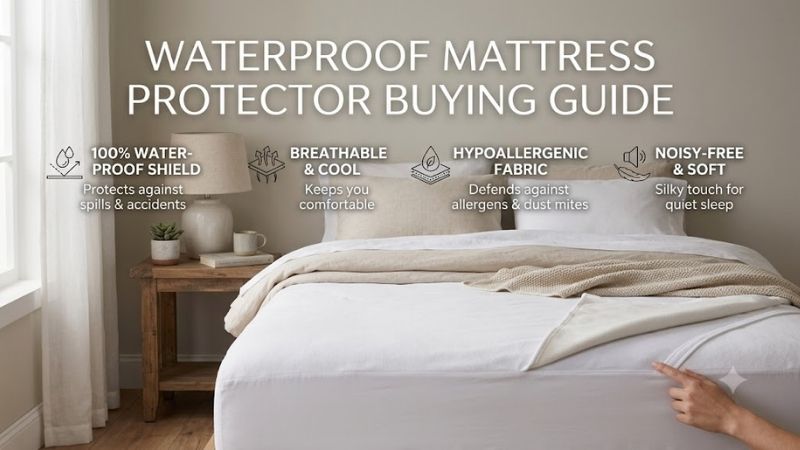
Identify Your Primary Protection Needs
Start by identifying the situations your mattress is most likely to encounter.
-
Occasional spills: A fitted protector with a waterproof top surface may be sufficient.
-
Children’s beds: Look for dependable liquid protection, washable construction, and secure fit.
-
Pet households: Consider waterproof coverage, cleaning convenience, and whether side protection is necessary.
-
Night sweats: Prioritize moisture protection without excessive padding or unnecessary insulating layers.
-
Dust mites and bed bugs: Consider an appropriate fully enclosed design, recognizing that waterproofing alone does not establish pest protection.
-
Expensive or specialty mattresses: Review mattress warranty conditions and select a protector compatible with the manufacturer’s care recommendations.
The goal is not necessarily to buy the thickest or most expensive product. It is to match the coverage and construction to realistic household risks.
Understand Waterproof Versus Water-Resistant Protection
These terms describe different levels of liquid protection.
A waterproof mattress protector contains a barrier intended to prevent liquid from passing through the protected area under specified conditions.
A water-resistant mattress protector may repel small amounts of liquid temporarily but may not prevent penetration during prolonged exposure or heavier spills.
Neither term guarantees that every product will withstand unlimited liquid volume, pressure, repeated laundering, or wear.
For meaningful mattress protection, check whether the manufacturer identifies a waterproof layer and clearly describes the covered surfaces.
Decide Between Fitted, Encasement, and Strap Designs
The construction determines how much of the mattress is covered.
| Protector type | Coverage | Main advantage | Main limitation |
|---|---|---|---|
| Fitted-style | Usually top surface, with a fabric skirt | Easy installation and removal | Sides may not be waterproof |
| Six-sided encasement | Top, bottom, and sides | More complete physical coverage | More difficult to remove and wash |
| Elastic-strap pad | Primarily the top surface | Simple placement | May shift and provide limited edge coverage |
| Waterproof quilted protector | Typically top surface | Adds cushioning | May retain more heat |
| Zippered barrier cover | Depends on construction | Encloses the mattress | Seams and closure quality matter |
For most everyday households, a fitted waterproof protector is a practical starting point. A full encasement is more appropriate when all-sided coverage is important.
Waterproof Mattress Protector Materials Explained
A typical waterproof protector combines a fabric sleep surface with a liquid-blocking layer. Both components influence comfort, durability, moisture management, and washing requirements.
Polyurethane Membranes
Polyurethane-based membranes are commonly used as waterproof backing materials. Thermoplastic polyurethane, often abbreviated TPU, is one form used in bedding applications.
A thin polyurethane barrier can provide liquid protection while allowing a relatively flexible construction.
However, performance varies with membrane composition, thickness, lamination, seams, and manufacturing quality.
Some membranes are designed to permit water vapor transmission while blocking liquid water. This can support comfort, but the amount of vapor transmission depends on the specific material and construction.
Best for: Everyday mattress protection when flexibility and a relatively low-profile feel are priorities.
Trade-off: Waterproof membranes can still reduce airflow, and incorrect laundering may damage certain constructions.
Vinyl and PVC-Based Barriers
Vinyl-based waterproof materials can provide an effective physical barrier against liquid.
They are often associated with utilitarian bedding protection, although flexibility, thickness, noise, and comfort vary by product.
Compared with some thin textile-laminated membranes, less breathable vinyl constructions can feel less comfortable in warm or humid sleeping environments.
Do not assume every vinyl product has identical material properties or safety certifications.
Best for: Situations where basic liquid protection is the overriding consideration and the manufacturer’s construction meets the intended use.
Trade-off: Depending on the design, reduced breathability, stiffness, and noticeable movement noise may affect comfort.
Cotton Top Fabrics
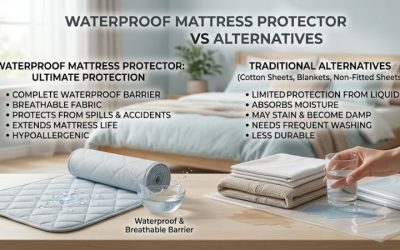
Cotton is commonly used on the sleeping side of mattress protectors because it provides a familiar textile feel and can absorb moisture.
A cotton surface does not make a protector waterproof by itself. Liquid resistance generally comes from an additional membrane or backing.
Fabric weave, surface finishing, and padding can influence comfort. A cotton-covered protector may still feel warm if its construction includes heavy fill or a poorly ventilated backing.
Best for: Sleepers who prefer a familiar fabric surface and relatively simple bedding.
Trade-off: Absorbent cotton may remain damp until moisture evaporates or is removed through washing.
Lyocell and Other Cellulose-Based Fabrics
Lyocell and certain other regenerated cellulose textiles are used in mattress protectors to provide a smooth surface and moisture-management characteristics.
Some bedding marketed as bamboo-derived contains regenerated cellulose fibers rather than mechanically processed natural bamboo fiber.
The fiber content label is therefore more useful than broad marketing terminology.
These fabrics may improve the feel of the sleeping surface, but their presence does not prove superior waterproof performance or guaranteed cooling.
Best for: Sleepers who value softness and moisture comfort.
Trade-off: Fabric properties and care requirements vary, and the underlying waterproof layer remains important.
Polyester and Microfiber Surfaces
Polyester is used in affordable and premium mattress protectors because it can offer durable, lightweight fabric construction.
Some engineered polyester fabrics are designed to transport moisture across the surface. Others use dense microfiber constructions that may feel less breathable.
The exact fiber arrangement, finishing treatment, and backing material influence the overall result.
Best for: Households that prioritize ease of care, practical construction, and a range of budget options.
Trade-off: Polyester does not automatically provide better cooling or moisture management than alternatives.
Important Features to Compare Before Buying
A protector’s material composition matters, but its practical usefulness also depends on size, coverage, seam construction, noise, and care requirements.
Waterproof Coverage and Seam Construction
Check whether the waterproof layer covers only the mattress top or extends along the sides.
A fitted protector may have a fully waterproof upper panel combined with a non-waterproof fabric skirt. This is often sufficient for ordinary spills occurring near the center of the mattress, but it may leave edges exposed.
For more complete protection, evaluate side panels and closures as carefully as the top membrane.
Stitching can create potential paths for liquid penetration, depending on the construction. Manufacturer information about waterproof testing or seam treatment is useful when available.
Mattress Size and Pocket Depth
A protector should fit securely without excessive stretching, loose fabric, or lifted corners.
Standard US mattress dimensions include:
| Mattress size | Nominal dimensions |
|---|---|
| Twin | 38 × 75 inches |
| Twin XL | 38 × 80 inches |
| Full | 54 × 75 inches |
| Queen | 60 × 80 inches |
| King | 76 × 80 inches |
| California King | 72 × 84 inches |
Actual mattress dimensions may vary by manufacturer.
Measure the height of your mattress, including any topper that will remain installed beneath the protector.
If a fitted protector lists a maximum pocket depth, confirm whether it can comfortably accommodate the entire setup. An excessively tight fit may place unnecessary tension on fabric and seams.
Breathability and Sleeping Temperature
Waterproofing and breathability are not the same characteristic.
A waterproof barrier blocks liquid water, while vapor transmission describes the passage of water vapor through the material. Some membranes support vapor transmission, but that does not necessarily mean air passes freely through them.
For hot sleepers, consider the cover fabric, membrane construction, padding thickness, and bedding used above the protector.
A thin protector may be preferable when you do not need additional cushioning. However, no waterproof protector can guarantee a cooler mattress surface.
Noise and Movement Comfort
Some waterproof barriers produce audible rustling or crinkling when the sleeper changes position.
Noise depends on the material’s flexibility, thickness, fabric lamination, fit, and surrounding bedding.
Marketing terms such as “silent” or “noiseless” should be treated as product claims rather than guarantees.
If movement noise is a major concern, prioritize flexible textile-backed construction and credible evidence addressing the exact product.
Padding and Mattress Feel
A thin protector is designed primarily to safeguard the mattress, not significantly change its comfort.
Quilted designs add cushioning but can also alter how closely the sleeper contacts the original mattress surface.
Extra fill may interfere with the feel of a carefully selected mattress, particularly when the sleeper prefers a responsive or relatively firm surface.
Choose minimal padding if preserving the existing mattress feel is important.
Cleaning and Drying Requirements
Washability is essential because mattress protectors are exposed to body oils, perspiration, spills, and ordinary bedding soil.
Check whether the manufacturer permits machine washing, what water temperature is recommended, and whether tumble drying is allowed.
High heat can damage some waterproof membranes or laminated constructions. Follow the care label instead of assuming that hot washing or drying is always beneficial.
Fully dry the protector before reinstalling it to avoid trapping moisture against the mattress.
Durability and Warranty Terms
Waterproof performance can deteriorate if membranes crack, delaminate, or develop damage after repeated use.
When evaluating durability, look for clear care instructions, construction details, and any credible evidence of wash durability.
Warranty language should be read carefully. A protector warranty does not automatically mean the manufacturer will replace a stained mattress or cover any mattress damage.
Confirm what is covered, whether proof of purchase is needed, and whether specific cleaning or use conditions apply.
Choosing a Waterproof Mattress Protector for Your Household
Different sleepers and households place different demands on their bedding. The most suitable protector provides appropriate coverage without introducing unnecessary inconvenience.
Best Features for Hot Sleepers
Hot sleepers should prioritize a lightweight protector with minimal added insulation.
Consider a thin textile surface paired with a waterproof membrane designed for moisture-vapor transmission. Breathable sheets and suitable room conditions remain important.
Avoid assuming that a thick quilted protector will improve cooling simply because its product description mentions temperature regulation.
Recommended approach: A low-profile, waterproof fitted protector with a comfortable, moisture-managing top fabric.
Best Features for Children and Families
Children’s beds may be exposed to spills, nighttime accidents, and frequent laundering.
A dependable waterproof upper surface and uncomplicated removal process are particularly useful. Some families may prefer owning a spare protector so the bed can be remade while the first is being washed.
For a child’s mattress, check that the protector fits securely and does not bunch or shift. For infants, use only bedding appropriate for the specific sleep product and follow current safe-sleep guidance; loose or unapproved mattress accessories should not be added.
Recommended approach: A well-fitting, easily washable protector with clear waterproof coverage and care instructions.
Best Features for Pet Owners
Pets can introduce moisture, dirt, fur, and occasional accidents to a sleeping surface.
A fitted waterproof protector may be adequate for small spills, but side coverage deserves more attention if liquids could reach mattress edges.
Choose materials that can tolerate the manufacturer’s recommended cleaning routine. Inspect the protector periodically, especially if a pet may scratch or damage the fabric.
Recommended approach: Durable, washable construction with waterproof coverage matched to the areas most likely to become wet.
Best Features for Adjustable Beds
Adjustable bed foundations repeatedly bend the mattress, so the protector needs sufficient flexibility to accommodate movement.
A stiff or poorly fitted product may pull against the corners, shift, or place stress on its seams.
Check whether the manufacturer identifies the protector as compatible with adjustable beds. A flexible membrane and fitted construction may be useful, but compatibility should not be assumed.
Recommended approach: A properly sized, flexible protector explicitly approved for the intended adjustable mattress setup.
Best Features for Allergy-Conscious Sleepers
A mattress protector can create a physical layer between the sleeper and the mattress. However, waterproof protection does not automatically mean that a product blocks dust mite allergens or bed bugs.
For dust mite concerns, look for a complete encasement with appropriate evidence supporting its barrier performance.
For bed bug protection, select a purpose-designed encasement with a secure zipper and durable construction. The US Environmental Protection Agency recommends suitable mattress and box spring encasements as one part of a broader bed bug management strategy.
Recommended approach: A documented allergen-barrier encasement for relevant allergy concerns, or a bed-bug-rated encasement when pest protection is needed.
Waterproof Mattress Protector Budget and Long-Term Value
A more expensive protector is not necessarily more waterproof. Construction quality, coverage, maintenance requirements, and intended use provide a better basis for evaluating value.
Budget Waterproof Mattress Protectors
Affordable protectors often use polyester or cotton-blend surfaces laminated to waterproof membranes.
They can provide practical everyday protection when properly designed and fitted.
Prioritize clear waterproof specifications, appropriate mattress depth, and realistic care instructions rather than premium-sounding fabric terminology.
Midrange Waterproof Mattress Protectors
Midrange designs may offer softer textile covers, more refined membrane construction, additional sizing choices, or improved edge construction.
These features may justify an additional expense for households concerned about comfort, repeated washing, or mattress fit.
However, claims about quietness, breathability, and durability should be supported by meaningful product information.
Premium and Full-Encasement Designs
Premium options may provide six-sided coverage, specialized barrier fabrics, reinforced closures, or additional comfort features.
A higher price may be reasonable when protecting a costly mattress or meeting specific bedding requirements.
For bed bug protection, a properly designed and securely closed encasement matters more than luxury fabric.
When Spending More Makes Sense
Consider paying more when the additional expense buys a relevant benefit: verified waterproof coverage, suitable mattress dimensions, robust construction, or a specific barrier function.
If you only need protection from occasional spills, a well-constructed fitted protector may provide better practical value than a complex encasement.
How to Install and Maintain a Waterproof Mattress Protector
Proper use helps maintain coverage and can reduce the risk of moisture reaching the mattress.
Install the Protector Correctly
For a typical fitted design, use the following bedding arrangement:
-
Place the waterproof protector directly over the mattress.
-
Secure the elastic skirt around the mattress corners.
-
Smooth the protected surface to eliminate bunching.
-
Add a mattress pad if desired and compatible.
-
Finish with a fitted sheet.
If using a full encasement, follow the manufacturer’s installation procedure and completely secure the zipper or closure system.
Clean Spills Promptly
If liquid spills onto the bed, remove the affected bedding and check whether moisture has reached the mattress.
Even with a waterproof protector, liquid may travel around exposed edges or through damaged areas.
Clean the protector according to its care label. If the mattress becomes damp, follow the mattress manufacturer’s cleaning guidance and allow it to dry completely before replacing bedding.
Avoid Damaging the Waterproof Membrane
Some polyurethane-backed protectors can be damaged by inappropriate washing agents or excessive heat. For example, Protect-A-Bed’s published care guidance restricts bleach and specifies laundering and drying conditions for its protectors. Those instructions are product-specific, not universal.
Follow the exact care instructions for your protector, particularly where laundering temperatures, detergents, bleach, and dryer settings are concerned.
Inspect for Signs of Wear
Check the protector periodically for torn fabric, separating layers, weakened elastic, damaged zippers, or visibly deteriorating waterproof backing.
A protector that no longer maintains a reliable barrier may need replacing, even if its outer fabric still appears usable.
Frequently Asked Questions
Is a Waterproof Mattress Protector Worth Buying?
Yes, for many households. A waterproof mattress protector can help prevent ordinary spills, perspiration, and accidental liquid exposure from reaching the mattress. It is particularly useful when the mattress is difficult to clean or expensive to replace. Its effectiveness depends on adequate coverage, fit, and membrane condition.
Do Waterproof Mattress Protectors Make You Sleep Hot?
Some can affect sleeping temperature because waterproof membranes and added padding may restrict airflow or influence moisture movement. Thin protectors with moisture-managing top fabrics may feel more comfortable for hot sleepers. However, breathability depends on the complete construction, and no design guarantees a cooler sleeping surface.
What Is the Difference Between a Mattress Pad and a Mattress Protector?
A mattress protector primarily provides a barrier against spills, moisture, and other contaminants, depending on its design. A mattress pad generally adds a thin cushioning layer and may modify the sleeping surface. Some products combine both functions, but padding alone does not establish waterproof protection.
Can a Waterproof Mattress Protector Prevent Bed Bugs?
A standard waterproof fitted protector is not equivalent to a bed bug encasement. A purpose-built, fully enclosed protector with appropriate zipper construction can help contain bed bugs and reduce hiding places when correctly installed. It does not replace a comprehensive pest management approach.
Can You Put a Waterproof Mattress Protector in the Dryer?
Many protectors permit tumble drying, but the allowable temperature varies by material and manufacturer. Excessive heat can damage certain waterproof membranes or laminated layers. Always follow the care label, and do not assume that high-temperature drying is appropriate.
How Long Does a Waterproof Mattress Protector Last?
There is no universal replacement interval. Longevity depends on material quality, washing frequency, mechanical wear, and care conditions. Replace a protector when its waterproof layer becomes damaged, its seams fail, or it can no longer remain securely fitted. Product-specific warranty terms may provide additional guidance but are not a substitute for checking its condition.
Conclusion
The right waterproof mattress protector should provide reliable liquid protection while preserving the comfort and fit of your existing mattress. For everyday spills and perspiration, a thin, machine-washable fitted protector with a suitable waterproof membrane is often the most practical choice. Choose a full encasement when complete mattress coverage or a specific barrier function is necessary. Before purchasing, confirm waterproof coverage, mattress depth, fabric construction, washing requirements, and warranty conditions so your protector remains useful over the long term.