Key takeaways
-
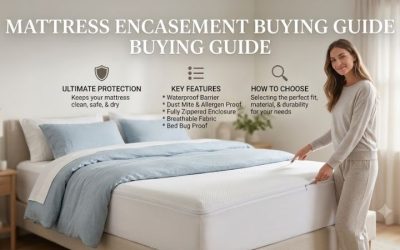
Mattress encasement: Best for complete mattress enclosure and specialized protective barriers.
-
Fitted mattress protector: Best for everyday waterproof protection and convenient laundering.
-
Mattress pad: Best for adding light cushioning while protecting the sleeping surface.
-
Mattress topper: Best for changing mattress feel rather than providing comprehensive protection.
-
Basic mattress cover: Best for limited fabric coverage or replacing a removable cover when the mattress manufacturer permits it.
Choosing between a mattress encasement and alternatives depends on what you need to protect against. A full encasement surrounds the mattress, while protectors, pads, toppers, and basic covers offer different levels of spill protection, comfort, and coverage. Understanding these differences helps you avoid buying more—or less—protection than your bed requires.
Quick Verdict: Mattress Encasement vs Alternatives
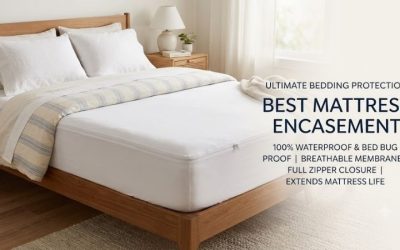
A six-sided, fully zippered mattress encasement is generally the strongest choice when your priority is enclosing the entire mattress, particularly for bed bug management or comprehensive allergen-barrier coverage.
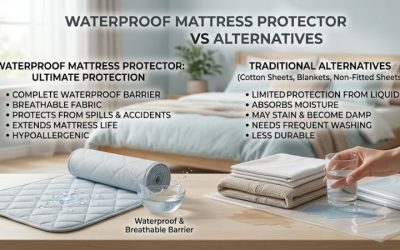
A five-sided waterproof mattress protector is usually more practical for routine spills, sweat, and everyday household use because it is easier to remove and wash.
Other bedding accessories serve different purposes:
-
Mattress encasement: Best for complete mattress enclosure and specialized protective barriers.
-
Fitted mattress protector: Best for everyday waterproof protection and convenient laundering.
-
Mattress pad: Best for adding light cushioning while protecting the sleeping surface.
-
Mattress topper: Best for changing mattress feel rather than providing comprehensive protection.
-
Basic mattress cover: Best for limited fabric coverage or replacing a removable cover when the mattress manufacturer permits it.
For most households without a specific bed bug or allergen concern, a well-fitting waterproof protector offers a useful balance of protection, convenience, and cost.
However, if your goal is to isolate an existing mattress as part of a bed bug management plan, an appropriately designed bed bug encasement provides protection that ordinary fitted covers cannot replicate.
Mattress Encasement vs Alternatives: Quick Comparison Table
| Feature | Full Mattress Encasement | Fitted Protector | Mattress Pad | Mattress Topper | Basic Mattress Cover |
|---|---|---|---|---|---|
| Typical coverage | Six sides | Top and sides | Mainly top | Mainly top | Varies |
| Waterproof options | Available | Widely available | Some models | Uncommon | Varies |
| Bed bug containment | With purpose-built design | Generally unsuitable | No | No | Generally unsuitable |
| Allergen barrier | Available with suitable construction | Available for some allergens | Limited or model-dependent | Not a complete barrier | Model-dependent |
| Adds cushioning | Minimal | Minimal | Light | Moderate to substantial | Minimal |
| Installation | More involved | Easy | Easy | Easy to moderate | Varies |
| Routine washing | More involved | Convenient | Usually convenient | Often more difficult | Varies |
| Best use | Comprehensive enclosure | Everyday spills | Light comfort | Changing mattress feel | Basic coverage |
These comparisons describe typical product designs rather than guaranteed performance. Waterproofing, allergen protection, fabric construction, care requirements, and fit must be checked for each product.
What Is a Mattress Encasement?
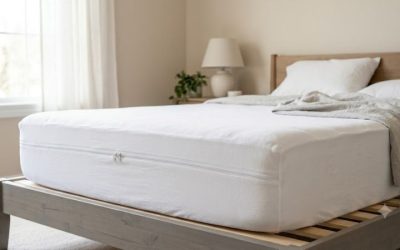
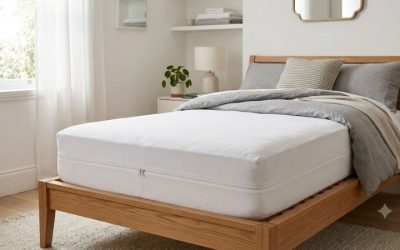
A mattress encasement is a protective covering designed to surround the entire mattress, including the top, bottom, and four sides.
Unlike a conventional fitted protector, an encasement encloses the mattress using a zipper or another integrated closure system. The most protective designs include features intended to limit openings around the zipper and seams.
How a Full Mattress Encasement Works
A mattress encasement acts as a physical barrier between the mattress and its surroundings.
Depending on the product’s construction, it can perform several functions:
-
Reduce exposure to allergens contained within the mattress.
-
Protect mattress surfaces against certain spills and moisture.
-
Help contain bed bugs already inside an enclosed mattress.
-
Make mattress surfaces easier to inspect during pest monitoring.
-
Reduce direct contact between the mattress fabric and everyday contamination.
These capabilities are not universal. A waterproof encasement is not automatically bed bug proof, and a product marketed as hypoallergenic may not provide an effective barrier against every relevant allergen.
Important Construction Features
The most useful specifications to examine include:
Six-sided coverage: The covering should completely surround the mattress rather than leaving the underside exposed.
Secure zipper closure: A continuous, properly closing zipper helps maintain the integrity of the enclosure.
Bed bug-specific closure design: Purpose-built products may include protective zipper-end features designed to address potential escape routes.
Protective fabric or membrane: Materials determine whether the product offers water resistance, waterproofing, or an allergen barrier.
Mattress depth compatibility: A mattress with a thick pillow top may require a deeper encasement than a standard mattress.
Care requirements: Some products tolerate machine washing and drying, while others require lower temperatures or more restrictive care.
The enclosure must remain intact and properly closed to provide its intended protection.
Mattress Encasement vs Fitted Mattress Protector
These are the two most directly comparable choices for households seeking mattress protection.
Coverage and Design Differences
A mattress encasement surrounds all six sides, including the bottom of the mattress.
A conventional fitted protector is designed much like a fitted sheet. It protects the upper sleeping surface and may cover the sides, but the underside generally remains exposed.
This difference matters when the purpose is to isolate the mattress rather than simply prevent spilled liquids from reaching the top.
Waterproof Performance
Both product categories offer waterproof versions.
A waterproof fitted protector can be particularly effective for accidental drinks, nighttime accidents, perspiration, and other moisture reaching the sleeping surface.
A waterproof encasement may offer more extensive coverage, but the manufacturer must confirm which surfaces and seams provide protection. Some encasements have waterproof fabric only on the top panel.
Neither option should be assumed to prevent damage from major flooding, prolonged saturation, or liquid entering through an unprotected opening.
Bed Bug Protection
A purpose-built mattress encasement has a significant advantage for bed bug management.
When installed correctly, it can help trap bed bugs already inside the mattress and reduce places where additional bed bugs can hide within it.
A fitted mattress protector does not accomplish the same task because its underside remains open.
An encasement is not a complete bed bug treatment. Bed bugs can also occupy bed frames, headboards, furniture, baseboards, and other nearby locations.
Cleaning and Maintenance
Fitted protectors are generally more convenient for frequent washing because they can be removed without lifting and maneuvering the entire mattress.
Encasements are more cumbersome to remove, particularly from heavy mattresses or beds positioned close to walls.
If a bed bug infestation is being managed, removing the encasement prematurely may undermine containment. Follow the pest management professional’s instructions regarding how long it should stay in place.
Which Should You Choose?
Choose a mattress encasement if:
-
You need comprehensive mattress coverage.
-
You are following a bed bug treatment or prevention plan that calls for an encasement.
-
You want to isolate an existing mattress from certain allergens.
-
You prefer protection that remains in place over a longer period.
Choose a fitted mattress protector if:
-
Your main concern is spills and nighttime accidents.
-
You wash bedding frequently.
-
You want easy installation and removal.
-
You do not need the underside of your mattress enclosed.
For a household primarily concerned about ordinary spills, a fitted waterproof protector is often the more convenient solution.
Mattress Encasement vs Mattress Pad
A mattress pad primarily adds a modest layer of cushioning, although some pads also provide surface protection.
Protection vs Comfort
A standard mattress encasement is generally thin and should not significantly change how the mattress feels.
A mattress pad may contain polyester fiberfill, cotton batting, down alternative, or other cushioning materials.
This additional padding can make a mattress surface feel slightly softer, but it generally does not transform the underlying support system.
A pad also cannot substitute for a complete enclosure when bed bug containment is required.
Moisture and Spill Protection
Some mattress pads have waterproof backing, while others absorb liquid without preventing it from reaching the mattress.
An absorbent quilted pad might temporarily hold a small amount of moisture, but absorption should not be confused with waterproof protection.
If a product does not specifically identify a waterproof barrier, do not assume it can prevent mattress stains.
Cleaning Requirements
Many mattress pads are machine washable, although thicker padding may take longer to dry.
An encasement normally remains on the mattress for extended use and may require more effort to remove.
Which Is Better?
Choose a mattress pad if your mattress needs a little additional softness and you want a washable layer between the mattress and fitted sheet.
Choose an encasement when maintaining a protective enclosure matters more than adjusting comfort.
For households wanting both benefits, a mattress pad can be placed above an encasement, provided the combined layers fit securely beneath the fitted sheet.
Mattress Encasement vs Mattress Topper
A mattress topper is primarily a comfort accessory rather than a protective barrier.
Differences in Thickness and Materials
Mattress toppers are often made from memory foam, latex, fiberfill, or other cushioning materials.
Many are substantially thicker than protectors and encasements, allowing them to change the sensation of the sleeping surface.
A mattress encasement, by comparison, is designed to fit closely around the existing mattress.
It generally adds negligible cushioning and should not be expected to correct uncomfortable firmness or pressure points.
How Each Affects Mattress Feel
A topper can make a firm mattress feel softer or alter its surface response.
However, a topper cannot reliably repair a mattress that has lost structural support or developed severe sagging.
An encasement is not intended to change firmness, although a poorly fitting or stiffly constructed model may alter surface feel slightly.
Protection and Maintenance
Most foam toppers do not provide comprehensive moisture protection. In fact, some materials can be difficult to clean after liquid exposure.
A mattress encasement protects the mattress itself, but a topper placed above it may remain exposed to spills.
An optional waterproof protector above the topper can offer an additional washable barrier when compatible with the bedding setup.
Which Is Better?
A mattress topper is appropriate when your main complaint involves comfort rather than contamination.
A mattress encasement is appropriate when your primary concern involves covering and isolating the mattress.
These products are complementary rather than interchangeable.
Mattress Encasement vs Basic Mattress Cover
The term “mattress cover” can describe several different products, which makes this comparison less straightforward than it first appears.
Some manufacturers use “mattress cover” to describe a complete zippered encasement. Others use it for a removable fabric casing, a fitted protector, or a decorative outer covering.
Coverage and Construction
A basic removable cover may wrap around a mattress’s foam or internal components, providing a finished exterior surface.
However, that does not necessarily mean it offers waterproof protection, allergen control, or bed bug containment.
A protective encasement is specifically designed to create a barrier around the mattress.
Can You Replace an Existing Mattress Cover?
Not every removable-looking mattress cover should be removed.
Some mattresses, particularly certain foam models, use specialized covers associated with their fire safety construction.
Removing or replacing an original cover without manufacturer approval can create safety or warranty problems.
A separate protective encasement installed over the original mattress cover is generally the more appropriate option when additional protection is needed.
Which Option Makes More Sense?
Choose a manufacturer-approved replacement cover when the original cover is damaged and the mattress maker specifically permits replacement.
Choose a mattress encasement when you want an additional protective layer without changing the mattress’s original construction.
Important Performance Differences
Bed Bug Containment
Bed bug protection is one of the clearest reasons to choose a specialized encasement over conventional bedding accessories.
A bed bug-rated encasement should be designed to remain closed without allowing insects to escape through openings around the seams or zipper.
The U.S. Environmental Protection Agency recommends suitable mattress and box spring encasements as part of an integrated management strategy.
A properly installed encasement can help contain insects already inside the mattress. However, it does not eliminate insects living elsewhere in the room.
For bed bug management, EPA guidance recommends leaving suitable encasements in place for at least one year. This duration is substantially different from the routine laundering schedule of an ordinary mattress protector.
Dust Mites and Allergen Barriers
Allergen exposure is another reason some households choose mattress encasements.
Dust mites and their allergens can accumulate within mattresses and bedding materials. A properly designed allergen-barrier cover can reduce movement of mattress-contained allergens into the sleeping environment.
The Asthma and Allergy Foundation of America recommends zippered allergen-barrier covers for mattresses and pillows as part of dust mite exposure reduction.
However, allergen barriers are not a standalone treatment for allergies or asthma. Regular bedding cleaning and broader indoor environmental management remain important.
A fitted protector may provide useful protection against specific allergens when designed and evaluated for that purpose, but it should not be assumed equivalent to a complete encasement.
Waterproofing and Liquid Spills
Waterproofing is not exclusive to mattress encasements.
Both fitted protectors and full encasements can incorporate protective membranes intended to prevent liquid penetration.
The critical differences involve where the barrier is positioned and whether the seams, sides, and bottom are protected.
For spills originating on the bed, a quality fitted protector may provide sufficient coverage.
For concerns involving moisture reaching other sides of the mattress, a fully waterproof six-sided design may offer broader protection.
Neither type should be used to seal an already damp mattress. Enclosing trapped moisture may worsen existing dampness or microbial growth concerns.
Breathability and Sleeping Temperature
A common assumption is that all waterproof encasements feel hot and uncomfortable.
Actual comfort depends on fabric construction, membrane properties, room temperature, other bedding layers, and the individual sleeper.
Protective membranes can affect moisture-vapor movement and airflow, but a product’s waterproof designation alone does not establish how warm it will feel.
Likewise, labels such as “cooling,” “breathable,” and “temperature regulating” should not be treated as proof of measurable cooling performance.
If sleeping temperature is a major concern, examine the fabric and membrane information instead of relying solely on advertising terminology.
Noise and Surface Feel
Thin protective fabrics may produce some rustling, especially when the fit is loose or the material is relatively stiff.
Soft knit surfaces can help make a cover feel less noticeable beneath a fitted sheet, although comfort is product-specific.
Mattress pads and toppers generally have greater potential to change surface cushioning than a thin protective encasement.
For sleepers sensitive to fabric texture or noise, material selection and proper sizing are particularly important.
Advantages and Disadvantages of Each Option
| Option | Main Advantages | Main Disadvantages |
|---|---|---|
| Mattress encasement | Full enclosure, specialized bed bug options, available allergen barriers | Harder installation, more involved removal, zipper integrity matters |
| Fitted protector | Convenient laundering, waterproof options, simple installation | Usually leaves underside exposed |
| Mattress pad | Adds light cushioning, often washable | Limited enclosure and model-dependent waterproofing |
| Mattress topper | Changes surface comfort, multiple material choices | Often bulky, difficult to clean, not a protective enclosure |
| Basic cover | Can provide a finished fabric surface | Protection varies; replacement may be restricted |
No single choice is superior across every consideration. The most useful product is the one that addresses the actual problem without introducing unnecessary maintenance or compatibility issues.
Mattress Encasement vs Alternatives: Which Is Better for Your Household?
For Families With Young Children
A waterproof fitted protector is often the most convenient choice for everyday accidents.
It can be removed quickly for laundering and replaced with a clean protector without lifting the entire mattress.
Keeping a second protector available can simplify overnight changes.
A complete waterproof encasement may be worthwhile for broader coverage, with a washable protector layered above it for routine cleaning.
For People Concerned About Dust Mites
A zippered allergen-barrier mattress encasement is generally more appropriate than an ordinary padded mattress pad.
Look for documented allergen-barrier construction rather than assuming any tightly woven fabric provides equivalent protection.
Pillow encasements and regular bedding laundering can complement mattress coverage.
For Households Managing Bed Bugs
A purpose-built bed bug encasement is the appropriate choice over conventional fitted protectors or mattress pads.
The mattress and box spring, when applicable, should be evaluated as part of the broader control plan.
An encasement should not replace inspection, monitoring, cleaning, or professional treatment when needed.
For Apartment Dwellers and Renters
A fitted mattress protector is often sufficient for routine spill protection in a small apartment.
It is easy to launder and requires little storage space.
A full encasement can still be useful where allergen containment or bed bug management is a specific concern.
Small bedrooms may make installation more difficult because limited floor space can restrict access to the mattress edges.
For Hot Sleepers
Choose based on the required protection first, then compare material construction.
A lightweight fitted protector may feel less cumbersome than a heavier multilayer encasement, but actual temperature performance cannot be determined solely from product category.
Avoid piling on unnecessary bedding layers if you already experience excessive warmth.
For Older Mattresses
An encasement can protect or isolate the outer surfaces of an aging mattress, but it cannot reverse significant sagging, restore degraded foam, or repair broken support components.
Likewise, a mattress topper may improve the immediate feel of a firm surface but cannot correct fundamental structural deterioration.
If the mattress no longer provides adequate support, replacement may be more appropriate than adding accessories.
How to Choose the Right Mattress Protection
Check Mattress Dimensions and Depth
A proper fit is essential for both fitted protectors and encasements.
Common US mattress dimensions include:
| Mattress Size | Standard Width × Length |
|---|---|
| Twin | 38 × 75 inches |
| Twin XL | 38 × 80 inches |
| Full | 54 × 75 inches |
| Queen | 60 × 80 inches |
| King | 76 × 80 inches |
| California King | 72 × 84 inches |
These are conventional nominal sizes. Actual mattress measurements can vary by manufacturer and construction.
Measure the mattress’s width, length, and total height, including any integrated pillow top.
Do not select an encasement based only on the mattress size printed on the product packaging.
Choose the Right Closure
For a mattress encasement, examine the zipper design carefully.
A completely closing zipper, reinforced construction, and a secure zipper-end design are especially relevant for bed bug-specific applications.
For a fitted protector, examine pocket depth and elastic construction.
A protector that repeatedly slips off the corners cannot deliver convenient everyday coverage.
Evaluate the Waterproof Barrier
Waterproof products often use a fabric surface combined with a protective membrane.
Polyurethane-based membranes are one common construction, although other materials and coatings exist.
Check whether the protection covers only the top panel or extends to all six sides.
For frequent nighttime accidents, machine-washable waterproof protection is generally more useful than a product with complicated cleaning requirements.
Consider Cleaning Frequency
A removable fitted protector is easier to wash regularly than a complete zippered encasement.
An encasement may be left in place for long periods, with fitted sheets and an optional additional protector cleaned separately.
Always follow the manufacturer’s instructions for water temperature, drying temperature, bleach use, and fabric care.
High heat can damage some waterproof membranes or elastic components.
Compare Cost Based on Function
A basic fitted protector often costs less than a specialized full encasement, although materials, brand, sizing, and construction can change that relationship.
Compare prices only among products that meet the same essential requirements.
For example, a less expensive fitted protector is not a true substitute for a bed bug-rated encasement if insect containment is the primary objective.
A more expensive encasement may also be unnecessary when simple waterproof surface coverage is all you need.
Consider Long-Term Durability
An effective protective layer needs to remain intact throughout ordinary use.
Look for construction details that address:
-
Zipper durability and seam reinforcement.
-
Fabric resistance to everyday wear.
-
Waterproof membrane care requirements.
-
Stretch and recovery around mattress corners.
-
Clear manufacturer washing and drying guidance.
Inspect an encasement periodically for tears, punctures, seam separation, or zipper damage.
Any opening may compromise its intended barrier function.
Can You Use a Mattress Encasement and Protector Together?
Yes. Using both products is a practical arrangement when you want a full protective barrier and convenient everyday laundering.
A typical bedding arrangement is:
Layering example — top to bottom
Fitted Sheet
Everyday sleeping surface
Waterproof Fitted Protector
Removable layer for spills and washing
Full Mattress Encasement
Six-sided protective enclosure
Mattress
Encasement surrounds all sides, including the bottom
Illustrative arrangement, not to scale.
The encasement stays around the mattress, while the fitted protector can be removed for regular cleaning.
This configuration can be useful for children, households managing bed bug risks, or sleepers who want allergen-barrier protection without frequently removing the complete enclosure.
Make sure the extra bedding layers fit securely without excessive tension, slipping, or bunching.
Common Mistakes When Comparing Mattress Encasements and Alternatives
Assuming Every Zippered Cover Is Bed Bug Proof
A zipper alone does not establish insect containment.
A specialized encasement should have construction appropriate for preventing bed bugs from passing through the closure and other potential openings.
Choose a product with documented bed bug-specific suitability when that is your main concern.
Assuming Waterproof Means Allergen Proof
A waterproof membrane may block liquid penetration, but this does not establish comprehensive allergen protection for the entire product.
Allergen-barrier performance also depends on seams, openings, fabric construction, and the allergens being considered.
Buying an Encasement That Is Too Shallow
An overly tight encasement can be difficult to install and may place unnecessary stress on the fabric and zipper.
Measure the full mattress height instead of assuming that all queen or king mattresses share the same depth.
Using a Topper to Solve a Protection Problem
A topper can improve surface comfort, but it is not a substitute for a waterproof protector or specialized encasement.
If your mattress is already comfortable and simply needs protection, a topper adds unnecessary thickness and complexity.
Removing an Encasement Too Early During Bed Bug Treatment
Removing an encasement before the recommended containment period ends can defeat its intended purpose.
Follow applicable pest management guidance and maintain the enclosure without unnecessary removal.
Frequently Asked Questions
Is a mattress encasement better than a mattress protector?
A mattress encasement is generally better for full mattress coverage, specialized bed bug containment, and certain allergen-barrier applications. A fitted protector is often better for routine spills and frequent washing. The stronger choice depends on the hazard you want to address.
Do you really need a mattress encasement?
Not every household needs one. If your goal is simply to protect the sleeping surface from moisture and stains, a waterproof fitted protector may be sufficient. An encasement becomes more relevant when complete enclosure or specialized barrier protection is necessary.
Can bed bugs get through a mattress protector?
Ordinary fitted mattress protectors leave the underside exposed and are not designed to contain bed bugs. A properly installed, purpose-built bed bug encasement is a more appropriate choice, although bed bugs can still live elsewhere around the bed.
Does a mattress encasement make your bed hotter?
It may affect sleeping temperature depending on materials, membrane construction, and bedding layers, but not every encasement performs the same way. Without controlled comparative testing, it is not possible to conclude that all encasements sleep hotter than fitted protectors.
Can you put a mattress topper over an encasement?
Yes. A topper can generally be placed above an encased mattress, provided the arrangement is compatible with the mattress and bedding. If the topper also needs spill protection, a properly sized protector may be placed above it.
How long should you keep a mattress encasement on?
For normal mattress protection, follow the manufacturer’s care instructions and replace the encasement if it becomes damaged or no longer fits properly. For bed bug management, EPA guidance recommends keeping appropriate encasements installed for at least one year. Follow professional instructions for the specific infestation.
Conclusion
When comparing mattress encasement vs alternatives, the deciding factor is whether you need complete mattress enclosure or everyday surface protection. Choose a purpose-built encasement for bed bug containment or comprehensive allergen-barrier needs, a waterproof fitted protector for routine spills and easy cleaning, and a mattress pad or topper when comfort is the primary concern. For households needing both long-term coverage and convenient washing, combining an encasement with a removable waterproof protector offers a practical solution.