A quality linen duvet cover can provide a comfortable sleeping surface and a distinctive relaxed appearance, but linen products vary substantially in material sourcing, fabric weight, finishing, dimensions, and construction. Some covers feel soft immediately, while others are firmer and change with laundering. This buying guide explains what genuine flax linen is, how to compare construction details, which sizes and closures work best, and how to avoid paying premium prices for poorly documented fabric claims.
What Is a Linen Duvet Cover?
A linen duvet cover is a removable textile enclosure designed to hold a duvet insert.
Genuine linen is made from fibers obtained from the flax plant.
These fibers are processed into yarn and woven into fabric.
Linen has a characteristic texture and generally develops a relaxed, wrinkled appearance.
However, the term linen is also used casually to describe textile appearance.
A polyester cover marketed as having a linen look is not equivalent to a cover made from genuine flax linen.
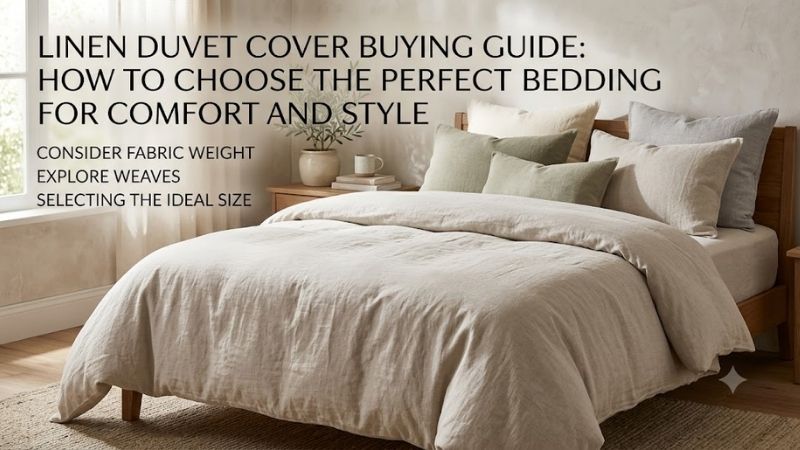
Linen Versus Linen-Look Fabric
Linen-look products imitate some of the visual texture of flax linen.
They may be made from polyester, cotton, or blends.
These fabrics can still be suitable for bedding, but they should be evaluated according to their actual composition.
Linen Blends
A linen-cotton blend combines properties of both fibers.
The result depends on the blend ratio, yarn structure, and finishing.
A cover containing 55% linen and 45% cotton should not be marketed or evaluated as pure linen.
Why Composition Matters
Fiber content influences texture, care, and expected fabric behavior.
Read the product label rather than relying entirely on photography or promotional descriptions.
Understanding Flax Linen Quality
Flax fiber quality is an important part of linen construction.
However, it is not the only factor.
Fiber Length
Longer fibers can contribute to strong, relatively consistent yarn construction.
Shorter fibers can also be used in textiles, often producing different textures.
The final fabric depends on spinning and weaving.
Yarn Quality
Even well-sourced flax can produce inconsistent fabric if spinning quality is poor.
Yarn uniformity influences texture and appearance.
Weaving
Weave construction affects drape, density, and durability.
Most conventional linen bedding uses woven construction, but fabric weight and finishing vary.
Finishing
Washing and mechanical finishing can change the initial feel.
A softer product is not necessarily made from stronger fibers.
European Linen, Belgian Flax, and French Linen Explained
Geographic terminology is common in linen marketing.
It may describe the source of flax, production location, or other elements of the supply chain.
These claims should be evaluated carefully.
European Linen
European linen may refer to linen associated with European flax or production.
The exact meaning depends on the manufacturer’s documentation.
Belgian Flax Linen
Belgian flax is associated with flax sourcing from Belgium.
However, a geographic description does not automatically guarantee that every manufacturing stage occurred there.
French Linen
French linen may refer to flax grown in France or products associated with French sourcing.
The term alone does not establish specific fabric weight, durability, or manufacturing quality.
Does Origin Guarantee Better Linen?
No.
Climate and agricultural practices influence flax production, but finished quality also depends on retting, spinning, weaving, finishing, and quality control.
Choose documented construction over vague claims about heritage.
Washed Linen, Stonewashed Linen, and Unwashed Linen
Finishing is one of the most noticeable differences between linen duvet covers.
Washed Linen
Washed linen undergoes processing intended to relax the fabric.
It often feels softer when first used than comparable untreated linen.
Stonewashed Linen
Stonewashing is intended to change fabric texture and appearance through mechanical processing.
The exact methods vary.
Unwashed Linen
Unwashed linen may feel firmer initially.
It can soften through normal use and laundering.
Does Softer Mean Better?
Not necessarily.
Some buyers want substantial, textured linen.
Others prefer a soft, relaxed surface.
The best choice depends on personal comfort.
Understanding Linen Fabric Weight and GSM
Fabric weight is particularly important in duvet covers because a large cover can contain substantial textile mass.
What GSM Means
GSM stands for grams per square meter.
It is a measure of fabric weight per unit area.
Lightweight Linen
Lightweight linen can feel less substantial and may be easier to handle during laundering.
It may be attractive in warmer sleeping environments.
However, lightweight does not automatically mean breathable or durable.
Midweight Linen
Midweight linen can provide a balance between texture and handling.
Many buyers find this a practical category.
Heavyweight Linen
Heavyweight linen produces a more substantial fabric experience.
It may also take longer to dry and require more laundering capacity.
Is Higher GSM Better?
No.
A higher GSM value only indicates greater fabric mass per square meter.
It does not guarantee better fiber quality, strength, or comfort.
Why GSM Comparisons Need Context
Fabric construction, finishing, and fiber characteristics influence performance.
Compare fabrics with similar intended uses rather than treating GSM as a universal score.
How to Choose the Correct Duvet Cover Size
Sizing is one of the most important purchasing considerations.
US duvet insert and cover dimensions are not completely standardized.
Measure the Insert
Measure the width and length of the actual duvet insert.
Do not choose solely based on whether your bed is queen or king.
Compare Finished Dimensions
Check the duvet cover’s stated measurements.
A cover that is significantly larger than the insert may leave empty edges.
A cover that is too small may compress the fill.
Account for Loft
A thick duvet insert may fill a cover differently from a thin summer insert.
The relationship between dimensions and insert loft affects appearance.
Check Shrinkage Guidance
Some manufacturers allow for fabric relaxation or shrinkage.
Follow the product’s stated sizing guidance.
Do not assume every linen cover arrives at its final dimensions.
Duvet Size Categories
| Duvet category | Typical use | Main buying concern |
|---|---|---|
| Twin/Twin XL | Single beds | Insert length |
| Full/Queen | Full and queen mattresses | Variable manufacturer dimensions |
| King | King mattresses | Width and coverage |
| California King | Longer mattresses | Length and actual insert size |
| Oversized Queen | Additional drape | More fabric and storage |
| Oversized King | Large beds | Laundry and handling requirements |
The labels are not universal measurements. Always compare inches.
Closure Systems: Buttons, Zippers, and Ties
Closure choice affects appearance, cleaning convenience, and maintenance.
Button Closures
Buttons provide a traditional finish.
A loose button is often relatively simple to repair.
However, fastening several buttons can take longer than closing a zipper.
Zipper Closures
Zippers can make the cover easier to close.
They also create a relatively continuous opening.
However, a damaged zipper may require more involved repair.
Tie Closures
Some designs use fabric ties.
These can create a casual appearance.
However, they may take more time to secure.
Hidden Closures
A closure can be concealed beneath a fabric flap.
This can improve appearance but does not automatically improve durability.
Why Internal Corner Ties Matter
A duvet insert may shift within its cover.
Internal corner ties or loops can help keep compatible components aligned.
Attachment Compatibility
The insert must have suitable attachment points for the system to work as intended.
How Many Attachment Points Are Useful?
Four corners are common, but some covers and inserts use additional points.
More attachments do not guarantee superior performance if the fit is incorrect.
Can You Use a Cover Without Ties?
Yes.
However, some inserts may shift more readily.
Correct dimensions remain important.
Linen Duvet Covers for Hot Sleepers
Linen is frequently described as breathable.
However, a cover’s actual thermal performance depends on its construction and the surrounding bedding.
Fabric Weight
Lightweight and heavyweight linen can feel different.
Insert Insulation
A thick winter duvet can create substantial warmth regardless of cover material.
Room Temperature
Hot or humid rooms affect thermal comfort.
Moisture Behavior
Linen can absorb moisture, but that does not mean every linen fabric dries at the same rate.
Practical Recommendation
If you sleep hot, evaluate the duvet insert and room environment together with the cover.
Do not expect linen alone to compensate for excessive insulation.
Linen Versus Cotton Duvet Covers
Cotton offers a wide range of textile constructions.
The comparison depends on which cotton fabric is being considered.
Linen Versus Cotton Percale
Percale typically feels crisper and more structured.
Linen has a more naturally textured surface.
Linen Versus Cotton Sateen
Sateen generally feels smoother and drapes more fluidly.
Linen has a more rustic or relaxed appearance.
Laundry Considerations
Both fibers can be machine-washable when permitted by the care label.
Specific requirements vary.
Durability
Neither material is universally superior in every product.
Quality depends on yarn, fabric construction, use, and laundering.
Are Expensive Linen Duvet Covers Worth It?
Premium linen covers may offer refined yarns, finishing, colors, closures, and construction.
However, higher prices do not automatically establish better performance.
Material Documentation
Look for clear fiber composition.
Fabric Weight
Check whether the weight suits your preferences.
Construction Quality
Examine seams, closures, and attachment points.
Size Accuracy
A premium cover must still fit your insert.
Return Policy
Linen texture is subjective.
A reasonable return policy can be valuable when purchasing online.
Replacement Components
Matching shams or additional bedding may affect long-term value.
How to Evaluate Construction Quality
Seam Strength
Seams should be consistently stitched and properly finished.
Closure Durability
Buttons and zippers should operate smoothly.
Fabric Consistency
Natural linen can contain texture variations, but major construction defects should not be dismissed as normal.
Dye Quality
Colorfastness depends on the dyeing and finishing process.
Hem Finishing
A neatly finished hem can reduce fraying and improve appearance.
Attachment Points
Internal ties should be securely sewn.
Understanding Linen Certifications
Certifications can provide useful information about sourcing or textile safety, but they address different issues.
European Flax Certification
European Flax certification is associated with traceability and requirements concerning flax fiber grown in Western Europe.
It should not be interpreted as proof that every stage of a finished duvet cover’s manufacturing occurred in Europe.
Masters of Linen
Masters of Linen relates to defined European textile production criteria.
Check whether the specific product is covered by the relevant certification.
OEKO-TEX STANDARD 100
This program concerns testing textile products for specified harmful substances.
It is not a universal sustainability or durability certification.
Avoid Certification Confusion
A claim about fiber origin differs from a claim about chemical testing.
Neither automatically establishes superior sleeping comfort.
How to Wash Linen Duvet Covers
Follow the Care Label
Manufacturer instructions take priority.
Separate the Cover From the Insert
Most duvet covers are intended to be washed separately from the duvet insert.
Use a Suitable Cycle
Avoid excessive agitation when the care label recommends gentle washing.
Do Not Overload the Washer
Large covers need room to move.
Avoid Excessive Detergent
Too much detergent may leave residue.
Dry as Instructed
Excessive heat can cause shrinkage or wear in some products.
Do Not Store Damp Linen
Ensure the cover is completely dry before folding and storing.
Does Linen Shrink?
Linen can shrink when exposed to unsuitable laundering conditions.
The amount depends on textile construction, finishing, and care.
Preshrunk Linen
Some manufacturers prewash or process linen to reduce subsequent shrinkage.
However, preshrunk does not always mean zero shrinkage.
High Heat
Excessive drying temperatures may contribute to shrinkage.
How to Reduce Risk
Follow the care label and avoid unnecessary heat.
If the Cover Has Already Shrunk
Do not assume stretching or aggressive washing can safely restore its original dimensions.
Check the manufacturer’s guidance before attempting corrective treatment.
How to Keep Linen Looking Good
Linen naturally wrinkles.
This is part of its characteristic appearance.
Remove Promptly After Drying
This can reduce deep creasing.
Smooth During Bed-Making
Gently smoothing the fabric can create a more relaxed appearance.
Avoid Excessive Ironing
Ironing is optional for many household uses.
Follow manufacturer guidance if you choose to iron.
Store Neatly
Avoid folding the cover into an excessively tight bundle.
Common Mistakes When Buying Linen Covers
Confusing Linen-Look Polyester With Flax Linen
Read the fiber-content label.
Choosing by Mattress Size Alone
Measure the insert.
Ignoring Closure Quality
A poorly designed closure can become frustrating.
Buying Heavyweight Linen Without Considering Laundry
Large heavyweight covers can be inconvenient in small machines.
Assuming European Origin Guarantees Quality
Production documentation matters.
Believing Linen Never Shrinks
Care instructions remain important.
Expecting Perfectly Smooth Fabric
Linen wrinkles naturally.
Frequently Asked Questions
Is 100% Linen Better Than a Linen-Cotton Blend?
Not universally. Pure linen offers its characteristic texture, while blends may have different softness, drape, and maintenance requirements.
What GSM Is Best for a Linen Duvet Cover?
There is no universal ideal. Choose fabric weight based on preferred texture, handling, and sleeping environment.
Does Linen Get Softer With Washing?
Many linen fabrics soften and relax with use and laundering, although the degree of change varies.
Are Linen Duvet Covers Good for Summer?
They can be comfortable, but the duvet insert and bedroom conditions are equally important.
Should the Duvet Cover Be the Exact Size of the Insert?
Choose closely matching dimensions and follow manufacturer fit guidance. Excessive size differences can cause shifting or compression.
Are Premium Linen Covers Worth the Money?
They may be worthwhile for specific construction details, finishing, or fabric preferences. Price alone does not guarantee superior quality.
Conclusion
The best linen duvet cover combines genuine flax composition, suitable fabric weight, accurate insert dimensions, reliable closures, and manageable care. Choose washed linen if you prefer a softer initial feel, consider lighter construction for easier handling, and check internal ties when insert stability matters. Premium pricing is justified only when the product’s materials and features meet your needs. A well-fitting, properly maintained linen cover can provide the relaxed texture and everyday practicality that make linen bedding appealing.