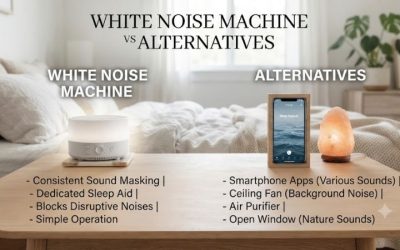
A white noise machine can provide consistent background audio that makes intermittent environmental sounds less noticeable, but not every machine produces the same kind of noise or offers the same listening experience. Mechanical fan devices, digitally generated noise machines, and recorded nature-sound players differ in sound character, adjustability, portability, and long-term convenience.
This white noise machine buying guide explains how sound masking works, what separates white, pink, and brown noise, which specifications matter, and how to select a device that is comfortable rather than simply loud. It also examines the limits of sleep-related claims, safe placement, cleaning, and the features worth paying for.
How White Noise Machines Work
A white noise machine creates a relatively consistent background sound. This can make intermittent disturbances feel less distinct because the difference between the background and the unwanted noise is reduced.
For example, a quiet bedroom may make a distant door closing seem especially noticeable. A steady background sound can reduce that contrast, although the door may still be heard.
This process is known as sound masking.
It differs from physically blocking sound waves or actively canceling them with specialized electronics.
Sound Masking Versus Soundproofing
Soundproofing involves reducing sound transmission through physical structures such as doors, windows, walls, and seals.
A white noise machine does not reinforce those structures.
It adds audio to the environment.
If traffic noise enters through a poorly sealed window, a sound machine may make some of it less noticeable, but the underlying sound transmission remains.
Sound Masking Versus Active Noise Cancellation
Active noise cancellation uses microphones and signal processing to produce sound intended to reduce selected incoming noise at a particular listening location.
Traditional white noise machines do not perform this process.
Their purpose is to provide a consistent masking sound.
A product advertised as noise canceling should therefore be evaluated carefully to determine whether it actually incorporates active cancellation technology.
Why Masking Effectiveness Varies
The result depends on the unwanted noise’s loudness, frequency, duration, and unpredictability.
A steady fan-like sound may make low-level background activity less noticeable.
Sudden loud sounds can remain audible.
The sleeper’s personal sensitivity and sound preference also matter.
White Noise, Pink Noise, and Brown Noise
Noise colors describe the way sound energy is distributed across frequencies.
These terms are technical descriptions, not inherently different levels of sleep effectiveness.
White Noise
Ideal white noise contains equal power per unit of frequency across the defined frequency range.
When reproduced through an ordinary speaker, it is often perceived as a consistent hiss.
Some people like this sound because it is relatively uniform.
Others find the higher-frequency character sharp or irritating.
Pink Noise
Pink noise has power spectral density that decreases as frequency increases, commonly described as an approximately 1/f relationship.
It can sound less bright than white noise and more balanced toward lower frequencies.
However, a comfortable subjective sound profile does not prove superior clinical sleep outcomes.
Brown Noise
Brown noise, also called Brownian or red noise, emphasizes lower frequencies more strongly than pink noise.
It may sound like a deep rumble.
Some listeners prefer it because it is less hiss-like.
The speaker’s low-frequency capabilities influence how faithfully the device reproduces the sound.
Comparing Noise Types
| Noise type | Frequency characteristic | Common perceived sound | Buying consideration |
|---|---|---|---|
| White | Equal power per unit frequency | Bright hiss | May feel sharp to some listeners |
| Pink | Approximately 1/f power distribution | Softer, balanced noise | Useful alternative when white sounds too bright |
| Brown | Stronger low-frequency emphasis | Deep rumble | Speaker bass response matters |
| Fan noise | Mechanical or simulated airflow | Steady fan-like sound | Natural versus digital sound preference |
| Nature recordings | Recorded environmental sounds | Rain, ocean, wind, streams | May contain changing patterns |
Which Noise Color Is Best for Sleep?
There is no universally established winner.
Research into noise exposure and sleep has produced mixed findings across populations and study designs.
The most useful purchasing strategy is choosing a sound that remains comfortable over time at an appropriate volume.
A machine with multiple noise colors can be valuable when the buyer is unsure of their preference, but a large library is unnecessary when one sound already works well.
Mechanical White Noise Machines
Mechanical machines use moving components, typically a fan mechanism, to produce sound.
Their defining feature is that the audio originates from physical movement rather than a recording of a fan.
Why Some People Prefer Mechanical Sound
A mechanical fan produces naturally occurring variations in airflow and sound.
Some people describe this as less artificial than digitally reproduced fan audio.
However, that perception is subjective.
A high-quality digital fan sound may be equally comfortable for another listener.
Mechanical Sound Adjustment
Some mechanical devices allow adjustment through fan speed or openings in the outer housing.
Changing these settings can alter sound level and tone.
The variety is generally more limited than a digital machine with dozens of presets.
Moving Parts and Maintenance
Mechanical devices contain components that move during operation.
Their durability depends on design, materials, and manufacturing quality.
A mechanical device should not be assumed to last longer simply because it has no app or digital sound library.
Who Should Choose Mechanical?
A mechanical machine is a logical choice when the buyer already enjoys steady fan noise and does not need several sound categories.
It may be less convenient for travelers seeking a very small rechargeable device.
Digital White Noise Machines
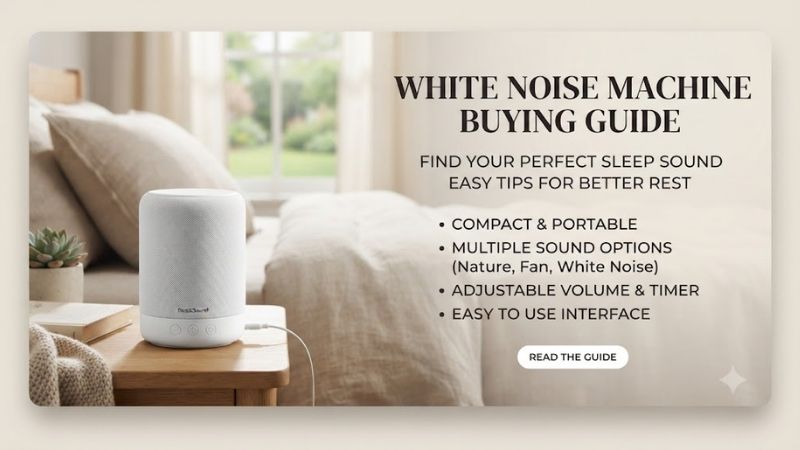
Digital sound machines generate or reproduce audio through an electronic speaker.
Their major advantage is flexibility.
A compact machine can provide several fan tones, noise colors, and nature sounds without mechanical fan components.
However, digital devices differ in how their audio is produced.
Digitally Generated Noise
Some machines electronically generate continuous noise.
This avoids the obvious repetition that can occur with short recorded sound loops.
However, non-looping generation alone does not guarantee pleasant sound quality. Speaker characteristics and processing still matter.
Recorded Sound Playback
Other machines use audio recordings.
These may reproduce natural environments, including rain, ocean waves, or forest sounds.
Recording quality and loop design influence whether the audio feels continuous.
A short loop containing a recognizable event can become distracting for sensitive listeners.
Speaker Quality
A speaker must reproduce the intended frequencies without excessive distortion.
A small speaker may have limited bass output, influencing the perceived depth of brown noise.
However, larger speakers are not automatically better for a bedroom.
The goal is clear, comfortable background audio at an appropriate level.
Sound Quality: What to Compare Before Buying
Sound-library size is easy to advertise, but it is not a complete indicator of quality.
When possible, listen for characteristics that will remain noticeable during extended use.
Audible Loops
A short repeating recording can become distracting once the listener recognizes the pattern.
For example, a rain recording with one distinctive loud drop every thirty seconds may be less relaxing than a more uniform rain sound.
A continuously generated noise profile may be preferable when repetition is a concern.
Volume Consistency
Background sound should generally remain consistent when masking is the goal.
Nature recordings with sudden changes in loudness may be less suitable for a person sensitive to unexpected noises.
Speaker Distortion
Excessive distortion can create harshness or rattling, especially near maximum volume.
A machine that sounds unpleasant when pushed loudly should not be assumed to become effective through further volume increases.
Frequency Balance
Some listeners prefer brighter noise, while others favor a deeper sound.
Machines offering several profiles provide more flexibility.
However, a small number of well-produced options may be preferable to a much larger collection of poor-quality recordings.
How Loud Should a White Noise Machine Be?
The appropriate volume depends on the room, listener, placement, and intended purpose.
The most sensible starting point is a low setting that provides comfortable background sound.
Increasing volume beyond what is needed for masking may create unnecessary noise exposure.
Why Decibel Specifications Are Often Misunderstood
A machine’s advertised decibel output may have been measured at a particular distance or volume setting.
Sound level at the listener can differ substantially depending on placement and room conditions.
A maximum volume rating does not describe the level normally experienced at the bedside.
Distance Matters
A machine placed near the head can expose the listener to a higher sound level than the same device positioned farther away.
Room reflections also influence the result.
Adjust placement and volume together rather than attempting to evaluate either independently.
Why Louder Is Not Always Better
A loud continuous sound may mask more background disturbances, but it can also become uncomfortable or interfere with hearing important alerts.
Avoid treating maximum masking as the sole objective.
Comfort and reasonable exposure matter.
Infant and Child Safety
Extra caution is required when sound machines are used around infants and young children.
The American Academy of Pediatrics advises positioning infant sleep machines as far away as practical, using the lowest possible volume, and limiting duration.
Keep all devices and power cords outside an infant’s crib and reach.
Timers Versus Continuous Playback
Some sleepers want sound only while falling asleep. Others prefer a consistent background for the entire night.
A machine’s playback controls should match the actual use.
Short Timers
Timers such as 15, 30, or 60 minutes can be convenient during a bedtime routine.
They also prevent unnecessary operation after the selected period.
However, a short timer may be less useful when noise disturbances continue overnight.
Long Timers
A longer timer can provide sound across most of the sleep period.
The benefit depends on the user’s schedule and environmental conditions.
Do not assume eight hours is universally necessary or optimal.
Continuous Operation
A continuous mode may help maintain consistent background sound.
However, it should remain comfortable and appropriately quiet.
The capability to operate all night is not a requirement that the user must do so.
Choosing the Right Power System
White noise machines use several power arrangements.
The most practical option depends on whether the device remains at home or travels frequently.
Plug-In Power
A plug-in machine is straightforward for permanent bedside use.
It avoids daily battery charging, but requires a nearby outlet.
Check adapter requirements and cable routing.
Rechargeable Battery
Rechargeable devices are useful for travel and rooms where outlets are inconvenient.
Battery runtime depends on volume, battery condition, and operating features.
Check whether the machine supports the intended playback duration.
Replaceable Batteries
Disposable batteries provide an alternative power source but create ongoing expense.
They may be useful for occasional portable operation.
USB Power
USB-powered machines may be convenient when connected to a compatible adapter.
However, not all USB devices contain rechargeable batteries.
A USB-powered machine may stop immediately when disconnected.
Essential Controls and Features
A white noise machine should remain easy to operate when the room is dark.
Physical Volume Controls
Dedicated volume buttons or a dial may be more convenient than multi-function controls.
Precise low-volume adjustment is particularly useful.
Memory Functions
Some machines remember the previously selected sound and volume.
This can make repeated use easier.
However, buyers should confirm how the machine behaves after power interruptions.
Dimmable Displays
A bright display can become a sleep disturbance.
If the machine includes a screen, check whether its brightness can be reduced or turned off.
Night Lights
A night light can be useful for some households.
However, people sensitive to light may prefer a machine without illuminated controls.
App Integration
Smartphone control can enable scheduling and additional sound settings.
It also introduces setup requirements and potential software dependence.
Choose it only when those features provide real convenience.
Choosing a White Noise Machine for Different Needs
| Primary need | Best starting feature | What to avoid |
|---|---|---|
| Basic bedroom masking | Comfortable steady sound and fine volume control | Paying for unused smart features |
| Natural fan sound | Mechanical fan machine | Assuming digital fan sound feels identical |
| Several sound preferences | Digital machine with multiple noise colors | Choosing by sound count alone |
| Travel | Compact rechargeable design | Unverified overnight battery runtime |
| Shared bedroom | Low minimum volume and timer | Extremely loud default output |
| Bedside clock replacement | Dimmable display and reliable controls | Bright screen with no dimming |
| Infant environment | Conservative volume and distant placement | Device or cords near crib |
Can White Noise Machines Improve Sleep?
Research has examined whether continuous background sound can influence falling asleep, nighttime awakenings, and perceived sleep quality.
Some studies suggest benefits under particular conditions, while others have identified insufficient or inconsistent evidence.
A systematic review published in 2020 found that the available evidence was not strong enough to confidently recommend continuous noise for sleep improvement in general.
Why Research Findings Differ
Participants may have different sleep problems and environmental conditions.
Studies also use different sound levels, devices, durations, and outcome measurements.
A result in a noisy clinical environment may not apply directly to a quiet home bedroom.
What This Means for Buyers
White noise may be worth trying when intermittent environmental sounds are the main problem.
However, the machine should not be treated as a treatment for chronic insomnia or a substitute for addressing disruptive noise at its source.
When to Seek Professional Guidance
Persistent insomnia, excessive daytime sleepiness, loud snoring with breathing interruptions, or other concerning symptoms warrant appropriate assessment.
A white noise machine should not delay evaluation of an underlying sleep disorder.
How to Compare Price and Long-Term Value
A simple machine can provide excellent value when it produces a comfortable sound and operates reliably.
A premium machine may offer a larger library, sophisticated routines, lighting, or app features.
Those extras are worthwhile only when the user benefits from them.
Budget Devices
Prioritize reliable audio, sensible controls, and suitable power.
Check warranty and return conditions.
Midrange Devices
Additional noise profiles, rechargeable operation, and timers may justify extra expense.
Premium Smart Devices
Integrated routines and lighting can reduce the need for separate bedside equipment.
However, subscription requirements or app dependence may increase long-term cost.
The Value of a Return Policy
Sound preference is highly individual.
A return policy can be especially useful when the buyer cannot hear the device before purchase.
Common White Noise Machine Buying Mistakes
Assuming More Sounds Means Better Quality
A large number of presets provides variety but does not establish audio quality.
A few comfortable, consistent sounds may be more useful.
Buying Based on Maximum Volume
High output does not make a machine more appropriate for overnight use.
Low-volume control and speaker comfort are more important.
Confusing Masking With Soundproofing
A machine cannot seal a window or wall.
Address physical noise transmission when it is the main problem.
Ignoring Power Requirements
A USB-powered machine may not have a battery, and a rechargeable model may not operate for the claimed duration at every volume.
Verify the actual setup.
Relying on Medical Claims
A white noise machine does not guarantee better sleep or treat underlying medical conditions.
Evaluate it as a comfort and masking device.
Frequently Asked Questions
Is Mechanical or Digital White Noise Better?
Mechanical machines provide sound produced by actual moving components, while digital machines offer greater variety and often more compact designs. Neither is universally better. Choose based on the sound character you enjoy, power needs, and desired features.
Is Pink Noise Better Than White Noise for Sleep?
Some listeners find pink noise more pleasant because it has relatively less high-frequency energy. However, current evidence does not establish that pink noise is universally superior for sleep. Personal comfort and appropriate volume remain important.
Can I Leave a White Noise Machine Running All Night?
Many products support continuous operation, but whether this is appropriate depends on comfort, volume, placement, and the intended environment. Use a low level and follow the device instructions. Extra caution is necessary for infants and children.
How Many Sound Options Do I Need?
Many people use only one or two favorites. A limited sound library may be sufficient when you know your preferences. A wider selection is useful when you want to compare fan sounds, white noise, pink noise, brown noise, and nature audio.
Do White Noise Machines Block Snoring?
They may make some low-level snoring less noticeable but cannot reliably mask loud or irregular snoring. Persistent loud snoring, especially with breathing pauses or daytime sleepiness, should be medically assessed.
Are Expensive White Noise Machines Worth Buying?
Premium devices may be worthwhile for specialized sound generation, scheduling, rechargeable operation, or integrated bedside routines. However, price alone does not guarantee better masking or sleep quality. Buy features you expect to use regularly.
Conclusion
The best white noise machine produces sound you find comfortable, offers precise volume control, and fits your intended use without unnecessary complexity. Mechanical models suit sleepers who prefer authentic fan noise, while digital machines provide more noise colors and playback options. Compare sound consistency, power, timers, placement, and long-term costs rather than selecting the loudest device or largest sound library. Treat sound masking as a comfort tool, not a guaranteed sleep treatment or substitute for soundproofing.