Key takeaways
-
Add cushioning to a mattress that feels excessively firm.
-
Change the degree of surface contouring.
-
Create a more responsive sleeping surface.
-
Reduce direct pressure against a hard-feeling comfort layer.
-
Extend the useful comfort of a structurally sound mattress.
Choosing a latex mattress topper vs alternatives comes down to how you sleep, your mattress condition, and your comfort preferences. Latex offers responsive cushioning and durability, while memory foam, wool, and other materials offer different benefits. This guide explains which option fits your needs and budget.
Latex Mattress Topper vs Alternatives: Quick Comparison
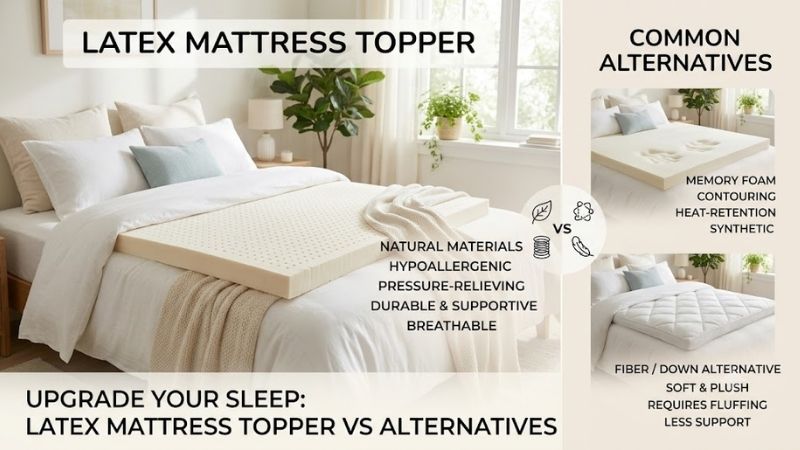
A latex mattress topper is often a strong choice for sleepers who want pressure relief without feeling deeply surrounded by foam. However, alternatives can be more suitable when motion isolation, plushness, affordability, or moisture management takes priority.
Quick Comparison Table
| Topper Material | Comfort and Feel | Pressure Relief | Temperature Characteristics | Main Trade-Off |
|---|---|---|---|---|
| Latex | Buoyant, elastic, responsive | Good, depending on firmness | Generally breathable | Higher price and weight |
| Memory foam | Slow-moving, body-hugging | Strong contouring potential | Traditional versions may retain heat | Less responsive |
| Conventional polyfoam | Responsive, varies by grade | Depends on density and firmness | Varies by construction | Lower-quality foam may soften sooner |
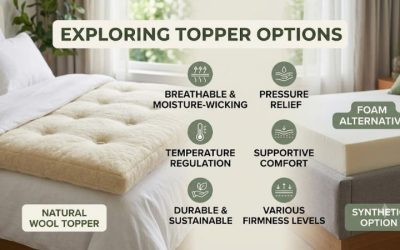
| Wool | Cushioned, resilient fiber feel | Modest contouring | Strong moisture management | Limited ability to change mattress support |
| Down and feather | Fluffy, plush surface | Limited structural support | Depends on fill and construction | Requires regular fluffing |
| Down alternative | Soft, pillow-like | Limited deep pressure redistribution | Depends on fiber and fabric | Fill can flatten |
| Fiber-filled mattress pad | Light cushioning | Minimal | Depends on materials | Small change in comfort |
These comparisons describe general material behavior, not measured performance for particular products. Foam formulations, thickness, covers, firmness, and mattress construction can substantially change the results.
Quick Verdict
Choose latex if you want a responsive sleeping surface, moderate contouring, and a material generally associated with good long-term resilience.
Choose memory foam if you prefer deeper body contouring, a slower-moving surface, or stronger motion isolation.
Choose wool if your mattress is already comfortable and moisture management matters more than changing its firmness.
Choose down or down alternative if you primarily want a plush, pillow-like surface rather than substantial foam support.
Choose conventional polyfoam if budget is the main consideration and you can find a suitable density, firmness, and thickness.
Understanding Latex Mattress Toppers
Latex foam differs from most traditional mattress topper materials because it compresses under body weight and recovers quickly when pressure is removed.
This produces a buoyant sleeping sensation that some people describe as sleeping on the mattress rather than sinking deeply into it.
What Is a Latex Mattress Topper?
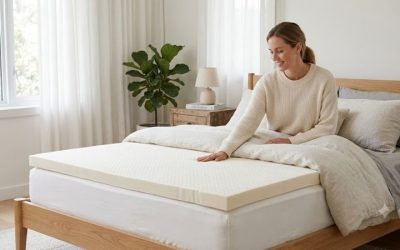
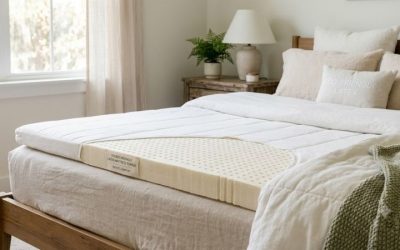
A latex mattress topper is a separate comfort layer placed over an existing mattress. It usually consists of a sheet of latex foam, sometimes enclosed in a fabric cover.
Latex foam may be manufactured using natural rubber latex, synthetic latex, or a blend. These materials should not be treated as identical simply because the label includes the word latex.
The topper changes the immediate feel of the sleeping surface, but the underlying mattress continues to provide most of the bed’s structural support.
A latex topper can:
-
Add cushioning to a mattress that feels excessively firm.
-
Change the degree of surface contouring.
-
Create a more responsive sleeping surface.
-
Reduce direct pressure against a hard-feeling comfort layer.
-
Extend the useful comfort of a structurally sound mattress.
It cannot reliably correct broken springs, permanent mattress impressions, or a failing support core.
Natural Latex vs Synthetic and Blended Latex
Natural latex foam is manufactured primarily from rubber-tree latex. Synthetic latex is manufactured using synthetic rubber polymers, while blended formulations combine natural and synthetic components.
These distinctions matter for shoppers interested in material composition, environmental attributes, and expected durability.
However, the words natural and organic are not interchangeable.
A natural latex claim does not automatically establish organic certification, and neither label independently proves a finished topper’s chemical emissions, allergy suitability, or durability.
Buyers should examine the stated latex composition, any applicable independent certification, and the manufacturer’s care information.
Dunlop vs Talalay Latex
Dunlop and Talalay refer to manufacturing processes rather than universal firmness categories.
Dunlop latex is made through a comparatively straightforward foaming and vulcanization process. Talalay production includes additional vacuum expansion and freezing steps.
These processing differences influence foam structure and often its feel.
| Characteristic | Dunlop Latex | Talalay Latex |
|---|---|---|
| Typical feel | More substantial and dense | More uniform and buoyant |
| Firmness availability | Available in multiple firmness levels | Available in multiple firmness levels |
| Manufacturing | Simpler processing | Additional vacuum and freezing steps |
| Common application | Support and comfort layers | Comfort layers and toppers |
| Price tendency | Often less expensive | Often more expensive |
| Best suited for | Sleepers wanting a substantial foam feel | Sleepers wanting a lighter, springier feel |
Talalay is not automatically softer than every Dunlop topper. A soft Dunlop product may feel gentler than a firm Talalay product.
The actual firmness specification and thickness are more useful than the manufacturing label alone.
Latex vs Memory Foam Mattress Toppers
Memory foam is the closest alternative to latex for buyers seeking a substantial change in mattress comfort.
Both materials can cushion pressure points, but they respond differently to weight, movement, and temperature.
Pressure Relief and Body Contouring
Memory foam is viscoelastic polyurethane foam. It responds to pressure and, depending on the formulation, temperature, allowing it to conform closely to the sleeper.
Latex also conforms to the body, but its elastic response creates a different type of cushioning.
A soft memory foam topper may allow the shoulder and hip to sink deeply, which can benefit some side sleepers using an excessively firm mattress.
Latex distributes pressure through elastic compression and may feel more supportive or buoyant.
Neither material guarantees better spinal alignment.
A topper that is too soft or thick can allow excessive sinking, particularly when combined with an already soft mattress.
Best choice: Memory foam for deep, enveloping contouring; latex for pressure relief with easier movement and less of a sinking sensation.
Temperature Regulation
Traditional, dense memory foam can restrict airflow and retain body heat near the sleeper.
Latex foam typically has a more responsive structure and is often manufactured with ventilation holes. These characteristics can improve airflow within the topper.
However, material choice alone does not determine sleeping temperature.
A dense waterproof protector, nonbreathable bedding, warm room, or insulating topper cover can reduce the ventilation advantages of latex.
Likewise, some engineered memory foam constructions incorporate features intended to improve temperature management.
Gel infusions and cooling labels should not be interpreted as proof that a topper stays cool throughout the night.
Best choice: Latex is a reasonable starting point for sleepers who dislike the warmth of traditional memory foam, although the complete bedding system still matters.
Motion Isolation and Partner Disturbance
Memory foam generally absorbs movement effectively because of its slow recovery and limited rebound.
Latex recovers quickly and has greater elasticity, so movement can be more noticeable on some constructions.
A memory foam topper may therefore be preferable when one partner is sensitive to movements during the night.
Nevertheless, mattress construction, bed-frame stability, topper thickness, and the type of movement also influence disturbance.
A topper cannot completely eliminate motion transfer from a highly responsive mattress.
Best choice: Memory foam when minimizing partner movement is the leading priority.
Durability and Long-Term Value
High-quality latex is generally known for resilience and resistance to permanent compression.
Memory foam durability varies substantially with formulation, density, manufacturing quality, and use conditions.
It would be inaccurate to claim that every latex topper outlasts every memory foam alternative.
A well-constructed premium memory foam topper may maintain useful comfort longer than a poorly manufactured latex product.
Latex usually has a higher initial purchase cost. Its value depends on how long it maintains a suitable feel, not simply on its material category.
Best choice: Latex for shoppers prioritizing resilient materials and willing to pay more initially; memory foam when close contouring and purchase price matter more.
Latex vs Conventional Polyfoam Toppers
Conventional polyurethane foam is another popular alternative, especially among budget-conscious shoppers.
Unlike memory foam, conventional polyfoam generally responds more quickly when compressed, although its feel varies substantially by formulation.
Comfort and Responsiveness
Both latex and conventional polyfoam can create a springier sleeping surface than traditional memory foam.
Latex typically offers distinctive elasticity and resistance to compression.
Polyfoam can range from very soft cushioning to relatively firm support-oriented foam.
A soft polyfoam topper may feel comfortable initially, but softness alone does not indicate durability or suitability.
A more substantial foam formulation may hold its feel better than inexpensive, low-density alternatives.
Cost and Material Quality
Conventional polyfoam is often available at lower purchase prices than natural latex.
This makes it useful for guest beds, temporary housing, and situations where a large investment is not justified.
However, a low purchase price does not necessarily mean a lower long-term cost.
Foam density and construction quality influence resistance to wear, though density should not be confused with firmness.
A dense foam can be manufactured soft, and a lighter foam can initially feel firm.
Who Should Choose Polyfoam?
Choose conventional polyfoam when you need to make a moderate comfort adjustment at a lower upfront cost.
Choose latex when responsiveness, material resilience, and long-term use justify a larger investment.
For either material, check the stated firmness, foam thickness, cover construction, and applicable return terms.
Latex vs Wool Mattress Toppers
Wool toppers differ from latex because they use fibrous cushioning rather than a solid foam structure.
This changes how they handle pressure, moisture, and temperature.
Cushioning and Support
Wool compresses under body weight and can make a mattress surface feel more comfortable.
However, wool does not usually provide the same substantial contouring as a thick latex foam layer.
A wool topper is therefore better suited to refining the surface feel of an already supportive mattress.
If the mattress creates uncomfortable pressure at the hips or shoulders, an appropriately selected latex topper may provide a more meaningful change.
Moisture Management and Sleep Temperature
Wool fibers can absorb and release water vapor, helping manage moisture near the sleeping surface.
This makes wool attractive to sleepers who experience humidity or occasional nighttime perspiration.
Wool also provides insulation, so its actual temperature feel depends on construction, thickness, bedding, and room conditions.
Latex relies more on its foam structure and surrounding materials for ventilation.
Neither wool nor latex should be assumed to eliminate overheating.
Cleaning and Maintenance
Wool toppers can require more specialized care than basic synthetic bedding.
Some may need airing, spot cleaning, or professional cleaning depending on their construction.
Latex cores also require care. They generally should not be placed in a household washing machine or dryer unless the manufacturer specifically permits it.
A removable, washable cover can make either option more practical.
Best choice: Wool for moisture management and modest cushioning; latex for a more substantial change in pressure distribution and sleeping feel.
Latex vs Down and Down Alternative Toppers
Down, feather, and synthetic down alternative toppers emphasize softness rather than the elastic resistance of latex foam.
They are most appropriate when the mattress already provides adequate support.
Plushness and Sleeping Feel
Down-filled toppers create a soft, airy sensation, while feather-containing designs may feel denser depending on their construction.
Down alternative toppers often use polyester or other synthetic fibers to imitate a plush filled surface.
Latex feels fundamentally different.
Instead of surrounding the sleeper with loose fill, it provides cushioning through a continuous elastic foam layer.
Sleepers seeking a floating or buoyant feel are more likely to prefer latex.
Those who primarily want a pillow-like surface may prefer down or down alternative.
Pressure Relief Differences
A thick latex topper can alter how body weight is distributed at the surface.
Down and down alternative fillings generally compress more easily and provide less consistent resistance under concentrated loads.
Although a fluffy topper may initially feel soft, it may not adequately address pressure caused by an excessively firm mattress.
Fill weight, chamber construction, and how much material shifts or compresses also matter.
Maintenance and Shape Retention
Down and fiber-filled toppers may require regular fluffing to redistribute their filling.
Baffle-box or chambered construction can limit excessive shifting, but it does not prevent compression.
Latex does not need fluffing, although it should be protected from unsuitable moisture exposure and handled according to the manufacturer’s instructions.
Down and down alternative toppers are often lighter and easier to handle than a thick latex foam topper.
Best choice: Latex for consistent foam cushioning; down or down alternative for plushness and a lighter, bedding-like feel.
Important Technical Differences That Affect Sleep
Material is only one part of topper selection. Thickness, firmness, mattress condition, and surrounding bedding can matter just as much.
Topper Thickness: 1 Inch vs 2 Inches vs 3 Inches
Thicker toppers generally produce a greater change in how the mattress feels, assuming comparable materials and firmness.
| Thickness | Typical Effect | Most Suitable Situation | Potential Limitation |
|---|---|---|---|
| 1 inch | Subtle surface adjustment | Mattress already feels close to comfortable | May provide insufficient cushioning |
| 2 inches | Noticeable comfort modification | Moderately firm mattress needing more cushioning | May alter alignment if too soft |
| 3 inches | Substantial surface change | Very firm mattress needing deeper cushioning | Greater sinking and added bed height |
These are general selection guidelines rather than guarantees.
A firm 3-inch latex topper may allow less sink than a soft 2-inch topper. Similarly, memory foam and latex of identical thickness can feel substantially different.
For many shoppers with a structurally sound but overly firm mattress, 2 inches is a practical starting point.
A 3-inch topper deserves additional consideration when shoulder and hip cushioning is insufficient, but it can also increase the risk of excessive sink.
Firmness and Body Weight
A topper’s ideal firmness depends partly on body weight and sleeping position.
Lighter sleepers may not compress a firm latex layer enough to experience the desired cushioning.
Heavier sleepers may compress a very soft topper more deeply, potentially changing body alignment.
The mattress beneath the topper remains important.
Someone using a firm innerspring mattress may experience a soft topper differently from someone using an already plush foam mattress.
When available, indentation load deflection (ILD) or similar firmness information can help compare foam options.
However, firmness numbers should be compared carefully because testing methods and reported specifications may differ.
Breathability and Cover Materials
Ventilation holes in latex can create airflow paths within the foam, but they do not guarantee a cooler sleeping surface.
The cover, protector, sheets, and mattress underneath influence how heat and moisture move.
A tightly constructed, waterproof protector may change the feel and ventilation of the complete system.
A breathable cover can be beneficial, but shoppers should distinguish manufacturer material descriptions from independently measured cooling performance.
For sleepers concerned about heat, evaluating the complete bed setup is more useful than relying on a single cooling claim.
Edge Feel and Stability
A topper can change how the edges of a mattress feel when sitting or sleeping near the perimeter.
Thicker, softer toppers may compress substantially near the edge, especially if the underlying mattress has weak edge support.
Latex’s resilience may help the surface feel responsive, but it does not replace structural edge reinforcement inside the mattress.
Check whether the topper lies flat, stays properly positioned, and fits the mattress dimensions.
Mattress Compatibility and Household Considerations
A topper works best when it complements an existing mattress rather than attempting to compensate for major structural problems.
Existing Mattress Condition
Before buying a topper, examine the mattress for permanent impressions, uneven support, broken components, and deterioration.
A topper can soften an excessively firm surface, but it follows the general support characteristics of the mattress underneath.
If the bed has significant sagging, an additional comfort layer may conceal the problem temporarily without correcting it.
A replacement mattress may be the more appropriate investment.
Mattress Size and Fit
US mattress sizes typically include Twin, Twin XL, Full, Queen, King, and California King.
However, nominal size labels do not guarantee identical measurements across all products.
Verify the actual topper dimensions against the mattress before purchasing.
Also consider the extra height a topper adds.
Deep-pocket fitted sheets may be necessary, especially when combining a thick mattress with a substantial topper and protector.
Adjustable Beds
Flexible latex and memory foam toppers can often be used with adjustable mattresses, but compatibility depends on the particular product.
The topper must be able to follow the mattress as the adjustable base changes position.
A thick or relatively rigid construction may shift, bunch, or resist bending.
Confirm the mattress and topper manufacturers’ guidance before assuming compatibility.
For split adjustable beds, independent toppers sized for each sleeping surface may preserve separate movement better than one continuous topper.
Topper Weight and Handling
Latex foam can be relatively heavy, particularly in thick constructions and larger mattress sizes.
This matters when changing sheets, lifting the topper, moving apartments, or cleaning the bed.
Memory foam can also be heavy, depending on its density.
Wool, down, and down alternative toppers vary in weight but may be easier to reposition.
For households where frequent lifting is difficult, handling requirements deserve consideration before purchasing a large latex topper.
Latex Allergy and Material Sensitivities
Natural rubber latex can be an allergen.
Although finished latex foam is usually enclosed beneath bedding and may undergo washing during manufacture, that does not establish safety for everyone with a latex allergy.
People with a diagnosed or suspected latex allergy should consult an appropriate healthcare professional before using a natural latex sleep product.
Synthetic latex and polyurethane foam have different material compositions, but product-specific ingredients should still be checked.
Claims such as hypoallergenic, chemical-free, and non-toxic should not be accepted without understanding what they mean and what evidence supports them.
Which Mattress Topper Is Best for Your Sleeping Position?
Sleeping position affects where the body concentrates pressure and how much contouring may be comfortable.
Side Sleepers
Side sleepers commonly need sufficient cushioning around the shoulders and hips.
A softer latex topper can provide useful pressure relief while maintaining a buoyant sensation.
Memory foam may be preferable when a sleeper wants deeper contouring around these areas.
A topper that is too firm may leave pressure points uncomfortable, while one that is excessively soft may allow the midsection to sink out of alignment.
Recommendation: Consider soft to medium-feeling latex for responsive cushioning, or memory foam for deeper contouring. Match the firmness to the mattress underneath.
Back Sleepers
Back sleepers generally benefit from a surface that accommodates the body’s contours without excessive sinking around the pelvis.
Medium-feeling latex may provide a useful balance between cushioning and resistance.
Memory foam can also work well when the combined mattress and topper remain supportive.
A thick, very soft topper may be unsuitable if it changes the natural alignment of the lower back.
Recommendation: A moderately cushioned latex topper is a reasonable starting point when the mattress feels firm but still provides consistent underlying support.
Stomach Sleepers
Stomach sleepers often require a relatively stable surface to avoid excessive sinking around the abdomen and hips.
Adding thick, soft foam can make that challenge worse.
A thinner, firmer latex topper may be more suitable when only a slight comfort adjustment is necessary.
Some stomach sleepers may be better served by keeping their current mattress unchanged.
Recommendation: Prioritize minimal added sink rather than maximum cushioning.
Combination Sleepers
Combination sleepers change positions during the night.
Latex’s rapid recovery can make turning and repositioning feel easier than on some slow-response memory foam toppers.
This does not mean latex is always more comfortable.
A combination sleeper who spends most of the night on their side may still prefer the deeper cushioning of memory foam.
Recommendation: Latex deserves particular consideration when freedom of movement matters more than a body-hugging sensation.
Latex Mattress Topper vs Alternatives by Buyer Priority
The most useful choice becomes clearer when the purchase decision is connected to a specific sleep concern.
| Buyer Priority | Recommended Starting Point | Reason |
|---|---|---|
| Responsive comfort | Latex | Quick recovery and elastic cushioning |
| Deep body contouring | Memory foam | Slow-response pressure conformity |
| Motion isolation | Memory foam | Generally absorbs movement effectively |
| Lower initial cost | Conventional polyfoam | Often less expensive |
| Moisture management | Wool | Fibers can manage water vapor |
| Pillow-like plushness | Down or down alternative | Soft, compressible fill |
| Material resilience | High-quality latex | Generally strong recovery characteristics |
| Easier repositioning | Latex | Less slow-moving resistance |
| Lightweight bedding feel | Fiber-filled or down alternative | Less substantial foam construction |
| Small comfort adjustment | Thin latex, wool, or mattress pad | Less dramatic change to the mattress |
Best for Hot Sleepers
Latex and wool are both worth considering, but for different reasons.
Latex offers a relatively breathable foam construction, while wool can help manage moisture within the bedding system.
A hot sleeper who needs meaningful pressure relief may find latex more appropriate.
Someone whose mattress already feels supportive but becomes humid or clammy may prefer wool.
Bedroom temperature and surrounding bedding remain important regardless of material.
Best for Couples
Memory foam is often the stronger choice when movement isolation is the main concern.
Latex may appeal more to couples who want a responsive surface that makes repositioning easier.
When partners have different comfort preferences, a single continuous topper may not work equally well for both.
Two separately sized toppers, where compatible with the bed, can provide different comfort characteristics without forcing both sleepers into the same firmness.
Best for Budget-Conscious Shoppers
Conventional polyfoam is often the most accessible starting point when purchase cost is the main constraint.
Memory foam also offers a broad range of construction qualities and price levels.
Latex may represent better long-term value for some buyers, but that depends on its purchase price, construction quality, and useful lifespan.
A lower-cost topper that meets the sleeper’s needs can be a better purchase than a premium material that feels uncomfortable.
Best for Guest Rooms and Temporary Use
Polyfoam and down alternative toppers can be practical options for beds used occasionally.
They may provide sufficient cushioning without the expense of a premium latex layer.
Guest preferences are unpredictable, so an extremely soft or unusually firm topper may be less versatile.
A moderate comfort adjustment is generally a safer starting point than a thick layer that substantially changes the bed.
Best for Long-Term Everyday Use
High-quality latex is worth considering for an everyday bed when the sleeper values resilience and responsive cushioning.
However, durability depends on more than the material name.
Construction quality, appropriate firmness, manufacturing consistency, care, and the condition of the underlying mattress all influence long-term comfort.
A well-selected memory foam or polyfoam topper may still be preferable when its feel better matches the sleeper.
Advantages and Disadvantages of Latex Mattress Toppers
Latex offers meaningful benefits, but its limitations should be considered alongside them.
Advantages of Latex
-
Responsive cushioning: Elastic recovery allows the surface to adjust quickly when the sleeper changes position.
-
Pressure redistribution: An appropriate firmness and thickness can reduce concentrated pressure from an excessively firm mattress.
-
Material resilience: High-quality latex generally maintains its shape and elasticity well.
-
Breathable construction: Latex foam can permit airflow, particularly when designed with ventilation channels.
-
Firmness variety: Products are available in different firmness levels for different sleeping preferences.
Disadvantages of Latex
-
Higher upfront cost: Natural latex often costs more than conventional synthetic foam alternatives.
-
Substantial weight: Thick latex layers may be inconvenient to lift or move.
-
Distinctive bounce: Sleepers who enjoy a slow, enveloping memory foam feel may dislike latex’s responsiveness.
-
Limited motion isolation compared with some memory foams: Elastic movement may be more noticeable.
-
Material sensitivity concerns: Natural rubber latex may be unsuitable for people with latex allergies.
These limitations do not make latex a poor material. They help identify buyers whose needs may be better satisfied by another topper.
How to Choose the Right Mattress Topper
A useful purchase process begins by identifying what is actually uncomfortable about the existing bed.
Step 1: Identify the Problem You Want to Fix
Determine whether the mattress feels too firm, creates pressure at the shoulders or hips, retains too much heat, transfers movement, or simply lacks surface plushness.
These issues require different solutions.
A latex topper may be appropriate for responsive cushioning, while memory foam may better address a desire for deeper contouring.
If the mattress is structurally damaged, a topper is unlikely to provide a lasting solution.
Step 2: Select the Material Based on Feel
Consider how you want the bed to respond when you lie down or change positions.
Choose latex for elastic cushioning, memory foam for a slower body-hugging sensation, and fiber-filled materials for surface plushness.
Wool deserves consideration when moisture management and modest cushioning are priorities.
Avoid purchasing solely because a material is marketed as premium.
Step 3: Match Firmness and Thickness to the Mattress
Start with the current mattress firmness.
A very firm mattress may benefit from a thicker or softer comfort layer, while a moderately comfortable mattress may need only a small adjustment.
Remember that greater thickness does not automatically improve pressure relief or alignment.
Compare manufacturer firmness descriptions and consider whether the seller offers a meaningful trial or return policy.
Step 4: Check Construction and Material Claims
For latex, verify whether the topper uses natural, synthetic, or blended material.
For memory foam and polyfoam, look for disclosed construction details and relevant foam information.
For wool and down products, examine fill composition, cover materials, and cleaning requirements.
Independent certifications can be useful when their actual scope is understood.
For example, a foam emissions certification does not automatically establish organic material sourcing or superior sleep comfort.
Step 5: Calculate the Total Ownership Cost
Purchase price is only one expense.
Consider whether the topper needs a separate cover, replacement protector, special cleaning, or more suitable fitted sheets.
Also assess how practical it will be to maintain and handle.
A premium latex topper may be worthwhile for a long-term bed, while a simpler alternative may make more sense for temporary use.
Step 6: Review Trial, Return, and Warranty Terms
A topper’s feel cannot be determined with certainty from material descriptions alone.
Before purchasing, verify whether returns are permitted after opening and whether return shipping, handling, or restocking charges apply.
Check whether the warranty addresses manufacturing defects, permanent impressions, or other specific conditions.
A warranty does not necessarily cover gradual softening or changes in personal comfort preferences.
Common Mistakes When Comparing Mattress Toppers
Even a high-quality topper can be disappointing when the selection process overlooks the existing mattress.
Assuming Latex Is Always Firm
Latex is available in a range of firmness levels.
A soft latex topper can provide significant cushioning, while a firm one may produce a much more substantial surface.
The manufacturing process and natural-material label do not independently determine firmness.
Choosing the Thickest Available Topper
A thicker topper is not always more comfortable.
Excessive cushioning can change pelvic support and body alignment, particularly on an already soft mattress.
Select thickness according to the adjustment required rather than automatically choosing the maximum.
Expecting a Topper to Repair Sagging
A topper cannot restore the internal structure of a worn mattress.
If the underlying mattress has permanent depressions or damaged support components, additional foam may follow those impressions.
Replacing the mattress or addressing an incompatible foundation may be necessary.
Assuming Cooling Infusions Guarantee Better Sleep Temperature
Gel, graphite, copper, and other added materials may be marketed as cooling technologies.
Their presence alone does not establish meaningful, sustained temperature reduction.
Look for appropriate independent measurements before accepting numerical cooling claims.
Ignoring Maintenance Requirements
Cleaning and handling requirements vary substantially between materials.
Latex foam, memory foam, wool, down, and synthetic-fill products should not be treated as interchangeable laundry items.
Follow the care instructions for the actual topper and cover.
Frequently Asked Questions
Is a Latex Mattress Topper Better Than Memory Foam?
Latex is generally better suited to sleepers who prefer responsive cushioning, easier movement, and less of a sinking sensation. Memory foam may be better for deep contouring and motion isolation. The most suitable choice depends on topper firmness, thickness, body weight, sleeping position, and mattress condition.
Do Latex Mattress Toppers Sleep Cooler Than Memory Foam?
Latex often offers better airflow than traditional dense memory foam and may feel less heat-retentive. However, actual temperature performance depends on foam construction, covers, bedding, room conditions, and the mattress underneath. A latex topper cannot guarantee a cool sleeping surface.
Is a 2-Inch or 3-Inch Latex Topper Better?
A 2-inch topper is a reasonable starting point for a noticeable comfort adjustment without substantially increasing mattress height. A 3-inch topper may provide deeper cushioning on a very firm bed. The correct choice depends on firmness and how much additional sink the sleeper can tolerate.
Can a Latex Topper Make a Mattress Firmer?
A relatively firm latex topper may create a firmer-feeling immediate surface over some mattresses. However, it cannot restore a failing support core or reliably prevent excessive sinking into a very soft or sagging mattress. The underlying mattress still influences overall support.
Are Latex Mattress Toppers Worth the Extra Money?
They can be worthwhile when the sleeper prefers latex’s responsive feel and expects to use the topper regularly over an extended period. High-quality latex generally offers good material resilience. However, a less expensive alternative may deliver better value if it matches the sleeper’s preferences more closely.
How Should I Clean and Maintain a Latex Mattress Topper?
Follow the manufacturer’s instructions for the exact product. Many latex foam cores are intended for spot cleaning rather than machine washing. Avoid saturating the foam or exposing it to unsuitable heat or direct sunlight. A removable, washable cover and routine bedding maintenance can help keep the sleeping surface clean.
Conclusion
When comparing a latex mattress topper vs alternatives, latex is a strong choice for sleepers who want responsive pressure relief, material resilience, and less sink than traditional memory foam. Memory foam is preferable for deeper contouring and motion isolation, wool for moisture management, and polyfoam or fiber-filled options for lower-cost comfort adjustments. Choose according to your mattress condition, sleeping position, preferred feel, and budget rather than material labels alone.