Key takeaways
- For most apartment bedrooms, small guest rooms, and studio apartments, a 2-inch latex mattress topper is a sensible starting point. It can change the surface feel of an existing mattress without adding as much height, weight, or bulk as a thicker topper.
Quick Verdict: What Works Best in Small Spaces?
For most apartment bedrooms, small guest rooms, and studio apartments, a 2-inch latex mattress topper is a sensible starting point. It can change the surface feel of an existing mattress without adding as much height, weight, or bulk as a thicker topper.
However, the best configuration depends on how you use your bed.
| Small-Space Situation | Suggested Configuration | Main Advantage | Important Trade-Off |
|---|---|---|---|
| Small bedroom with a permanent bed | 2-inch medium latex | Balances cushioning and support | Cannot repair a sagging mattress |
| Side sleeper on a firm mattress | 2–3-inch soft or medium latex | Adds pressure-relieving cushioning | Thicker, softer layers can affect alignment |
| Back sleeper in a studio apartment | 2-inch medium or firm latex | Changes surface feel without excessive sinkage | Firmness is subjective |
| Guest bed used occasionally | 1–2-inch latex | Less bulk than thicker configurations | Latex is not especially compact when stored |
| Hot sleeper in a small bedroom | Ventilated latex with breathable bedding | Allows airflow through the comfort layer | Does not guarantee cooler sleep |
| Small shared bed | 2-inch medium latex | Responsive feel and relatively modest added height | Motion transfer depends on the full mattress system |
| Folding bed or convertible sofa | Manufacturer-approved thin topper | May improve surface cushioning | Folding and storage compatibility can be restrictive |
Best general recommendation: Choose a 2-inch natural latex topper in the correct mattress size, with a firmness that complements your existing mattress. Prioritize a removable, washable cover if the manufacturer offers one, and check whether the topper can remain on the bed during storage.
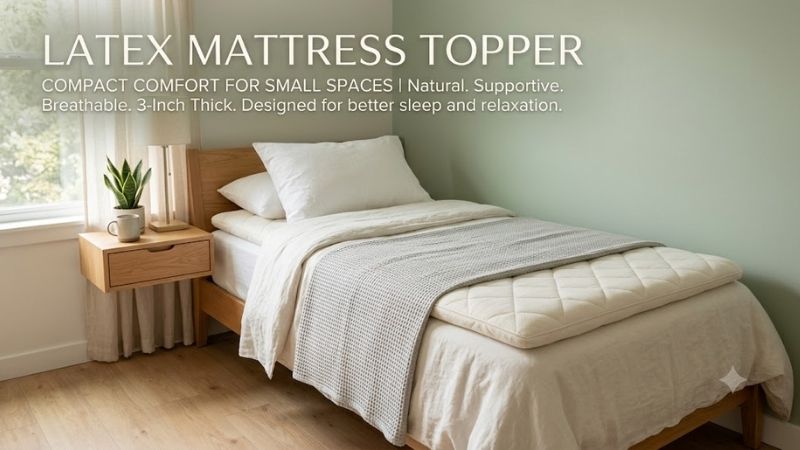
Why Latex Mattress Toppers Work Well in Small Bedrooms
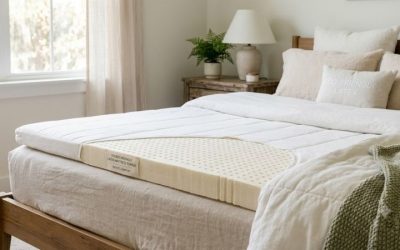
Latex toppers are made from latex foam, a resilient material that compresses under body weight and rebounds when pressure is removed. They are available in different thicknesses, firmness levels, and constructions.
A latex topper does not save floor space by itself. Its practical advantage is that it can modify an existing mattress without requiring a new mattress, bed frame, or larger sleeping setup.
They Improve an Existing Sleep Surface Without Replacing the Bed
In a small bedroom, replacing a mattress can involve moving bulky furniture through narrow doors, hallways, or staircases. A topper is a more manageable way to adjust surface comfort when the mattress underneath remains structurally sound.
A softer latex layer can make a mattress feel less rigid around the shoulders and hips. A firmer topper can modify the surface sensation, although it cannot restore a mattress with a failing support core.
This makes latex most useful when the existing mattress is supportive but uncomfortable.
Latex Has a Responsive Feel That Suits Different Sleeping Positions
Latex typically feels more responsive than slow-recovery memory foam. Rather than creating the same deep, gradually conforming sensation, it tends to recover its shape relatively quickly as a sleeper changes position.
This can benefit combination sleepers who frequently move between their side and back.
However, responsiveness is not the same as firmness. A soft latex topper can still allow substantial compression, while a firm latex topper may provide limited pressure relief on an already hard mattress.
A Thin Topper Adds Less Height and Bulk
A 2-inch topper raises the overall sleeping surface by approximately its nominal thickness before compression.
In a small bedroom, this can help preserve a manageable bed height, especially when the mattress already sits on a platform frame or storage bed.
A thinner topper can also be easier to lift and reposition than a thicker one, although latex foam may still be relatively heavy.
Latex Can Offer Useful Ventilation
Many latex toppers feature perforations or an open foam structure that permits some airflow.
Natural latex generally has a different response and feel from traditional viscoelastic memory foam, but cooling claims should be interpreted carefully. A perforated design does not automatically establish a measurable temperature advantage.
The mattress underneath, room temperature, bedding, mattress protector, and humidity also influence sleeping comfort.
A Durable Comfort Layer Can Reduce Unnecessary Mattress Replacement
Latex is known for elastic recovery and resistance to permanent deformation, although actual service life varies with foam formulation, density, usage, and manufacturing quality.
For renters or people who expect to move, a suitable topper may extend the useful comfort life of a structurally sound mattress.
It should not be viewed as a solution for broken springs, deep permanent body impressions, significant sagging, or a compromised mattress foundation.
How to Choose the Right Latex Topper Thickness
Thickness is particularly important in compact sleeping environments. It affects how much the topper changes the mattress, how high the bed becomes, and how difficult the foam is to move or store.
1-Inch Latex Topper: Minimal Surface Adjustment
A 1-inch topper provides a relatively modest change to the comfort surface.
It may suit someone whose mattress is almost comfortable but feels slightly too firm, or someone who wants to minimize added bed height.
The limitation is that a thin layer has less room to compress before the sleeper experiences the firmness of the mattress underneath.
A 1-inch topper is unlikely to substantially change the feel of a very firm mattress for a side sleeper needing significant shoulder and hip cushioning.
2-Inch Latex Topper: The Most Versatile Starting Point
A 2-inch topper offers a practical middle ground between cushioning and overall bulk.
It can make a meaningful difference to a mattress that feels too firm while remaining easier to handle than many thicker options.
For small apartments, the 2-inch configuration is often worth considering first because it does not create as dramatic a change in the bed’s height or surface feel as a thicker topper.
The correct firmness still matters. Two toppers with identical thicknesses can feel very different depending on latex construction and foam firmness.
3-Inch Latex Topper: More Substantial Comfort Adjustment
A 3-inch topper creates a more pronounced comfort layer.
It may suit side sleepers who experience uncomfortable pressure on a firm mattress or people who want deeper cushioning.
However, it also raises the bed more, adds material to move or store, and may alter how the sleeper interacts with the underlying mattress.
In compact spaces, the added thickness is usually justified only when a thinner topper would not provide enough comfort adjustment.
Thickness Comparison for Small-Space Buyers
| Thickness | Surface Change | Storage Consideration | Most Appropriate Use |
|---|---|---|---|
| 1 inch | Subtle | Least bulk among these choices | Minor firmness adjustment |
| 2 inches | Moderate | Manageable for a permanent bed | Everyday apartment sleeping |
| 3 inches | Substantial | More bulk and weight | Greater pressure relief on a firm mattress |
These are general selection guidelines, not measured comfort results. Foam firmness, body weight, sleep position, and mattress construction can change the outcome.
Choosing the Right Firmness for Your Sleeping Position
Firmness should be selected according to the mattress underneath and the comfort problem you are trying to solve.
A topper cannot be evaluated independently of the mattress. A medium latex topper over a soft mattress can feel different from the same topper over a firm hybrid mattress.
Side Sleepers: Prioritize Shoulder and Hip Pressure Relief
Side sleeping concentrates body weight around the shoulders and hips.
A soft or medium latex topper may provide additional cushioning if the current mattress feels too firm.
Many side sleepers can start by considering a 2-inch soft or medium topper. A 3-inch option may be appropriate when a more substantial comfort adjustment is needed.
The trade-off is that excessive softness or thickness can allow the torso and hips to sink differently, potentially affecting spinal alignment.
Back Sleepers: Balance Cushioning and Pelvic Support
Back sleepers generally need a sleep surface that accommodates the body’s contours without allowing excessive pelvic sinkage.
A 2-inch medium latex topper is a reasonable starting point when the existing mattress is supportive but uncomfortable.
Someone who prefers a firmer surface may favor medium-firm latex, especially if the mattress underneath already has considerable cushioning.
Avoid choosing a very thick, soft topper solely because it appears more comfortable.
Stomach Sleepers: Avoid Excessive Sinkage
Stomach sleepers often benefit from maintaining relatively even support across the abdomen and hips.
A thin medium-firm or firm topper may be more appropriate than a thick soft version, depending on the underlying mattress.
If a mattress is already soft, adding another comfort layer may increase pelvic sinkage rather than improve alignment.
Combination Sleepers: Consider Medium Latex
Combination sleepers change position during the night and may prefer a surface that responds relatively quickly.
Medium latex can offer a compromise between cushioning and resistance.
A 2-inch configuration is worth considering, especially when both side and back sleeping are common.
Individual comfort matters more than the manufacturer’s firmness label alone.
Choosing the Correct Mattress Size for a Compact Room
A topper should generally match the sleeping surface of the mattress. An oversized topper can hang over the edges, while an undersized topper may create uncomfortable boundaries.
Before buying, measure the mattress itself rather than relying exclusively on its labeled size.
Common US Mattress Dimensions
| Mattress Size | Standard Width | Standard Length |
|---|---|---|
| Twin | 38 inches | 75 inches |
| Twin XL | 38 inches | 80 inches |
| Full | 54 inches | 75 inches |
| Queen | 60 inches | 80 inches |
| King | 76 inches | 80 inches |
| California King | 72 inches | 84 inches |
These are common nominal US sizes. Actual mattress and topper measurements can vary slightly by manufacturer, model, and production tolerances.
Twin and Twin XL for Narrow Rooms
Twin and Twin XL mattresses are often practical for one-person bedrooms, dorm-style rooms, and compact guest spaces.
A Twin XL topper provides extra length compared with a standard Twin without increasing nominal width.
Choose based on the actual mattress rather than room size alone.
A Twin XL topper should not be treated as interchangeable with a standard Twin.
Full Size for a Compact Apartment Bedroom
A Full mattress can be a useful compromise when a Twin feels too narrow but a Queen occupies too much floor space.
For one sleeper, it offers more lateral room than a Twin while remaining narrower than a Queen.
A Full-size latex topper must still match the mattress dimensions. Check fitted-sheet pocket depth after adding the topper.
Queen Size for Studio Apartments
Queen mattresses are common in apartments where one bed serves as the main sleeping surface.
A 2-inch Queen latex topper may be practical when the existing mattress needs additional cushioning.
However, a Queen topper contains substantially more material than a Twin topper, making weight and handling important considerations.
If the bed must be moved frequently, verify the actual product’s weight before purchase.
RV, Short Queen, and Custom Mattress Sizes
Some RVs, daybeds, and custom compact sleeping platforms use nonstandard mattress dimensions.
A regular Queen topper should not be assumed to fit a short Queen mattress.
Likewise, some convertible furniture uses proprietary mattress dimensions.
Look for a manufacturer offering the exact required dimensions or a clearly documented customization service.
Do not cut latex foam unless the manufacturer confirms that modification is appropriate and explains its effect on product coverage and performance.
Latex Types and Materials: What Buyers Should Know
Not all latex mattress toppers have the same construction. The latex formulation, manufacturing process, and cover materials influence feel, handling, and cost.
Understanding these differences helps prevent buying a topper based on marketing language alone.
Natural Latex vs. Synthetic Latex
Natural latex foam is produced primarily from rubber tree latex, while synthetic latex is manufactured using synthetic rubber materials. Blended latex combines natural and synthetic components.
Natural latex is often chosen by buyers who prefer products made with a high proportion of renewable raw material.
However, the word natural does not establish a particular durability rating, comfort level, or safety certification. Material composition and manufacturing standards must be verified for each product.
Synthetic and blended latex may offer different costs and firmness options. Their suitability depends on the exact formulation rather than material labels alone.
Dunlop Latex vs. Talalay Latex
Dunlop and Talalay refer to manufacturing processes rather than universal firmness categories.
Dunlop latex is produced by foaming latex and curing it in a mold. Talalay processing includes additional steps involving vacuum expansion and freezing before curing.
Both processes can produce comfortable, resilient mattress toppers.
| Feature | Dunlop Latex | Talalay Latex |
|---|---|---|
| Manufacturing | Foamed and cured in a mold | Vacuum-expanded and frozen before curing |
| Available firmness | Soft to firm, depending on product | Soft to firm, depending on product |
| Typical feel | Often described as more substantial | Often described as buoyant and consistent |
| Small-space suitability | Suitable for permanent compact beds | Suitable for permanent compact beds |
| Key consideration | Check actual firmness and weight | Check actual firmness and price |
Neither manufacturing method automatically provides superior spinal alignment, cooling, or durability.
For a small bedroom, thickness and the overall mattress combination usually matter more than the process alone.
Understanding ILD and Firmness Ratings
Some manufacturers publish Indentation Load Deflection (ILD) or Indentation Force Deflection (IFD) values.
These indicate the force required to compress a foam sample by a specified amount under defined testing conditions.
A higher value generally indicates greater resistance to compression when measurements are directly comparable.
However, different testing procedures, sample thicknesses, and compression percentages can produce different numerical results.
Do not compare two toppers using ILD numbers alone unless their measurement methods are compatible.
A manufacturer’s soft, medium, or firm classification is useful for narrowing choices, but it should not be treated as a universal standard.
Certifications and Material Transparency
Relevant certification programs may include GOLS, GOTS, OEKO-TEX STANDARD 100, GREENGUARD Gold, and eco-INSTITUT.
These programs evaluate different characteristics, such as organic material requirements, textile processing, chemical content, or emissions.
They are not interchangeable.
A certification covering an organic cotton cover does not automatically certify the latex foam inside. Likewise, an emissions certification does not establish that a topper has a particular level of comfort or durability.
Look for documentation that identifies the certified component, applicable standard, and product scope.
Storage and Furniture Compatibility in Small Spaces
Storage is one of the biggest practical differences between shopping for a topper in a conventional bedroom and shopping for one in a studio apartment, dorm, or multipurpose room.
A latex topper is flexible, but that does not make it equivalent to a lightweight folding mattress.
Can You Fold a Latex Mattress Topper?
Latex foam can flex, but repeated tight folding or prolonged compression may stress the foam.
Whether a topper can be folded depends on its construction, thickness, cover, and the manufacturer’s handling instructions.
For occasional moving, some manufacturers may permit careful rolling or temporary folding. That does not mean the same topper is suitable for daily folding inside a sofa bed.
If you must store the topper every morning, obtain explicit manufacturer guidance before purchase.
Can You Use Latex on a Murphy Bed?
A latex topper may work with a Murphy bed if the overall mattress assembly remains within the bed manufacturer’s permitted thickness and weight limits.
Check whether the mechanism allows additional bedding to remain attached while the bed is folded upright.
An extra topper can increase the mattress assembly’s thickness and weight and may interfere with retaining straps, cabinet clearance, or closing mechanisms.
Never force a wall bed closed around a topper that prevents normal operation.
Can You Use Latex on a Sofa Bed?
Some sofa beds can accommodate a topper while open, but the topper usually needs to be removed before the mechanism is folded unless the manufacturer expressly allows it.
Many sleeper-sofa mattresses have limited thickness and folding clearances.
Even a thin topper can interfere with closing the bed or place unwanted stress on the mechanism.
For occasional guests, a separate thin topper may work. For daily conversion, a folding-compatible comfort system may be more convenient than conventional latex.
What About Trundle Beds and Daybeds?
A latex topper can be used on a daybed with a compatible mattress, provided the combined bed height does not create problems with rails or bedding.
Trundle beds require additional attention because the lower mattress must fit underneath the main bed.
Measure the available vertical clearance with the topper and bedding installed.
Also confirm the trundle frame’s load capacity and any manufacturer restrictions on mattress thickness.
Storage Beds With Drawers or Lift-Up Platforms
A topper generally does not interfere with drawers underneath a stationary bed.
Lift-up storage beds are different. Adding a heavy latex topper changes the load on the lifting mechanism and may affect how easily the platform opens or stays supported.
Verify the frame manufacturer’s requirements, particularly for gas-assisted lifting systems.
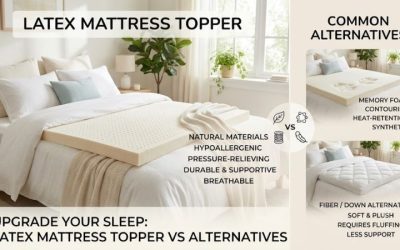
Latex vs. Other Topper Materials for Small Spaces
Latex is not automatically the best topper material for every compact sleeping arrangement.
The decision depends on whether the topper will stay on the bed permanently, how much comfort adjustment is needed, and whether the bed doubles as seating or storage furniture.
| Material | Main Characteristic | Small-Space Advantage | Main Limitation |
|---|---|---|---|
| Latex foam | Responsive cushioning | Useful for permanent beds | Weight and storage bulk |
| Memory foam | Slow-recovery contouring | Provides a different pressure-relieving feel | May retain heat and compress deeply |
| Polyurethane foam | Wide variety of firmness and density options | Often available at lower prices | Quality varies considerably |
| Down alternative fiber | Soft surface padding | Often easier to handle | Usually provides less substantial cushioning |
| Wool | Natural fiber cushioning and moisture management | Relatively thin options available | Feel and maintenance differ from foam |
Latex vs. Memory Foam
Memory foam responds to pressure and temperature through viscoelastic behavior, creating a slower-recovering contour.
Latex generally responds and rebounds more quickly.
For sleepers who change position frequently, this difference may make latex appealing.
For someone seeking a more enveloping sensation, memory foam may be preferable.
Storage convenience should not be assumed from material alone. Both materials can be bulky, and suitability for folding must be checked.
Latex vs. Polyurethane Foam
Conventional polyurethane foam toppers are available in a wide range of constructions and price categories.
Some are lighter or less expensive than comparable latex options, making them appealing for temporary living arrangements.
However, material density, resilience, and durability can vary significantly.
A low initial price is not necessarily the lowest long-term cost if the topper develops uncomfortable impressions or needs frequent replacement.
Latex vs. Fiber-Filled Toppers
Fiber-filled toppers generally provide softer surface padding rather than the same structured cushioning offered by a substantial latex foam layer.
They may be easier to handle and may have different cleaning options, depending on construction.
If you only want to soften a guest bed slightly, a fiber-filled option could be sufficient.
If your mattress feels too firm around the shoulders and hips, latex may provide a more meaningful change.
How to Buy a Latex Mattress Topper on a Budget
Latex toppers can represent a significant purchase, especially in larger mattress sizes.
A practical budget should account for more than the topper’s advertised price.
Choose the Thickness You Actually Need
A 3-inch topper contains more material than a comparable 2-inch topper of the same dimensions and formulation.
It may also cost more and require greater effort to move.
If a 2-inch topper offers enough cushioning, there is little reason to pay for extra thickness solely because it sounds more luxurious.
Start with the comfort problem and choose the minimum thickness that reasonably addresses it.
Compare Equivalent Configurations
When comparing prices, use the same mattress size, thickness, material formulation, and cover configuration.
A bare 1-inch Twin latex topper should not be treated as equivalent to a covered 3-inch Queen topper.
Also check whether shipping, return fees, and accessories are included.
Evaluate Trial Periods and Return Policies
Latex firmness can be difficult to judge without lying on the topper.
A trial or reasonable return policy can reduce the financial risk of selecting an unsuitable firmness.
Before purchasing, determine whether the policy requires the topper to remain clean, whether original packaging is necessary, and who pays return shipping.
For bulky latex foam, these details can materially affect the total cost.
Consider the Cover and Bedding Cost
A removable cover can help protect latex from routine wear and soiling.
However, a cover may be sold separately, and its presence can change the total purchase price.
A topper can also increase the required fitted-sheet pocket depth.
Include those potential expenses when comparing options.
Avoid Paying for Features Without Clear Benefits
Terms such as luxury, premium support, and orthopedic comfort do not establish measurable advantages.
Evaluate the actual material, thickness, firmness, certification scope, dimensions, and return terms.
For a compact apartment bed, an appropriate fit and realistic comfort improvement generally matter more than decorative packaging or broad marketing promises.
Practical Buying Scenarios
The right topper depends on how the small room functions during the day as well as at night.
Scenario 1: A Studio Apartment With a Queen Bed
A studio apartment may use a Queen bed as its main sleeping setup without offering much space for additional bedroom furniture.
If the mattress is structurally sound but feels too firm, a 2-inch soft or medium latex topper is a reasonable option.
Because the topper can stay on the bed, storage flexibility is less important.
Prioritize mattress fit, comfort, breathable bedding, and a manageable bed height.
Scenario 2: A Small Guest Room With a Twin Bed
A guest room used occasionally may benefit from a 1-inch or 2-inch topper when the mattress needs modest cushioning.
A thinner topper helps minimize added bulk.
However, guests have different firmness preferences, so a medium configuration may be a practical compromise rather than a guaranteed match.
Protect the topper from moisture and dust between visits.
Scenario 3: A Bedroom With a Firm Full-Size Mattress
A Full mattress that is supportive but uncomfortably firm can be a candidate for a soft latex topper.
For a side sleeper, a 2-inch version is a practical starting point.
A 3-inch version may be worth considering when more cushioning is needed, although extra softness can affect alignment.
Do not use thickness alone as a substitute for determining the correct firmness.
Scenario 4: A Home Office With a Convertible Guest Bed
In a home office that becomes a guest room, a conventional latex topper can create a storage problem.
If the sleeping surface folds or retracts, first establish whether additional bedding is permitted.
If the topper must be removed daily, consider its handling weight and the available storage dimensions.
A flexible topper is not necessarily a convenient topper to store.
Scenario 5: An Apartment Bedroom With Limited Closet Space
If there is no dedicated storage space, choose a topper that can remain on the bed.
A thinner latex layer reduces overall bed height while still offering some comfort adjustment.
Avoid buying a bulky topper with the expectation that it can be tightly compressed into a small closet after each use.
The ability to roll foam for shipping does not establish suitability for repeated long-term compression.
How to Set Up and Maintain a Latex Topper
Proper setup helps a topper remain comfortable and prevents common problems such as slipping, moisture buildup, and poor mattress fit.
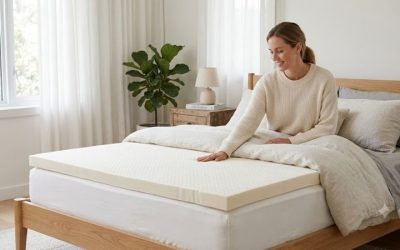
Step 1: Inspect the Existing Mattress
Place the mattress on its intended foundation and inspect its surface.
Look for sagging, pronounced depressions, damaged springs, unusual unevenness, or a compromised support base.
If the underlying mattress has structural problems, a topper may temporarily mask the discomfort without addressing the cause.
The mattress and foundation should be in acceptable condition before adding another layer.
Step 2: Measure the Mattress and Bed Height
Measure mattress width, length, and depth.
Consider the extra topper thickness when assessing the final bed height and fitted-sheet compatibility.
In bedrooms with low shelves, nearby furniture, or restrictive bed rails, confirm that the added height will not create interference.
Step 3: Position the Topper Evenly
Follow the manufacturer’s unpacking instructions.
Place the topper flat on the mattress and align its edges as closely as the dimensions permit.
Avoid pulling aggressively on latex foam, particularly at narrow edges or ventilation holes.
If the topper has a removable cover, ensure it is positioned correctly.
Step 4: Add Appropriate Bedding
Use a fitted sheet with sufficient pocket depth for the combined mattress and topper.
A fitted sheet that is too shallow may pull upward at the corners or bunch the topper.
A compatible mattress protector can reduce exposure to spills and moisture.
Choose bedding that does not unnecessarily restrict airflow or create discomfort.
Step 5: Check for Shifting
After several nights, inspect the topper’s position.
Shifting can occur when bedding is loose, the mattress surface is slippery, or the topper does not fit correctly.
A suitable cover or manufacturer-approved nonslip solution may help.
Avoid improvised adhesives or fasteners that could damage the latex or mattress.
Step 6: Clean According to the Manufacturer’s Instructions
Latex foam generally should not be placed in a household washing machine or soaked in water unless the manufacturer specifically permits it.
For minor spills, manufacturer-approved spot cleaning may be appropriate.
Use as little moisture as necessary and allow the material to dry fully according to the care instructions before covering it again.
A removable cover may be machine washable, but its care label takes precedence.
Step 7: Protect the Topper During Storage or Moving
If the topper must be moved, support it rather than pulling it from one corner.
Avoid dragging uncovered latex across rough surfaces.
Follow manufacturer instructions regarding rolling, folding, sunlight exposure, and storage.
Keep it in a clean, dry environment. Do not store it damp or under prolonged compression unless approved by the manufacturer.
Common Mistakes When Buying Latex for Small Spaces
Buying the Thickest Topper Available
More thickness is not always more comfortable.
A thick, soft topper can substantially change a mattress’s feel and may introduce too much sinkage for some sleepers.
Choose thickness based on the existing mattress and your sleeping position, not simply on the amount of foam.
Expecting a Topper to Fix Mattress Sagging
A topper follows the shape of the underlying mattress.
It cannot reliably correct broken springs, deep depressions, or an inadequate foundation.
If the mattress is no longer supportive, replacing or repairing the affected component is usually more appropriate than adding another comfort layer.
Ignoring Topper Weight
Latex can be heavier than shoppers expect, particularly in larger sizes and thicker constructions.
This matters when making the bed, moving apartments, or lifting a storage platform.
Check the product’s published weight for the exact size and thickness rather than assuming all latex toppers weigh the same.
Assuming All Latex Is Naturally Cooling
Latex construction may support airflow, but actual sleeping temperature depends on the entire bedding environment.
A nonbreathable protector or heavy bedding can reduce the benefit of a ventilated topper.
Choose bedding suited to your room temperature and personal preferences rather than relying solely on a cooling claim.
Overlooking Latex Allergies
People with known natural rubber latex allergies should not assume a natural latex foam topper is suitable.
Manufacturing processes and covers may influence exposure, but these do not justify a blanket allergy-safety claim.
If you have a diagnosed or suspected latex allergy, consult a qualified healthcare professional and consider nonlatex alternatives.
Neglecting the Return Policy
A topper may have the right dimensions and material composition but still feel uncomfortable.
Without a workable return policy, correcting a firmness mistake can be expensive.
Review return requirements before purchase, especially when ordering a heavy or custom-sized topper.
Frequently Asked Questions
Is a 2-Inch Latex Mattress Topper Enough for a Small Bedroom?
A 2-inch latex topper is often enough to provide a moderate comfort adjustment when the existing mattress is supportive but feels too firm. It also adds less height and bulk than a 3-inch version. However, sleepers needing greater cushioning may prefer a thicker topper, depending on firmness and body weight.
Can I Roll Up a Latex Mattress Topper Every Day?
Some latex toppers can be rolled carefully for temporary handling, but daily rolling or tight compression may not be appropriate. Repeated handling can also be inconvenient because latex may be relatively heavy. Check the manufacturer’s instructions before choosing latex for a bed that must be stored every day.
Is a Latex Mattress Topper Better Than Memory Foam for a Studio Apartment?
Latex is worth considering if you prefer a responsive surface and plan to keep the topper on a permanent bed. Memory foam may be preferable if you want slower, deeper contouring. Neither material automatically occupies less space; thickness, product weight, and storage requirements determine convenience.
Will a Latex Topper Make My Bed Too High?
It depends on the existing mattress and bed frame. A topper adds approximately its nominal thickness to the uncompressed mattress assembly. Measure the bed before purchase and consider accessibility, bed rails, fitted-sheet depth, and the clearance required by convertible furniture.
Can I Put a Latex Topper Directly on the Floor?
A latex topper is generally intended to modify a mattress, not replace a complete sleeping system. Using it directly on the floor may provide inadequate support or comfort and can create moisture-management concerns, particularly on cold or poorly ventilated surfaces. Use it on a suitable mattress and foundation unless the manufacturer explicitly supports another arrangement.
How Long Does a Latex Mattress Topper Last?
Service life depends on latex formulation, foam quality, body weight, frequency of use, environmental conditions, and care. Natural latex is generally valued for its resilience, but no universal lifespan can be guaranteed. Replace the topper when permanent impressions, material deterioration, or reduced comfort make it unsuitable for continued use.
Conclusion
The best latex mattress topper for small spaces is one that improves comfort without creating unnecessary height, weight, or storage problems. For a permanent apartment bed, a 2-inch soft or medium latex topper is a practical starting point, provided the existing mattress is supportive. Choose the correct size, verify firmness and care instructions, and prioritize furniture compatibility before purchasing.