Key takeaways
- For most small bedrooms with a permanent bed, a thin or moderately filled wool topper with a breathable cotton cover is a practical starting point. It can soften the mattress surface while keeping added bulk relatively modest.
Choose a wool mattress topper for small spaces with advice on thickness, firmness, moisture control, mattress sizing, storage, cleaning, and apartment comfort.
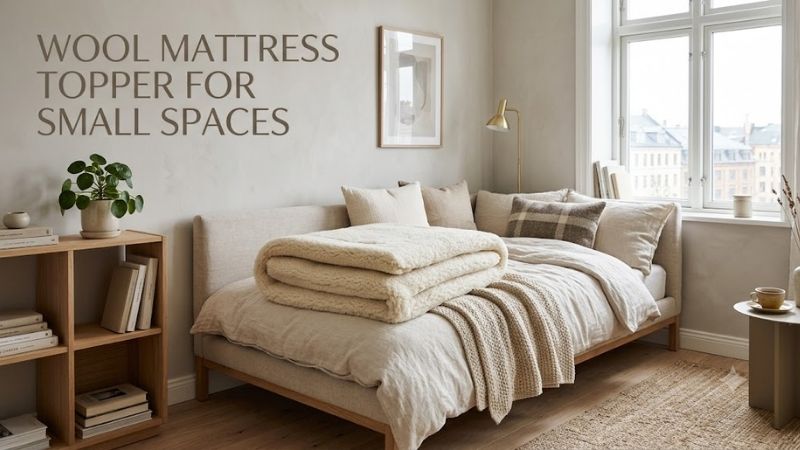
A wool mattress topper for small spaces can add gentle cushioning and help manage moisture without replacing your existing mattress. For apartments, studio bedrooms, and compact guest rooms, choosing the right thickness, construction, and size is essential. This guide explains how to balance sleep comfort, storage, temperature regulation, and practical maintenance.
Quick Verdict: Which Wool Topper Works Best in Small Spaces?
For most small bedrooms with a permanent bed, a thin or moderately filled wool topper with a breathable cotton cover is a practical starting point. It can soften the mattress surface while keeping added bulk relatively modest.
Wool behaves differently from latex and memory foam. Instead of creating a thick foam comfort layer, wool fibers compress and gradually settle under body weight. This makes construction and fill quantity especially important when selecting a topper.
| Small-Space Situation | Recommended Wool Topper Type | Main Advantage | Important Trade-Off |
|---|---|---|---|
| Studio apartment with permanent bed | Moderately filled wool topper | Gentle cushioning with moisture management | Requires occasional airing |
| Small bedroom with a firm mattress | Thicker wool-filled topper | Softens the surface feel | Limited ability to correct inadequate support |
| Hot or humid bedroom | Breathable wool fill with cotton cover | Helps buffer moisture near the body | Not active cooling |
| Compact guest bedroom | Thin wool topper | Less bulk than heavily filled designs | Limited pressure relief |
| Small shared bed | Quilted wool topper with stable construction | Consistent surface padding | Fill can compress unevenly over time |
| Murphy bed or convertible furniture | Thin, manufacturer-approved topper | Potentially compatible with restricted clearances | May need removal before folding |
| Bedroom with limited storage | Low-profile wool topper left on the bed | Avoids frequent storage | Still requires appropriate cleaning and ventilation |
Best overall configuration: For a permanent bed in a small apartment, consider a wool-filled topper with moderate loft, a breathable cotton cover, secure corner straps, and a clearly documented care policy. Choose thicker wool padding only when your existing mattress needs more noticeable surface cushioning.
Why Choose a Wool Mattress Topper for a Small Bedroom?
A wool topper is a layer of wool fiber padding placed above a mattress and usually held inside a fabric cover. Its main functions are to modify surface comfort and influence the moisture and temperature conditions immediately around the sleeper.
Wool is not a structural mattress replacement. Its suitability depends on the existing mattress, bedding, and the way the room is used.
Wool Provides Gentle Surface Cushioning
Wool fibers have natural crimp and elasticity, allowing them to create a cushioned layer when assembled into a topper.
This cushioning differs from the contouring behavior of memory foam or the responsive compression of latex.
A wool topper generally creates a softer initial contact surface rather than a substantial new support system.
For someone with a supportive mattress that feels slightly hard, this can be useful. However, people needing significant shoulder or hip pressure relief may require a thicker foam comfort layer.
Wool Helps Manage Moisture Around the Body
Wool fibers can absorb water vapor and release it as surrounding conditions change.
This hygroscopic behavior allows wool to buffer some fluctuations in moisture within bedding.
For small bedrooms where ventilation may be limited, moisture management is a relevant consideration.
However, wool does not remove humidity from the room or replace ventilation, air conditioning, or a dehumidifier.
In persistently damp conditions, a wool topper can still retain moisture and require additional drying time.
Wool Can Help Moderate Temperature Fluctuations
Wool provides insulation by trapping air between fibers. It can also absorb and release moisture vapor, contributing to thermal comfort under suitable conditions.
These characteristics may help some sleepers feel comfortable across changing temperatures.
Nevertheless, wool should not be described as automatically cooling.
A thick wool topper can retain warmth, particularly when paired with heavy bedding or a warm mattress.
Room temperature, humidity, cover fabric, and bedding construction remain important.
Wool Offers a Different Feel From Foam
A wool topper generally feels more like a thick cushioned bedding layer than a foam mattress extension.
It does not typically produce the same slow, deep contouring associated with memory foam.
Wool also lacks the same pronounced rebound of many latex toppers.
This distinction matters when selecting a topper for a compact bedroom.
If the mattress is already supportive and only needs a gentler surface, wool may be sufficient. If the goal is substantial contouring or firmness adjustment, foam may be better suited.
Wool Can Be a Practical Natural-Fiber Choice
Buyers seeking natural-fiber bedding may appreciate wool’s composition and traditional use in mattresses and bedding.
However, product labels require careful interpretation.
A topper marketed as natural may contain synthetic fabric, polyester quilting, or other materials.
Check the complete materials list, including fill, cover, stitching, and any additional padding layers.
Do not assume all wool toppers are organic, untreated, chemical-free, or independently certified.
Choosing the Right Wool Topper Thickness
Thickness matters in compact sleeping environments because it influences bed height, cushioning, bedding compatibility, and storage.
Unlike a solid foam slab, a wool topper’s thickness may change substantially after use because fibers settle and compress.
Consequently, the advertised loft should not be treated as a permanent measurement.
Thin Wool Toppers: Best for Modest Comfort Changes
A relatively thin wool topper is appropriate when the existing mattress is comfortable but needs a little extra softness.
It may also suit compact guest beds, low-profile platform beds, and bedrooms where the total mattress height should remain modest.
Thin wool padding is generally easier to handle than a heavily filled topper of the same size.
The main limitation is pressure relief. A thin wool layer cannot substantially change the support characteristics of a very firm mattress.
Medium-Loft Wool Toppers: A Balanced Everyday Choice
A medium-loft wool topper offers more initial cushioning without necessarily creating the bulk of a deeply filled model.
For permanent apartment beds, this is often a sensible category to investigate first.
Look beyond the nominal thickness and examine how the wool is distributed.
Quilting or tufting can help stabilize the fill, although it may also create variations in surface feel.
Because wool compresses during use, the long-term feel may become firmer and flatter than the initial loft suggests.
Thick Wool Toppers: More Cushioning but More Bulk
Thicker wool toppers contain more filling or use a more lofted construction.
They can provide a more noticeable padding layer on top of the mattress.
However, increased loft creates additional considerations for small rooms, especially when the topper must be moved, lifted, or stored.
A thick wool topper may also settle with use. Its initial thickness should not be interpreted as a guarantee of lasting cushioning depth.
Why Fill Weight Matters as Much as Thickness
Two toppers with the same advertised thickness may contain different quantities of wool.
Fill weight can be expressed in ounces per square yard, grams per square meter, or total pounds of filling.
Higher fill weight generally indicates more wool per unit area when measurements describe the same material and construction.
However, more filling does not automatically mean greater softness.
Fiber characteristics, processing, quilting, and compression influence the finished feel.
A heavier, densely packed wool topper may feel firmer than a loftier topper with a different construction.
Comparing Wool Topper Constructions
| Construction | Typical Surface Character | Space Consideration | Best Use |
|---|---|---|---|
| Thin wool batting | Gentle padding | Low added bulk | Minor surface adjustment |
| Moderately filled quilted wool | Balanced surface cushioning | Suitable for permanent beds | Everyday apartment sleeping |
| Deeply filled wool | More substantial initial loft | More difficult to handle and store | Greater surface padding |
| Tufted wool | Fill held in place at intervals | Depends on fill quantity | Buyers prioritizing fill stability |
| Wool-blend fill | Varies by fiber mixture | Depends on composition | Buyers comparing cost and care needs |
Construction descriptions are general. Actual loft, softness, and durability must be evaluated for the specific product.
Wool Topper Firmness and Sleeping Position
Wool toppers do not always have conventional soft, medium, and firm ratings.
Their feel depends on the amount of wool, the degree of compression, and the characteristics of the mattress underneath.
A topper that feels plush when unpacked may settle into a firmer, flatter layer after repeated use.
Side Sleepers: Consider Pressure Relief Carefully
Side sleepers concentrate pressure around the shoulders and hips.
A wool topper can soften contact with the mattress, but it may not provide the deeper contouring required by someone sleeping on a very firm surface.
If the mattress already accommodates the shoulders and hips reasonably well, a medium-loft wool topper may be adequate.
If discomfort results from insufficient pressure relief, a latex or memory foam topper may offer a more substantial change.
Do not assume extra wool thickness will automatically resolve pressure problems.
Back Sleepers: Gentle Cushioning Over Stable Support
Back sleepers may appreciate wool’s relatively modest adjustment to the mattress surface.
A thin or medium-loft wool topper can add cushioning without necessarily changing the support characteristics as dramatically as a thick, soft foam topper.
However, the underlying mattress must still provide suitable support through the lower back and pelvis.
If the mattress sags, wool padding will not restore its structural integrity.
Stomach Sleepers: Avoid Excessive Surface Softness
Stomach sleepers generally need to avoid excessive sinking around the abdomen and pelvis.
Because wool tends to compress, a relatively thin topper may be suitable when the underlying mattress already provides appropriate support.
A thick, plush topper may be unnecessary, especially if the mattress is already soft.
Comfort should be assessed by how the entire sleep surface supports the body rather than by the topper material alone.
Combination Sleepers: Maintain an Even Surface
Combination sleepers change positions throughout the night.
A quilted wool topper with well-distributed filling can offer a consistent padding layer across the mattress.
However, wool may compress differently in areas receiving frequent pressure.
If the topper develops noticeable unevenness, follow the manufacturer’s instructions for redistributing or refreshing the fill.
Choosing the Right Wool Topper Size for a Compact Bed
A correctly sized topper should sit securely on the mattress without excessive overhang or uncovered gaps.
This is particularly important on narrow beds, daybeds, and small mattresses where a few inches of misalignment can affect comfort.
Standard US Mattress Dimensions
| Mattress Size | Nominal Width | Nominal Length | Typical Small-Space Application |
|---|---|---|---|
| Twin | 38 inches | 75 inches | Small single bedroom |
| Twin XL | 38 inches | 80 inches | Taller single sleepers |
| Full | 54 inches | 75 inches | Compact adult bedroom |
| Queen | 60 inches | 80 inches | Studio apartment |
| King | 76 inches | 80 inches | Larger shared bedroom |
| California King | 72 inches | 84 inches | Longer shared sleeping surface |
These are nominal US mattress measurements. Individual mattress and topper dimensions may vary by manufacturer.
Twin Wool Toppers for Small Guest Rooms
A Twin wool topper can be practical for a small guest bedroom or a single-person sleeping setup.
Its smaller footprint means there is less bedding material to lift and maintain than with a larger mattress size.
If the topper will remain on the mattress, choose a construction that stays aligned under the fitted sheet.
For rooms where the bed also functions as a daybed, check whether the topper changes seating height or interferes with rails.
Twin XL Wool Toppers for Longer Single Beds
Twin XL mattresses provide additional length without increasing nominal width.
They are common in some dormitory and adjustable-bed configurations.
A standard Twin topper is shorter than a Twin XL mattress and may leave part of the sleeping surface uncovered.
Choose a matching Twin XL product instead of trying to stretch a smaller topper.
Full Wool Toppers for Compact Adult Bedrooms
A Full mattress can be a practical choice for one person who needs more width than a Twin.
A wool topper allows the surface feel to be adjusted without replacing the entire mattress.
For a small Full-size bed, moderate fill can offer a balance between cushioning and manageable bulk.
Check topper weight and fitted-sheet depth before purchase.
Queen Wool Toppers for Studio Apartments
A Queen bed is often the primary sleeping area in a studio apartment.
A wool topper can be convenient if it stays on the mattress permanently.
Because Queen-size toppers contain more material, cleaning, airing, and handling can be less convenient than with smaller sizes.
Look for clear care instructions and a cover construction compatible with routine maintenance.
Nonstandard Mattresses and Custom Sizes
RV mattresses, folding beds, and custom sleeping platforms may use nonstandard dimensions.
A standard Queen topper may not fit a short Queen mattress.
Measure the actual sleeping surface and confirm whether the manufacturer offers the required dimensions.
Avoid buying an oversized topper with the expectation that it can be easily trimmed. Cutting through a quilted or tufted wool construction may damage seams and allow filling to escape.
Wool Fill Types, Covers, and Construction Quality
Not all wool mattress toppers use the same materials or manufacturing methods. These differences affect how the topper feels, how well it maintains its shape, and how much maintenance it requires.
Pure Wool vs. Wool-Blend Filling
A pure wool topper uses wool as its filling material, although the outer cover may be cotton or another fabric.
Wool-blend toppers combine wool with other fibers, such as polyester. These blends may be designed to change cost, resilience, or ease of care.
A pure wool filling may appeal to shoppers prioritizing natural materials and wool’s moisture-buffering characteristics.
However, pure wool is not automatically more comfortable or durable than every blend. The finished construction, fill quality, and care instructions matter.
Check the filling composition by percentage rather than relying on broad terms such as natural wool blend.
Organic Wool vs. Conventional Wool
Organic wool claims should be supported by relevant certification documentation.
The Global Organic Textile Standard (GOTS), for example, has requirements concerning eligible organic fibers and textile processing. Its applicability depends on the certified product and certification scope.
A wool topper described as organic should not automatically be assumed to have an organic cotton cover.
Likewise, the word organic does not prove superior pressure relief, temperature control, or long-term resilience.
Buyers should evaluate organic certification separately from comfort and construction quality.
Cotton Covers vs. Synthetic Covers
Cotton is a common cover material for wool bedding because it is flexible and can allow moisture vapor to pass through, depending on the weave and finishing treatments.
A tightly woven or heavily coated fabric may behave differently from an untreated breathable cotton fabric.
Synthetic covers can also vary considerably in airflow, moisture handling, durability, and cleaning requirements.
In a warm apartment, prioritize a cover with clear material information rather than assuming all cotton covers are equally breathable.
Quilted vs. Tufted Wool Construction
Quilting secures the filling through stitched compartments or patterns, while tufting holds layers or filling together at selected points.
Both techniques can help limit fill migration.
Quilted construction may appeal to buyers who want a more consistently distributed padding layer.
Tufted construction can support thicker fill assemblies, although tufting points may be noticeable depending on the design.
Neither method completely prevents the gradual compression of wool fibers.
Corner Straps and Topper Stability
Elastic corner straps can help keep a topper positioned on the mattress.
This is especially useful on narrow beds where movement may cause the topper to shift toward one edge.
Check strap length and compatibility with the mattress depth.
Some toppers rely primarily on the fitted sheet for stability. Others have fitted skirts or elastic attachment systems.
Choose a secure design that does not pull excessively on the corners or distort the filling.
Wool Mattress Toppers vs. Other Materials for Small Spaces
Wool, latex, memory foam, and fiber-filled toppers can all improve mattress comfort, but they solve different problems.
The most important question is whether you need surface softness, deeper contouring, or a substantial change in firmness.
| Material | Main Comfort Characteristic | Moisture and Temperature Considerations | Small-Space Limitation |
|---|---|---|---|
| Wool | Gentle, compressible fiber cushioning | Absorbs and releases moisture vapor | Loft decreases with compression |
| Latex | Resilient, responsive foam cushioning | Airflow depends on construction and bedding | Can be heavy and bulky |
| Memory foam | Slow-recovery contouring | Heat and moisture behavior vary by formulation | Some designs feel warm or deeply conforming |
| Polyurethane foam | Wide range of firmness and density | Performance depends on foam construction | Quality varies significantly |
| Polyester fiberfill | Soft, lightweight padding | Moisture buffering differs from wool | Can compress or clump over time |
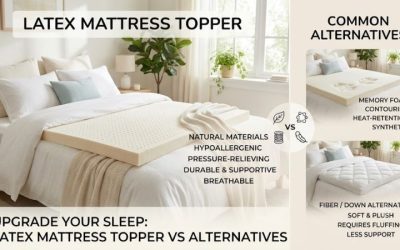
Wool vs. Latex Mattress Toppers
Latex provides a more defined foam comfort layer that responds elastically to body weight.
Wool offers fiber-based padding that changes as the filling settles.
Latex may be preferable for sleepers seeking a significant adjustment to the feel of a firm mattress.
Wool may be better suited to people who already like their mattress support but want gentler surface cushioning and natural-fiber bedding.
For small spaces, compare the actual products’ weight, thickness, and handling requirements. Neither material is automatically easier to store.
Wool vs. Memory Foam Mattress Toppers
Memory foam conforms gradually under pressure, while wool cushions through the compression of fibers.
A memory foam topper may be more suitable for someone who needs deeper contouring around the shoulders and hips.
A wool topper may appeal to someone who dislikes a deeply enveloping foam sensation.
Temperature comfort cannot be determined solely from these material names. Thickness, covers, bedding, and room conditions matter.
Wool vs. Cotton-Filled Mattress Toppers
Cotton-filled toppers offer another natural-fiber option.
Cotton and wool have different moisture absorption and fiber resilience characteristics.
Both materials can compact during use, but their long-term feel depends heavily on fill preparation and construction.
Wool’s crimped fibers can help create loft, while cotton-filled toppers may have a denser, flatter sensation.
The better choice depends on preferred comfort, care requirements, and the exact products being compared.
Wool vs. Polyester Fiberfill Toppers
Polyester fiberfill toppers are commonly used to add soft bedding-style cushioning.
They can be lightweight and may offer more convenient cleaning options, depending on the product.
Wool provides different moisture absorption and thermal properties.
However, a polyester topper may be more practical for occasional guest use when affordability, low weight, or machine washing is the priority.
Check actual product care labels before deciding.
Storage and Furniture Compatibility
A wool topper’s ability to flex does not guarantee that it can be repeatedly folded, tightly rolled, or stored in a small cabinet without affecting its fill.
The right choice depends on whether your bed remains open throughout the day.
Can a Wool Topper Be Used on a Murphy Bed?
A wool topper may be suitable for a Murphy bed if the bed manufacturer permits the added thickness and weight.
The topper must not interfere with mattress restraints, cabinet clearance, or the folding mechanism.
For compact wall beds, a thin topper is generally easier to accommodate than a thick, heavily filled design.
However, even thin toppers should not be left on a closing bed unless the manufacturer confirms compatibility.
Can a Wool Topper Be Used on a Sofa Bed?
Some sofa beds can accommodate a wool topper while the mattress is unfolded.
However, the topper may need to be removed before closing the mechanism.
Wool padding can compress, but repeated folding may create uneven fill distribution or stress stitching.
A removable topper can be practical for occasional guests if there is adequate storage space.
For daily conversion, a topper specifically approved for the furniture may be more convenient.
Is Wool Suitable for Trundle Beds?
A wool topper can be used on a trundle mattress when the combined mattress and topper height fits the available clearance.
Check the clearance underneath the main bed with the bedding included.
A thick topper can prevent the trundle from sliding back into place.
A thin, low-profile topper may be more practical, but dimensions must be verified.
Can You Store a Wool Topper in a Small Closet?
Many wool toppers can be folded or rolled for temporary storage, subject to manufacturer instructions.
However, tight compression over long periods can flatten the filling or alter its distribution.
Store the topper clean and completely dry.
Use breathable storage protection where the manufacturer recommends it, and avoid environments with condensation or persistent dampness.
Is Wool Suitable for RVs and Camper Beds?
Wool padding may be useful in RV sleeping areas, particularly where temperature and moisture conditions vary.
However, wool does not eliminate condensation or moisture problems.
A poorly ventilated mattress platform can still accumulate moisture.
Measure the mattress accurately, maintain appropriate ventilation, and inspect the bedding and underlying support surface regularly.
Nonstandard RV mattress sizes may require a custom topper.
How to Choose a Wool Mattress Topper on a Budget
Price alone does not identify the best wool topper. A more expensive product may contain more filling, use a different cover, or carry certifications that matter to some buyers but not others.
The goal is to purchase enough cushioning and quality for your actual use without paying for unnecessary thickness or features.
Compare Fill Quantity and Mattress Size
Wool quantity is an important cost and comfort variable.
Compare products with the same mattress dimensions and review their stated fill weights.
A larger topper naturally requires more material than a smaller one.
When fill weight is provided, distinguish between total weight and filling weight.
Total product weight may include the cover, quilting, straps, and packaging-related components.
Evaluate the Initial Loft and Expected Compression
A thick-looking topper may feel substantially flatter after regular use.
Manufacturers sometimes provide guidance regarding natural settling or expected changes in loft.
Review that information before purchase.
If the product does not disclose fill quantity or construction details, it may be difficult to assess its long-term suitability.
Avoid assuming a larger advertised thickness necessarily provides better value.
Consider Maintenance Costs
Some wool toppers require professional cleaning or specialized care.
Others permit careful spot cleaning or have removable covers that can be washed separately.
A topper with complicated cleaning requirements may be inconvenient in a small apartment where drying space is limited.
Consider the cost of compatible protectors and the practical ability to air the topper.
Check the Return Policy Before Purchasing
Wool has a distinctive feel that changes as the filling compresses.
Some buyers may appreciate the resulting surface, while others may prefer the consistent contouring of foam.
Review the trial period, return shipping rules, and restrictions involving used bedding.
A clear return policy can be particularly valuable when buying a topper without experiencing its feel beforehand.
Focus on Relevant Certifications
Certifications may be worth paying for when they address a specific buyer concern.
For example, a buyer focused on organic fiber sourcing may value properly documented organic textile certification.
Someone concerned about particular chemical substances may look for applicable independent testing.
However, certifications do not replace an evaluation of comfort, fit, thickness, and construction.
Confirm exactly which component is certified.
Practical Buying Scenarios for Small Homes
The following scenarios illustrate how room layout, mattress condition, and sleeping habits influence topper selection.
Scenario 1: Studio Apartment With a Queen Bed
A studio apartment may have limited space for storing additional bedding.
If the Queen mattress is supportive but its surface feels slightly firm, a moderately filled wool topper can offer gentle cushioning without introducing a thick foam layer.
A quilted design with a cotton cover and secure corner straps may be convenient for everyday use.
Because the topper stays on the mattress, storage flexibility is less important than comfort and routine care.
Scenario 2: Compact Guest Room With a Twin Bed
For a guest bed used occasionally, a thin wool topper may provide adequate surface padding.
A smaller Twin topper can also be easier to lift and air than a Queen or King version.
Prioritize manageable weight, a protective cover, and straightforward cleaning instructions.
If guests have widely different comfort preferences, a topper that provides only a modest surface change may be more practical than a heavily filled model.
Scenario 3: Full-Size Bed With a Firm Mattress
A firm Full mattress may benefit from wool padding if the sleeper wants a softer contact surface without a pronounced foam sensation.
Choose a topper with enough filling to create noticeable initial cushioning, while recognizing that wool compresses.
If shoulder or hip pressure is a major problem, compare wool with a suitable latex or memory foam topper.
Wool should not be chosen solely because it is described as soft.
Scenario 4: Home Office With a Convertible Guest Bed
A home office that occasionally becomes a guest room may require the topper to be stored between visits.
A thin wool topper can be easier to handle than a deeply filled design.
However, storage convenience still depends on actual weight, dimensions, and folding guidance.
Confirm the sofa-bed or folding-bed requirements before purchasing.
If the topper must be tightly compressed every day, another bedding configuration may be more appropriate.
Scenario 5: Small Bedroom in a Humid Climate
A wool topper may help buffer moisture vapor in the bedding environment.
However, its moisture-regulating behavior should not be confused with active dehumidification.
Choose a breathable cover, avoid leaving the topper damp, and maintain adequate room ventilation.
Inspect the mattress and foundation for condensation or moisture accumulation.
Persistent humidity problems should be addressed through the room environment, not by relying on wool alone.
How to Set Up a Wool Mattress Topper Correctly
Proper installation helps maintain an even sleeping surface and reduces unnecessary wear.
Step 1: Inspect the Mattress
Check that the existing mattress is structurally sound.
Look for pronounced sagging, damaged areas, or an unstable foundation.
A wool topper should be used to refine comfort rather than conceal major mattress defects.
If the mattress has significant support problems, address those before purchasing additional padding.
Step 2: Measure the Mattress
Measure the width, length, and depth of the mattress.
Compare those dimensions with the manufacturer’s stated topper measurements.
Include the added topper thickness when evaluating fitted-sheet pocket depth.
If the bed has rails, a folding mechanism, or restricted clearance, confirm compatibility before placing the topper on it.
Step 3: Unpack and Position the Topper
Follow the manufacturer’s unpacking instructions.
Lay the wool topper evenly across the mattress and align the edges.
If corner straps are included, attach them without overstretching.
Allow compressed filling to recover as directed by the manufacturer.
Do not assume the topper will reach a particular final thickness unless the manufacturer provides that specification.
Step 4: Add a Suitable Mattress Protector
A compatible protector can help reduce exposure to spills, body oils, and routine soiling.
However, waterproof protectors vary in vapor permeability and may change how warm the bed feels.
For buyers prioritizing wool’s moisture-handling characteristics, consider how the complete bedding system affects airflow and vapor transfer.
The protector should fit securely without compressing or distorting the topper unnecessarily.
Step 5: Use a Deep Enough Fitted Sheet
The fitted sheet must accommodate the mattress and topper together.
If it is too shallow, it may pull away from the corners or bunch the wool filling.
Select the appropriate pocket depth using the actual combined height.
Do not rely exclusively on mattress-size labels.
Step 6: Monitor Fill Compression
Wool filling naturally settles under repeated pressure.
Check whether the topper remains evenly distributed after regular use.
Some manufacturers recommend occasional rotation, airing, or gentle redistribution of the filling.
Follow the product’s instructions rather than assuming all wool toppers can be shaken, beaten, or refluffed in the same way.
Cleaning and Maintaining Wool in a Small Apartment
Wool requires care that differs from many machine-washable synthetic bedding products.
The safest cleaning method depends on the topper’s exact construction, cover, and manufacturer’s instructions.
Air the Topper When Needed
Airing can help release accumulated moisture from bedding.
If the manufacturer permits it, remove the bedding and expose the topper to clean, dry, well-ventilated air.
Some products may be suitable for airing outdoors under specified conditions.
Avoid prolonged direct sunlight unless the manufacturer allows it, because light and heat exposure can affect fibers, dyes, and covers.
Do not leave wool bedding outdoors where it could become damp.
Spot-Clean Minor Spills
Blot spills promptly with an absorbent cloth.
If the product permits spot cleaning, use the specified cleaning method and avoid unnecessary saturation.
Do not aggressively scrub the filling or soak the topper.
Excessive moisture can be difficult to remove from thick wool assemblies and may lead to odor or mildew problems if the material is not dried completely.
Do Not Assume Wool Is Machine Washable
Some wool products are manufactured for machine washing, but many wool mattress toppers are not.
Agitation, water temperature, and inappropriate detergents can cause shrinkage, felting, or changes in the filling.
A machine-washable cover does not necessarily mean the entire topper can be washed.
Follow the specific product label.
Rotate When Recommended
Regular use can concentrate compression in certain areas.
If the manufacturer recommends rotation, changing the topper’s orientation may help distribute wear.
However, rotation cannot reverse all permanent fiber compression.
Do not use vigorous beating or aggressive pulling to restore loft.
Keep the Mattress and Foundation Dry
Moisture beneath a mattress can be a concern in compact bedrooms, particularly when air circulation is restricted.
A wool topper cannot prevent condensation underneath the mattress.
Maintain ventilation around the sleeping surface and inspect the foundation when appropriate.
Avoid storing damp bedding inside enclosed furniture compartments.
Know When to Replace the Topper
There is no universal replacement schedule for wool mattress toppers.
Service life varies with wool quality, fill quantity, construction, sleeping habits, and maintenance.
Consider replacing the topper if it develops persistent unevenness, damaged seams, substantial fill deterioration, or discomfort that cannot be resolved through manufacturer-recommended care.
Common Mistakes When Buying Wool Toppers
Choosing Wool to Fix Severe Mattress Sagging
A wool topper cannot correct a damaged mattress core or failing foundation.
Its fibers follow the existing surface and compress under pressure.
If the mattress has deep body impressions or insufficient support, replacing the affected mattress or support system may be necessary.
Assuming Higher Loft Means Better Comfort
More filling or greater initial thickness does not automatically produce better sleep.
A thick wool layer may compress, retain warmth, or create unnecessary bulk.
Choose according to the mattress’s current comfort and your preferred sleeping position.
Ignoring the Topper’s Fill Weight
Two products with similar advertised thicknesses can have very different amounts of wool.
Without checking the fill weight and construction, it is difficult to understand what the added material may contribute.
Compare equivalent sizes and review the filling specifications.
Expecting Wool to Act Like Memory Foam
Wool does not provide the same slow-recovery contouring behavior as memory foam.
It primarily modifies the mattress’s surface through fiber cushioning.
If deep pressure relief is the goal, consider whether a foam topper would better address the underlying comfort issue.
Overlooking Storage Requirements
Wool toppers can be flexible, but thick versions may be inconvenient to fold and store.
A topper that works well on a permanent bed may be unsuitable for furniture that must close every morning.
Check the furniture manufacturer’s requirements as well as the topper’s handling instructions.
Assuming Natural Wool Is Allergy-Proof
Natural wool does not guarantee that a topper will be suitable for everyone with allergies or sensitivities.
Reactions may relate to fiber contact, processing substances, other components, or environmental allergens.
People with known sensitivities should review the full material composition and seek appropriate medical advice when needed.
Do not assume that natural, organic, or hypoallergenic marketing labels establish universal safety.
Purchasing Without Checking Cleaning Instructions
A thick wool topper may be difficult to clean and dry in an apartment without outdoor space.
Before purchasing, confirm how spills should be handled and whether the cover can be removed.
Ease of care is especially important for guest beds, family homes, and households where accidental spills are likely.
Frequently Asked Questions
Is a Wool Mattress Topper Good for a Small Apartment?
Yes, a wool mattress topper can be suitable for a small apartment when the existing mattress is supportive and the topper can remain on the bed. It adds gentle cushioning and offers moisture-buffering properties. Thin or moderately filled designs are generally more manageable than bulky, heavily filled toppers.
How Thick Should a Wool Mattress Topper Be for a Small Bed?
A relatively thin or medium-loft topper is a practical starting point. Unlike foam, wool compresses and may lose some initial loft over time, so advertised thickness alone is not a reliable indicator of long-term comfort. Check fill weight, construction, and the manufacturer’s guidance about settling.
Can a Wool Mattress Topper Keep You Cool in Summer?
Wool can absorb and release moisture vapor, which may help regulate the bedding microclimate. However, it also provides insulation and does not actively cool the body. Actual comfort depends on thickness, room temperature, humidity, covers, and other bedding. Hot sleepers should consider the complete sleep environment.
Can You Fold a Wool Mattress Topper for Daily Storage?
Some wool toppers can tolerate temporary folding, but repeated tight folding may affect fill distribution or stitching. Thick wool toppers can also be bulky. Check the manufacturer’s folding and storage instructions before selecting one for a Murphy bed, folding mattress, or convertible sofa.
Is a Wool Mattress Topper Better Than Latex for a Firm Mattress?
It depends on the discomfort. Wool is useful for adding gentle surface padding to an otherwise comfortable mattress. Latex generally offers a more substantial, resilient comfort layer that may better address the need for deeper cushioning. Neither material can reliably repair a mattress with structural support problems.
How Often Should You Clean a Wool Mattress Topper?
Cleaning frequency depends on usage, spills, bedding protection, and manufacturer instructions. Routine care may include airing the topper, washing removable protective bedding, and permitted spot cleaning. Do not machine-wash the entire topper unless the manufacturer explicitly approves it. Always dry wool completely before returning it to the bed.
Conclusion
A wool mattress topper for small spaces is a practical choice for sleepers who want gentle cushioning, natural-fiber bedding, and moisture management without replacing a supportive mattress. For most permanent apartment beds, a thin or moderately filled wool topper with a breathable cover is a sensible starting point. Prioritize correct mattress sizing, verified fill construction, manageable weight, and realistic care requirements. If you need deep contouring or substantial firmness correction, consider latex or memory foam instead.