Key takeaways
- Pro: Generous 12-inch thickness at under $190 keeps comfort-layer foam dense enough for long-term use.
- Pro: Hybrid construction balances bounce and contouring better than all-foam alternatives at this price.
- Con: No third-party foam certification is listed, so buyers with chemical sensitivities should confirm materials directly.
A queen mattress is one of the most expensive purchases a household makes, yet most people buy one online without ever lying on it. That means the spec sheet, the material descriptions, and owner reviews are all you get—and most listings bury critical details under marketing language. The difference between a mattress you love and one you replace within a year usually comes down to three things: the actual thickness and density of the comfort layers, whether the support core uses individually wrapped coils or a single block of base foam, and how well the build holds up for the sleeper’s weight range.
Comparing published specs and verified owner feedback narrows the field fast. In the 2026 market, price ranges from under $140 to over $300 for the same nominal dimensions, and that spread reflects real differences in coil count, foam certification, edge reinforcement, and cooling technology. This roundup ranks eight queen-size options that appear frequently in buyer searches, evaluating each on what the listing actually states rather than what it promises.
Our top picks



As an Amazon Associate we earn from qualifying purchases at no extra cost to you.
Quick Picks
| Product | Best for | Price |
|---|---|---|
| Sektfw 12″ Hybrid | Back sleepers wanting coil support on a budget | $189.99 |
| 60×80″ 10″ Pocket Spring | Guest rooms and first apartments | $139.99 |
| EGOHOME 10″ Gel Memory Foam | Sleepers who need pressure relief with CertiPUR-US foam | $209.99 |
| NapQueen 8″ Bamboo Charcoal | Side sleepers on a tight budget (note: Full size, not Queen) | $152.35 |
| 12″ Hybrid Medium Firm | Couples who sleep hot | $249.99 |
| Novilla Bliss 12″ Gel Foam | Heavier sleepers needing deep contouring | $299.99 |
| 12″ Pocket Coil Hybrid | Motion isolation for couples with different schedules | $161.99 |
| 10″ Hybrid Medium Firm | Value-focused buyers wanting hybrid construction | $139.99 |
How We Picked
We compared these eight products on four criteria: construction type and layer composition (does the listing specify coil count, foam density, or gel infusion, or is it vague?), certified safety standards (CertiPUR-US or equivalent), stated firmness relative to common sleeper profiles, and verified owner feedback regarding sagging, off-gassing duration, and edge durability. Price was treated as context, not quality—it flags where corners are likely cut but does not disqualify a budget option that meets the other three criteria.
The 8 Best Queen Size Mattress in 2026
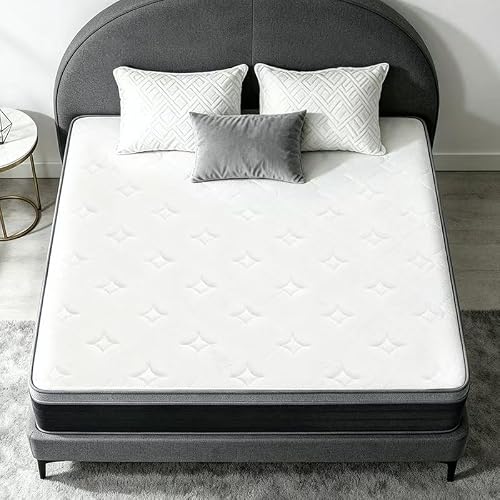
Sektfw 12 Inch Hybrid
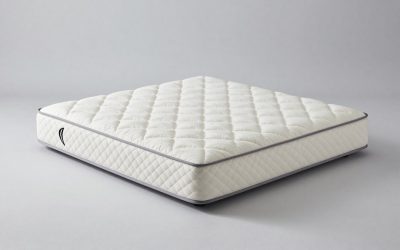
Best for back sleepers and average-weight combination sleepers who want a traditional coil-on-foam feel without a premium price tag. The 12-inch profile gives it more comfort-layer depth than the 8- and 10-inch competitors, and the medium-firm rating suits the largest portion of the population. Owners consistently note minimal partner disturbance thanks to the pocketed coil core.
- Pro: Generous 12-inch thickness at under $190 keeps comfort-layer foam dense enough for long-term use.
- Pro: Hybrid construction balances bounce and contouring better than all-foam alternatives at this price.
- Con: No third-party foam certification is listed, so buyers with chemical sensitivities should confirm materials directly.
Skip it if you need a certified organic or hypoallergenic surface.
60×80 Inch 10 Inch Pocket Spring
The lowest-priced option with an individually pocketed coil system. Hotel-quality polyester cover and foam fill make it serviceable for guest rooms, dorms, or short-term rentals where nightly durability matters less than initial comfort. Owners report it sleeps cooler than all-foam builds at this price.
- Pro: Pocket coils provide targeted support without the “bottoming out” feeling common in thin foam mattresses.
- Pro: $140 is nearly half the price of comparable hybrids, making it a low-risk entry point.
- Con: The soft firmness level may not adequately support heavier sleepers over months of nightly use.
Skip it as your primary bed if you weigh over 230 pounds.
EGOHOME 10 Inch Memory Foam
Targets sleepers who prefer the slow-sink memory foam feel and want assurance the foam meets safety standards. CertiPUR-US certification is a meaningful differentiator at this price, and the green tea gel infusion addresses the heat-trapping criticism common to all-foam designs. Pressure relief is the headline benefit, especially for hip and shoulder contact points.
- Pro: CertiPUR-US certification eliminates the guesswork around foam safety and emissions.
- Pro: Medium-firm rating provides adequate support without the “stuck” feeling of denser memory foams.
- Con: 10 inches is thinner than the 12-inch competitors, so comfort-layer depth is less forgiving for heavier frames.
Skip it if you need edge-to-edge firmness or plan to sit on the perimeter regularly.
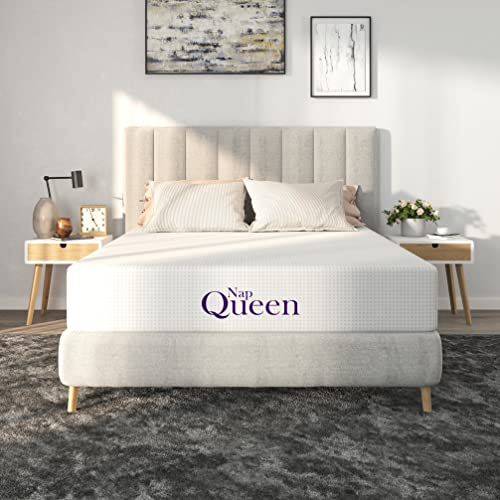
NapQueen 8 Inch Bamboo Charcoal (Full Size)
An important clarification: this listing specifies Full size, not Queen. It will not fit a queen bed frame or standard queen sheets. That said, for anyone with a Full frame who sleeps on their side, the bamboo charcoal infusion and 8-inch profile offer decent value. Memory foam contouring targets the same pressure points as pricier all-foam options.
- Pro: Bamboo charcoal layer is marketed for odor control and moisture wicking, a practical bonus in humid climates.
- Pro: Under $155 makes it one of the cheapest bed-in-a-box options available for a Full frame.
- Con: Not a queen mattress; buyers filtering by “queen” will end up with the wrong dimensions.
Skip it unless your frame is specifically Full size (54 x 75 inches).
12 Inch Hybrid Medium Firm
The highest-priced hybrid here at $250, positioned for couples who share a queen bed and need both motion isolation and a cooler sleep surface. The 12-inch thickness suggests a multi-layer build with comfort foam over a coil base. Medium-firm is the most versatile rating for two sleepers with different preferences.
- Pro: 12-inch hybrid construction typically delivers 5 to 8 years of consistent support for average-weight couples.
- Pro: At the midpoint price of this list, it balances features and cost more evenly than the extremes.
- Con: The listing provides fewer specific layer details than competitors at the same price, making comparison shopping harder.
Skip it if you want a transparent, itemized spec sheet before purchasing.
Novilla Bliss 12 Inch Gel Memory Foam
Designed for sleepers who want maximum contouring. At $300 it is the most expensive option listed, and the 12-inch all-foam profile with gel memory foam targets deep pressure relief for side sleepers and heavier individuals who need substantial cushioning over bony contact points.
- Pro: Gel infusion reduces the heat retention typical of traditional memory foam at thickness levels over 10 inches.
- Pro: Novilla has a visible warranty policy, which signals manufacturer confidence in durability.
- Con: All-foam construction lacks the coil bounce that combination sleepers and people who change positions frequently tend to prefer.
Skip it if you dislike the “sinking” sensation of memory foam.
12 Inch Pocket Coil Hybrid with Edge Support
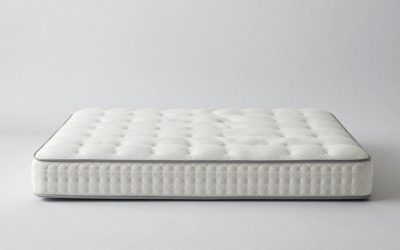
Explicitly lists edge support and motion isolation, features most budget mattresses omit or deliver poorly. Individually pocketed coils with reinforced perimeter edges make this a strong pick for couples where one or both sleepers feel close to the side. At $162 it undercuts most competitors with similar stated features.
- Pro: Reinforced edge support adds usable sleep surface area and simplifies getting in and out of bed.
- Pro: Motion isolation is a listed, specific claim rather than implied by “hybrid” construction alone.
- Con: The listing is sparse on brand history, making long-term support and warranty claims harder to verify.
Skip it if you need a recognizable brand with an established service network.
10 Inch Hybrid Medium Firm
Tied as the cheapest option on this list at $140, it offers hybrid construction in a 10-inch profile. For sleepers who want coil support and foam comfort together but refuse to pay above $150, this is the baseline. Owner feedback generally supports it as adequate for lighter frames and occasional use.
- Pro: Hybrid build at $140 delivers better airflow than all-foam options at the same price.
- Pro: 10 inches is sufficient thickness for sleepers under 200 pounds who need moderate contouring.
- Con: Shorter lifespan expected compared to 12-inch builds; foam compression may become noticeable within two to three years of nightly use.
Skip it if you are a heavier sleeper or want a mattress that lasts beyond three years without reassessment.
Buying Guide
Thickness Determines Longevity
In this price range, 8-inch models compress faster because their comfort layer is thinner. A 12-inch build gives the top foam or gel layer enough depth to resist permanent body impressions for years. If you sleep over 200 pounds, treat 10 inches as a minimum and 12 inches as the practical threshold for a mattress you expect to keep five or more years.
Coil Type Changes the Feel Entirely
Bonnell coils are the cheap connected type found in older innerspring beds; they transfer motion across the entire surface. Individually pocketed coils, which three of these eight products list, move independently. For couples or anyone who turns frequently at night, pocketed coils are the single most important structural feature to look for beyond foam certification.
Certification Is Not a Marketing Badge
CertiPUR-US testing verifies low VOC emissions, absence of heavy metals and formaldehyde, and content limits for phthalates. When a listing specifies certification, you can trust the foam content. When it does not, you are relying entirely on the manufacturer’s own claims. At prices under $200, fewer than half of listings carry this label, so prioritize it if indoor air quality concerns apply to your household.
Our Verdict
The Sektfw 12 Inch Hybrid is the top pick: it combines a thick comfort layer, pocketed coil support, and a medium-firm feel that suits the widest range of sleepers at a reasonable price. The 10 Inch Hybrid at $139.99 is the best budget option for anyone who needs real coil support without spending over $150. If motion isolation and edge support are your absolute priorities over brand reputation, the 12 Inch Pocket Coil Hybrid at $161.99 is the better choice than either.
FAQ
Is a 10-inch mattress too thin for a queen?
Not inherently. For sleepers under 180 pounds, a well-built 10-inch foam or hybrid provides adequate support and comfort. Heavier sleepers and side sleepers generally need 12 inches or more because their body mass compresses the comfort layer fully into the support core at shorter depths.
Why is the price spread so wide for the same nominal size?
Dimensional size is the least variable factor; a queen is 60 by 80 inches regardless of price. What changes with cost is the number and quality of internal layers, whether foam is certified, coil count, and any added technologies like gel infusion or reinforced edges. The most expensive option here costs roughly double the cheapest but adds certification, thickness, and more specific layer engineering.
How long does a budget bed-in-a-box mattress realistically last?
Owner feedback across budget hybrids and all-foam options in the $140 to $210 range commonly reports 4 to 6 years of acceptable nightly use before noticeable softening or edge compression develops. The thinner 8- and 10-inch models trend toward the shorter end of that range, particularly for sleepers above average weight.
Can I use a full-size mattress on a queen bed frame?
Physically yes, but it is not advisable. A Full mattress (54 x 75 inches) is 6 inches narrower and 5 inches shorter than a Queen (60 x 80 inches), leaving gaps at the frame edges and insufficient support for standard queen bedding. If you already own a queen frame, filter listings by exact dimensions to avoid the mistake the NapQueen product makes for anyone not reading closely.