Key takeaways
-
Full external dimensions and base footprint.
-
Available stable bedside placement.
-
Maximum brightness and stated measurement conditions.
-
Number of brightness settings.
-
Adjustable or fixed sunrise duration.
-
Yellow-only or multicolor sunrise sequence.
-
Audible alarm backup and volume controls.
-
Single, dual, or weekly alarm scheduling.
-
Display-dimming options.
-
Night-light or sunset functions, if useful.
-
Wall-power requirements and outage behavior.
-
App or subscription dependencies.
-
Warranty and return conditions.
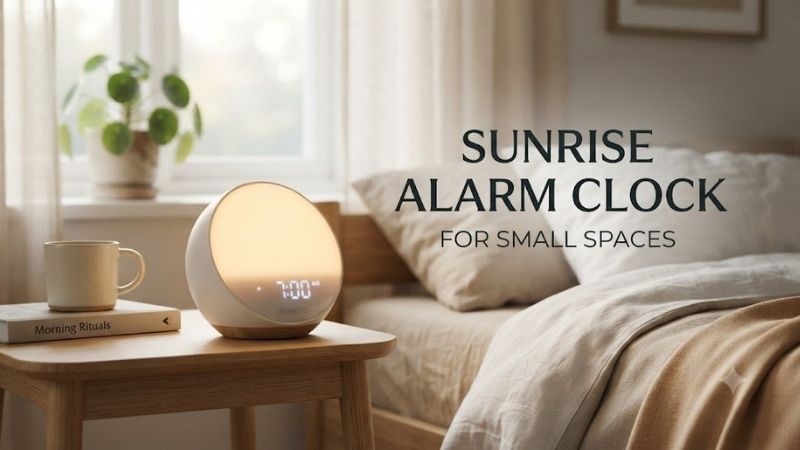
A sunrise alarm clock for small spaces should provide a comfortable, gradual wake-up light without overwhelming a narrow nightstand or creating unnecessary clutter. In studio apartments, dorm rooms, and compact bedrooms, the best device may not be the brightest or most feature-rich model. Its physical footprint, light placement, audible backup, display brightness, and power requirements can be more important than elaborate smart-home features.
This buying guide explains how sunrise alarm clocks work, which specifications matter, how to position one in a small bedroom, and when a basic wake-up light may provide better value than an expensive multifunction device.
How Sunrise Alarm Clocks Work
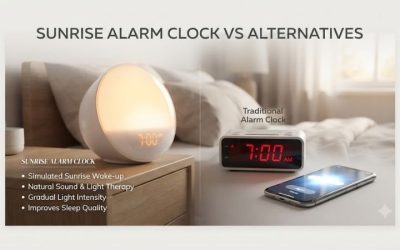
A sunrise alarm clock gradually increases its light output before the scheduled wake-up time. Many devices begin with a dim light and progress toward a brighter morning-like appearance, often accompanied by an audible alarm at the selected time.
The intention is to provide a gentler transition from darkness to wakefulness than a sudden alarm sound alone.
However, different products simulate sunrise in different ways. Some gradually brighten yellow light, while others transition through red, orange, and yellow tones.
A visually realistic sunrise effect is not the same as a clinically verified circadian treatment.
Gradual Light Versus a Conventional Alarm
A conventional alarm relies primarily on sound, vibration, or both.
A sunrise clock introduces light before the audible notification.
Some people find the gradual increase more pleasant, while others continue sleeping through the light and require a conventional alarm sound.
For this reason, a reliable audible backup is an important feature.
A sunrise alarm should be tested under ordinary sleeping conditions before being relied on for work, school, or another important obligation.
What Light Can Do to Circadian Timing
Light is a major signal influencing the human circadian system.
The effect depends on the timing, intensity, duration, and spectral characteristics of exposure.
Morning light can influence circadian timing differently from light late in the evening.
However, a bedside sunrise simulation does not automatically deliver the same light exposure as outdoor daylight or a clinically prescribed light therapy device.
The practical purchasing goal should be a comfortable and reliable waking experience.
Why Small-Room Placement Matters
In a compact bedroom, the lamp may be placed close to the sleeping position.
That can make moderate brightness noticeable without requiring a very large device.
However, furniture can obstruct the light, and a lamp positioned behind the sleeper may be less effective as a visual cue.
Physical placement is therefore as important as the clock’s advertised maximum brightness.
Choosing the Right Size for a Small Nightstand
A sunrise clock must be positioned where its light can reach the sleeping area.
Yet small bedrooms often have narrow nightstands already occupied by charging devices, glasses, medication, books, or a bedside lamp.
The goal is not necessarily to buy the smallest clock. It is to choose one that provides useful illumination without interfering with essential items.
Measure the Available Surface
Measure the usable width and depth of the nightstand.
Do not count areas where a device would overhang the furniture.
Also consider the clearance needed behind the clock for a power cable.
A clock that fits physically but must be placed at the very edge of a narrow shelf may not be a suitable purchase.
Check the Device’s Base Footprint
Some sunrise clocks have a broad circular face but a relatively small supporting base.
Others occupy more depth than their front-facing photographs suggest.
Compare complete exterior dimensions rather than only the advertised display diameter.
Consider Control Accessibility
A compact clock may use small multifunction buttons.
If you frequently change your alarm, difficult controls can become frustrating.
A slightly larger model with accessible physical buttons may be more practical than a tiny device requiring an app for basic adjustments.
Avoid Overcrowding the Nightstand
A wake-up light should sit securely on stable furniture.
Do not stack it on books or position it where the cable pulls against the device.
If no suitable bedside location exists, consider a wall shelf designed for the load or another safe arrangement.
How Much Brightness Does a Sunrise Alarm Need?
Brightness is one of the most heavily advertised specifications.
Some manufacturers describe maximum output in lux, while others use more general terms such as bright sunrise light.
However, lux measurements are meaningful only when the distance and testing conditions are understood.
A specification measured near the lamp does not necessarily describe the light reaching the sleeper.
Understanding Lux
Lux measures illuminance, or luminous flux reaching a surface per unit area.
The amount reaching the user depends on distance, orientation, obstructions, and the lamp’s light distribution.
Two devices advertising similar lux values may produce different practical experiences if their measurement conditions differ.
Why Higher Lux Is Not Always Better
A very bright lamp may be unnecessary in a small bedroom.
If the clock sits close to the bed, a moderate output may already be noticeable.
The appropriate brightness depends on personal sensitivity and ambient light.
A device with fine brightness adjustment can be more useful than one offering a very high maximum output but limited control.
Consider the Room’s Existing Light
A sunrise clock is easier to notice when the bedroom is relatively dark before waking.
If substantial natural daylight already enters the room, the simulated sunrise may contribute less additional visual change.
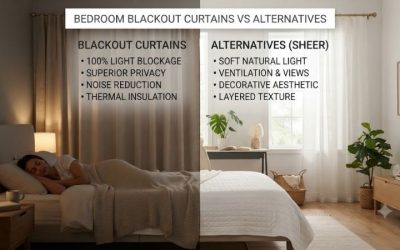
This is why blackout curtains and a sunrise alarm can serve complementary purposes.
However, the alarm’s audible backup should remain reliable.
Sunrise Duration: Why Timing Matters
Sunrise duration determines how long the device takes to progress from its initial dim level toward its intended wake-up brightness.
Some models offer fixed durations, while others allow users to adjust the timing.
The best duration is the one that fits your schedule and sleeping preferences.
Short Sunrise Programs
A relatively short sunrise may be preferable for someone who wants a noticeable cue close to the alarm time.
However, a very short program may feel more abrupt.
Longer Sunrise Programs
A longer sequence creates a slower change in illumination.
Some people find this pleasant, while others may become aware of the light earlier than intended.
Longer is not necessarily more effective.
Example: A 7:00 AM Alarm
| Sunrise duration | Approximate light-start time | Audible alarm |
|---|---|---|
| 15 minutes | 6:45 AM | 7:00 AM |
| 20 minutes | 6:40 AM | 7:00 AM |
| 30 minutes | 6:30 AM | 7:00 AM |
| 40 minutes | 6:20 AM | 7:00 AM |
| 60 minutes | 6:00 AM | 7:00 AM |
These are illustrative timing calculations, not claims that every model offers each duration.
Why Incorrect Timing Can Be Frustrating
Some users assume that a sunrise alarm set for 7:00 AM begins brightening at 7:00 AM.
In many designs, the light starts increasing beforehand.
This means the actual beginning of the wake-up sequence can occur significantly earlier.
Review how the device defines alarm time and sunrise start time before deciding whether its scheduling behavior suits you.
Yellow Sunrise Versus Red-to-Orange Sunrise
Some basic sunrise clocks increase the brightness of a yellow or warm-white light.
More elaborate models use colored transitions intended to resemble dawn.
These designs differ visually, but a more complex color sequence is not proof of better sleep outcomes.
Yellow-Light Sunrise
A yellow-light sunrise can create a gradual increase in brightness without requiring a complex lighting system.
For many buyers, this may be sufficient.
It is particularly appropriate when the primary goal is making the alarm less abrupt.
Red-to-Orange-to-Yellow Sunrise
A colored sequence may feel more natural to users who associate sunrise with warm color progression.
It can also create a softer-looking early phase.
However, the quality of the experience depends on the device’s brightness control and light distribution, not simply the number of colors advertised.
Decorative RGB Lighting
Some budget sunrise clocks offer numerous ambient colors.
These colors may function as decorative lighting rather than as part of the wake-up sequence.
A product advertising sixteen or seventeen colors does not necessarily provide a sixteen-stage sunrise.
Check the actual alarm-light behavior before purchasing.
Sunrise Alarm Clock Types Compared
| Type | Main benefit | Space consideration | Best starting buyer |
|---|---|---|---|
| Basic sunrise clock | Gradual light and audible alarm | Usually straightforward bedside footprint | Wants simple waking |
| Multifunction sunrise lamp | Light, sounds, radio, or night light | Can replace separate devices | Limited nightstand space |
| Smart sunrise clock | App schedules and routines | Adds connectivity requirements | Wants automation |
| Sunrise clock with sound machine | Combines waking and background audio | Reduces device count | Uses white noise already |
| Sunrise lamp with sunset routine | Morning and evening light functions | May replace bedside lamp | Wants a consistent routine |
| Portable wake-up light | Easier relocation | Power and battery limitations vary | Travel or temporary rooms |
Basic Sunrise Clocks Versus Smart Sleep Devices
Smart features can be convenient, but they are not necessary for every bedroom.
A basic sunrise clock may provide all the functions needed for a reliable waking routine.
Basic Standalone Models
Standalone clocks generally provide local physical controls and do not require a smartphone for ordinary operation.
This may be appealing to people who want fewer screens near the bed.
The main limitation is less sophisticated scheduling or fewer sound choices.
Smartphone-Connected Models
App-connected clocks may allow customized routines, sound selections, and lighting schedules.
However, they can require software setup, account access, or recurring content subscriptions.
The buyer should distinguish features included with the device from those requiring additional payment.
Multifunction Models
A combined sunrise light, clock, and sound machine can reduce bedside clutter.
For someone who already uses an alarm clock, white noise machine, and separate reading lamp, one multifunction device may provide useful consolidation.
However, all combined functions should be suitable for the intended use.
A sunrise lamp is not automatically a good reading lamp, and a built-in sound library is not necessarily comparable to a dedicated white noise machine.
Choosing an Alarm Clock for a Dorm Room
Dorm rooms often combine sleeping, studying, and social activity within a small area.
The user may also share the room with another person.
Roommate Light Exposure
A sunrise clock gradually brightens part of the room.
In a shared space, the light may disturb a roommate who has a different schedule.
Discuss placement and timing before choosing an exceptionally bright device.
A lamp positioned toward the user’s side may be more appropriate, although reflected light can still spread through the room.
Audible Alarm Settings
The audible backup needs to wake the intended user without being unnecessarily loud.
A machine with adjustable alarm volume can be useful.
However, no alarm can guarantee that one roommate wakes without disturbing another.
Dimmable Clock Displays
A bright clock display can be distracting at night.
Check whether the display can be dimmed or turned off independently from the sunrise function.
Residence Electrical Requirements
Dorms may have rules concerning electrical equipment, extension cords, and mounting.
Choose a power arrangement that can be used safely within those requirements.
Choosing a Sunrise Clock for a Studio Apartment
In a studio apartment, the sleeping area may remain visible during the day.
A sunrise clock can serve as both a wake-up device and a small decorative lamp, but its design should fit the broader room.
Consider Multifunction Value
A model offering a useful night light or sound function may reduce the number of devices on the nightstand.
However, decorative features that are rarely used add little value.
Avoid Large Unnecessary Bases
A clock with a broad base may occupy valuable surface space.
Check complete dimensions and the angle at which the lamp needs to face the bed.
Choose Appropriate Display Brightness
A bright clock display can remain visible across an open studio.
Dimming controls may be particularly useful when the sleeping and living areas are not separated.
Plan for Power Cables
A studio may have outlets located behind furniture.
Avoid routing cords across walking areas.
Do not place the device where the power cable makes it unstable.
Dual Alarms, Weekly Schedules, and Snooze Functions
Scheduling features affect everyday convenience.
Single Alarms
A single alarm may be sufficient for someone who wakes at the same time every day.
It can also make the controls easier to understand.
Dual Alarms
Dual alarms may be useful for different weekday and weekend times or for two people with different schedules.
However, dual alarms do not necessarily mean that the device supports a complete seven-day calendar.
Check exactly how schedules are configured.
Weekly Programming
Some advanced models allow different alarms on different days.
This can be convenient for students, shift workers, or people with changing work schedules.
However, frequent schedule changes can complicate sleep routines. The feature should be chosen for real practical need.
Snooze Functions
A snooze function provides a delayed audible reminder.
The specific delay varies by model.
Consider whether the button is easy to locate in darkness and whether snoozing changes the light sequence.
Power Requirements and Alarm Reliability
A sunrise alarm clock may use wall power, rechargeable power, or a combination of electrical systems.
Its behavior during a power interruption is an important purchasing detail.
AC-Powered Models
Many dedicated sunrise lamps rely on wall power because illumination requires sustained electrical energy.
These can be practical for permanent bedside use.
However, a power outage may interrupt the alarm.
Battery Backup
Some clocks have backup batteries that preserve time or alarm settings.
That does not necessarily mean the full sunrise lamp continues functioning during an outage.
Read the manufacturer’s description carefully.
Rechargeable Models
Some smaller wake-up lights include rechargeable batteries.
However, actual battery runtime depends on brightness, sound, and other settings.
Do not assume a rechargeable clock will provide several full-brightness sunrise cycles without charging.
Use an Appropriate Backup
If missing an alarm could have serious consequences, verify the device’s reliability and consider an independent backup.
A sunrise clock should not be relied on exclusively until its operation is familiar.
Choosing a Sunrise Alarm for Dark Winter Mornings
Sunrise clocks are particularly appealing when a person must wake before natural daylight.
However, the effect of light depends on more than the clock’s brightness.
Waking Before Dawn
A gradual bedside light may provide a consistent visual cue when the room is otherwise dark.
Some users find this more pleasant than a sudden audible alarm.
Morning Daylight Exposure
A sunrise simulation does not replace the potential benefits of appropriately timed outdoor daylight.
Natural light exposure can influence alertness and circadian timing.
The best overall routine may include a comfortable wake-up alarm followed by suitable daytime light exposure.
Seasonal Mood Concerns
Some people purchase sunrise lamps because winter mornings feel difficult.
However, a consumer sunrise alarm should not be assumed equivalent to a medical light therapy device used for seasonal affective disorder.
People with persistent mood symptoms should seek appropriate clinical guidance.
Light Sensitivity
People with certain eye conditions, migraine-related light sensitivity, or other relevant medical concerns may need individualized advice before using unusually bright light.
Choose comfortable brightness rather than assuming more intensity is always better.
How to Compare Value Across Price Levels
The right purchase depends on whether additional features will actually improve daily use.
Budget Sunrise Alarms
Budget devices often provide basic gradual lighting, audible sounds, and sometimes dual alarms or decorative colors.
Prioritize reliability, usable controls, and a clear explanation of the sunrise sequence.
Midrange Wake-Up Lights
Midrange devices may offer more brightness levels, adjustable sunrise duration, multiple wake-up sounds, or better display controls.
These features can justify extra expense for someone who wants precise customization.
Premium Smart Devices
Premium systems may combine sunrise lighting, background sounds, evening routines, and app scheduling.
However, they can involve higher upfront costs or subscription services.
The extra investment makes sense only when the buyer uses the integrated functions.
Total Ownership Cost
Include accessories, subscriptions, power arrangements, and potential replacement needs.
A basic device with reliable physical controls may offer better long-term value than a smart system requiring ongoing payment for desired features.
Sunrise Alarm Clock Buying Checklist
Before choosing a device, confirm:
-
Full external dimensions and base footprint.
-
Available stable bedside placement.
-
Maximum brightness and stated measurement conditions.
-
Number of brightness settings.
-
Adjustable or fixed sunrise duration.
-
Yellow-only or multicolor sunrise sequence.
-
Audible alarm backup and volume controls.
-
Single, dual, or weekly alarm scheduling.
-
Display-dimming options.
-
Night-light or sunset functions, if useful.
-
Wall-power requirements and outage behavior.
-
App or subscription dependencies.
-
Warranty and return conditions.
Common Small-Space Sunrise Alarm Buying Mistakes
Choosing the Brightest Clock Available
Maximum brightness does not determine whether a sunrise alarm will feel comfortable.
In a small bedroom, a nearby lamp may already provide a noticeable light cue at moderate output.
Prioritize adjustable brightness and suitable placement rather than selecting the highest advertised lux figure.
Ignoring Nightstand Dimensions
A device can look compact in a product photograph but have a deep supporting base.
Measure the actual surface and leave space for controls and cables.
An unstable clock placed at the edge of furniture is not an appropriate solution.
Assuming Decorative Colors Improve Sunrise Performance
RGB lighting can be attractive, but it does not guarantee a smooth or realistic sunrise sequence.
Check whether the alarm actually increases light gradually and whether the colors form part of that process.
Relying on Light Without an Audible Backup
Some people sleep through increasing light.
A reliable sound alarm remains important, particularly for school, work, or appointments.
Overpaying for Unused Smart Features
A subscription sound library or elaborate automation system provides little value if the user only wants a gradually brightening lamp.
Start with essential functions and add complexity only when necessary.
Frequently Asked Questions
What Size Sunrise Alarm Clock Is Best for a Small Bedroom?
Choose a device that fits securely on the available furniture while directing light toward the sleeping position. A compact clock may be convenient, but controls, brightness adjustment, and stability matter more than minimizing dimensions. Measure the base depth as well as the face width before purchasing.
Do Sunrise Alarm Clocks Work in Small Rooms?
They can provide a noticeable gradual light cue in compact bedrooms, particularly when the room is dark and the lamp is positioned appropriately. However, individual responses vary. Some users still require an audible alarm to wake reliably.
Is a 30-Minute Sunrise Better Than a 15-Minute Sunrise?
Neither duration is universally better. A longer sunrise provides a more gradual increase in light, while a shorter one may suit people who want the transition closer to their scheduled wake-up time. Adjustable duration is useful when personal preference is uncertain.
Can a Sunrise Alarm Replace a Bedside Lamp?
Some models provide adjustable illumination suitable for ambient lighting or certain bedside activities. However, not every sunrise clock produces appropriate task lighting for reading. Compare the lamp’s usable brightness and distribution before relying on it as the room’s only bedside light.
Are Sunrise Alarm Clocks Good for Dorm Rooms?
They can be useful, but gradual lighting may disturb a roommate. Consider placement, brightness, audible volume, display dimming, and residence electrical rules. A small device with precise controls is often more practical than one designed to illuminate an entire room.
Do I Need a Smart Sunrise Alarm Clock?
Not necessarily. A standalone device with gradual light and a reliable sound alarm can provide the main wake-up function. Smart features are useful when you want schedules, integrated sound routines, or app-based customization, but they are not essential for a basic sunrise experience.
Conclusion
The best sunrise alarm clock for small spaces combines a stable compact footprint, adjustable brightness, comfortable sunrise timing, and a dependable audible alarm. Basic standalone models suit shoppers who want uncomplicated mornings, while multifunction clocks may save nightstand space by replacing separate lamps or sound machines. Measure the placement area, check nighttime display brightness and power reliability, and prioritize useful wake-up controls over decorative colors or unnecessary smart features.