Choosing a weighted blanket for small spaces requires balancing comfortable pressure with mattress dimensions, available storage, and everyday handling. A heavy queen-size blanket may seem appealing, but it can be inconvenient in a studio apartment with a narrow bed or compact washing machine. Smaller weighted throws, breathable knitted blankets, and removable-cover designs may offer more practical alternatives. This guide explains how to choose a manageable blanket that suits your sleeping preferences without overwhelming your room.
Why Small-Space Buyers Should Choose Differently
Weighted blankets are different from traditional comforters.
Their purpose is to provide distributed pressure through weighted filling or substantial knitted material.
That weight affects how the blanket feels, but it also influences storage, laundering, transportation, and ease of use.
In a spacious home, a heavy blanket may be stored in a dedicated linen closet.
In a compact apartment, the same blanket may need to fit inside a shallow drawer, under-bed container, or small wardrobe.
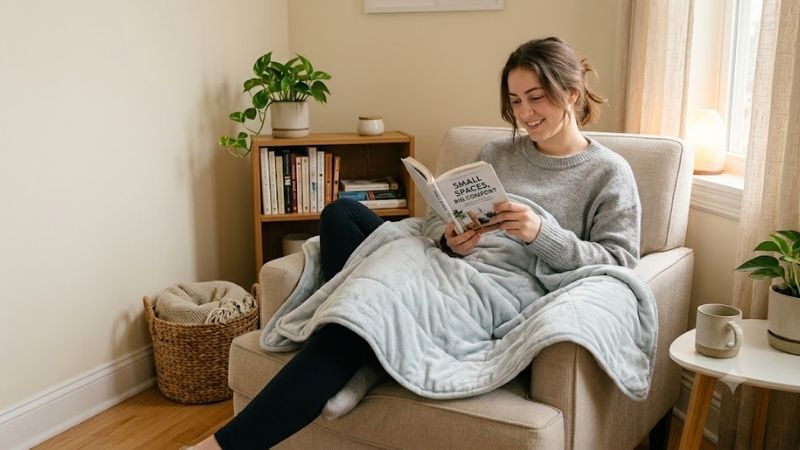
The Three Main Small-Space Challenges
The first is physical size.
A large blanket can occupy substantial mattress space and may hang over the edges.
The second is weight.
A heavier product can be difficult to lift, fold, and wash.
The third is maintenance.
Compact washing machines may not support the total weight of a soaked blanket.
These considerations should be evaluated before selecting a model.
Understand How Weighted Blankets Work
Weighted blankets produce distributed pressure against the body.
Some people find this sensation comfortable or relaxing.
However, individual experiences differ.
The available research does not establish that weighted blankets provide guaranteed relief from insomnia, anxiety, or other medical conditions.
They should be treated primarily as comfort products unless a qualified clinician recommends an appropriate therapeutic use.
Glass-Bead Blankets
Many weighted blankets contain glass beads distributed through sewn compartments.
The compartments are designed to limit major movement of the filling.
The outer fabric and additional textile layers influence the blanket’s feel.
Plastic-Pellet Blankets
Some products use plastic pellets.
These can produce a different texture and weight distribution.
The exact result depends on pellet size, compartment design, and surrounding fabric.
Chunky-Knit Weighted Blankets
Knitted weighted blankets achieve their weight through thick yarn construction.
They may not require separate bead filling.
The open spaces in some knitted designs can allow greater airflow.
However, the large yarn structure may also create a bulky blanket that occupies substantial storage space.
Which Construction Is Best for Small Bedrooms?
| Construction | Main advantage | Main limitation | Small-space suitability |
|---|---|---|---|
| Glass-bead quilted | Compact layered design | Heavy to wash | Often suitable if size is manageable |
| Plastic-pellet quilted | Conventional weighted pressure | Texture and care vary | Depends on weight and construction |
| Chunky-knit cotton | Open structure and decorative use | Bulky folded volume | Useful as visible throw, less ideal for tiny drawers |
| Removable-cover design | Easier cover cleaning | Multiple components | Practical when storage is organized |
| Compact weighted throw | Smaller footprint | Limited body coverage | Often attractive for small spaces |
No construction is universally best.
Choose according to the intended use and ability to manage the blanket safely.
How Heavy Should a Weighted Blanket Be?
One commonly cited shopping guideline is to start around 10% of the adult user’s body weight.
However, this is not a universal medical rule or an assurance that a particular blanket is safe.
The most important requirement is that the person can move and remove it independently.
Why the 10% Rule Is Only a Starting Point
Body weight does not capture every relevant factor.
Strength, mobility, comfort preferences, breathing conditions, and physical limitations matter.
A person who finds a 15-pound blanket uncomfortable should not continue using it simply because the weight matches a formula.
Example Starting Weights
| Adult body weight | Conventional 10% reference | Important qualification |
|---|---|---|
| 120 pounds | 12 pounds | Choose a manageable available weight |
| 150 pounds | 15 pounds | Comfort and independent removal come first |
| 180 pounds | 18 pounds | A lighter blanket may be preferable |
| 200 pounds | 20 pounds | Do not assume heavier is better |
| 250 pounds | 25 pounds | Assess mobility and individual suitability |
These are arithmetic illustrations, not individualized medical recommendations.
Why Small-Space Buyers May Prefer Lighter Models
A lighter blanket is often easier to fold, transport, and store.
It may also be more manageable during laundering.
For someone uncertain about pressure preferences, choosing a manageable lighter option can be more practical than starting with a very heavy model.
Why Blanket Dimensions Matter as Much as Weight
Two blankets can weigh the same amount but feel different because of their dimensions.
A 15-pound blanket distributed across a smaller surface concentrates the weight over less area.
A larger blanket spreads that weight across more fabric.
Actual pressure on the body also depends on how much of the blanket contacts the person.
Weighted Blankets Are Not Ordinary Comforters
Traditional comforters often extend well beyond the edges of the mattress.
Weighted blankets do not necessarily need that overhang.
Excess fabric hanging over the edge can pull the blanket downward.
This may increase shifting and make repositioning inconvenient.
Twin-Size Weighted Blankets
A twin-oriented weighted blanket may be useful for a single adult sleeping on a narrow bed, provided the weight and dimensions are appropriate.
It generally requires less storage space than a large king-oriented blanket.
Weighted Throws
A weighted throw may be suitable for sofa use or occasional relaxation.
However, a compact throw may not provide the body coverage someone wants during overnight sleep.
Queen-Size Weighted Blankets
A queen-size model may be appropriate for a larger mattress.
But a single sleeper does not necessarily need a weighted blanket that covers the entire queen bed.
Sharing a Weighted Blanket
Two people may have different weight and pressure preferences.
A shared blanket may also be difficult to reposition independently.
Separate appropriately sized blankets may be more practical in some households.
Weighted Blankets for Studio Apartments
A studio apartment often combines living and sleeping areas.
This creates a useful opportunity to choose a blanket that serves more than one purpose.
Decorative Knitted Blankets
A chunky-knit weighted blanket can be displayed as a throw when not in use.
Its appearance may complement a sofa or bed.
However, its bulk can make hidden storage difficult.
Compact Quilted Blankets
A folded quilted blanket may be easier to place inside an appropriately sized storage container.
The actual folded dimensions depend on the product.
Neutral Colors
A neutral cover can coordinate with different furniture arrangements.
This may reduce the need for a separate decorative throw.
Avoid Unnecessary Accessories
A blanket that requires several additional covers can create more laundry and storage.
Choose accessories only when they provide a genuine benefit.
Weighted Blankets for Twin and Twin XL Beds
Smaller mattresses create more restrictive dimensions.
Avoid Excessive Overhang
A weighted blanket that extends far beyond the mattress may shift or pull downward.
Check Width and Length
A product labeled twin may not match the dimensions of an ordinary twin comforter.
Read the actual measurements.
Consider Mattress Position
A bed against a wall may limit access to one side.
A heavy blanket that falls into a narrow gap can be inconvenient to retrieve.
Check Bed-Frame Stability
A weighted blanket adds mass to the bedding arrangement.
It should be used only with an appropriate bed and within the furniture manufacturer’s guidance.
Do not treat a weighted blanket as a structural safety risk merely because it is heavy, but consider total load where relevant.
Weighted Blankets for Small Shared Bedrooms
When two adults share a compact mattress, a very large weighted blanket may be awkward.
Different Weight Preferences
One person may enjoy substantial pressure while another dislikes it.
A single shared blanket cannot necessarily satisfy both.
Temperature Preferences
A warmer sleeper may prefer a lighter or more open construction.
A colder sleeper may prefer a different cover material.
Movement During Sleep
If one person turns frequently, a large heavy blanket can be difficult to reposition.
Practical Option
Separate individual blankets may offer greater control, provided they fit comfortably and do not create unsafe or obstructive arrangements.
Glass-Bead Versus Knitted Blankets for Storage
Storage is one of the most meaningful differences between constructions.
Glass-Bead Quilted Blankets
A relatively thin quilted blanket may fold into a compact rectangle.
However, its concentrated weight can make the folded bundle heavy to lift.
Chunky-Knit Blankets
Large knitted loops can create substantial volume.
The blanket may occupy more drawer space even if its weight is comparable.
Which Is Better for a Small Closet?
A compact quilted design may be easier to store in a suitably strong container.
A knitted design may be more practical when left visible on a sofa or bed.
The actual result depends on folded dimensions and materials.
Choosing a Storage Location
A weighted blanket should be stored somewhere that can safely support its mass.
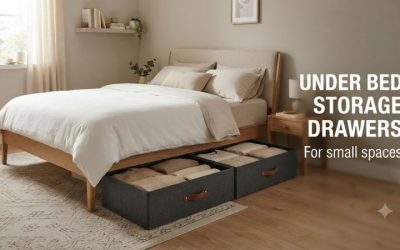
Under-Bed Storage
A sturdy under-bed container can be useful.
However, check the container’s load capacity.
A lightweight fabric organizer intended for shoes may not be appropriate for a heavy blanket.
Closet Shelves
Store heavy belongings on a stable shelf that can safely support the load.
Avoid placing a heavy folded blanket where it could fall from a high position.
Drawers
A drawer can provide convenient storage if its construction supports the blanket.
Excessive weight can damage drawer slides or make operation difficult.
Storage Bags
A storage bag can protect the blanket from dust.
However, the carrying handles and seams must be appropriate for the weight.
Do Not Store Damp
A weighted blanket should be thoroughly dry before storage.
Moisture trapped inside filling compartments can create problems.
Washing Weighted Blankets in Small Apartments
This is one of the most important ownership considerations.
Weighted blankets can be much heavier than ordinary bedding.
Check the Manufacturer’s Weight-Specific Instructions
Some blankets permit machine washing in selected weights.
Heavier configurations may require different care.
Do not assume that a washable 10-pound model means the brand’s 25-pound version can also be washed in a household machine.
Consider Wet Weight
A blanket becomes heavier when saturated with water.
Washing-machine capacity limits must be respected.
Avoid Overloading
An overloaded machine may not wash effectively.
It can also place excessive stress on the drum and suspension system.
Commercial Laundry
Some heavy blankets may require a suitable commercial washer.
However, always follow the blanket manufacturer’s requirements.
Removable Covers
A removable cover can reduce how often the weighted insert itself requires cleaning.
This is a meaningful feature for apartment dwellers with limited laundry access.
Drying
Dry the blanket according to the instructions.
A heavy or densely constructed blanket may require considerable drying time.
Do not store it while the inner sections remain damp.
Are Removable-Cover Weighted Blankets Worth It?
A removable cover adds complexity but can improve cleaning convenience.
Advantages
The cover may be easier to wash than the full weighted insert.
It can also allow changes in surface texture.
Limitations
Removing and reinstalling a cover around a heavy insert can require effort.
The cover and insert must have compatible attachment points and dimensions.
When the Extra Cost Makes Sense
A removable cover is valuable when the blanket is used regularly and the insert is difficult to launder.
It may be less necessary for a lightweight, easily washable product used only occasionally.
Choosing Fabric for Small Warm Bedrooms
Small bedrooms can become warm because of limited airflow, sunlight exposure, or insulation.
Weighted blankets add additional material against the body.
Cotton
Cotton can provide a familiar textile feel.
However, actual breathability depends on weave and construction.
Polyester
Polyester covers vary considerably.
Some feel lightweight and smooth, while plush polyester fabrics can be more insulating.
Bamboo-Derived Viscose
Some weighted blanket covers use viscose derived from bamboo.
This can provide a smooth surface.
However, the term bamboo does not guarantee sustained cooling or natural antibacterial properties.
Knitted Construction
Open knitted structures may allow additional airflow.
Nevertheless, fabric thickness and yarn type matter.
Practical Cooling Expectations
No passive weighted blanket actively refrigerates the body.
Room conditions and other bedding layers remain important.
Can Weighted Blankets Improve Sleep?
Some people report finding weighted pressure calming.
Research has explored possible effects on sleep and anxiety.
However, the evidence is not sufficient to guarantee that every user will experience a meaningful benefit.
A weighted blanket is not a replacement for evaluation or treatment of persistent insomnia, anxiety disorders, or other medical conditions.
Comfort Versus Treatment
A person may enjoy the pressure sensation without experiencing measurable improvements in sleep.
That does not necessarily make the purchase unsuccessful if comfort was the goal.
Individual Responses
Some users may find weighted pressure uncomfortable or restrictive.
Others may find it relaxing.
The correct response is to prioritize comfort and safety, not force adaptation.
Essential Weighted Blanket Safety Considerations
A weighted blanket should never prevent the user from moving or breathing comfortably.
Independent Removal
The person must be able to reposition and remove the blanket without assistance.
This requirement is more important than matching a recommended percentage of body weight.
Never Use Weighted Blankets for Infants
Weighted blankets, weighted swaddles, and other weighted sleep products are not safe for infants.
Do not use them in cribs or as substitutes for ordinary infant sleep clothing.
Toddlers and Young Children
Weighted bedding requires particular caution for children.
Do not choose an adult blanket for a child based on a simplified weight calculation.
Professional guidance is appropriate before considering weighted products for older children with specific needs.
Mobility Limitations
Someone with significant weakness or restricted mobility may be unable to move a heavy blanket safely.
A lighter product is not automatically appropriate in every such situation.
Breathing or Circulatory Conditions
People with relevant respiratory, circulatory, or other medical concerns should seek individualized guidance before using weighted bedding.
Avoid Using Blankets as Restraints
Never use a weighted blanket to prevent someone from moving or getting out of bed.
Stop if Uncomfortable
Remove the blanket if it causes breathing difficulty, distress, pain, overheating, or restricted movement.
How to Choose a Weighted Blanket for Different Small-Space Uses
Everyday Overnight Sleeping
Prioritize manageable weight, correct dimensions, breathable-feeling fabric, and easy removal.
Sofa Relaxation
A compact weighted throw may be more practical than a full bed blanket.
Dorm Rooms
Consider narrow mattress dimensions and shared laundry limitations.
Guest Rooms
A weighted blanket is a personal preference product and may not be appropriate as default bedding for every guest.
Provide ordinary bedding alternatives.
Home Offices
A small weighted lap product is a different category from a full weighted blanket.
Select based on the intended use and avoid assuming the same safety considerations or weight recommendations apply.
How Much Should You Spend?
A higher price can reflect premium yarn, more elaborate quilting, removable covers, or branding.
However, price alone does not establish better comfort or safety.
Basic Quilted Models
These may provide distributed pressure with relatively straightforward construction.
Check the stitching and care instructions.
Midrange Models
Additional cover options or improved material choices may be available.
Evaluate whether those features match your needs.
Premium Knitted Models
These can offer distinctive texture and appearance.
However, they may occupy more storage space and require different cleaning methods.
Calculate Total Cost
Include any required cover, replacement accessories, or professional laundering expenses.
A cheaper blanket that cannot be maintained conveniently may not provide good long-term value.
Common Mistakes When Buying Weighted Blankets for Small Spaces
Choosing Weight Based Only on a Formula
The conventional 10% guideline does not account for all personal needs.
Buying a Blanket Larger Than the Bed
Excessive overhang can make the blanket shift or pull downward.
Ignoring Laundry Capacity
A heavy blanket may exceed the limits of a compact washing machine.
Choosing Bulky Knit Without Considering Storage
A chunky-knit blanket can require substantial space.
Assuming Every Cooling Claim Is Proven
Cooling performance depends on the complete construction and environment.
Using Weighted Blankets for Infants
Weighted infant sleep products are unsafe.
Buying Without a Return Policy
Pressure preference is subjective.
A reasonable return policy can be useful when trying weighted bedding for the first time.
Frequently Asked Questions
Are Weighted Blankets Good for Small Apartments?
They can be, provided the size, weight, storage, and laundering requirements are manageable. A compact weighted throw or smaller individual blanket may be more practical than a large bed-size model.
What Size Weighted Blanket Is Best for a Twin Bed?
Choose dimensions that suit the individual sleeper and do not create excessive overhang. Weighted blanket sizes are not necessarily identical to comforter sizes.
Can I Store a Weighted Blanket Under the Bed?
Yes, when the storage container can safely support its weight and the blanket is clean and dry.
Is a 15-Pound Weighted Blanket Too Heavy?
That depends on the individual. The user must be able to move and remove the blanket independently, and the pressure must feel comfortable.
Are Knitted Weighted Blankets Better for Small Spaces?
They can be useful as decorative throws, but chunky knitted construction may occupy more folded storage space than a thin quilted blanket.
Can I Wash a Weighted Blanket in a Compact Washer?
Only when both the blanket’s care instructions and the washing machine’s capacity permit it. Heavy blankets may require specialized laundering.
Conclusion
The best weighted blanket for small spaces is one with manageable weight, suitable dimensions, and realistic storage and cleaning requirements. A compact quilted blanket may be easier to fold into a small closet, while an open-knit weighted throw can double as visible sofa or bedroom decor. Removable covers are useful when washing a heavy insert is inconvenient. Prioritize independent movement and removal, avoid excessive mattress overhang, and never use weighted blankets for infant sleep.