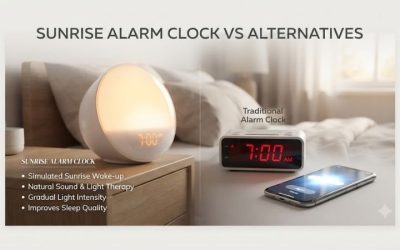
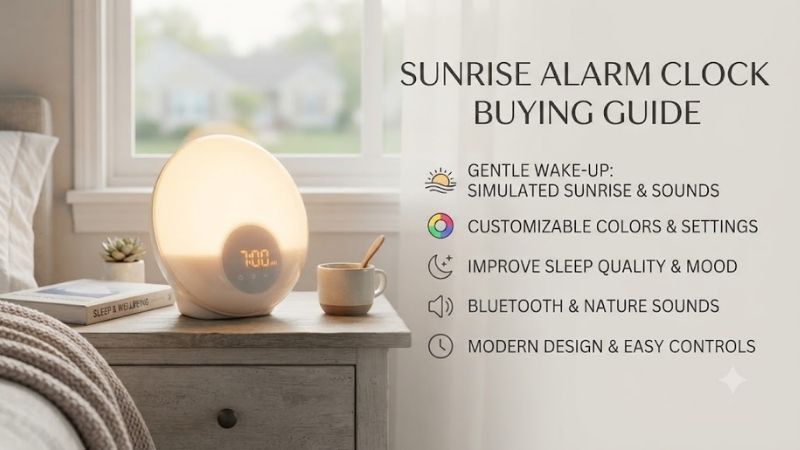
A sunrise alarm clock can make waking up feel more gradual by increasing light before your scheduled alarm time. However, not every wake-up light delivers the same experience. Some models offer a simple yellow glow that grows brighter over 30 minutes, while others provide multicolor dawn simulation, adjustable wake-up sounds, evening light routines, and app-based scheduling. The right choice depends on your sleep environment, sensitivity to light, daily schedule, and need for a reliable audible alarm.
Quick Verdict: Which Sunrise Alarm Clock Features Are Worth Paying For?
For most adults buying their first sunrise alarm, the best starting point is a standalone device with adjustable brightness, a gradual 20–40-minute light sequence, an audible backup alarm, and a display that can be dimmed at night. These features address the main purpose of a sunrise clock without requiring a smartphone application or subscription.
A more advanced model becomes worthwhile when you need different schedules throughout the week, integrated evening routines, or several sound and lighting combinations. A large number of decorative colors is less important than a smooth, controllable sunrise sequence.
| Buyer priority | Feature to prioritize | Feature that may be unnecessary |
|---|---|---|
| Gentle everyday waking | Adjustable sunrise duration and brightness | Extensive RGB color modes |
| Heavy sleeping | Reliable audible backup and volume settings | Light-only alarm |
| Dark winter mornings | Noticeable bedside illumination | Unverified therapeutic claims |
| Irregular schedule | Separate alarm schedules or calendar programming | Fixed single-alarm interface |
| Shared bedroom | Controlled brightness and positioning | Excessively bright room-wide illumination |
| Minimal nightstand clutter | Combined alarm and bedside lamp | Separate decorative lighting |
| Phone-free bedroom | Physical controls and offline operation | App-only customization |
| Budget purchase | Dependable light and sound functions | Subscription sound libraries |
The essential decision is whether the clock’s additional functions improve your actual waking routine or merely make the product more complicated.
How Sunrise Alarm Clocks Actually Work
A sunrise alarm gradually increases the light reaching the bedroom before the designated wake-up time. Rather than introducing maximum brightness instantly, it begins with relatively dim illumination and progresses toward a brighter final level.
Some devices coordinate the end of this sequence with audible sounds such as birdsong, music, or a conventional alarm tone. Others permit the user to wake with light alone.
The principle is straightforward, but the experience depends on several interacting factors: how the device changes brightness, its spectral characteristics, placement relative to the sleeper, the amount of existing daylight, and how readily the person wakes in response to light.
Dawn Simulation Versus a Regular Alarm
A traditional alarm depends mainly on sound or vibration to interrupt sleep. A sunrise alarm introduces a gradually changing environmental cue before that interruption occurs.
This may make waking feel less sudden for some people. However, a gradual light sequence does not guarantee that the sleeper has reached a lighter sleep stage or will wake at an ideal biological moment.
A person who sleeps with an eye mask, faces away from the lamp, or has substantial daylight already entering the room may experience a different result from someone in a dark bedroom with the light positioned beside the bed.
For reliable waking, especially when an important obligation is involved, an audible backup remains valuable.
Dawn Simulation Versus Clinical Light Therapy
A consumer sunrise clock is designed primarily for the waking experience. A clinical light-therapy device is selected according to specific treatment protocols involving light intensity, timing, duration, and other characteristics.
These categories should not be treated as interchangeable.
A sunrise clock advertising a particular lux value does not automatically provide the exposure used in light therapy for seasonal mood disorders or circadian conditions.
People considering light as treatment for a medical condition should seek appropriate professional guidance.
Understanding Brightness: What Does Lux Mean?
Brightness is one of the most prominent specifications in sunrise alarm marketing. Some devices advertise maximum illuminance in lux, while others provide only general brightness settings.
Lux measures illuminance reaching a surface. It does not describe the entire light output of a lamp independently of distance and geometry.
This distinction matters because a device measured close to its light source may produce a substantially different illuminance at the sleeper’s position.
Why Two Clocks With the Same Lux Rating May Feel Different
Imagine two hypothetical sunrise alarms, each advertised at a maximum of 300 lux.
One manufacturer measures illumination at a specified short distance in front of the lamp. Another provides no measurement distance.
Those claims are not sufficiently comparable to establish that the devices deliver the same light exposure during sleep.
The shape of the diffuser, light distribution, distance from the pillow, and surrounding furniture also influence the experience.
A product with clearly documented measurement conditions is more informative than one displaying a large number without context.
Maximum Brightness Versus Adjustable Brightness
A high maximum setting is useful only if the device can also provide comfortable lower settings.
Someone sleeping close to the lamp may prefer a lower final brightness than someone whose clock is several feet away.
Fine adjustment is especially important when the bedroom is small or shared.
Choose a device that allows the sunrise to remain noticeable without producing an uncomfortably bright final stage.
Why Lamp Placement Changes the Experience
A lamp positioned behind a headboard or shaded by furniture may illuminate the room without producing the intended cue near the sleeper.
Conversely, a lamp placed directly beside the face may feel intrusive when it reaches full brightness.
Position the clock on a stable surface where its light can spread toward the sleeping area. The ideal arrangement is one that provides a comfortable, perceivable change without glare or unnecessary obstruction.
Sunrise Duration: Is 15, 30, or 60 Minutes Better?
Sunrise duration determines how early the light begins increasing before the scheduled alarm.
Many wake-up lights use a sequence around 30 minutes, while some permit shorter or longer settings.
A longer sequence creates a slower transition, but it also introduces light earlier in the sleep period. Whether that feels beneficial depends on the individual.
Short Sunrise Programs
A 10–15-minute sequence can be attractive when someone wants a brief visual warning before the audible alarm.
However, a short sequence may feel more abrupt than a longer progression. It also may not provide enough time for a light-sensitive sleeper to gradually become aware of the changing environment.
For a heavy sleeper, a short light sequence might have little noticeable effect before the sound alarm activates.
Thirty-Minute Sunrise Programs
A 30-minute sequence is a common starting point because it provides a relatively gradual change without beginning extremely early.
In a small study of adults who reported difficulty waking, simulated dawn over the final 30 minutes before waking was associated with improvements in some measures of alertness and performance. However, the study had only eight participants, so the findings should not be interpreted as proof that every sunrise alarm will improve morning function.
Thirty minutes is a reasonable setting to try, not a universally optimal duration.
Longer Sunrise Programs
Some devices permit light to increase across 40, 45, or 60 minutes.
This can provide a slower transition, but it also increases the amount of light exposure before the target wake-up time.
A 2024 study investigating a combined light, sound, and temperature alarm reported limited overall effects, with some differences linked to chronotype and exposure duration.
That suggests timing may matter, but does not establish that longer programs are better for all users.
Practical Alarm Timing Example
For a target wake-up time of 6:30 AM:
| Sunrise duration | Light begins | Scheduled alarm |
|---|---|---|
| 15 minutes | 6:15 AM | 6:30 AM |
| 20 minutes | 6:10 AM | 6:30 AM |
| 30 minutes | 6:00 AM | 6:30 AM |
| 40 minutes | 5:50 AM | 6:30 AM |
| 60 minutes | 5:30 AM | 6:30 AM |
These times illustrate how sunrise scheduling works. Not every model supports every duration.
When comparing devices, verify whether the advertised alarm time refers to the beginning or end of the light sequence.
Sunrise Color: Yellow Light Versus Multicolor Dawn Simulation
Some basic sunrise alarms gradually brighten a warm-yellow or warm-white lamp. More elaborate devices transition from reddish tones through orange and eventually toward brighter yellow or white light.
The multicolor version may resemble the visual impression of dawn more closely, but realism alone does not establish superior physiological or sleep benefits.
Yellow-Only Sunrise Clocks
A yellow-only clock can provide the essential function of gradual light increase.
This may be all that is required for someone who wants a softer transition before the audible alarm.
Such designs often have simpler controls and may cost less than premium multicolor models.
The main limitation is visual realism and, in some products, a narrower range of brightness adjustments.
Red-to-Orange-to-Yellow Simulation
A colored sequence can produce a visually gentler beginning before transitioning to brighter light.
For buyers who value the atmosphere of a simulated sunrise, this may make the morning routine more enjoyable.
However, the quality of the brightness transition matters as much as the available colors.
A lamp that changes colors abruptly may feel less gradual than a well-designed yellow-only model.
Decorative RGB Lighting Is Different
Some inexpensive alarm clocks advertise numerous colors, including blue, green, pink, and purple.
These modes may be intended for ambient lighting rather than the alarm sequence.
A clock advertising 16 colors does not necessarily offer 16 stages of sunrise simulation.
When comparing models, identify which colors are part of the actual wake-up program.
Audible Backup Alarms: A Feature You Should Not Overlook
An audible alarm is particularly important for sleepers who need to wake at a specific time.
The light sequence may create a gentler transition, but some people will continue sleeping through it.
Others may not perceive it consistently because of sleeping position, room conditions, or an eye mask.
Choosing an Audible Alarm Sound
Some clocks provide nature sounds, while others offer traditional electronic tones or radio.
The most pleasant sound is not always the most reliable for the individual.
A very gentle sound may be easy to ignore. A harsh alarm may defeat the user’s goal of a less abrupt wake-up.
Adjustable alarm volume is often more useful than a large number of sound presets.
Single, Dual, and Weekly Alarms
A single alarm may suit someone with a consistent schedule.
Dual alarms can be convenient when weekday and weekend schedules differ or when two people share a room.
However, two stored alarms do not necessarily provide independent programming for each day of the week.
People with irregular schedules should inspect the actual calendar functions.
Snooze Behavior
Some sunrise clocks allow snoozing after the audible alarm begins.
Check whether snoozing restarts the light program, keeps the light at maximum brightness, or simply delays the sound.
These differences can influence how intuitive the device feels during early mornings.
Bedside Controls, Displays, and Everyday Usability
A sunrise alarm should be manageable when the user is sleepy and the room is dark.
An otherwise attractive device can become frustrating if basic settings require multiple button combinations or repeated smartphone interaction.
Physical Controls
Dedicated controls for alarm time, brightness, sound, and snooze can simplify daily use.
Touch-sensitive controls may offer a cleaner appearance but can be difficult to locate without looking.
Buyers who dislike phone use before bed may prefer a device with complete physical operation.
Dimmable Clock Display
A bright clock display can become a source of unwanted nighttime light.
Some models offer several brightness levels, while others permit the display to turn off.
This is especially useful in bedrooms where the lamp faces the pillow directly.
App-Based Controls
Smartphone applications can simplify complex scheduling and custom routines.
However, they introduce connectivity, account, and software considerations.
Determine which basic functions remain available when the phone is unavailable or the internet connection fails.
Subscription Features
Some premium sleep systems offer additional audio or routine content through paid services.
Before purchasing, identify which sunrise, alarm, and lighting functions are included without ongoing payment.
A device should be evaluated by its long-term cost, not only its initial purchase price.
Power Supply and Alarm Reliability
Sunrise simulation requires electrical power for the light source, and many dedicated devices operate from a wall adapter.
Some include a backup battery that preserves the clock or alarm settings during a power interruption.
However, maintaining the time is not the same as powering a complete sunrise sequence.
AC-Powered Sunrise Clocks
A plug-in device is practical for permanent bedside use.
It does not require routine recharging.
The drawback is dependence on a functioning electrical supply.
Battery Backup
A small backup battery may preserve settings, but the lamp and audible alarm may not continue working normally during an outage.
Read the exact product documentation to determine what remains operational.
Rechargeable Devices
Rechargeable models can be convenient for travel.
However, battery runtime depends on brightness, sound, and other operating functions.
Do not assume a clock with an internal battery can complete several maximum-brightness sunrise cycles without charging.
When an Independent Alarm Is Sensible
If missing an alarm would cause a serious problem, test the sunrise clock thoroughly and consider a backup device.
A product’s advertised reliability is not a substitute for understanding how it behaves after power interruptions or configuration changes.
Sunrise Alarm Clocks for Different Sleepers
Heavy Sleepers
A heavy sleeper should prioritize audible alarm reliability, adjustable volume, and straightforward controls.
A light-only device may be insufficient.
Choose a model with a dependable sound backup rather than assuming that a brighter sunrise guarantees waking.
People Who Wake Before Dawn
A sunrise clock can provide a consistent visual cue when natural morning light is unavailable.
This may be appealing during winter or for early work schedules.
However, the device does not replace adequate sleep duration or appropriate daytime light exposure.
Shift Workers
Shift workers may need alarms at unusual times, including during daylight hours.
A device with flexible scheduling may be valuable, but the room may need suitable blackout curtains for the simulated sunrise to be noticeable.
A sunrise alarm does not independently resolve circadian misalignment associated with rotating shifts.
Couples Sharing a Bedroom
One person’s gradual sunrise may wake the other person.
Consider lamp direction, brightness control, and separate schedules.
A more localized light source may reduce disturbance, but cannot guarantee that only one person will perceive it.
Students and Dorm Residents
Dorm rooms may have limited nightstand space and roommates with different schedules.
A compact model with controlled brightness, reliable sound, and a dimmable display is often more practical than a large multifunction lamp.
How Sunrise Alarm Clocks Compare With Other Wake-Up Options
| Wake-up method | Main advantage | Main limitation |
|---|---|---|
| Smartphone alarm | Familiar, inexpensive, flexible | Sudden sound; can encourage phone use |
| Traditional digital alarm | Reliable, straightforward | No gradual light cue |
| Sunrise alarm clock | Gradual illumination before wake time | May not wake every sleeper |
| Vibrating alarm | Tactile notification | Can feel abrupt or require compatible equipment |
| Smart light bulb routine | Can use existing room lighting | Requires suitable automation and configuration |
| Wearable vibration alarm | Personal wake-up notification | Requires wearing and charging a device |
A sunrise clock is most attractive when gradual light improves the user’s subjective waking experience.
It should not be assumed to replace every other alarm method.
Are Sunrise Alarm Clocks Scientifically Proven to Improve Waking?
Research provides a plausible basis for studying gradual morning light, but findings are not uniform.
Some controlled studies have reported improvements in selected measures of perceived alertness or performance. Others have found modest, mixed, or no significant improvements across certain outcomes.
The 2024 multimodal bedroom-alarm study, for example, did not find a large overall benefit across all participants. Some differences were associated with chronotype and light-exposure duration.
The evidence therefore supports cautious expectations rather than a universal promise of better mornings.
A consumer sunrise alarm is best considered a tool for making the waking environment more comfortable, not a guaranteed medical intervention.
How Much Should You Spend on a Sunrise Alarm Clock?
Budget Models
A budget clock can be a good purchase when it provides gradual illumination, an audible alarm, and accessible controls.
The main disadvantages may be limited brightness adjustment, less realistic light transitions, or confusing buttons.
Midrange Models
Midrange options often provide more controlled sunrise duration, multiple brightness levels, improved display settings, or several sounds.
These features can justify additional cost when the buyer wants precise customization.
Premium Smart Systems
Premium devices may integrate sunrise alarms, sunset routines, sleep sounds, and app-based scheduling.
They can replace several bedside accessories, but their value depends on whether those functions are used consistently.
Subscription requirements should be included in the total ownership cost.
Common Sunrise Alarm Clock Buying Mistakes
Choosing Maximum Brightness Instead of Controllability
A clock with very high output may be uncomfortable beside the bed if its lower settings are poorly designed.
Look for a smooth transition and adequate adjustment rather than choosing the highest advertised lux figure.
Paying for Decorative Colors
A large RGB library does not guarantee a better sunrise alarm.
Confirm that the light actually increases gradually and that the morning program uses the intended colors.
Ignoring Room Placement
A lamp hidden behind furniture may produce an ineffective visual cue.
Evaluate the real bedside arrangement before buying.
Assuming Battery Backup Powers the Sunrise
Some backup systems preserve settings only.
Check what happens during a power outage.
Treating It as a Medical Light Therapy Device
A consumer wake-up light is not automatically appropriate for treating seasonal affective disorder or circadian disorders.
Medical use requires appropriate guidance.
Frequently Asked Questions
Are Sunrise Alarm Clocks Better Than Regular Alarms?
They provide a different waking experience by introducing light before the scheduled sound alarm. Some people find this gentler, but research does not establish that every user will wake more easily or perform better afterward. A conventional alarm may remain necessary as a backup.
How Long Should a Sunrise Alarm Last?
A 30-minute sequence is a reasonable starting point for many buyers, but shorter and longer settings may feel more comfortable to different people. Adjustable duration is useful when you are uncertain about your preference or frequently change your wake-up schedule.
How Bright Should a Sunrise Alarm Clock Be?
The ideal brightness depends on distance, room conditions, and personal sensitivity. A higher maximum lux rating is not automatically better. Prioritize a device with a comfortable adjustable range and meaningful information about how its brightness was measured.
Do Sunrise Alarms Work for Heavy Sleepers?
Some heavy sleepers may perceive the light, while others sleep through it. A reliable audible alarm is particularly important. Test the complete morning sequence before relying on the device for an essential obligation.
Can a Sunrise Alarm Help During Winter?
It may create a consistent light cue on dark mornings and make waking feel more pleasant. However, it should not be treated as a substitute for outdoor daylight or clinically prescribed light treatment.
Is a Premium Sunrise Alarm Worth Buying?
A premium model may be worthwhile when you want adjustable timing, sophisticated light transitions, integrated sounds, and flexible schedules. If you only need gradual light and a reliable audible alarm, a simpler standalone device may provide better value.
Conclusion
The best sunrise alarm clock offers a smooth, adjustable increase in light, a dependable audible backup, and controls that suit your daily routine. Choose a simple standalone model for uncomplicated waking, or a more advanced system when customized schedules and integrated bedtime features provide genuine value. Compare brightness measurement conditions, sunrise duration, display dimming, power behavior, and long-term cost before buying rather than relying on maximum lux figures or decorative color counts.