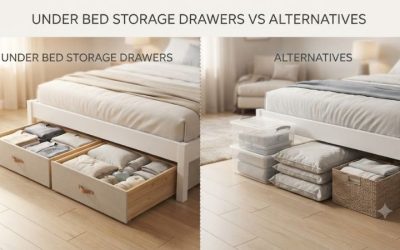
Choosing under bed storage drawers requires more than comparing the volume printed on a product listing. The correct drawer must fit beneath the bed, move smoothly across the floor, support its intended contents, and make belongings easy to retrieve. Materials, wheel construction, drawer mechanisms, dust protection, and compatibility with the bed frame all influence long-term value. This buying guide explains how to evaluate those details and select storage that works reliably in everyday use.
What Counts as an Under-Bed Storage Drawer?
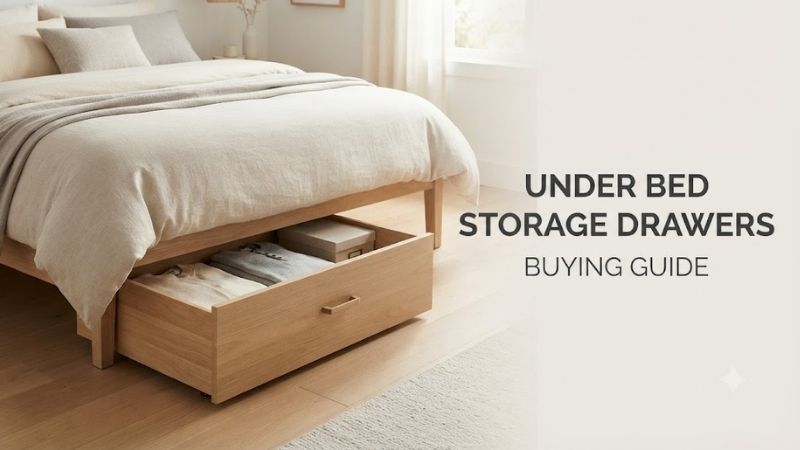
An under-bed storage drawer is a container or compartment designed to provide accessible storage beneath a bed frame.
Some products use rolling casters so the entire container moves. Others use a sliding compartment inside a stationary housing. Furniture-style drawers may be designed specifically for one bed-frame collection.
These designs have different mechanical requirements.
A rolling storage box may be easy to relocate, while a built-in drawer can provide a more integrated appearance. A sliding drawer may be useful for small accessories, but it requires extension space and a stable housing.
The first step is understanding which mechanism matches the intended use.
Comparing the Main Storage Designs
| Design | How it opens | Best application | Main limitation |
|---|---|---|---|
| Rolling plastic box | Entire container rolls outward | General household storage | Wheel performance varies |
| Rolling fabric organizer | Entire fabric-supported unit moves | Shoes and lightweight clothing | Less rigid construction |
| Rigid covered rolling box | Whole box rolls | Bedding and seasonal clothes | Heavier structure |
| Sliding drawer container | Inner drawer extends from housing | Accessories and small items | Requires extension space |
| Furniture-specific drawer | Drawer rolls or slides beneath matching bed | Coordinated bedrooms | Restricted compatibility |
| Modular drawer system | Separate units provide compartments | Category-based organization | Multiple components and gaps |
Measure Fit Before Comparing Capacity
A product’s advertised storage volume is useful only after confirming that the container fits the intended space.
The most important dimensions are external height, width, depth, and the clearance needed for movement.
Vertical Clearance
Measure from the floor to the lowest part of the bed frame along the full path the container will travel.
Include wheels and raised lids when evaluating the product’s exterior height.
A storage unit that measures 7.5 inches high cannot fit beneath a frame offering only 7 inches of usable clearance.
Horizontal Clearance
Measure the available width between bed supports.
Some beds have center legs that divide the under-bed area.
A large container may collide with those supports even when its width fits beneath the side opening.
Depth
Determine how far the drawer can extend beneath the bed.
A deep drawer may be inconvenient when the frame has braces or other obstructions.
Pull-Out Distance
A rolling box needs enough space to move completely or partially out.
A sliding drawer may require a different extension distance.
Check nearby furniture before deciding that the container is suitable.
How to Calculate Usable Storage Volume
Storage products often advertise capacity in quarts or liters.
Those numbers are useful, but they do not reveal whether the container can accommodate particular objects.
Understanding Volume
One US liquid quart is approximately 0.946 liters.
A container advertised as 27 quarts therefore represents roughly 25.6 liters of nominal capacity.
However, the actual usable dimensions depend on the container’s shape, wall thickness, interior dividers, and drawer mechanism.
Why Shape Can Matter More Than Capacity
Consider two hypothetical containers with the same volume.
One is wide and shallow. The other is narrow and tall.
The wide container may fit beneath a low bed while the taller one does not.
For shoe storage, a shallow compartment with adjustable dividers may also provide easier organization than an undivided tall box.
Exterior Versus Interior Dimensions
Exterior dimensions determine fit.
Interior dimensions determine what can be stored.
A rigid plastic housing may reduce usable internal space, while a fabric organizer may have thinner walls but less structural support.
Both sets of measurements matter.
Plastic, Fabric, Wood, and Metal Construction
Materials influence weight, cleaning, durability, and resistance to ordinary household conditions.
No material is universally superior.
Plastic Drawers
Plastic is common in affordable storage products because it can be molded into different shapes and is relatively easy to wipe clean.
However, not every plastic drawer is equally strong.
Thin walls may flex under heavy loads, while lower-quality corners or handles may crack after repeated use.
When comparing plastic drawers, check the wall construction, stated load capacity, and whether the drawer slides smoothly when appropriately loaded.
Fabric Organizers
Fabric organizers often use polyester or similar textile construction supported by a metal or plastic frame.
They are useful for shoes, seasonal clothing, and lightweight household items.
The main advantages are relatively low weight and flexible internal arrangements.
The disadvantages include vulnerability to abrasion, damage from sharp objects, and less rigid protection for fragile contents.
A fabric organizer should not be treated as a heavy-duty storage drawer simply because it includes metal support rods.
Engineered-Wood Drawers
Engineered-wood products use materials such as particleboard or fiberboard.
They can provide a coordinated furniture appearance and substantial panels.
However, their durability depends on construction, hardware, and environmental conditions.
Repeated moisture exposure can damage some engineered-wood surfaces and edges.
Check assembly quality and intended frame compatibility.
Metal-Framed Systems
Metal frames can provide rigidity, especially in rolling organizers.
However, metal components vary in thickness, corrosion resistance, and assembly quality.
A product with a metal frame is not automatically stronger than a well-designed plastic container.
Evaluate the entire structure.
How to Evaluate Wheels and Casters
Wheels are one of the most important features in a rolling under-bed drawer.
A container with poor wheels can become difficult to use, particularly when loaded with clothing or shoes.
Wheel Diameter
Larger wheels may roll more easily over small floor irregularities than very small casters, all else being equal.
However, larger wheels increase the overall storage-unit height.
This creates a trade-off between rolling convenience and under-bed clearance.
Wheel Materials
Different wheel materials behave differently on hard floors and carpet.
A hard wheel may roll readily on smooth surfaces but create noise.
A softer wheel may reduce some vibration, although performance depends on construction.
Wheel Attachment
The wheel must remain securely attached to the storage body.
Weak mounting points can fail when the container is pulled at an angle or overloaded.
Check whether the caster assembly is integrated or attached through separate hardware.
Carpet Compatibility
Thick carpet can create considerable rolling resistance.
Small casters may sink into the pile.
A rolling box intended for smooth flooring may perform poorly on carpet, even when the load remains within its rated capacity.
Wheel Maintenance
Hair, dust, and debris can accumulate around casters.
A design that permits practical cleaning may remain easier to operate over time.
Sliding Drawer Mechanisms: What Determines Smooth Operation?
A sliding drawer system uses an inner compartment that moves within a housing or along guides.
Its quality depends on alignment, material construction, support, and the weight of the contents.
Plastic-on-Plastic Slides
Simple plastic drawers often rely on molded rails or contact surfaces.
This can be adequate for lightweight storage.
However, overloaded drawers may bind or deform.
Metal Slides
Some furniture-style drawers use metal sliding hardware.
Such systems can offer controlled movement, but quality varies.
The presence of metal slides alone does not establish high load capacity.
Drawer Extension
Some drawers extend only partially, while others provide greater access to the interior.
A deep drawer with limited extension can make rear items difficult to reach.
Review the extension mechanism when storing items accessed frequently.
Drawer Stops
A drawer stop may help prevent accidental complete removal during normal use.
However, the product’s intended operation must be understood.
Do not force a drawer past its designed stop.
Why Smooth Movement Matters
A drawer that catches, tilts, or requires excessive force is less convenient and may wear more quickly.
Evaluate the mechanism in relation to the intended load, not only when the drawer is empty.
Understanding Weight Capacity
Weight capacity is a meaningful specification, but it must be interpreted according to the manufacturer’s conditions.
A container intended for lightweight clothing may not safely support a dense collection of books or tools.
Static Load Versus Movement
A drawer may support a load while stationary yet experience additional stresses when pulled.
Handles, wheels, and sliding mechanisms all contribute to practical load capacity.
Distribution of Weight
Heavy objects concentrated near one corner can stress the structure differently from evenly distributed clothing.
Use the product according to its intended loading guidance.
Why Heavier Materials Are Not Always Stronger
An engineered-wood drawer can weigh more than a plastic container, but overall strength depends on joints, panels, supports, and hardware.
Avoid assuming that greater product weight proves better durability.
What to Do When Capacity Is Not Published
If the manufacturer does not provide a meaningful loading specification, avoid using the drawer for heavy objects.
Consider another product with clearer documentation when weight capacity is important.
Choosing Drawers for Different Storage Contents
Clothing
Folded clothes benefit from shallow containers that make individual pieces visible.
Internal dividers can separate categories.
A covered design may reduce exposure to ordinary dust.
Bedding
Sheets and duvet covers can be stored horizontally in rigid or covered rolling boxes.
Bulky comforters may require more height.
Do not overcompress delicate fabric simply to force it into a container.
Shoes
A divided organizer can prevent pairs from mixing.
Transparent covers can make retrieval easier.
The container must be tall enough for the actual shoe type.
Accessories
Smaller sliding drawers may be preferable for socks, belts, scarves, or craft supplies.
Several narrow compartments can improve organization.
Heavy Household Items
Basic under-bed organizers are not necessarily suitable for books, tools, or dense equipment.
Verify load capacity and construction before using them for heavy belongings.
Dust Protection and Moisture Resistance
Under-bed storage is often exposed to dust because the area beneath a mattress is difficult to clean frequently.
A cover or lid can reduce dust accumulation, but different designs provide different levels of protection.
Open Furniture Drawers
Open drawers may be easy to access but allow dust to settle on stored belongings.
They are suitable for frequently used clothing when regular cleaning is practical.
Zippered Fabric Covers
A zippered cover may help contain dust and prevent lightweight items from escaping.
However, fabric covers are not necessarily waterproof or airtight.
Plastic Lids
Rigid plastic lids can provide better physical enclosure, depending on their fit.
But an ordinary lid should not be assumed to provide a humidity-controlled environment.
Moisture and Mold
Store textiles only when clean and fully dry.
If the bedroom has persistent moisture problems, address those conditions directly.
Enclosing damp items can increase the risk of odor and deterioration.
Under-Bed Storage and Different Bed Frames
Traditional Raised Beds
A raised frame may provide enough space for independent rolling storage boxes.
However, check center supports and side rails.
Platform Beds
Low platform beds can restrict vertical clearance.
Slim plastic or fabric organizers may be more appropriate when sufficient room exists.
Storage Beds
Built-in drawers may already occupy the under-bed area.
Do not attempt to add independent units where they could interfere with existing mechanisms.
Adjustable Beds
Motors, cables, moving components, and support legs may restrict storage.
Follow the adjustable-bed manufacturer’s guidance.
Murphy Beds
Foldaway beds have mechanical systems that may not permit storage beneath the mattress.
Never place containers where they could obstruct movement.
How to Compare Two Storage Products Fairly
Imagine comparing two hypothetical under-bed organizers.
Product A is a covered 60-liter fabric organizer with small wheels.
Product B is a rigid 45-liter rolling box with larger casters.
Product A provides greater advertised volume, but Product B may offer easier movement and more protection for certain belongings.
The better choice depends on use.
For rarely accessed lightweight bedding, Product A could provide greater practical value.
For items accessed daily, Product B may be preferable if its wheels work smoothly on the bedroom floor.
This illustrates why storage capacity should be considered alongside access, construction, and intended contents.
Budget Versus Premium Under-Bed Drawers
Budget Fabric Organizers
These are often suitable for lightweight clothing, shoes, and seasonal belongings.
Their value depends on fabric quality, frame construction, wheels, and cover design.
Midrange Plastic Drawers
Rigid plastic products may provide wipe-clean surfaces and dependable compartment organization.
However, the drawer mechanism and material thickness still deserve attention.
Furniture-Style Drawers
Matching drawers can cost more because of their construction and visual integration.
They make sense when the owner has a compatible bed and values the coordinated appearance.
Premium Storage Systems
Higher-priced systems may offer stronger slides, refined hardware, or specialized compartments.
Choose them only when those features improve the actual storage task.
Premium pricing does not guarantee universal bed compatibility.
A Pre-Purchase Quality Checklist
| Feature | What to inspect | Why it matters |
|---|---|---|
| Exterior dimensions | Full height, width, depth | Determines bed clearance |
| Interior dimensions | Usable compartment space | Determines item fit |
| Capacity | Liters or quarts | Helps compare volume |
| Load rating | Maximum permitted contents | Prevents overloading |
| Wheels | Diameter, material, mounting | Affects movement |
| Sliding hardware | Guides, extension, alignment | Affects access |
| Cover or lid | Closure and material | Influences dust protection |
| Handles | Placement and strength | Affects retrieval |
| Bed compatibility | Frame and support arrangement | Prevents obstruction |
| Cleaning | Material-specific instructions | Supports long-term use |
| Replacement parts | Wheels, handles, hardware | Affects repairability |
Common Under-Bed Storage Buying Mistakes
Comparing Only Capacity
A 60-liter organizer is not automatically better than a 45-liter drawer.
The larger product may have an unsuitable shape, weak wheels, or inconvenient access.
Compare the actual items to be stored and the way they will be retrieved.
Ignoring Interior Dimensions
A container’s exterior measurements may include substantial wall thickness, wheels, handles, or an outer housing.
Those features reduce usable space.
Check internal dimensions for shoes, books, or other objects with fixed shapes.
Assuming All Wheels Work on Carpet
Small casters may struggle on thick carpet.
Floor compatibility is part of the purchase decision.
Buying Furniture Drawers for the Wrong Bed
A furniture-style drawer may be intended for a specific frame.
Visual similarity or matching mattress size does not guarantee fit.
Ignoring Load Ratings
Heavy objects can damage lightweight organizers.
Follow the manufacturer’s intended-use and capacity information.
Treating Every Cover as Waterproof
Zippers and fabric lids may reduce dust exposure but do not necessarily prevent moisture entry.
Avoid storing damp belongings.
Frequently Asked Questions
What Material Is Best for Under-Bed Storage Drawers?
Plastic is useful when easy cleaning and contained storage matter. Fabric organizers are practical for lightweight clothing and shoes, while engineered-wood drawers offer a more integrated furniture appearance. The best material depends on load requirements, bedroom conditions, and frequency of access.
Are Rolling Under-Bed Drawers Better Than Sliding Drawers?
Rolling boxes are convenient when the entire container needs to be pulled out and rearranged. Sliding drawers are useful for smaller items that are accessed frequently without moving the outer housing. Neither mechanism is universally better, and both require sufficient clearance.
How Do I Choose the Correct Under-Bed Storage Height?
Measure the minimum floor-to-frame clearance along the entire movement path. Compare that measurement with the container’s complete exterior height, including wheels and lid components. Allow additional clearance so the unit can move without scraping.
Can Under-Bed Drawers Hold Heavy Books?
Only when the product’s stated load capacity and construction support the weight. Basic fabric organizers are often intended for lightweight household belongings. Heavy books can strain handles, casters, or sliding mechanisms, making a sturdier storage arrangement preferable.
Do Under-Bed Drawers Protect Clothes From Dust?
Covered drawers and boxes can reduce dust exposure, but ordinary lids and fabric closures may not be airtight. Store textiles clean and dry, maintain reasonable room conditions, and clean the under-bed area periodically.
Are Furniture-Style Under-Bed Drawers Worth the Extra Cost?
They may be worthwhile when they match a compatible bed frame and provide convenient daily access with a coordinated appearance. However, independent rolling containers often offer greater flexibility for renters or people who expect to change beds.
Conclusion
The best under bed storage drawers combine accurate fit, suitable load capacity, reliable movement, and materials appropriate for the items being stored. Choose rolling boxes for flexible storage, sliding drawers for frequently accessed accessories, and furniture-style drawers when the bed frame is explicitly compatible. Evaluate both exterior and interior dimensions, wheel or slide construction, cleaning requirements, and dust protection before purchasing. A well-designed drawer that is easy to access offers greater practical value than a larger container that barely fits.