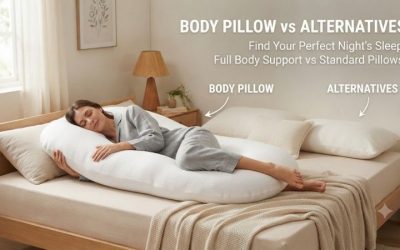
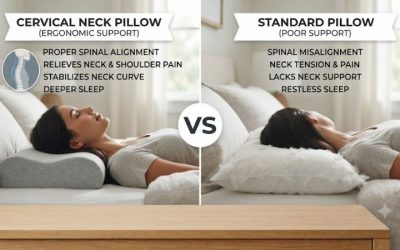
Find a body pillow for small spaces by comparing straight, J-shaped, C-shaped, and U-shaped designs, storage needs, filling, mattress fit, and care.
A body pillow for small spaces should offer comfortable cushioning without taking over the mattress, crowding another sleeper, or requiring an entire closet shelf for storage. Straight body pillows, compact curved designs, and adjustable-fill models serve different purposes, and the largest option is rarely necessary for everyone. This guide explains how to choose dimensions, shapes, filling, and cleaning arrangements that work for apartments, dorm rooms, and compact bedrooms.
Why Body Pillow Shape Matters in a Small Bedroom
A body pillow is usually longer than a conventional head pillow and is intended to provide cushioning along part of the body. Depending on the design, it may rest between the knees, support an upper arm, provide back cushioning, or surround the sleeper in a curved configuration.
In a small bedroom, the size of a body pillow affects several practical things at once. It changes how much usable mattress space remains, how easily another person can sleep beside it, how the bed looks during the day, and where the pillow can be stored when not needed.
The most useful buying decision is therefore not simply choosing a supportive pillow. It is choosing a shape that provides the support you actually use without introducing unnecessary bulk.
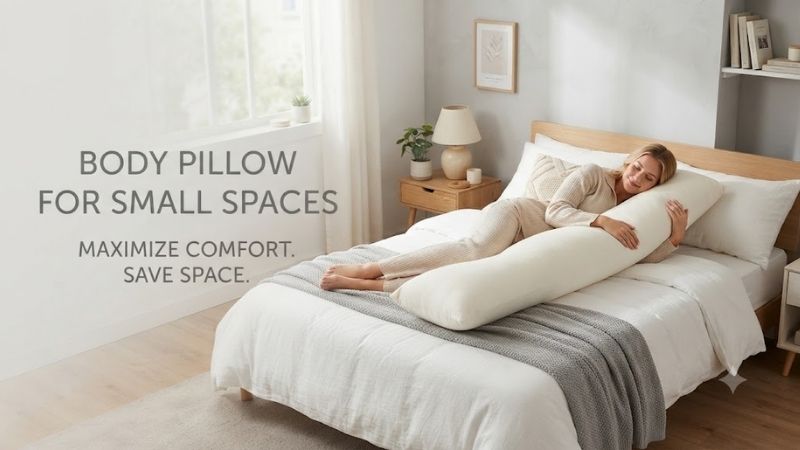
Straight Body Pillows: Best Starting Point for Compact Beds
A conventional straight body pillow has a rectangular shape and can be moved into several positions. It may be hugged against the chest, placed between the knees, or positioned behind the back for temporary cushioning.
This versatility is useful in small bedrooms because one pillow can serve several comfort purposes without requiring multiple curved sections. A traditional 20-by-54-inch body pillow is a common example, although actual dimensions vary.
The main limitation is that a straight pillow does not create a dedicated support area behind and in front of the sleeper simultaneously. Someone who wants constant wraparound contact may prefer a curved design, even though it occupies more space.
J-Shaped Body Pillows: Curved Support Without a Full U
A J-shaped pillow usually combines a longer body section with a curved upper or lower end. Depending on the design and how it is positioned, the curve may support the head or provide a resting place around the shoulders.
This can be useful for a side sleeper who wants a more guided arrangement without the large footprint of a full U-shaped pillow.
However, the fixed curve also limits flexibility. If its proportions do not match the user’s height and torso length, the pillow may be uncomfortable even when its overall dimensions seem appropriate.
C-Shaped Body Pillows: Wraparound Comfort With a Trade-Off
A C-shaped pillow offers a continuous curve around several parts of the body. Some designs are marketed for pregnancy, while others are intended for general side-sleeping comfort.
The shape can reduce the need to arrange multiple ordinary pillows around the head, abdomen, and knees. This is an advantage when it replaces several separate bedding accessories.
Its drawback is that the curved structure may occupy a large area of the mattress. Turning to the opposite side may require repositioning the pillow, and storing it in a narrow drawer can be difficult.
U-Shaped Body Pillows: Maximum Surrounding Support
A U-shaped pillow has two elongated sides connected by a curved section. This can provide cushioning in front of and behind the sleeper.
A person who changes sides may appreciate having support available in both directions. However, a U-shaped pillow can occupy much of a twin or full mattress, and the second side may interfere with another sleeper.
For compact shared beds, choose a U-shaped model only when its surrounding design provides a meaningful benefit. Otherwise, a straight or J-shaped alternative may be more practical.
How Much Mattress Space Does a Body Pillow Need?
Body pillow dimensions should be compared with the actual mattress width. A pillow does not have to fit completely within one rigid rectangle during use, but the comparison helps reveal whether it may crowd the sleeping area.
A full mattress is approximately 54 inches wide, while a twin mattress is approximately 38 inches wide. A body pillow measuring 20 inches across its nominal width can occupy a substantial portion of either bed, particularly when the user hugs it rather than placing it flat.
Comparing Pillow Shapes
| Shape | General space requirement | Best compact-bedroom use | Main trade-off |
|---|---|---|---|
| Straight | Narrow, elongated area | Single sleeper or shared bed | Must be repositioned for different support |
| J-shaped | Long section plus curved end | Side sleeper seeking guided support | Curve may not suit all body proportions |
| C-shaped | Wraparound area | Replacing multiple support pillows | Large footprint |
| U-shaped | Both sides of sleeper | Surrounding front and back support | Can crowd a shared mattress |
| Flexible elongated | Variable arrangement | One pillow for different activities | Requires reshaping |
These descriptions explain design differences rather than assigning universal dimensions. Always verify the exact pillow’s finished size.
A Twin XL Dorm Bed
A college student with a twin XL mattress has roughly 38 inches of nominal mattress width. A conventional straight body pillow may be manageable when placed along one side of the body.
A large U-shaped design may occupy most of the available surface, especially when both side sections rest on the mattress. This can make turning over more awkward and reduce the space available for a conventional head pillow.
For most students considering their first body pillow, a straight model is a more flexible starting point. A specialty shape is worth the additional bulk only when the sleeping position genuinely benefits from it.
Two People Sharing a Full Bed
A full mattress measures approximately 54 inches wide. Two adults already share less space than they would on a queen mattress, so a bulky body pillow can affect both sleepers.
Before buying, consider where the pillow will rest when one person turns. A straight pillow can often be moved toward the center or edge of the bed more easily than a U-shaped arrangement. However, it should not be allowed to create an uncomfortable or obstructive sleeping position for either person.
A narrower pillow with suitable support may offer better practical value than a larger design marketed as full-body.
A Queen Bed in a Studio Apartment
A queen mattress offers more width, but the surrounding room may still be limited. The body pillow may fit comfortably on the mattress while being difficult to store anywhere else.
If the pillow will remain on the bed, appearance and cover selection may matter. If it must be removed each morning, folded size and handling become more important.
Small-space suitability therefore involves both the sleeping position and the daily room routine.
Filling Materials: Which Is Best for Compact Living?
Filling affects softness, loft, weight, shape retention, and cleaning requirements. It also influences how easily the pillow can be compressed or stored.
A pillow that feels comfortable during the first few minutes may behave differently after a full night of body pressure. For this reason, evaluate the material according to the intended support location rather than relying solely on an advertised firmness label.
Polyester Fiberfill
Polyester-filled body pillows often have a familiar, fluffy sensation. They can be relatively lightweight and easy to reposition, making them practical for dorm rooms or compact bedrooms.
The major limitation is compression. If the filling is too soft, the pillow may flatten beneath the weight of the upper leg, reducing the cushioning the user intended to create. Filling may also shift over time, requiring fluffing.
A polyester pillow is most suitable for someone who mainly wants a soft object to hug or gentle cushioning rather than firm, consistent resistance.
Shredded Memory Foam
Shredded memory foam consists of individual foam pieces rather than one solid block. This construction can offer more substantial cushioning and may conform around the knees, arms, or torso.
Some products allow the user to remove filling, which is useful when the pillow feels too thick. However, the extra material must be stored somewhere, and not every shredded-foam pillow is adjustable.
Compared with lightweight polyester, shredded foam may feel heavier. That can be inconvenient when moving the pillow between a bed and a storage area every day.
Shredded Latex
Shredded latex can offer a more responsive feel than slow-response memory foam. Depending on the construction, the filling may rebound readily after compression and create a resilient cushioning surface.
However, shredded latex pillows vary in weight, firmness, and adjustability. The material can also be costly, and a buyer with a known latex allergy should seek an appropriate alternative.
For small-space use, the main question is whether the additional support characteristics justify the weight and maintenance requirements.
Down and Down-Alternative Filling
Down and down-alternative pillows can provide soft cushioning, but their support characteristics vary with fill power, amount, and construction.
A lightly filled body pillow may compress substantially between the knees. A fuller design may provide more loft but also occupy more storage space.
Down requires consideration of allergy concerns, care instructions, and sourcing preferences. Synthetic alternatives avoid animal down but are not automatically identical in feel or longevity.
Choosing the Right Thickness for Side Sleeping
A body pillow between the knees should create comfortable cushioning without forcing the upper leg into an exaggerated position. This is particularly important for people who buy the thickest available pillow believing that more material automatically produces better alignment.
The appropriate thickness depends on hip width, mattress firmness, sleeping position, and how much the filling compresses.
Knee Support
When sleeping on the side, direct contact between the knees can feel uncomfortable for some people. A body pillow can provide a cushioned surface between them, helping maintain a preferred leg position.
However, the pillow should not force the top leg unnaturally high or make the hips feel twisted. A plush pillow may compress enough to feel comfortable, while a denser foam design can create greater separation.
Start with a comfortable arrangement and adjust the pillow’s position rather than assuming one placement is correct for every sleeper.
Upper-Arm Support
Some side sleepers prefer hugging a pillow so the upper arm has somewhere to rest. A straight body pillow can provide a flexible surface in front of the chest.
A pillow that is excessively thick may push the shoulder into an uncomfortable position. One that is too thin may provide little meaningful cushioning.
Consider the contact area and how naturally the arm rests rather than focusing only on advertised full-body support.
Back Cushioning
A body pillow can also rest behind the back for temporary comfort. Some people enjoy the sensation of a supportive surface along the torso.
However, a body pillow should not be used as a restraint or to prevent a person from changing position. The user must remain free to move comfortably.
A rigid arrangement that makes turning difficult is not a good fit, particularly for people with mobility limitations.
Pregnancy Body Pillows in Small Bedrooms
Pregnancy is one reason shoppers consider C-shaped and U-shaped body pillows. These designs can provide cushioning around several parts of the body without requiring multiple separate pillows.
However, the most appropriate arrangement depends on individual comfort, pregnancy stage, and any clinical recommendations. The pillow should not place uncomfortable pressure against the abdomen or make normal repositioning difficult.
Choosing Between C-Shaped and U-Shaped Designs
A C-shaped design may be easier to fit into a narrower bed than a large U-shaped model, depending on actual dimensions. It can provide a curved surface for selected body areas.
A U-shaped design offers cushioning on both sides, potentially reducing the need to move the entire pillow when turning. The trade-off is greater mattress occupancy.
Rather than selecting by marketing photographs, measure the available mattress area and compare the product’s complete width and length.
Why a Smaller Pillow May Be More Practical
A straight pillow or appropriately sized curved model may provide the cushioning a pregnant sleeper wants without surrounding the entire body.
The best choice is not necessarily the most elaborate design. If the primary need is cushioning between the knees, a simpler pillow may be sufficient.
Pregnant users with complications or specific positioning restrictions should follow advice from their maternity clinician.
Cleaning and Storage: The Hidden Cost of Body Pillows
Large body pillows can be more difficult to maintain than ordinary head pillows. Their length, filling, and curved shapes may create problems with household washers, drying racks, and replacement covers.
Before buying, consider where the pillow will be cleaned and stored. This may be especially important for apartment dwellers who use shared laundry facilities.
Removable Covers
A removable, machine-washable cover simplifies routine maintenance. It can be cleaned more frequently than the pillow’s core when the manufacturer permits.
However, a C-shaped or U-shaped pillow may require a specially fitted cover. Replacement availability and price should be evaluated before purchase.
A standard rectangular body pillow is often easier to accommodate with conventional covers, provided the measurements match.
Washing the Pillow Insert
Some polyester-filled body pillows can be machine-washed, while others require different care. Foam and latex products may have more restrictive instructions.
Do not assume that a pillow can be washed merely because its cover is washable. Large inserts can also become heavy when wet and may not fit safely in a compact washer.
Air Drying in a Small Apartment
A full-length pillow can be difficult to dry because moisture may remain trapped deep inside the filling. Inadequate drying can produce persistent odors and hygiene problems.
Follow the manufacturer instructions and ensure the pillow is completely dry before use. Avoid placing a damp pillow inside a closed storage bag.
Under-Bed Storage
A straight body pillow may fit into a large suitable under-bed storage area, but it should not be forced into a container that compresses the filling beyond the manufacturer’s recommendations.
Curved pillows can be particularly awkward because their overall shape may resist compact folding. Measure the storage area rather than assuming the product will fit.
How to Choose Based on Your Daily Routine
A body pillow may remain on the bed every day, or it may be an occasional comfort accessory. This distinction changes which design makes sense.
If the Pillow Stays on the Bed
Choose a shape that does not unnecessarily obstruct sleeping space. Cover appearance, replacement pillowcases, and routine cleaning may matter more than compact storage.
If You Store It Every Morning
Prioritize easy handling and realistic folded dimensions. A heavy shredded-foam or large U-shaped pillow may become inconvenient when it must be moved daily.
If You Travel Frequently
A full-size body pillow may be impractical to transport. Some travelers prefer a smaller support cushion or use available hotel pillows to recreate a familiar arrangement.
However, a smaller substitute may not provide the same support as the home pillow. Consider portability without assuming identical comfort.
Common Mistakes When Buying Body Pillows for Small Spaces
Buying a U-Shaped Pillow Without Measuring the Bed
A U-shaped design can surround much of a sleeper’s body. On a narrow mattress, both sides may reduce the available area for movement and ordinary pillows.
Before purchasing, check the overall width and length of the complete product, not just the thickness of one side. A straight or J-shaped design may provide the desired cushioning with less interference.
Choosing the Softest Filling for Knee Support
A plush pillow can feel comfortable when hugged, but may compress substantially beneath the upper leg. If the main goal is consistent cushioning between the knees, the pillow must retain enough thickness under normal pressure.
Compare filling type, intended firmness, and adjustable features. The best option is one that produces comfortable positioning rather than maximum softness.
Ignoring Replacement Cover Availability
Curved body pillows often require specially shaped covers. If the original cover becomes damaged or stained, replacing it may be more difficult than finding a conventional rectangular body-pillow case.
Check the availability of compatible covers before buying a specialized shape. This matters particularly when the pillow will be used every night.
Frequently Asked Questions
What Body Pillow Shape Is Best for a Small Bed?
A straight rectangular body pillow is a flexible starting point because it can be moved into several positions without surrounding the entire sleeper. A compact J-shaped design may also work well. The best choice depends on whether the user needs simple knee cushioning or more extensive body support.
Is a U-Shaped Body Pillow Too Big for a Twin Bed?
Some U-shaped models can occupy much of a twin mattress, leaving limited space for movement. Exact dimensions vary, so measure the product and compare its complete width with the mattress. A smaller curved or straight pillow may be more practical for a narrow sleeping area.
How Long Should a Body Pillow Be for Side Sleeping?
The appropriate length depends on the user’s height and which body areas need cushioning. A common full-length format is approximately 54 inches, but shorter and longer products are available. A pillow intended only for knee cushioning may not need to extend from the upper body to the ankles.
Are Shredded-Foam Body Pillows Better Than Polyester?
Shredded foam can provide more substantial, contouring cushioning, while polyester often feels lighter and softer. Neither is universally better. Choose based on whether you need resistant support, how much weight you want to handle, and the product’s cleaning requirements.
Can a Body Pillow Help With Hip Discomfort?
Placing cushioning between the knees may improve positional comfort for some side sleepers. However, body pillows do not diagnose or treat hip conditions. Persistent or worsening pain should be evaluated appropriately rather than managed solely by purchasing thicker bedding.
How Many Body Pillows Should I Keep in a Small Apartment?
One well-chosen body pillow is often sufficient when it matches the user’s actual needs. Additional pillows may be useful for different activities, but they also increase storage and laundry demands. It is usually better to determine whether one straight or curved design can provide the desired comfort before purchasing several.
Conclusion
The best body pillow for small spaces provides comfortable cushioning without taking over the bed or requiring excessive storage. A straight pillow is a versatile starting point for most compact bedrooms, while J-shaped and C-shaped designs may suit sleepers who prefer more structured support. U-shaped models are worth considering when surrounding cushioning justifies their larger footprint. Compare actual dimensions, filling resilience, cover availability, and cleaning requirements before choosing.