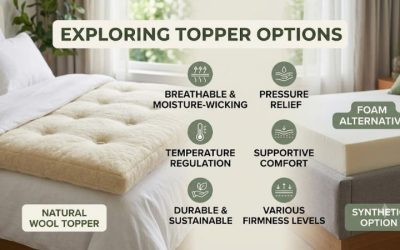
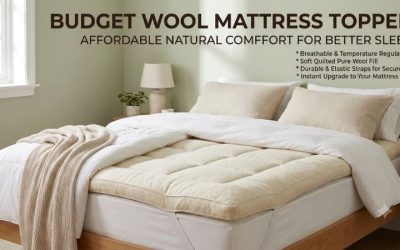
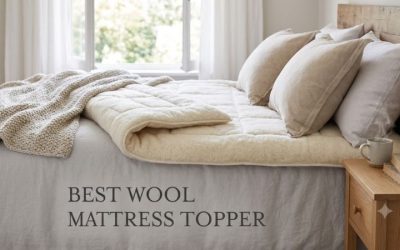
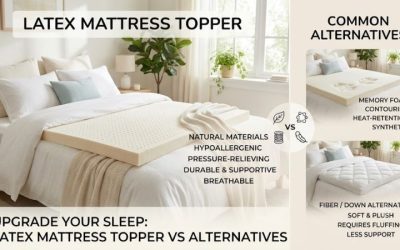
Key takeaways
- A wool mattress topper is best suited to sleepers who already have a reasonably supportive mattress but want additional surface cushioning, moisture management, and a different feel from conventional foam.
Quick Verdict: Is a Wool Mattress Topper Right for You?
A wool mattress topper is best suited to sleepers who already have a reasonably supportive mattress but want additional surface cushioning, moisture management, and a different feel from conventional foam.
Wool fibers naturally compress under body weight. Depending on how the filling is processed and assembled, the resulting topper may feel softly padded, relatively dense, or noticeably plush when new. The amount of cushioning can change as the material settles.
For most buyers, the smartest starting point is a moderately filled wool topper with a breathable cotton cover, clearly stated fill weight, and appropriate care instructions.
| Your Main Priority | What to Look For | Why It Matters |
|---|---|---|
| Gentle surface cushioning | Thin or moderately filled wool topper | Adds padding without dramatically changing mattress support |
| More noticeable softness | Higher-loft wool topper | Provides more initial cushioning, although compression changes the feel |
| Temperature comfort | Wool fill with breathable cover fabric | Helps manage moisture vapor around the sleeping surface |
| Natural materials | Clearly documented wool and cotton composition | Makes material sourcing and construction easier to assess |
| Long-term usability | Secure quilting or tufting and durable seams | Helps keep the filling distributed |
| Easy maintenance | Protective cover and clear care instructions | Reduces the risk of damage during cleaning |
| Budget-conscious shopping | Compare fill weight, size, and construction | Helps distinguish genuine material differences from marketing |
| Significant pressure relief | Evaluate latex or memory foam alternatives | Wool may not provide enough deep contouring |
Bottom line: Choose wool when your mattress needs surface-level comfort improvement rather than a major structural or firmness correction.
What Is a Wool Mattress Topper?
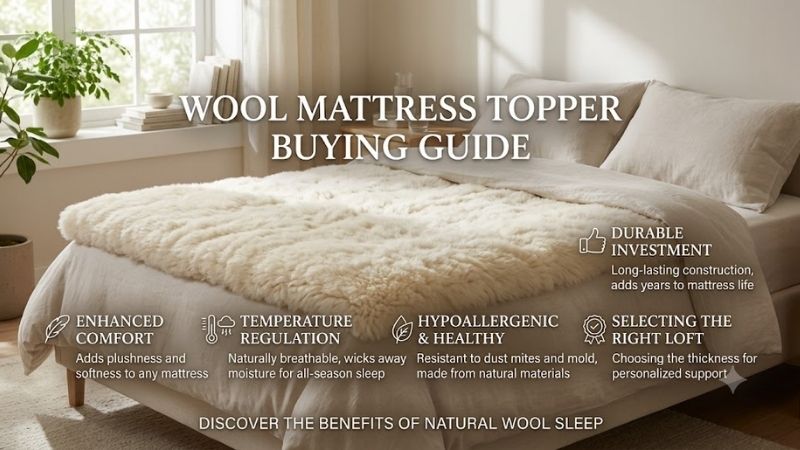
A wool mattress topper is a separate bedding layer placed above a mattress to modify how the sleeping surface feels.
Most wool toppers contain loose wool, carded wool batting, or another prepared wool filling enclosed in a fabric cover. The layers may be quilted or tufted to help stabilize the filling.
Unlike solid foam toppers, wool toppers depend on fiber loft and compression to produce cushioning.
How Wool Fibers Create Cushioning
Wool fibers have a naturally crimped structure. When assembled into bedding, the fibers can trap air and create a resilient padding layer.
Under body weight, the fibers compress and redistribute pressure across the surface.
However, this behavior differs from foam. Wool does not necessarily conform deeply around the shoulders, hips, and other body contours.
Its cushioning is usually most effective when the mattress underneath already provides suitable support.
How Wool Differs From a Mattress Pad
A mattress pad generally provides a relatively thin layer of protection or light cushioning.
A mattress topper is intended to make a more noticeable change to the sleeping surface.
However, manufacturers do not use these categories consistently. Some products described as wool mattress pads contain substantial filling, while certain wool toppers are relatively thin.
Evaluate actual fill quantity, construction, and intended use rather than relying solely on the product name.
What Wool Can and Cannot Fix
Wool can improve how a supportive mattress feels against the body.
It may soften a slightly firm surface, reduce direct contact with a particular cover fabric, or provide a different moisture-management experience.
It cannot reliably fix a mattress with significant sagging, broken springs, or a damaged support core.
Nor should a wool topper be expected to transform a very firm mattress into a deeply contouring pressure-relief system.
Benefits of Wool Mattress Toppers
Wool has several characteristics that make it relevant to bedding, but the practical benefits depend on its construction and the surrounding sleep environment.
Moisture Management
Wool is hygroscopic, meaning its fibers can absorb and release water vapor in response to surrounding conditions.
This property can help buffer changes in moisture within bedding.
For people who experience occasional nighttime perspiration, a wool layer may feel preferable to certain less absorbent bedding materials.
However, moisture absorption is not equivalent to waterproofing or active moisture removal.
A damp topper still needs appropriate drying, and bedroom humidity should be managed independently.
Temperature Regulation
Wool traps air within its fiber structure, providing thermal insulation.
Its moisture-handling characteristics may also contribute to thermal comfort under changing conditions.
These properties explain why wool is used in both warm and cool environments.
Nevertheless, wool does not automatically make a bed cooler. Thick wool filling can provide substantial insulation, and temperature perception varies with bedding, humidity, and individual physiology.
A breathable cover and suitable room conditions remain important.
Gentle Surface Softness
Wool can add a cushioned, slightly plush feel without the pronounced slow-recovery sensation of memory foam.
This may appeal to sleepers who find their current mattress supportive but somewhat uncomfortable at the surface.
The degree of softness depends on fiber quantity, initial loft, compression, and the underlying mattress.
It is important to distinguish initial fluffiness from lasting comfort.
Natural-Fiber Construction
Wool is an animal-derived natural fiber, typically obtained from sheep.
It can appeal to shoppers who prefer natural-fiber bedding instead of an entirely synthetic comfort layer.
However, a wool-filled product may still contain synthetic stitching, backing, or other components.
Natural composition also does not establish that a product is organic, free of chemical treatments, or suitable for every person with allergies or sensitivities.
Potential Long-Term Comfort
Quality wool filling can retain useful resilience, but compression and settling occur during normal use.
Durability depends on fiber preparation, fill quantity, construction quality, sleeping habits, and maintenance.
A well-made topper may remain usable for years, but there is no single reliable lifespan that applies to all wool products.
Specific longevity claims require product-specific evidence.
How to Choose the Right Wool Topper Thickness
Thickness influences comfort, bed height, storage, and maintenance.
For wool products, however, initial loft can differ substantially from compressed thickness.
A topper advertised as thick and plush may feel much flatter after repeated use.
Thin Wool Toppers for Light Cushioning
Thin wool toppers provide a modest adjustment to the mattress surface.
They may suit people who generally like their mattress firmness but want a gentler contact layer.
Thin designs can also be easier to handle, especially when changing sheets or airing the bedding.
Their main limitation is pressure relief. A thin wool layer has limited capacity to soften an extremely firm mattress.
Medium-Loft Wool Toppers for Everyday Comfort
A moderately filled wool topper offers more initial cushioning than a thin pad.
This can be a practical choice for an everyday bed when a noticeable but not dramatic surface change is desired.
Look for information about the quantity of wool and the way the filling is secured.
The manufacturer may describe the initial loft and the expected degree of settling.
Those details can be more useful than a single thickness measurement.
Thick Wool Toppers for More Substantial Padding
A thick wool topper contains more filling or uses a more lofted construction.
It may provide a noticeably cushioned surface when new.
However, additional wool does not guarantee better pressure relief or a softer long-term feel.
As fibers compress, a deeply filled topper can become denser.
Thicker models also require more effort to move, air, and store.
Thickness vs. Fill Weight
Fill weight is one of the most useful specifications when comparing wool toppers.
Manufacturers may report the total wool filling in pounds or a fill weight per unit of area.
These measurements describe different things.
A Queen topper naturally requires more filling than an otherwise identical Twin topper.
For meaningful comparisons, examine wool weight relative to mattress dimensions.
| Factor | What It Indicates | What It Does Not Prove |
|---|---|---|
| Initial thickness | Loft before significant compression | Long-term cushioning depth |
| Total wool fill weight | Overall quantity of wool filling | Softness without considering size |
| Fill weight per area | Wool quantity relative to surface area | Pressure relief or durability alone |
| Quilting pattern | How the filling is secured | Uniform comfort under all conditions |
| Finished product weight | Total weight of topper and materials | Exact weight of wool filling |
When specifications are incomplete, avoid assuming that a visually thicker topper contains more wool or offers better performance.
Choosing Wool Topper Firmness for Your Sleeping Position
Wool toppers rarely have firmness characteristics that translate directly to foam mattress ratings.
The filling compresses over time, while the mattress underneath continues to influence body alignment and pressure distribution.
Side Sleepers
Side sleepers typically need enough cushioning around their shoulders and hips.
A moderately or generously filled wool topper may soften the contact surface, especially if the underlying mattress is only slightly too firm.
However, wool may not provide the deeper contouring needed when a mattress causes pronounced pressure discomfort.
In that situation, a suitable latex or memory foam topper may be more effective.
Choose based on the reason for discomfort rather than the expectation that all soft materials relieve pressure equally.
Back Sleepers
Back sleepers usually benefit from a surface that accommodates body contours while maintaining appropriate support through the pelvis and torso.
A thin or medium-loft wool topper may be suitable when the underlying mattress already provides that support.
Because wool creates a padded layer rather than a thick foam system, it may be appealing to people who want minimal changes to their existing mattress feel.
Avoid using a wool topper to compensate for a mattress that visibly sags.
Stomach Sleepers
Stomach sleepers may prefer relatively modest surface cushioning, particularly when their mattress already has softer comfort layers.
A thin wool topper can provide light padding without introducing as much additional material as a thicker version.
Nevertheless, the combined mattress and topper must still provide appropriate support.
If the pelvis sinks excessively, adding more cushioning may worsen the problem.
Combination Sleepers
Combination sleepers change positions during the night and may appreciate wool’s relatively unobtrusive surface feel.
A moderately filled topper can provide consistent contact cushioning without the same slow-recovery contouring sensation associated with many memory foam products.
However, compression patterns can develop where body weight is repeatedly concentrated.
Choose a construction that keeps the filling reasonably distributed and follow the manufacturer’s rotation guidance.
Wool Types and Materials: What to Look For
Not every wool topper contains the same type of wool. Fiber quality, processing, blend composition, and cover construction all affect the final product.
Pure Wool vs. Wool Blends
A topper labeled 100% wool filling should contain wool throughout its specified filling component. However, the outer cover, stitching, or additional layers may contain other materials.
Wool blends incorporate fibers such as polyester or cotton to modify construction, cost, or handling characteristics.
A blend is not necessarily inferior, but buyers should understand what they are purchasing.
Check the fiber content label and distinguish between filling composition and total product composition.
Merino Wool vs. Other Sheep Wool
Merino wool is known for its relatively fine fibers, which are commonly valued in apparel worn against the skin.
However, a mattress topper usually places wool inside a fabric cover rather than directly against the body.
Consequently, fine fiber diameter alone does not establish superior topper comfort.
Other sheep wool types can be suitable for bedding depending on their resilience, cleanliness, preparation, and construction.
Prioritize documented material characteristics over breed-related marketing.
Organic Wool and Certification
Organic wool should be supported by certification appropriate to the fiber and finished textile product.
For example, GOTS certification addresses specified organic textile requirements and processing standards.
Certification scope matters. A certified organic cotton cover does not automatically mean the wool filling is certified organic.
Check the actual product documentation before accepting organic claims.
Cotton vs. Synthetic Covers
Cotton is a common outer fabric because it can provide a breathable, flexible covering for wool filling.
However, weave density, coatings, and additional layers influence airflow and moisture transfer.
Polyester and other synthetic fabrics may offer different durability or care characteristics.
Neither fabric category guarantees a particular sleeping temperature.
For buyers prioritizing wool’s moisture-buffering behavior, a breathable cover is an important consideration.
Quilted vs. Tufted Construction
Quilting divides the filling into stitched areas, while tufting secures layers at selected points.
Both techniques can reduce excessive movement of wool inside the cover.
Quilting may create a flatter, more controlled surface. Tufting may be used to secure thicker layers.
Neither approach entirely prevents wool from compressing with use.
Assess seam quality, fill distribution, and manufacturer guidance on maintaining even loft.
Wool Mattress Topper Sizes and Bed Compatibility
A topper should fit the mattress securely without excessive overhang, uncovered edges, or interference with bedding and bed-frame components.
Standard US Mattress Sizes
| Mattress Size | Nominal Width | Nominal Length |
|---|---|---|
| Twin | 38 inches | 75 inches |
| Twin XL | 38 inches | 80 inches |
| Full | 54 inches | 75 inches |
| Queen | 60 inches | 80 inches |
| King | 76 inches | 80 inches |
| California King | 72 inches | 84 inches |
These are standard nominal dimensions. Actual mattress and topper measurements can vary slightly by manufacturer.
Check Actual Mattress Dimensions
Measure the mattress width and length before purchasing.
This is especially important for older mattresses, RV beds, custom mattresses, and nonstandard furniture.
A Full-size topper is not interchangeable with a Queen topper, and Twin and Twin XL lengths differ.
Oversized wool toppers can bunch along the edges, potentially creating an uneven sleeping surface.
Account for Mattress Height
A wool topper increases the overall height of the sleeping surface.
However, its thickness may decrease under body weight and after regular use.
When choosing fitted sheets, consider the combined mattress and uncompressed topper depth.
A fitted sheet that is too shallow can pull at the corners or distort the topper.
Corner Straps and Attachment Systems
Some wool toppers use elastic corner straps, fitted skirts, or other attachment systems.
These can help reduce shifting during sleep.
Check whether the straps accommodate your mattress depth.
A topper that moves excessively may produce bunching or uneven cushioning.
Avoid using improvised adhesives or fasteners that could damage the mattress or wool cover.
Adjustable Beds and Convertible Furniture
A wool topper may be compatible with some adjustable bed frames, but it must flex appropriately without excessive bunching.
Murphy beds, sofa beds, and folding mattresses require additional attention.
Check the furniture manufacturer’s restrictions on overall mattress thickness, weight, and folding.
Do not assume a wool topper is safe to leave attached when closing a convertible bed.
Wool vs. Latex vs. Memory Foam Mattress Toppers
Wool is not universally better than foam. Each material offers a different combination of cushioning, resilience, contouring, and maintenance requirements.
| Feature | Wool | Latex | Memory Foam |
|---|---|---|---|
| Main feel | Fiber-based surface padding | Responsive, elastic cushioning | Slow-recovery contouring |
| Deep pressure relief | Usually limited | Varies with firmness and thickness | Often a major design priority |
| Response to movement | Compressible fiber layer | Generally quick rebound | Typically slower recovery |
| Moisture behavior | Absorbs and releases vapor | Depends on construction and bedding | Depends on foam and cover |
| Temperature comfort | Insulation and moisture buffering | Airflow varies by design | Heat retention varies by formulation |
| Long-term change | Fiber settling and compression | Possible softening or impressions | Possible softening or impressions |
| Care | Often specialized | Usually spot cleaning | Usually spot cleaning |
When Wool Is the Better Choice
Wool is worth considering when the mattress already supports the body adequately and the goal is gentler surface padding.
It may also appeal to people who prefer natural-fiber bedding and want moisture-buffering properties.
The main trade-off is that wool settles and does not create the same deep contouring offered by many foam toppers.
When Latex Is the Better Choice
Latex may be better for sleepers seeking a more substantial change in cushioning while maintaining a relatively responsive feel.
It is particularly worth considering when the existing mattress feels too firm and needs more structured pressure relief.
However, latex toppers can be heavy, and comfort varies substantially with thickness and firmness.
When Memory Foam Is the Better Choice
Memory foam may be appropriate when deeper contouring and motion isolation are priorities.
Its slow-recovery behavior differs markedly from wool.
Some sleepers appreciate the enveloping sensation, while others dislike feeling deeply surrounded by foam.
Temperature and support characteristics depend on the exact product rather than the material name alone.
Understanding Wool Topper Certifications and Safety
Material labels and certification claims can provide useful information, but they should not be interpreted more broadly than the applicable standard permits.
GOTS Certification
GOTS applies to qualifying organic textile products and their processing requirements.
A GOTS label can support certain organic sourcing and processing claims when the finished product or relevant material is genuinely covered.
It does not establish a particular comfort score or guarantee that the topper will suit every sleeper.
OEKO-TEX STANDARD 100
OEKO-TEX STANDARD 100 concerns testing textiles for specified harmful substances according to its criteria.
Certification applies to the certified article or components within its documented scope.
It does not automatically mean a topper is organic or entirely untreated.
Woolmark Certification
Woolmark certification relates to relevant wool-content and quality requirements under the applicable program.
It should not be confused with organic certification or an independent guarantee of mattress-topper durability.
Check whether the specific finished product is certified rather than relying on a general statement about the manufacturer’s materials.
Wool Sensitivities and Allergies
Wool may cause discomfort for people sensitive to its fiber texture or to substances associated with a particular product.
Some people may also react to other materials used in the topper.
A cotton cover can reduce direct contact with the filling but does not establish that the finished product is suitable for everyone.
If you have a known wool-related sensitivity or a significant allergy concern, review the materials and seek professional guidance as appropriate.
How to Evaluate Wool Mattress Topper Quality
A high-quality topper should combine clearly documented materials, suitable construction, and reasonable maintenance requirements.
Look for Transparent Material Specifications
A useful product description identifies the filling composition, cover material, size, and approximate fill quantity.
When available, review details about wool preparation, certification scope, and construction.
Products with vague descriptions such as premium natural filling can be difficult to compare objectively.
Check Filling Distribution
Uneven filling can cause some areas of the topper to feel thinner than others.
Quilting or tufting can help stabilize the wool, although neither construction prevents all settling.
Look for clear information about how the filling is secured.
Inspect Cover and Stitching Quality
The cover should hold the filling securely without obvious weak seams or large openings.
Reinforced edges and consistent stitching may help the topper withstand routine handling.
However, visible construction alone cannot establish long-term durability.
Understand Expected Compression
Wool naturally compresses during use.
Some manufacturers provide information about initial loft loss or settling.
This can help buyers set realistic expectations.
Do not interpret normal settling as an automatic defect, but investigate pronounced unevenness, persistent lumps, or loss of comfort.
Evaluate Trial and Warranty Terms
A topper may feel different once the wool has settled.
Check whether the return policy permits actual sleeping use and whether there are restrictions involving hygiene, stains, or compression.
Warranty terms should specify what types of defects are covered.
Normal changes in loft may be excluded, depending on the manufacturer.
How Much Should You Spend on a Wool Mattress Topper?
The best budget depends on mattress size, filling quantity, cover construction, certification requirements, and intended use.
Instead of relying on broad price categories, compare products using consistent specifications.
Budget Wool Toppers
Lower-cost products may use less wool, blended filling, simpler covers, or thinner construction.
These can be reasonable choices when only minor surface cushioning is needed.
Verify that the product actually contains the advertised wool quantity.
A product described as wool-like or wool-feel may not contain substantial wool filling.
Midrange Wool Toppers
Midrange options may offer more filling, clearer material specifications, or more substantial cover construction.
However, price alone does not establish quality.
Compare fill weight per unit area and examine cleaning and return requirements.
A well-specified moderately filled topper can be more useful than a thicker product with poorly documented materials.
Premium Wool Toppers
Higher-priced options may emphasize organic certifications, specialized wool sourcing, hand-tufted construction, or generous filling quantities.
These features may justify a higher price for buyers who specifically value them.
Nevertheless, none automatically guarantees better sleeping comfort.
Avoid paying for unnecessary features if your mattress needs only modest surface adjustment.
Calculate Total Ownership Cost
Consider the initial topper price, any separate cover, protective bedding, cleaning requirements, and potential return shipping charges.
A topper that requires specialized cleaning may cost more to maintain than expected.
A product with clear care instructions and suitable protection may be a more practical long-term purchase.
Practical Buying Scenarios
Scenario 1: Your Mattress Is Comfortable but Slightly Too Firm
A thin or moderately filled wool topper is a sensible option.
It can add a softer contact layer without substantially altering the support system.
Choose a design with enough filling to provide noticeable padding but avoid assuming that greater thickness is always necessary.
Scenario 2: You Sleep Hot and Want Natural-Fiber Bedding
Consider a wool topper with a breathable cotton cover.
Wool’s moisture-buffering properties may contribute to comfort, but room temperature and bedding still matter.
Avoid interpreting natural wool as an active cooling technology.
Choose lightweight, breathable sheets and manage room humidity where necessary.
Scenario 3: You Experience Shoulder and Hip Pressure
First determine whether the underlying mattress is excessively firm.
A wool topper may provide surface cushioning, but significant pressure relief often requires a material that contours more deeply.
Latex or memory foam may be more suitable for that specific goal.
If discomfort is persistent or medically significant, a topper should not replace appropriate professional assessment.
Scenario 4: You Share a Bed With a Partner
Consider how both sleepers feel about the existing mattress.
A wool topper can provide a modest surface adjustment across the bed.
However, it is unlikely to solve major differences in preferred firmness.
If the two sleepers have substantially different needs, separate comfort layers or another mattress configuration may be more appropriate.
Scenario 5: You Need a Topper for a Guest Bed
A thinner wool topper can add gentle cushioning to a guest mattress that is otherwise suitable.
Prioritize manageable weight, a protective cover, and practical cleaning requirements.
If the topper must be removed frequently, verify the manufacturer’s storage recommendations.
Scenario 6: You Live in a Humid Climate
Wool’s ability to absorb moisture vapor may be useful, but it cannot eliminate a humid room environment.
The topper must be able to release accumulated moisture.
Maintain ventilation, keep the mattress foundation dry, and avoid storing the topper when damp.
Persistent condensation or mold problems require attention to the room and bed foundation.
How to Set Up a Wool Mattress Topper
Step 1: Inspect the Existing Mattress
Check for significant sagging, damaged springs, excessive impressions, or foundation problems.
A topper should be placed on a reasonably supportive mattress.
If the existing mattress has major structural defects, adding wool is unlikely to resolve them.
Step 2: Measure the Sleeping Surface
Measure mattress width, length, and depth.
Compare the measurements with the topper’s specified dimensions.
Consider whether the combined bedding height will fit your existing sheets and bed frame.
Step 3: Unpack and Position the Topper
Follow the manufacturer’s unpacking instructions.
Place the topper evenly on the mattress and align the corners.
If the product includes elastic straps or another attachment system, secure it as directed.
Allow the filling to recover from packaging compression when applicable.
Step 4: Add Protective Bedding
A suitable mattress protector can reduce exposure to spills and body oils.
However, protectors differ in breathability and may influence the moisture behavior of the complete bedding system.
Choose one that fits the mattress and topper without excessive compression.
Step 5: Check Comfort and Alignment
Lie in your normal sleeping positions and assess whether the mattress still provides adequate support.
Pay attention to excessive pressure around the shoulders and hips or unusual sinking around the pelvis.
The goal is improved surface comfort without creating a new support problem.
Step 6: Monitor the Topper During Initial Use
Wool may settle over time.
Inspect the surface for uneven filling and follow the manufacturer’s recommendations for rotation or loft maintenance.
A noticeable change in initial fluffiness does not necessarily indicate a defective topper, but persistent lumps or uncomfortable depressions deserve investigation.
How to Clean and Maintain a Wool Mattress Topper
Wool care depends on the specific filling and construction.
Always prioritize the manufacturer’s label over general cleaning recommendations.
Air the Topper Regularly When Appropriate
Airing may help accumulated moisture escape from the bedding.
If permitted, remove the fitted sheet and protective covering to allow air circulation.
Some products may be aired outdoors under suitable conditions.
Avoid exposing wool to rain, persistent dampness, or prolonged direct sunlight unless allowed by the manufacturer.
Spot-Clean Carefully
For small spills, blot the affected area promptly.
Use the manufacturer’s recommended cleaning method.
Avoid excessive moisture and aggressive rubbing, which can disturb the filling or damage the cover.
Ensure the topper is fully dry before returning it to use.
Avoid Unapproved Machine Washing
Many wool toppers cannot safely be washed in a standard household machine.
Agitation, unsuitable water temperatures, and incorrect detergents can cause felting, shrinkage, or fill distortion.
A removable washable cover does not mean the wool filling itself is machine washable.
Follow the care label exactly.
Rotate When Recommended
Some manufacturers recommend rotating wool toppers to distribute compression more evenly.
If appropriate for the product, rotation can help expose different areas to repeated body weight.
However, it cannot reverse every permanent change in the filling.
Store in a Clean, Dry Environment
If the topper must be stored, ensure it is completely dry.
Avoid prolonged tight compression unless the manufacturer approves it.
Use appropriate protection against dust and moisture, and avoid unventilated storage spaces that accumulate condensation.
Know When Replacement Is Necessary
Replace the topper if it develops persistent unevenness, damaged filling, failed seams, or uncomfortable compression that cannot be corrected through approved care.
There is no universal replacement interval that applies to every wool topper.
Actual service life depends on construction, usage, and maintenance.
Common Wool Mattress Topper Buying Mistakes
Buying Based Only on Advertised Thickness
Initial loft is not the same as lasting cushioning.
Check filling quantity, construction, and the manufacturer’s guidance about settling.
Expecting Wool to Repair a Worn-Out Mattress
Wool padding cannot restore a damaged mattress support core.
Address significant sagging or foundation problems before purchasing a topper.
Assuming All Wool Toppers Are Organic
Natural wool, organic wool, and certified finished textile products are different classifications.
Confirm the applicable certification and its scope.
Ignoring Care Instructions
A topper that requires specialized cleaning may be inconvenient for some households.
Review the care label before buying, especially when spills or frequent washing are likely.
Assuming Wool Always Sleeps Cool
Wool provides insulation as well as moisture buffering.
Its effect on sleeping temperature depends on thickness, cover materials, bedding, and room conditions.
Choosing Wool for Deep Pressure Relief Without Comparing Alternatives
Wool often provides gentler surface padding than thick foam toppers.
If major contouring is needed, evaluate latex and memory foam before committing to wool.
Overlooking Return Restrictions
Because wool settles, comfort can change after initial use.
Read trial, return, and warranty terms carefully so you understand which conditions are covered.
Frequently Asked Questions
Is a Wool Mattress Topper Worth Buying?
A wool mattress topper can be worth buying if your mattress is supportive but you want additional surface cushioning and natural-fiber bedding. Its moisture-buffering properties may also appeal to some sleepers. However, wool is less suitable when you need major firmness correction, deep contouring, or a solution for mattress sagging.
Are Wool Mattress Toppers Good for Side Sleepers?
They can be suitable when the underlying mattress already provides adequate pressure relief. Wool adds cushioning but typically does not contour as deeply as memory foam or latex. Side sleepers with significant shoulder or hip discomfort may need a more substantial comfort layer.
Do Wool Mattress Toppers Flatten Over Time?
Yes. Wool fibers compress and settle with repeated use. The amount of change depends on fill quantity, construction, and sleeping habits. Some settling is normal, but persistent unevenness or significant loss of comfort may indicate that the topper is no longer performing adequately.
Can a Wool Mattress Topper Make a Bed Too Warm?
It can, depending on the topper’s thickness and the rest of the bedding. Wool provides insulation and manages moisture vapor, but it does not actively cool the sleeping surface. In a warm room, breathable covers, suitable sheets, and temperature control remain important.
Can You Wash a Wool Mattress Topper?
Some wool products permit particular washing methods, but many mattress toppers require spot cleaning or other specialized care. Machine washing without manufacturer approval can cause shrinkage, felting, or damage to the filling. Always follow the product-specific instructions.
Is Wool Better Than Latex or Memory Foam?
Wool is better suited to buyers seeking gentle surface padding and natural-fiber moisture management. Latex offers resilient cushioning, while memory foam provides slower, deeper contouring. The best material depends on mattress condition, sleeping position, comfort preference, and maintenance needs.
Conclusion
The best wool mattress topper is one that complements your existing mattress rather than attempts to replace its support. Start with a thin or moderately filled topper for gentle cushioning, prioritize transparent wool content and fill-weight specifications, and choose a breathable, well-constructed cover. Confirm mattress dimensions, cleaning requirements, and return terms before purchasing. Wool is an appealing option for surface comfort and moisture management, but sleepers needing significant pressure relief or firmness changes should also consider latex or memory foam.