Key takeaways
- Pro: Full-color screen with arcade-faithful Pac-Man implementation.
- Pro: No menu bloat; instant access to the one game that matters.
- Con: Only one title; limited appeal once novelty fades.
The best mini arcade machines solve a specific problem: you want the feel of a quarter-fed cabinet on a shelf or a desk, at a price low enough to hand to a kid or set up for yourself without guilt. The category has exploded since its retro revival, and options now range from single-game dedicated units to palm-sized handhelds loaded with hundreds of titles. What separates a satisfying purchase from a disappointing one comes down to three factors: how the games feel on a small screen, whether the build quality justifies the asking price, and whether the library matches what you actually want to play.
After comparing published specifications, current pricing, and owner feedback across this market, we narrowed the field to eight machines worth your attention. Some prioritize a focused experience on one or two beloved titles, while others pack hundreds of games into a shell smaller than a smartphone. None replicate a full-size upright cabinet, but the right choice gets the nostalgia and the gameplay loop close enough to matter for the money spent.
As an Amazon Associate we earn from qualifying purchases at no extra cost to you. Product prices and availability are accurate as of the date shown and are subject to change.



Quick Picks
| Product | Best for | Price |
|---|---|---|
| Arcade Classics Pac-Man | Single-game purity | $24.97 |
| Retro Handheld 240 Games | Lowest price, young kids | $19.88 |
| Galaga Micro Player Pro | Galaga fans on a budget | $39.99 |
| Street Fighter 2 Champion Edition | Two-player fighting | $59.99 |
| Arcade Classics Tetris | Puzzle nostalgia | $24.97 |
| Retro Arcade Machine X | Most games in a desktop form | $34.99 |
| Galaga Nano Player | Compact dedicated retro | $34.99 |
| Mini Arcade 156 Games | Balance of value and variety | $26.99 |
How We Picked
We evaluated every machine on four criteria drawn from spec sheets and verified owner reviews. First, game count versus playability: a unit listing three hundred titles means nothing if the controls make half of them unenjoyable, while a single perfectly tuned game can justify its price. Second, screen size relative to body: at this scale even a third of an inch changes how legible pixel art looks. Third, form factor and shelf presence: does the device read as a miniature arcade cabinet or as a disposable toy? Fourth, value per dollar: the cheapest option wins only when the experience feels complete rather than hollow.
The 8 Best Mini Arcade Machines in 2026
Arcade Classics Pac-Man
This handheld puts Pac-Man on a full-color screen in a classic joystick shell for $24.97. Owner feedback consistently highlights responsive controls and a faithful reproduction that avoids the clutter of large game libraries. The single-game design means no scrolling through filler titles; you press start and the maze loads immediately. For a gift or a desk ornament that doubles as a quick-stress-relief tool, the focus is the feature, not a limitation.
- Pro: Full-color screen with arcade-faithful Pac-Man implementation.
- Pro: No menu bloat; instant access to the one game that matters.
- Con: Only one title; limited appeal once novelty fades.
Skip if the recipient needs variety to stay engaged beyond a few sittings.
Retro Handheld with 240 Built-in Games
At $19.88, this is the cheapest entry here and ships with batteries included, making it ready to play the moment the box opens. The target age range of three to eight explains the simple control layout and plastic build, which adults will find toy-like but which keeps the price genuinely accessible. Two hundred forty games guarantee that whatever a child gravitates toward, something nearby will hold attention for a long car ride or quiet afternoon.
- Pro: Lowest price on the list with batteries in the box.
- Pro: Enormous game count ensures lasting novelty for young players.
- Con: Toy-grade build and small screen disappoint adult collectors.
Skip if you want a display piece for your own shelf rather than a kids gift.
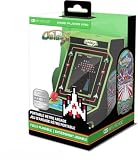
My Arcade Galaga Micro Player Pro
This dedicated shell at $39.99 packages two Galaga games with retro arcade branding and a focused hardware layout tuned for the series. Owners who grew up with this shooter praise the collectible presentation and the fact that the controls prioritize the specific stick feel Galaga demands. The two-game library is intentional, not a compromise, but the price per title is steep compared to multi-game options in this list.
- Pro: Dedicated hardware and branding appeal to franchise collectors.
- Pro: Two-game format delivers a curated, no-filler experience.
- Con: $39.99 for two games is hard to justify when 156-title units cost less.
Skip if you value breadth of library over brand-specific design.
My Arcade Street Fighter 2 Champion Edition
At $59.99, this is the priciest machine on the list and the only one designed for two simultaneous players on a single cabinet, replicating the versus-arcade moment that defined the franchise. The Champion Edition designation confirms more characters and stages than the original arcade release. The button and stick layout follows arcade specifications rather than a console port, giving competitive players the input feel they expect. That authenticity carries a premium that not every buyer needs.
- Pro: Local two-player versus mode is unique in this comparison.
- Pro: Arcade-spec controls match the original cabinet input feel.
- Con: Highest price, single franchise, and requires a second player to fully use.
Skip if your budget tops out at fifty dollars or you lack a second player.
Arcade Classics Tetris
Identical hardware to the Pac-Man unit, reskinned for the block-puzzle icon at the same $24.97. Tetris maps naturally to a simple joystick and two buttons, and owners note the lack of input lag compared to smartphone versions. As a gift it is arguably the safer blind buy of the two Arcade Classics singles, since the game scales across ages and does not demand fast reflexes the way a maze chase does.
- Pro: Universally playable game suits a wider age range than action titles.
- Pro: Clean input mapping with no perceptible lag reported by owners.
- Con: One game only, identical to the Pac-Man version in every other regard.
Skip if the recipient prefers shooters or platformers over abstract puzzles.
My Arcade Retro Arcade Machine X
Three hundred games, a 2.5-inch color display, and a 5.75-inch-tall cabinet silhouette make this the best shelf-presence-to-variety ratio in the group at $34.99. It physically resembles a miniature arcade cabinet rather than a handheld, which owners frequently cite as the reason they bought it. AA battery operation keeps it portable but introduces a recurring cost that rechargeable alternatives avoid.
- Pro: Cabinet form factor at nearly six inches tall looks like real arcade equipment.
- Pro: 300 titles provide variety that justifies the mid-range price.
- Con: AA batteries mean ongoing expense and mid-session downtime.
Skip if you dislike replacing disposable batteries or want USB-C charging.
My Arcade Galaga Nano Player
The Nano Player offers the same two-game Galaga library as the Micro Player Pro at an identical $34.99, but in a smaller body. The reduced footprint suits cramped desks or travel bags, though the trade-off is a slightly tighter screen area that can make distant pixel art harder to distinguish. For existing Galaga Micro owners looking for a second unit to travel with, this fills that gap; for first-time buyers, the choice between sizes is the only decision.
- Pro: Compact footprint fits spaces where the Micro Player Pro cannot.
- Pro: Same curated Galaga experience at no price premium over the larger model.
- Con: Same two-game limitation as a pricier-feeling unit with no added value over alternatives.
Skip unless you specifically need the smaller physical size over all else.
Mini Arcade with 156 Built-in Games
This unbranded unit at $26.99 delivers the largest screen in the roundup at 2.8 inches along with 156 classic titles. For buyers who want more than a handful of games but do not need the bulk of a 300-title library, the middle count and bigger display hit a practical sweet spot. Owner feedback supports the screen quality and game variety, though the absence of a recognizable brand name makes long-term support and build consistency harder to verify.
- Pro: Largest display here at 2.8 inches, improving readability for all ages.
- Pro: Substantial library at a price that undercuts many-brand competitors.
- Con: No-name brand complicates quality assurance and warranty claims.
Skip if brand-backed reliability matters more to you than screen size.
Buying Guide
Game Count Versus Game Quality
The biggest mistake buyers make is optimizing purely for the highest number of titles on the box. A 300-game list often includes dozens of near-identical clones, poorly mapped ports, or titles that become unplayable on a small joystick. A well-implemented two-game unit delivers more total enjoyment than a 240-game list where 90 percent feel like afterthoughts. Judge libraries by what is recognizable and playable rather than raw quantity.
Screen Size and Pixel Clarity
Display diagonals in this category range from 2.5 to 2.8 inches, and that difference matters more than it sounds. Arcade games rely on pixel-level precision for timing and positioning; a quarter-inch larger screen at the same resolution gives your eyes more room to parse individual sprites. If the machine will be used by anyone over forty or by children with developing coordination, favor the larger