This wall mounted tool organizer buying guide explains how to choose storage for hand tools, cordless drills, garden equipment, and workshop accessories. Pegboards, slatwall systems, hanging rails, and power-tool shelves differ in capacity, flexibility, and installation requirements. Understanding these differences helps you create a safer, more efficient garage without wasting wall space or money.
What Should You Look for in a Wall Mounted Tool Organizer?
A good wall-mounted organizer should keep the right tools accessible while supporting their weight safely.
The most suitable storage system depends on the equipment involved.
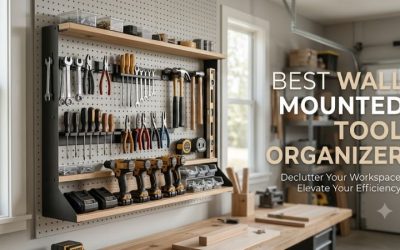
Hand tools are often easy to organize on pegboard.
Cordless drills and impact drivers benefit from dedicated holders.
Large outdoor equipment may be better supported by rails and adjustable hooks.
Small hardware often requires bins, drawers, or containers rather than open hooks.
Before purchasing, evaluate the tools, wall structure, available space, storage depth, and future expansion requirements.
Mounting capacity deserves particular attention.
A steel organizer may be physically capable of holding substantial weight while the supporting wall or fasteners are not.
The entire installed assembly must be suitable for the intended load.
Understand the Main Storage Systems
Traditional Pegboard
Traditional pegboard usually consists of a panel with regularly spaced holes.
Hooks and holders fit into the holes to support tools.
This format is useful because accessories can be repositioned.
A homeowner can reorganize a tool collection without replacing the entire panel.
However, traditional fiberboard may be vulnerable to moisture and wear.
Hooks can also move when tools are removed unless appropriate retainers are used.
Metal Pegboard
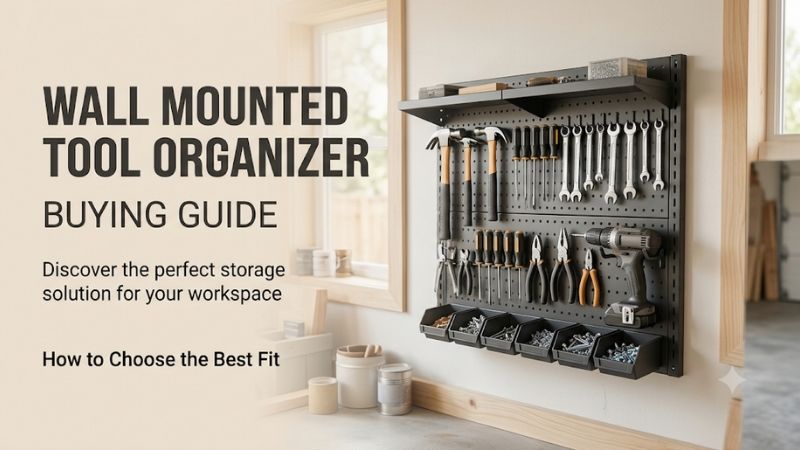
Metal pegboard provides a rigid surface for compatible storage accessories.
It can be useful for workshops where tools are rearranged frequently.
Some systems support both traditional pegboard hooks and manufacturer-specific accessories.
Others use proprietary hole patterns.
Check compatibility before buying.
Plastic Pegboard
Plastic pegboard can be lightweight and resistant to certain moisture conditions.
However, load capacity depends on the specific product.
It should not automatically be considered equivalent to steel.
Slatwall Panels
Slatwall uses horizontal channels rather than individual holes.
Compatible hooks, shelves, and baskets engage with the channels.
This can provide flexibility for bulky garage equipment.
However, the panel material, mounting design, and individual accessory ratings matter.
Wall Track Systems
Wall track systems use rails that support compatible hooks and storage accessories.
They are practical for long-handled tools and garage equipment.
A modular track can be expanded gradually.
Dedicated Power Tool Racks
Power-tool racks provide slots and shelves specifically intended for cordless tools.
They are useful for organizing drills, impact drivers, batteries, and chargers.
However, fixed holders may not fit every tool.
Magnetic Tool Holders
Magnetic holders can retain compatible metal hand tools.
They are convenient for certain wrenches and screwdrivers.
However, retention varies according to tool weight, contact area, and holder strength.
French Cleat Systems
French cleats use interlocking angled components.
They allow custom holders to be repositioned.
This can be attractive for woodworking enthusiasts.
However, construction quality and mounting strength determine safe capacity.
Choose Storage According to Tool Type
Hand Tools
Screwdrivers, pliers, and wrenches benefit from visible organization.
Pegboard is often effective because it supports many tool shapes.
Use appropriate holders rather than balancing several heavy tools on one hook.
Cordless Drills
Cordless drills are bulky and irregularly shaped.
A dedicated rack may hold them more securely than general-purpose hooks.
Check handle size and tool orientation.
Impact Drivers
Impact drivers are often compact enough for drill-holder slots.
However, battery placement and accessories can affect fit.
Do not force a tool into a holder that presses against its trigger.
Power Tool Batteries
Batteries should be stored according to the manufacturer’s instructions.
Avoid excessive heat, moisture, and mechanical damage.
Do not place charging batteries in an enclosed compartment without suitable ventilation.
Chargers
Chargers require appropriate electrical connections and ventilation.
A storage shelf is not automatically an approved charging station.
Follow equipment instructions.
Wrenches and Sockets
Dedicated wrench racks and socket rails can improve organization.
Pegboard may support the racks themselves.
Check the combined weight.
Garden Equipment
Shovels, rakes, brooms, and similar tools are often better suited to long hooks or grip holders.
Store sharp heads securely.
Measuring Equipment
Levels, squares, and measuring tapes should remain protected.
Avoid storing precision tools where they can bend or fall.
Small Hardware
Screws, nuts, washers, and clips are easier to manage in bins or drawers.
Use labels.
Dense metal hardware can overload lightweight plastic containers.
Understand Load Ratings
Total System Capacity
Some manufacturers publish a maximum total load for a rail, panel, or rack.
This rating applies only under specified installation conditions.
It may assume evenly distributed weight.
Do not concentrate the entire advertised load on one accessory.
Individual Hook Capacity
Hooks often have separate ratings.
A rail capable of supporting a high total load may still use hooks with much lower individual limits.
Check the exact accessory.
Shelf Capacity
A shelf’s load rating depends on its material, brackets, and mounting.
The load must be distributed appropriately.
Heavy tool cases can create concentrated loads.
Wall Capacity
The wall may be the limiting factor.
Drywall, wood studs, concrete, and masonry have different fastening requirements.
Fastener Capacity
Screws and anchors must be appropriate for the substrate and load.
Fastener ratings may depend on embedment depth, spacing, and installation technique.
Dynamic Loads
Removing and replacing tools can create forces beyond the weight of the stored equipment.
Avoid slamming heavy tools into holders.
Inspect fasteners periodically.
Choose the Right Wall Material and Mounting Method
Wood Stud Walls
For substantial loads, mounting into appropriate structural studs is often recommended.
Locate and verify the studs.
Use fasteners specified by the storage manufacturer.
Drywall
Drywall alone may not support heavy tool storage.
Anchors vary in capacity.
Use an approved method suitable for the complete installed load.
Concrete
Concrete may support heavy storage with appropriately selected anchors.
However, anchor suitability depends on substrate condition, spacing, and installation.
Masonry Block
Hollow block and solid masonry require different fastening considerations.
Do not assume every masonry anchor is interchangeable.
Plywood Backing
A properly fastened plywood board can provide a flexible mounting surface.
However, the board must be connected securely to structural framing.
The backing board does not eliminate load limits.
Metal Framing
Metal-stud walls can require specialized fastening methods.
Do not apply wood-stud mounting assumptions to metal framing.
Measure the Storage Area
Width
Measure the wall area available for the panel or rail.
Account for nearby doors and cabinets.
Height
Determine the comfortable reach range.
Keep heavy tools within safe retrieving height.
Depth
Include the protrusion of stored tools.
A drill or shovel may extend farther than the holder itself.
Door Clearance
Check the full opening path of doors.
Vehicle Clearance
Garage storage must not interfere with vehicles entering or leaving.
Workbench Clearance
Leave enough room to use tools and handle workpieces.
Electrical Clearance
Do not block electrical panels, outlets, or required service access.
Compare Organizer Materials
Steel
Steel offers rigidity and can support demanding storage systems.
However, corrosion protection and construction quality vary.
Aluminum
Aluminum can reduce weight and resist certain corrosion conditions.
However, load capacity depends on design.
Fiberboard
Fiberboard pegboard may be inexpensive and easy to modify.
However, moisture and repeated hook movement can cause wear.
Plastic
Plastic components can be lightweight and corrosion-resistant.
However, they must be used within their rated load and temperature conditions.
Wood
Wooden cleats and shelves can be highly customizable.
Their capacity depends on material quality, dimensions, fasteners, and construction.
Understand Hook and Accessory Compatibility
Round-Hole Pegboard Hooks
These fit appropriate conventional pegboard patterns.
However, hole spacing and panel thickness matter.
Square-Hole Locking Hooks
Systems such as Triton LocBoard use dedicated locking accessories.
They can reduce unintentional hook movement.
However, compatibility is more specific.
Slatwall Hooks
Slatwall accessories engage horizontal channels.
They are not automatically compatible with pegboard.
Rail Hooks
Rail systems often use manufacturer-specific mounting interfaces.
Verify the exact product family.
Power Tool Holders
Drill and driver holders must fit the tool body.
Check dimensions and weight capacity.
Shelves and Baskets
Shelves are useful for cases and accessories.
Baskets can hold loose items.
However, both require appropriate support.
Plan the Layout Before Installation
Inventory the Tools
List every tool intended for wall storage.
Identify dimensions and weight where necessary.
Group by Frequency
Place frequently used equipment near the workbench.
Store occasional items farther away.
Arrange by Category
Keep related tools together.
This reduces search time.
Create Tool Zones
Examples include drilling, measuring, automotive, and garden-tool zones.
Reserve Expansion Space
Leave some room for future additions.
Check Retrieval Clearance
Make sure every tool can be removed without dislodging another.
Safety and Accessibility
Heavy Tools
Keep heavy equipment at comfortable reaching heights.
Use dedicated holders.
Sharp Tools
Protect exposed cutting edges.
Avoid hanging blades at face level.
Children
Store hazardous tools beyond unsupervised access.
Locked cabinets may be more appropriate for some equipment.
Electrical Equipment
Keep chargers dry and ventilated.
Avoid overloaded outlets.
Falling Objects
Inspect hooks and mounting hardware.
Do not store fragile or heavy equipment in unstable positions.
Installation Workflow
Mark the Wall
Measure the intended location and mark mounting points.
Check level alignment.
Locate Structural Support
Identify studs or appropriate masonry fastening locations.
Check for Hidden Services
Avoid concealed wiring and plumbing.
Prepare Fasteners
Use hardware suitable for the wall and manufacturer requirements.
Mount the Organizer
Follow the product’s installation sequence.
Tighten fasteners appropriately without damaging the panel.
Inspect the Installation
Check for movement, gaps, or loose components.
Load Gradually
Add tools while checking that holders remain secure.
Do not exceed ratings.
Recheck Periodically
Inspect the organizer during routine garage maintenance.
Cost and Long-Term Value
Initial Price
Compare the base panel, rack, or rail.
Included Accessories
Check the number and type of hooks.
Mounting Hardware
Some systems require separate fasteners or installation kits.
Expansion Costs
Proprietary accessories can affect long-term expenses.
Durability
A rigid system may be worth the extra cost for frequent use.
Replacement Parts
Verify availability of compatible hooks and holders.
Flexibility
A reconfigurable system may reduce future replacement costs.
Common Buying Mistakes
Choosing by Appearance Alone
A good-looking panel may not fit the tool collection.
Evaluate function first.
Ignoring Wall Structure
The wall must support the complete load.
Overcrowding
Closely packed tools can be difficult to retrieve.
Buying Incompatible Accessories
Check the mounting interface.
Storing Batteries Improperly
Follow manufacturer storage and charging instructions.
Mounting Heavy Tools Too High
Keep heavy equipment accessible.
Failing to Plan Expansion
Future changes may require additional panels or rails.
Frequently Asked Questions
What is the best organizer for a home garage?
A pegboard is versatile for hand tools, while rails and dedicated racks suit larger or more specialized equipment.
Is steel pegboard worth the extra cost?
It can be for users who value rigidity and reconfigurability. However, correct mounting remains essential.
Can wall storage damage drywall?
Yes, particularly when the organizer is improperly mounted or overloaded.
How do I organize multiple cordless drills?
A dedicated rack with appropriately sized slots and shelves can be convenient.
Can tool organizers be installed on brick?
Many can be installed on suitable masonry with appropriate anchors and manufacturer-approved methods.
How many hooks should I buy?
Base the number on the actual tool collection and leave room for future equipment.
Should every tool go on the wall?
No. Heavy, hazardous, delicate, or awkwardly shaped tools may be better stored in cabinets, drawers, or cases.
Conclusion
This wall mounted tool organizer buying guide recommends choosing storage according to the actual tool collection, available wall space, mounting structure, and accessory requirements. Metal pegboard works well for visible hand-tool organization, dedicated racks suit cordless drills, and modular rail systems handle larger garage equipment. Prioritize secure fastening, appropriate load capacity, comfortable access, and future flexibility over simply buying the largest organizer available.
More from Amazon
Programs that pair well with the guide above. Offers and eligibility are set by Amazon and may change.
Collect the home and kitchen items you want in one registry that guests can shop from.
Create a wedding registrySet up recurring deliveries of everyday items on eligible products. Terms and savings are set by Amazon.
Explore Subscribe & SaveFree shipping on eligible items, Prime Video and more. Eligible new members can start with a free trial.
Start a Prime free trialAudiobooks and podcasts to listen to on the go. Eligible new members can start with a free trial.
Try Audible freeAs an Amazon Associate we earn from qualifying purchases.