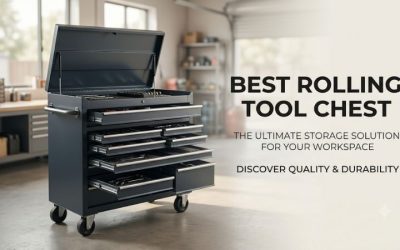
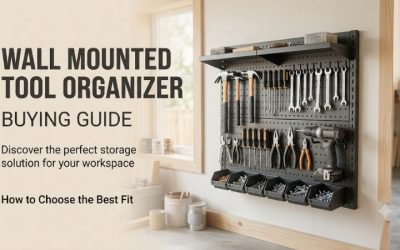
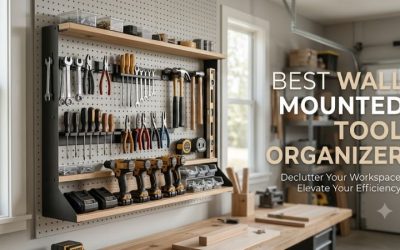
A wall mounted tool organizer for small spaces helps keep drills, hand tools, measuring equipment, and garage supplies accessible without sacrificing valuable floor area. The best solution depends on available wall width, tool depth, mounting strength, and how frequently equipment is used. This guide explains how to build efficient storage in compact garages, sheds, and workshops.
Quick Answer: What Works Best in a Small Garage?
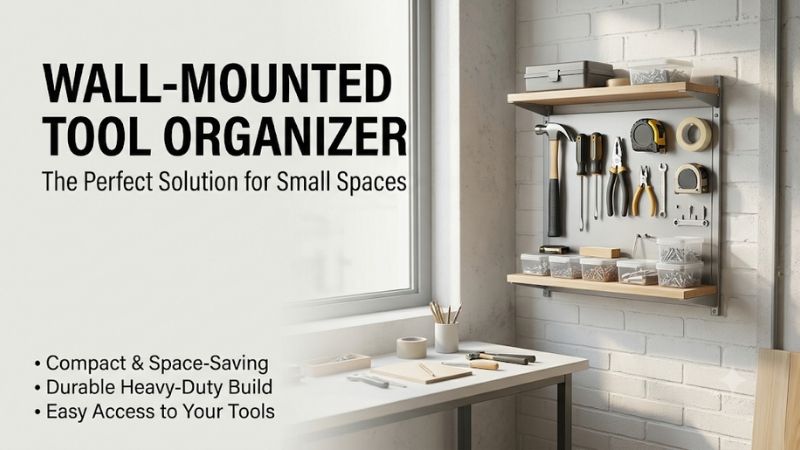
For a narrow wall above a workbench, a compact metal pegboard is often the most versatile option. It allows tools to be arranged vertically rather than spread across drawers or shelves.
The Triton Products LocBoard 18 x 36-Inch kit is a good example of a narrow pegboard configuration. Its 18-inch width helps it fit into spaces that cannot accommodate broader panels.
For cordless drills and drivers, a dedicated rack with hanging tool slots may use wall space more efficiently than conventional pegboard hooks.
The VEVOR four-layer power tool organizer is an example of a system designed around this requirement.
For brooms, shovels, rakes, and other long-handled tools, compact adjustable rails or grip hooks may provide better storage.
The Everbilt 32-Inch Adjustable Storage System is one option for this category.
However, the most space-efficient solution is not always the one with the greatest advertised number of hooks.
A crowded wall can become difficult to use and may create hazards when sharp or heavy tools overlap.
The goal is to maximize accessible storage, not simply fill every available inch.
Measure the Real Storage Area
Wall Width
Start by measuring the available horizontal space.
A 32-inch-wide panel may be suitable above a workbench but impossible to install between two existing cabinets.
An 18-inch-wide vertical pegboard may fit more easily.
However, the tools themselves may extend beyond the panel edges.
Measure the width required by the largest tool in its intended storage position.
Wall Height
Vertical space is often underused in compact garages.
A tall pegboard can accommodate several rows of hand tools.
However, placing heavy equipment too high can make retrieval dangerous.
Store frequently used tools at a comfortable reaching height.
Reserve upper positions for appropriate lightweight items that are used infrequently.
Storage Depth
An organizer may project only a short distance from the wall, but attached tools can extend considerably farther.
A cordless drill hanging from a rack may protrude into a walkway.
A long-handled shovel can interfere with a vehicle or door.
Measure the complete stored-tool depth.
Do not rely only on the panel manufacturer’s dimensions.
Clearance Around Doors
Garage doors, storage-room doors, and cabinet doors need unobstructed movement.
A tool rack installed near a doorway can create an obstruction even when the panel itself fits.
Test the intended opening path.
Ensure handles and accessories do not project into required clearance.
Workbench Clearance
A wall organizer above a workbench must leave enough room to use tools and move materials.
Low-mounted shelves can interfere with drills, saws, or workpieces.
Consider the largest projects performed at the bench.
Choose a Suitable Small-Space Storage Format
Narrow Metal Pegboard
A narrow pegboard is useful when the available wall width is limited.
It can store screwdrivers, pliers, small wrenches, measuring tapes, and other frequently used hand tools.
The main advantage is reconfigurability.
Hooks can be moved as the collection changes.
However, panel capacity and accessory compatibility must be checked.
Do not assume every hook is suitable for heavy equipment.
Horizontal Tool Rails
Horizontal rails are useful when tools can hang vertically.
Long-handled equipment often requires only a relatively narrow horizontal mounting area.
However, substantial vertical clearance may be necessary.
A rake hanging from a rail can extend nearly to the floor.
The rail must also be positioned where the tool will not interfere with pedestrians or vehicles.
Cordless Drill Racks
A dedicated drill rack can organize several cordless tools in a small wall area.
The tools generally hang beneath a shelf or lower support.
This keeps them visible and easy to retrieve.
However, tool slots must fit the actual handle geometry.
Some larger drills or impact wrenches may not fit conventional holders.
Compact Shelving
Shallow wall shelves can support small cases, chargers, batteries, and accessory boxes.
They are useful when equipment cannot be hung safely.
However, shelf depth matters.
A deep shelf may obstruct an already narrow work area.
Magnetic Tool Strips
Magnetic strips can organize compatible metal hand tools.
They are particularly convenient for frequently used screwdrivers and certain wrenches.
However, magnetic retention depends on tool shape, weight, and the strip design.
Avoid placing sharp or heavy tools where they could fall and cause injury.
Do not rely on a magnetic holder for equipment it is not rated to support.
French Cleat Systems
French cleat storage uses interlocking angled components to support removable holders.
It can be built from suitable wood or purchased as part of a storage system.
The advantage is configurability.
However, mounting strength depends on the cleat material, fasteners, and structural support.
A homemade cleat should not be assigned an arbitrary load rating.
Best Organizer Configurations for Compact Workshops
Single-Panel Hand-Tool Station
A single metal pegboard above the workbench is a practical starting point.
Place the most frequently used screwdrivers, pliers, and measuring tools in the central area.
Use lower positions for tools retrieved often.
Group related items together.
Leave some open space for future equipment.
A completely filled pegboard can become difficult to rearrange.
Narrow Vertical Tool Wall
A tall panel can provide substantial storage within a small horizontal area.
This is useful beside a workbench or between cabinets.
Longer tools may be placed vertically.
However, avoid placing heavy items at difficult reaching heights.
Drill-and-Battery Station
A dedicated rack can hold cordless drills below and batteries above.
This keeps related equipment together.
However, batteries should be stored and charged according to the manufacturer’s instructions.
Do not assume that every shelf is suitable for active battery charging.
Garden-Tool Corner
A short rail installed in a suitable corner can hold shovels, rakes, and brooms.
Arrange tools so handles remain accessible.
Avoid overlapping sharp metal heads.
Mobile-Workbench Wall
If the workbench is movable, a wall-mounted organizer can provide a permanent storage location without attaching tools to the bench.
However, ensure the organizer does not interfere with movement of the workbench.
How to Organize Tools Efficiently
Sort by Frequency of Use
Tools used every day should occupy the easiest positions.
Occasional tools can be stored higher or farther from the main work area.
However, heavy equipment should remain at a safe retrieving height regardless of frequency.
Group by Function
Store measuring tools together.
Keep screwdrivers near bits and fasteners.
Place pliers beside related gripping tools.
This reduces time spent searching.
Separate Sharp Tools
Sharp blades, chisels, and cutting accessories should be protected.
Do not hang exposed edges where hands may contact them accidentally.
Use dedicated holders or suitable guards.
Create a Charging Area
Cordless batteries and chargers benefit from organized storage.
However, active charging should occur in an appropriate location.
Maintain ventilation and follow manufacturer electrical requirements.
Use Small Parts Bins
Bins can organize screws, washers, nuts, and other small components.
Label compartments clearly.
Avoid overloading lightweight bins with dense metal parts.
Leave Space for New Tools
An organizer should accommodate future changes.
Reserve some open hooks or panel area.
Avoid purchasing an expensive expansion system before understanding actual storage needs.
Mounting Considerations for Small Spaces
Locate Structural Support
The wall structure determines the appropriate mounting method.
In wood-framed garages, fastening into studs is often appropriate for heavier systems.
Use a suitable stud finder and verify the location.
Follow the product manufacturer’s instructions.
Evaluate Drywall Anchors
Drywall anchors vary greatly in capacity.
Some are suitable for lightweight fixtures, but heavy tool organizers often require structural support.
Do not assume a drywall anchor’s advertised capacity applies to an entire loaded rack.
Mounting on Masonry
Concrete and suitable masonry may support organizers with appropriately selected anchors.
However, hollow block, deteriorated mortar, and other conditions require special consideration.
Use manufacturer-approved hardware.
Mounting on Plywood Backing
A properly installed plywood mounting board can provide flexibility when organizer holes do not align with wall studs.
However, the plywood itself must be securely attached to structural framing.
Its thickness, fasteners, and installation determine capacity.
Avoid Hidden Services
Before drilling mounting holes, check for electrical wiring, plumbing, and other concealed components.
Do not drill blindly.
Check the Finished Installation
Inspect each fastener and accessory after mounting.
Apply only manufacturer-permitted loads.
Recheck the system periodically.
Tool Storage Safety
Keep Heavy Tools Low
Heavy power tools are easier to retrieve safely at waist or chest height.
High storage positions increase the consequences of falling equipment.
Prevent Hooks From Pulling Out
Use locking hooks or manufacturer-approved retainers where appropriate.
Check that hooks remain fully engaged.
Protect Children and Visitors
Sharp tools and heavy equipment should not be accessible to unsupervised children.
Consider cabinets or locked storage for hazardous equipment.
Avoid Unstable Stacks
Do not pile heavy cases on narrow shelves without proper support.
Store equipment so that removing one item does not dislodge others.
Protect Electrical Equipment
Keep chargers away from water, metal debris, and excessive heat.
Do not route electrical cables across sharp hooks.
How to Maximize Storage Without Overcrowding
Use Vertical Zones
Divide the wall into zones according to tool type.
For example, upper sections may hold suitable lightweight accessories, the middle can hold frequently used hand tools, and lower positions can support compatible power tools.
Combine Different Systems
A small garage does not require every tool to use the same storage format.
Pegboard may organize hand tools, while rails handle long equipment and shelves support bulky cases.
The systems should be mounted independently according to their requirements.
Use Labels
Labels reduce search time.
They can also make it easier to return tools to the correct location.
However, labels should not create clutter that reduces visibility.
Avoid Excessive Wall Coverage
Filling an entire garage wall with storage panels can reduce flexibility.
Leave suitable access for outlets, windows, ventilation, and future equipment.
Use Appropriate Hook Depth
Short hooks are often suitable for small tools.
Long hooks can hold larger items but may project unnecessarily into the workspace.
Select the smallest hook that securely accommodates the tool.
Common Mistakes
Buying a Large Panel Without Measuring
A broad panel may not fit the available wall.
Measure first.
Ignoring Tool Protrusion
A compact rack can still hold tools that extend into walkways.
Account for the stored equipment.
Choosing Hooks Without Checking Compatibility
Different wall systems use different mounting interfaces.
Verify accessory fit.
Overloading a Small Rack
A small organizer may look sturdy but still have strict load limits.
Follow the manufacturer’s ratings.
Mounting Too High
A high-mounted organizer may be difficult or unsafe to use.
Keep frequently used equipment accessible.
Ignoring Moisture
Damp garage walls can accelerate corrosion.
Choose suitable materials and maintain a dry storage environment.
Frequently Asked Questions
What is the best wall organizer for a small garage?
A narrow pegboard, compact tool rack, or short adjustable rail can be effective. Choose according to the equipment being stored.
How much wall space do I need?
Measure the organizer and the tools when installed. Leave room for retrieval and nearby doors or vehicles.
Can I mount a tool organizer without studs?
Only when the product and wall construction support an approved alternative mounting method. Heavy systems often require structural fastening.
Are magnetic strips good for garage tools?
They can organize compatible metal hand tools, but retention depends on tool weight, shape, and strip capacity.
Is a pegboard better than shelves?
Pegboard is useful for visible hand-tool access. Shelves are better for bulky cases and equipment that should rest on a flat surface.
How can I store cordless drills in a tiny workshop?
A dedicated drill holder with suitable slots can keep tools accessible while using relatively little wall space.
Conclusion
A wall mounted tool organizer for small spaces should use the available wall efficiently without compromising accessibility or mounting safety. Narrow metal pegboards are useful for hand tools, dedicated racks organize cordless drills, and compact rails are effective for long-handled equipment. Measure tool protrusion, verify wall capacity, and arrange frequently used items within comfortable reach. A smaller, well-planned system is often more useful than an overcrowded storage wall.
More from Amazon
Programs that pair well with the guide above. Offers and eligibility are set by Amazon and may change.
Collect the home and kitchen items you want in one registry that guests can shop from.
Create a wedding registrySet up recurring deliveries of everyday items on eligible products. Terms and savings are set by Amazon.
Explore Subscribe & SaveFree shipping on eligible items, Prime Video and more. Eligible new members can start with a free trial.
Start a Prime free trialAudiobooks and podcasts to listen to on the go. Eligible new members can start with a free trial.
Try Audible freeAs an Amazon Associate we earn from qualifying purchases.