Choosing the central anchor for your living room is one of the most consequential design decisions you will make. The coffee table is not merely a landing pad for remote controls and morning mugs; it dictates the traffic flow, visual weight, and overall comfort of your primary seating area. When weighing the options of a glass coffee table vs solid wood coffee table, buyers are often torn between two entirely different design philosophies: the airy, modern minimalism of glass and the warm, grounding permanence of solid wood.
This decision goes far beyond aesthetics. It impacts how often you will reach for a microfiber cloth, how safe your living room is for toddlers and pets, and how spacious your room feels. A heavy wood block can make a tight room feel cramped, while a sleek glass table can make a small space feel double its actual size. Below, we break down the practicalities, costs, and design realities of both materials to help you make the perfect choice for your home.
Our top picks


As an Amazon Associate we earn from qualifying purchases at no extra cost to you.
Quick Verdict
If your primary goal is to make a small, dimly lit, or crowded living room feel larger and more modern, choose a glass coffee table. It allows light to pass through, showcases beautiful area rugs, and resists permanent liquid stains. However, if you have a busy household with young children or pets, prioritize storage, or want a cozy, low-maintenance piece of furniture that develops character over decades, a solid wood coffee table is the superior investment.
Side by Side Comparison
Before diving into the specific advantages of each material, let us look at how they compare across key categories that affect your daily life.
| Feature | Glass Coffee Table | Solid Wood Coffee Table |
|---|---|---|
| Safety & Comfort | Hard, cold surfaces; sharp edges can be hazardous; breakage risk if struck hard. | Softer, warmer tactile feel; rounded edges are safer; no risk of shattering. |
| Durability | Tempered glass is strong but prone to scratches, chips, and sudden shattering under high impact. | Extremely durable; resists heavy impacts; can be sanded and refinished if damaged. |
| Price Range | Typically $80 to $500 for high-quality consumer models. | Typically $120 to $1,500+ depending on wood species and craftsmanship. |
| Maintenance | High; requires frequent wiping to remove fingerprints, dust, and water spots. | Low to moderate; requires occasional dusting and seasonal wood conditioning; needs coasters. |
| Visual Footprint | Virtually weightless; opens up sightlines and reflects ambient light. | Substantial; anchors the room but can overwhelm small spaces. |
| Storage Capacity | Minimal; occasionally features a lower glass shelf, but stored items remain highly visible. | Excellent; often includes drawers, lower wooden shelves, or lift-top storage compartments. |
| Resale Value | Low to moderate; glass trends shift quickly and buyers fear transport damage. | High; quality wood furniture retains value and appeals to vintage and secondhand buyers. |
| Best For | Modern apartments, minimalist spaces, and homes highlighting decorative rugs. | Family rooms, rustic/traditional spaces, and busy households needing storage. |
Where Glass Coffee Table Wins
The magic of glass lies in its relationship with light. In interior design, “visual noise” refers to how much a piece of furniture commands your attention and blocks your sightlines. A glass table reduces this noise to almost zero. By allowing light to pass directly through its surface, it prevents the middle of your seating area from looking cluttered or dark.
For example, a minimalist piece like the Premium Tempered Glass Coffee Table ($149), measuring a compact 39.4″ x 19.7″ x 13.8″, serves its functional purpose without cutting off the view of a beautiful, high-pile geometric rug underneath. Because it is completely clear, it almost disappears into the room, making tight quarters feel much more expansive.
Glass is also highly versatile when combined with other materials. The iconic mid-century modern look often utilizes a wooden base paired with an asymmetrical glass top. The Honyee Morden Coffee Table ($135.99) features a 42.5″ x 28.5″ x 16.1″ triangle tempered glass top supported by a natural wood base. This hybrid approach gives you the organic warmth of wood grain alongside the airy elegance of glass, softening the cold look that all-glass tables sometimes project.
Additionally, glass is completely impervious to liquids. If a guest spills red wine, coffee, or condensation from an icy glass, there is no panic. You do not have to worry about permanent warping, rotting, or deep-seated cup rings that ruin the finish. A quick wipe with a glass cleaner restores the surface to a pristine state.
Where Solid Wood Coffee Table Wins
Solid wood brings an irreplaceable sense of warmth, history, and organic texture to a home. Unlike glass, which can feel cold and clinical, wood is tactile. It invites you to prop your feet up, rest your hands on its surface, and relax without worrying about leaving greasy smudge marks or fingerprints.
The primary advantage of a solid wood table is its sheer structural integrity and longevity. A table like the LITTLE TREE Solid Wood Coffee Table ($159.99), with its 47.2″ width and 2-tier design, offers a robust surface that can hold heavy art books, board games, and decorative trays without bowing. Wood tables are also highly functional storage units. This model’s lower shelf allows you to tuck away blankets, storage baskets, and magazines, keeping the top clutter-free.
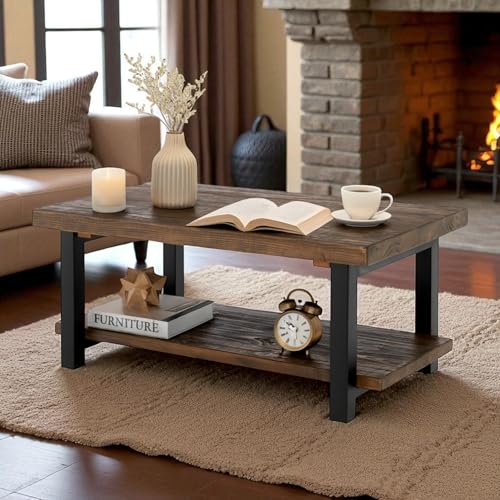
For those who prefer a more rustic or industrial aesthetic, solid wood combined with metal frames offers incredible stability. The Alaterre Pomona 42 Inch Coffee Table ($194.55) features a rustic natural wood top and lower shelf that showcases the unique knots, grain patterns, and natural imperfections of the timber. This character means that minor everyday wear and tear—like a small scratch from a toy or a dent from a dropped remote—actually blends into the rustic look rather than ruining it.
Furthermore, solid wood is a repairable material. If a glass table chips or shatters, it is ruined. If a solid wood table gets deeply scratched, stained, or burned, you can sand it down, apply a fresh coat of stain or sealant, and bring it back to life. It is not uncommon for a solid wood coffee table to last for thirty to fifty years, eventually becoming a cherished family heirloom.
Cost Over 5 Years
When calculating the true cost of a coffee table, you must look past the initial price tag and consider durability, maintenance supplies, and the likelihood of replacement.
A quality glass coffee table typically costs between $100 and $300 upfront. Over five years, your main ongoing expense is cleaning supplies—microfiber cloths and glass cleaner can add up to $30 to $50 over half a decade. However, the real financial risk with glass is accidental damage. A dropped ceramic mug or a heavy metal toy can easily chip or completely shatter tempered glass. If this happens, the table must be replaced entirely, doubling your long-term investment.
In contrast, a solid wood coffee table usually requires a higher initial investment, often ranging from $150 to over $600. Maintenance over five years is cheap, requiring only occasional dusting and perhaps a $15 tin of wood wax or furniture polish every couple of years. Because solid wood is practically indestructible under normal residential use, the probability of needing to replace it within five years is close to zero. If you decide to change your home’s color scheme, you can paint or stain the wood for under $30 rather than buying a new table. Thus, solid wood consistently offers a lower cost-per-year of utility.
Which One for Your Home?
Small Apartment or Studio
If you are working with limited square footage, a glass table is almost always the correct choice. It keeps sightlines open and prevents the room from feeling like a crowded obstacle course. Choose a clear option to maximize the illusion of floor space.
Family with Kids and Pets
For active households, solid wood wins easily. Toddlers learning to walk frequently bump their heads on coffee tables; wood is far more forgiving than glass, and round-edged wood tables eliminate the danger of sharp, painful corners. Furthermore, you will save yourself from the endless chore of wiping away nose prints from pets and sticky fingerprints from children.
Rental Properties
If you move frequently or own a rental property, opt for solid wood. Glass is incredibly stressful to pack, wrap, and transport in moving trucks. One bad bump can shatter a glass top. Solid wood tables can handle the bumps, scrapes, and rough handling of moving day with ease.
Long-Term Home
If you are settling into a long-term home and want to invest in pieces that will grow with you, choose solid wood. As design trends evolve, wood remains timeless. In 2026, interior design continues to celebrate natural, biophilic elements, making the rich textures of real timber a highly desirable and permanent fixture in modern living rooms.
FAQ
Is tempered glass safe for a coffee table?
Yes, high-quality glass coffee tables use tempered safety glass. If tempered glass does break, it is designed to fracture into thousands of small, relatively dull pebbles rather than sharp, jagged shards, significantly reducing the risk of severe injury.
Do glass coffee tables scratch easily?
While tempered glass is highly resistant to deep cracks, it can develop fine micro-scratches over time from sliding ceramic mugs, metal coasters, or decorative items across its surface. Using felt pads under accessories can help prevent this.
How do you protect a solid wood coffee table from water rings?
To protect wood from moisture, ensure it is sealed with a polyurethane, lacquer, or hardwax oil finish. Always use coasters under drinks, wipe up spills immediately, and avoid placing hot mugs directly on the bare wood surface.
Which table shows dust more quickly?
Glass coffee tables show dust, pet hair, and fingerprints much more quickly than wood. Under direct sunlight, even a thin layer of dust on a glass surface becomes highly visible, requiring more frequent daily maintenance.