Key takeaways
- With a generous 7.5 cu
- Equipped with removable glass shelves, a transparent crisper,…
- Enjoy the convenience of a separate freezer compartment…
Choosing an energy efficient refrigerator is one of those purchases where the sticker price tells you almost nothing about what you will actually pay over five or ten years of ownership. A unit that costs $300 more upfront but sips electricity can save you hundreds in utility bills before the compressor fails. The reverse is also true: a bargain fridge with an inefficient motor and poor insulation quietly drains your wallet every month.
What separates a genuinely efficient refrigerator from a marketing label is measurable hardware: compressor type, insulation thickness, door seal design, and how the unit handles defrost cycles. Beyond efficiency, you must match capacity to your household and dimensions to your kitchen. We compared published specs, listed prices, and aggregated owner feedback across dozens of models to narrow this list down to eight that balance wattage, space, and cost without obvious compromises.
Our top picks
 Frigidaire
- With a generous 7.5 cu
- Equipped with removable glass shelves, a transparent crisper,…
- Enjoy the convenience of a separate freezer compartment…
 Upstreman 7.7 Cu Ft Apartment Refrigerator 2
- Same Price More Space: With a small footprint…
- 5 Adjustable Temperature: With a temperature range of…
- Quiet and Energy Saving: The refrigerator operates at…
 Kenmore 18.1 cu. ft. 30" Wide Top
- Spacious Yet Compact: This 30-inch, white refrigerator offers…
- Adjustable Edge-to-Edge Glass Shelves: Edge-to-edge tempered glass shelves…
- Gallon Door Storage + Freezer Bins: 4 clear…
| Product | Key specs | |
|---|---|---|
| Frigidaire | With a generous 7.5 cu Equipped with removable glass shelves, a transparent crisper,… Enjoy the convenience of a separate freezer compartment… | Check price |
| Upstreman 7.7 Cu Ft Apartment Refrigerator 2 | Same Price More Space: With a small footprint… 5 Adjustable Temperature: With a temperature range of… Quiet and Energy Saving: The refrigerator operates at… | Check price |
| Kenmore 18.1 cu. ft. 30" Wide Top | Spacious Yet Compact: This 30-inch, white refrigerator offers… Adjustable Edge-to-Edge Glass Shelves: Edge-to-edge tempered glass shelves… Gallon Door Storage + Freezer Bins: 4 clear… | Check price |
 BLACK+DECKER 12.1 Cu. Ft. Top Mount Refrigerator BLACK+DECKER 12.1 Cu. Ft. Top Mount Refrigerator | Spacious 12.1 Cu Adjustable Temperature Control: Maintain optimal freshness with the… Frost-Free Auto-Defrost: Enjoy hassle-free maintenance with frost-free auto-defrost | Check price |
 Sharp SJB1255GS 11.5 cu.ft. Counter Depth 24 Sharp SJB1255GS 11.5 cu.ft. Counter Depth 24 | Check price | |
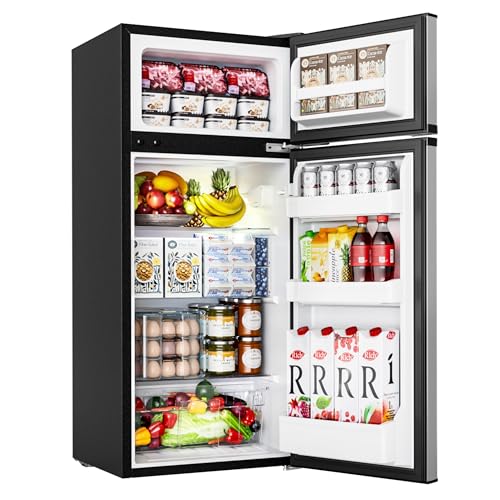 EUHOMY 4.5 Cu.Ft Mini Fridge with Freezer EUHOMY 4.5 Cu.Ft Mini Fridge with Freezer | 4.5 Cu.Ft Large Capacity: This mini fridge combines… 3-Level Temperature Control: This fridge offers 3 cooling… Efficient Cooling & Insulation: Equipped with high-quality insulation,… | Check price |
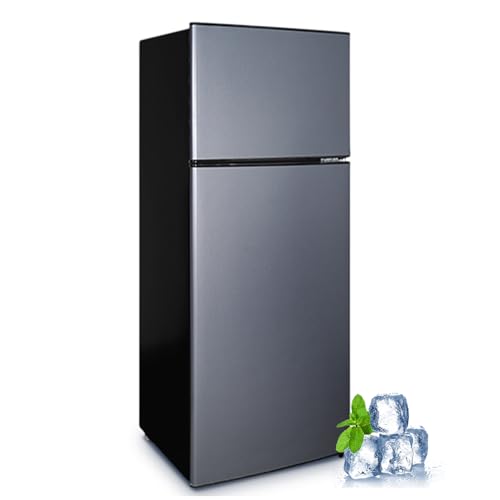 Cucina Magica 8.5 cu.ft Dual-Door Apartment Refrigerator Cucina Magica 8.5 cu.ft Dual-Door Apartment Refrigerator | This refrigerator has a generous capacity of 8.5… Equipped with removable glass shelves, transparent preservation boxes,… This refrigerator only consumes 1kWh of electricity per… | Check price |
 Midea MRS25I7BST 24.5 Cu. Ft. Stainless Counter-Depth Midea MRS25I7BST 24.5 Cu. Ft. Stainless Counter-Depth | Autofill Water Pitcher Icemaker Fingerprint-Resistant Stainless Steel | Check price |
As an Amazon Associate we earn from qualifying purchases at no extra cost to you.
Quick Picks
| Product | Best for | Price |
|---|---|---|
| Frigidaire Platinum Series 7.5 cu ft | Small apartments needing stainless finish | $379.99 |
| Upstreman 7.7 cu ft | Rentals and studios wanting compact capacity | $399.99 |
| Kenmore 18.1 cu ft Top Mount | Family kitchens with standard cabinet widths | $899.99 |
| BLACK+DECKER BR1210HW 12.1 cu ft | Couples or two-person households | $649.99 |
| Sharp SJB1255GS 11.5 cu ft Counter Depth | Modern kitchens where the fridge should not protrude | $898.97 |
| EUHOMY 4.5 cu ft Mini Fridge | Dorm rooms, offices, and bedroom suites | $269.99 |
| Cucina Magica 8.5 cu ft Dual-Door | RVs, offices, and multi-purpose spaces | $319.99 |
| Midea MRS25I7BST 24.5 cu ft Side-by-Side | Large households needing counter-depth efficiency | |
| $1079.12 |
How We Picked
We evaluated models on four criteria: published annual energy consumption relative to class average, usable capacity versus footprint, build quality signals from owner reviews (compressor longevity, seal durability, shelf stability), and price-to-feature ratio. A refrigerator earns a spot here only if it does not sacrifice one dimension to artificially boost another. For example, we avoided units with high capacity but oversized footprints that would not fit standard kitchens, and we flagged models whose owners report disproportionate noise or early seal degradation.
The 8 Best Energy Efficient Refrigerators in 2026
Frigidaire Platinum Series 7.5 cu ft
This is a solid choice for apartment dwellers who want the look and feel of a premium fridge without the premium footprint or price tag. The stainless finish resists fingerprints better than many competitors in this range, and the top-mount freezer layout keeps the refrigeration section at comfortable eye level for the average adult. Owners consistently praise its quiet operation and reliable thermostat accuracy.
- Pro: Stainless exterior at a sub-$400 price point is rare in this category.
- Pro: Compact 23″ depth fits narrow galley kitchens and alcove placements.
- Con: 7.5 cu ft total capacity means the freezer is small; not ideal if you buy frozen goods in bulk.
Skip this if your household exceeds two people or you regularly stock more than a week of groceries. The internal shelving is adequate but not adjustable enough for tall bottles on every shelf.
Upstreman 7.7 cu ft Apartment Refrigerator
Upstreman has carved a niche in the compact-apartment segment by offering slightly more freezer volume than similarly priced rivals. The two-door configuration gives you a dedicated freezer compartment that actually fits a week of frozen vegetables and a couple of ice trays without tetris-style stacking. Owners report good temperature consistency and minimal frost buildup over months of use.
- Pro: The extra 0.2 cu ft over the Frigidaire is concentrated in the freezer, which matters for daily use.
- Pro: Reversible door hinge gives flexibility in tight layouts.
- Con: Black plastic interior finish shows scratches and stains more visibly than white or stainless interiors.
Pass on this if you need a polished look in an open-plan living space or if you plan to keep the fridge in a garage or unheated space, where its thermostat range may struggle.
Kenmore 18.1 cu ft 30″ Top Mount
The Kenmore is the classic family workhorse. At 18.1 cu ft it handles a full week of groceries for four people without rearranging shelves. The 30-inch width slots into standard cabinet cutouts, and the white finish hides wear better than darker surfaces. Owners highlight the spacious crisper drawers and a freezer that actually maintains a consistent zero-degree environment.
- Pro: Generous capacity with a footprint that still fits most kitchen layouts designed for a standard-width fridge.
- Pro: Top-mount design uses less energy than side-by-side configurations of similar volume because cold air does not escape from both doors simultaneously.
- Con: The 2026 price reflects a premium over budget competitors that offer similar internal volume but less polished build.
Skip this if you live in a rental with a narrow fridge alcove or if you prefer the accessibility of French-door or side-by-side layouts for fresh food.
BLACK+DECKER BR1210HW 12.1 cu ft
This top-mount hits the middle ground most people actually need: enough room for a couple or a single adult who cooks regularly, without the energy penalty of a full-size unit. The 12.1 cu ft capacity splits reasonably between fresh and frozen sections. Owner feedback emphasizes straightforward installation and a compressor that stays quiet even during summer heat.
- Pro: Good capacity-per-dollar ratio for households that do not need more than 12 cubic feet.
- Pro: Simple mechanical controls mean fewer electronic failure points over a long ownership period.
- Con: White exterior and interior may feel dated in kitchens designed around stainless or matte-black appliances.
Not the best fit for anyone who wants a statement appliance or needs a water/ice dispenser, which this unit does not offer.
Sharp SJB1255GS 11.5 cu ft Counter Depth
Counter-depth refrigerators exist to solve one specific problem: a fridge that does not stick out past your cabinets. The Sharp delivers that flush look at 24 inches wide, making it suitable for condos and kitchenettes with limited linear space. Its two-door layout and glass shelving give it a more premium feel than the price suggests.
- Pro: True counter-depth design with 11.5 cu ft of usable space in a compact 24-inch width.
- Pro: Glass shelves are easier to clean and do not sag under heavy pots the way wire racks do.
- Con: The narrow width means the freezer section is slim; tall frozen items like pizza boxes or large bags of vegetables will not fit without trimming packaging.
Skip this if your household relies heavily on frozen storage or if you need more than 12 cu ft for fresh food.
EUHOMY 4.5 cu ft Mini Fridge
Not every room needs a full-size refrigerator. The EUHOMY serves the dorm room, the home office, the guest suite, or the garage workshop. At 4.5 cu ft it holds beverages, snacks, and a modest amount of fresh food without humming loudly through the night. The silver finish keeps it from looking like a college hand-me-down.
- Pro: Lowest price on this list by a wide margin, with a two-door layout that most minis at this cost do not offer.
- Pro: Compact enough to slide under a counter or beside a desk without dominating the room.
- Con: The freezer compartment is small and better suited to ice trays than long-term frozen storage.
Do not consider this a replacement for a main kitchen fridge. It is a secondary unit, and its energy efficiency matters most when it runs 24/7 in a room where you sleep or work.
Cucina Magica 8.5 cu ft Dual-Door
The Cucina Magica targets a flexible use case: dorms, offices, RVs, and studio apartments. Its adjustable thermostat and slide-out glass shelves make it easy to reconfigure for drinks one week and leftovers the next. At 8.5 cu ft it occupies the sweet spot between mini and apartment size without requiring a dedicated kitchen footprint.
- Pro: Slide-out glass shelves are a genuine convenience over wire racks, especially when loading heavy items.
- Pro: Dual-door design with adjustable thermostat allows independent temperature tuning between sections.
- Con: Brand recognition and long-term parts availability are less certain than established names like Frigidaire or Kenmore.
Consider skipping this if you plan to keep the fridge for ten years and want confidence in warranty service access in your region.
Midea MRS25I7BST 24.5 cu ft Side-by-Side
For households that need volume without sacrificing the clean lines of a counter-depth installation, the Midea is the standout here. At 24.5 cu ft it comfortably feeds a family of five or more, and the AutoFill Water Pitcher is a practical feature that eliminates bottled-water clutter on the counter. Stainless construction matches most modern kitchen palettes.
- Pro: Largest capacity on this list in a counter-depth format, with a built-in water pitcher system that adds convenience without external plumbing.
- Pro: Side-by-side layout at this width keeps daily grab items at arm’s reach rather than buried behind a single door.
- Con: The $1079.12 price is the highest here, and side-by-side configurations generally consume more energy than top-mount units of similar volume.
Not ideal for small kitchens where a 24.5 cu ft unit overwhelms the space, or for anyone who needs the most efficient energy profile per cubic foot.
Buying Guide
Capacity vs. Footprint: Size for Your Real Life
More capacity means more energy consumed to cool empty air. A single person or couple rarely needs more than 12 to 14 cu ft, and every cubic foot above that adds roughly 5 to 10 percent to annual electricity use. Measure your kitchen alcove width before falling in love with a large unit. Counter-depth models like the Sharp and Midea solve the protrusion problem, but they trade internal volume for a slimmer shell. If you buy frozen goods weekly, do not undersize the freezer.
Compressor Type and Insulation Quality
Variable-speed or inverter compressors modulate cooling demand instead of cycling on and off at full power, which reduces peak energy draw and extends component life. You cannot always see compressor type on a spec sheet, but owner reviews frequently mention whether a unit runs noticeably during defrost or kicks loudly at startup. Insulation thickness matters most in garages, sunrooms, or unheated spaces where ambient temperature swings force the compressor to work harder. Thicker foam and tighter door gaskets keep the interior stable without constant intervention.
Door Configuration and Real-World Efficiency
Every time you open a refrigerator, cold air spills out and warm air rushes in, forcing the compressor to run a recovery cycle. French-door and side-by-side layouts expose more surface area per opening than top-mount designs. In practice, a top-mount like the Kenmore or BLACK+DECKER will use less energy during daily snacking and cooking than a side-by-side with the same interior volume, simply because you are opening the smaller fresh-food door more often and the freezer stays sealed. This is a subtle but cumulative factor over years of ownership.
Our Verdict
Top pick: The Kenmore 18.1 cu ft is the best balance of capacity, efficiency, and long-term ownership confidence for a household of three or more. It fits standard kitchens, uses a top-mount layout that minimizes cold-air loss, and carries a brand reputation for durability that matters when you plan to keep a fridge for a decade.
Budget pick: The EUHOMY 4.5 cu ft mini fridge is the most cost-effective unit on this list for secondary or single-person use, and its two-door design at under $270 is genuinely hard to beat.
Conditional winner: If you need counter-depth aesthetics with family-sized capacity and you accept the higher energy draw of a side-by-side, the Midea 24.5 cu ft is the only option here that delivers all three, and it will make you happier than any top-mount in a modern open kitchen.
FAQ
Do smaller refrigerators use less electricity automatically?
Not necessarily. A poorly insulated small fridge can consume more energy per cubic foot than a well-built larger one because the compressor runs more frequently to compensate for heat leakage. Look for published annual kWh estimates rather than assuming size alone predicts efficiency.
Is a counter-depth refrigerator less efficient than a standard-depth model?
Counter-depth units sacrifice some internal volume for a slimmer shell, which means the compressor works a smaller space. This can be a modest efficiency advantage, but the difference is usually minor compared to compressor type and insulation quality. The primary trade-off is capacity, not energy use.
What is the single most important spec to check before buying an efficient refrigerator?
The EnergyGuide label, which appears on most refrigerators sold in the United States. It lists estimated annual electricity use in kWh, a range for comparable models, and sometimes a cost estimate based on average national rates. Comparing kWh across the same capacity class is the most reliable shortcut to real-world efficiency.
Does the freezer need to be separate from the refrigerator for better efficiency?
A separate door on the freezer means you only expose the frozen compartment when you actually need it, preventing cold air loss from the fresh-food section. This is why top-mount and bottom-mount designs often beat side-by-side layouts on energy consumption when interior volume is similar.