Comparing a wall mounted tool organizer vs alternatives helps homeowners decide how to store drills, hand tools, hardware, and workshop equipment efficiently. Tool chests, rolling cabinets, shelving, portable boxes, and French cleat systems offer different advantages. Understanding storage capacity, accessibility, installation, security, and cost helps you choose the right combination for your garage.
Quick Verdict: Which Garage Storage System Should You Choose?
A wall-mounted organizer is particularly useful for keeping frequently used tools visible and accessible while freeing workbench and floor space.
However, it is not always the best place for every item.
A rolling tool chest is more suitable for large collections of sockets, wrenches, and other equipment that benefits from drawer organization.
A lockable cabinet can protect tools from casual access and reduce visual clutter.
A portable toolbox is more practical when equipment regularly moves between work locations.
Open shelving is useful for larger cases and supplies that cannot be safely hung from hooks.
A French cleat system can provide extensive customization for woodworking enthusiasts who want to build their own storage holders.
The best garage often combines several systems.
For example, frequently used screwdrivers may remain on wall pegboard, while expensive power tools are stored in a locked cabinet and small hardware is organized in drawers.
Quick Comparison Table
| Storage type | Main advantage | Main limitation | Best use |
|---|---|---|---|
| Wall-mounted organizer | Visible tools and clear floor | Requires wall installation | Frequently used equipment |
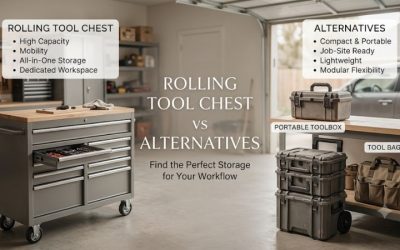
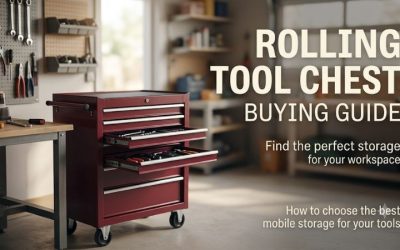
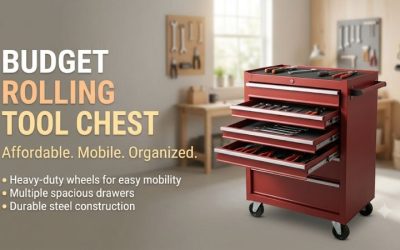
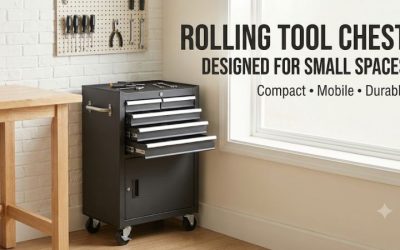
| Rolling tool chest | Drawers and mobility | Uses floor space | Mechanics’ hand tools |
| Wall cabinet | Concealed and potentially lockable | Less immediate visibility | Valuable equipment |
| Open shelving | Accommodates bulky items | Can collect dust and clutter | Cases and supplies |
| Portable toolbox | Easy transport | Limited accessible capacity | Mobile repairs |
| French cleat system | Highly customizable | Requires design and fabrication | Custom workshop organization |
| Workbench drawers | Convenient nearby storage | Occupies cabinet space | Small tools and parts |
Wall Mounted Tool Organizer vs Rolling Tool Chest
Storage Layout
A wall organizer keeps tools visible through hooks, holders, rails, or shelves.
A rolling tool chest uses drawers and compartments.
These arrangements suit different equipment.
Pegboard is convenient for frequently used screwdrivers and pliers.
Drawers are often better for socket sets, specialty tools, and small accessories.
Floor Space
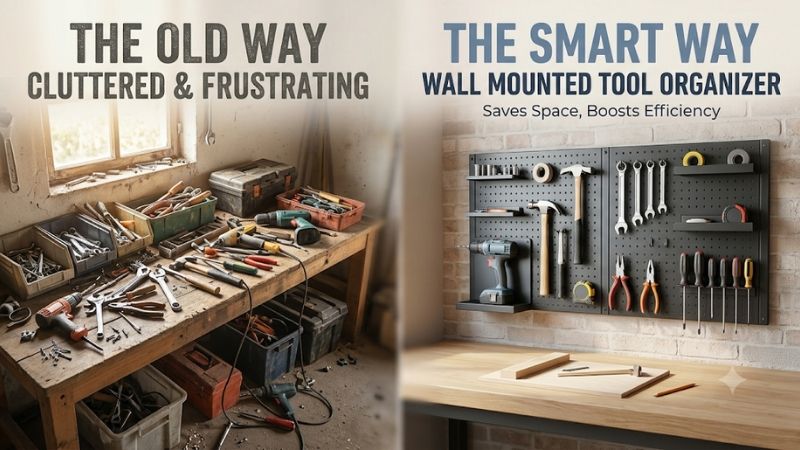
Wall storage can free valuable floor area.
A rolling chest occupies floor space even when its drawers are closed.
However, the chest may also provide a useful top surface.
In a small garage, floor clearance can be a major purchasing consideration.
Mobility
A rolling tool chest can move around the workshop.
This is useful when performing repairs at different locations.
A wall organizer remains fixed.
For users who move frequently between vehicles or workstations, mobility may be more important than wall efficiency.
Security
Some rolling chests include locking drawers.
This can reduce casual access to expensive equipment.
Most open wall organizers do not provide comparable security.
However, a lock is not a guarantee against theft.
Weight Capacity
Rolling tool chests may support substantial loads when used within their manufacturer ratings.
However, drawer capacities and total cabinet capacities differ.
Wall organizers are limited by panels, hooks, fasteners, and supporting wall structure.
Neither system should be overloaded.
Tool Accessibility
Wall storage allows many tools to be identified immediately.
Drawers may require opening and searching.
However, carefully arranged drawer inserts can provide excellent organization.
Which Is Better for Automotive Work?
A rolling chest is often useful for mechanics who rely on socket sets, wrenches, and numerous specialized tools.
Wall storage can complement it by holding frequently used accessories near the workbench.
Wall Mounted Tool Organizer vs Wall Cabinet
Open Versus Enclosed Storage
A wall organizer usually leaves tools visible.
A cabinet conceals equipment behind doors.
Visible storage improves quick identification.
Enclosed storage can reduce dust exposure and visual clutter.
Security
Some wall cabinets include locks.
They may be more suitable for expensive tools or equipment that should remain inaccessible to children.
However, the cabinet must be mounted securely.
Space Efficiency
Both systems use wall space.
However, cabinets generally project farther into the room.
This can interfere with vehicles or narrow walkways.
A shallow pegboard may be more suitable when depth is limited.
Tool Protection
A cabinet can protect stored equipment from certain dust and debris.
Open pegboard provides less protection.
However, a cabinet does not automatically control moisture.
Access Speed
Frequently used tools are usually faster to retrieve from visible holders.
A cabinet may require opening doors and removing stored items.
Which Is Better for Power Tools?
A lockable cabinet may be preferable for valuable cordless equipment.
A dedicated open power-tool rack may provide faster access during frequent work.
Some users benefit from both.
Wall Mounted Tool Organizer vs Open Shelving
Tool Shape Compatibility
Shelves support items that rest on flat surfaces.
This is useful for tool cases, chargers, storage bins, and large equipment.
Wall hooks are more appropriate for items that can hang securely.
Vertical Space
Both systems use vertical wall area.
However, shelving generally projects farther outward.
A shallow panel with hooks may occupy less depth.
Accessibility
Open shelves make cases and containers easy to see.
However, items may become stacked or crowded.
A wall organizer often provides a dedicated position for each tool.
Small Parts
Shelving works well with labeled bins.
Pegboard is less suitable for loose screws and washers without additional containers.
Weight Distribution
Shelves and brackets have specific load ratings.
Stored items should be distributed according to the manufacturer’s instructions.
Wall organizer hooks also have individual limits.
Dust Collection
Open shelves can accumulate dust.
Pegboard-mounted tools can also become dusty, but the panel may be easier to wipe down when not overcrowded.
Which Is Better for Garage Supplies?
Shelving is generally better for larger cases, containers, oils, and suitable supplies.
Pegboard is often more effective for frequently used hand tools.
Wall Mounted Tool Organizer vs Portable Toolbox
Portability
A portable toolbox can be carried to different locations.
A wall organizer remains fixed.
This distinction matters for mobile technicians and homeowners who perform repairs outside the garage.
Tool Protection
A closed toolbox protects equipment from some dust, rain, and accidental contact.
However, water resistance varies by product.
Wall storage provides less environmental protection.
Storage Capacity
A wall panel can make numerous tools accessible at once.
A portable toolbox has limited internal space.
Large tool collections may require multiple boxes.
Organization
Toolboxes can include trays and removable compartments.
However, tools may become stacked if the internal layout is poor.
Wall organizers usually make missing tools easier to notice.
Security
Some portable toolboxes include lockable latches.
However, the entire box can be moved.
A fixed wall system offers different security considerations.
Which Is Better for DIY Home Repairs?
A portable toolbox is useful when tools move between rooms or properties.
Wall storage is better for a dedicated garage or workshop.
A practical combination is to keep a frequently used portable kit while organizing the remaining tools on the wall.
Wall Mounted Tool Organizer vs French Cleat System
What Is a French Cleat?
A French cleat system uses interlocking angled components.
One component attaches to the wall, while another attaches to the tool holder.
This allows compatible holders to hang from the wall and be repositioned.
Customization
French cleats can support custom shelves, drill holders, bins, and other storage fixtures.
This is particularly attractive for woodworkers who enjoy building workshop equipment.
Installation
A French cleat system requires careful construction and secure mounting.
The wall cleat must be fastened appropriately.
Homemade holders should not be assigned unsupported load capacities.
Appearance
A custom wooden system can create a coordinated workshop appearance.
Metal pegboard may provide a more industrial look.
Appearance is a preference rather than a performance measure.
Expansion
Both systems can expand.
French cleats allow custom holders to be fabricated.
Commercial systems may offer easier installation through ready-made accessories.
Cost
A homemade cleat system may be economical when suitable materials and woodworking tools are already available.
However, materials, finishing, labor, and installation time should be considered.
Which Is Better for Woodworkers?
A French cleat system is attractive when custom storage is a priority.
Commercial pegboard is more convenient for buyers who want a ready-made solution.
Wall Mounted Tool Organizer vs Workbench Drawers
Access During Work
Workbench drawers keep tools close to the working surface.
A wall organizer can provide similar convenience when mounted above the bench.
Small Tool Storage
Drawers are useful for drill bits, measuring instruments, and small accessories.
They can include dividers or inserts.
Wall storage may require additional bins for those items.
Workspace Clutter
Both systems can reduce clutter.
However, an overloaded pegboard may create visual crowding.
Drawers conceal equipment.
Tool Protection
Drawers can protect delicate items from dust and accidental impacts.
Wall hooks leave equipment exposed.
Capacity
Drawer capacity depends on runners, construction, and rated load.
Wall capacity depends on panels and mounting.
Which Is Better for Precision Tools?
Drawers may be preferable for calipers, measuring instruments, and other delicate tools.
Wall storage is useful for durable equipment used frequently.
Compare Pegboard With Slatwall and Rails
Pegboard
Pegboard provides many closely spaced positions for small tools.
It is highly configurable.
However, some hooks may move unless retained properly.
Slatwall
Slatwall provides horizontal channels for compatible holders.
It is often useful for larger equipment and modular shelves.
However, panel and accessory compatibility matters.
Rail Systems
Rails are particularly effective for long-handled tools.
They occupy relatively little vertical wall coverage but may not organize small tools efficiently.
Choosing Between the Three
For hand tools, pegboard is often the best starting point.
For large equipment, slatwall or rails may provide better compatibility.
For mixed collections, combining systems can be practical.
Compare Storage Systems by Common Workshop Needs
Cordless Drills
A dedicated wall rack is convenient for frequently used drills.
A cabinet provides enclosed storage.
A toolbox is useful for transporting tools.
Choose according to accessibility and security needs.
Sockets and Wrenches
Drawers and socket rails are effective for large sets.
Pegboard can display frequently used wrenches.
However, small sockets may be difficult to organize on ordinary hooks.
Garden Tools
Wall rails or grip holders are often ideal.
Large cabinets may be inefficient for long-handled equipment.
Power Tool Cases
Open shelves are usually convenient for bulky cases.
Dedicated racks may hold tools without cases.
Small Fasteners
Drawers, bins, and compartment organizers are generally preferable.
Pegboard alone is not sufficient for loose hardware.
Precision Measuring Tools
Drawers or protective cases may reduce accidental damage.
Wall storage can be suitable for robust levels and squares.
Automotive Equipment
Rolling tool chests suit broad collections of hand tools.
Wall storage can supplement frequently used equipment.
How to Choose the Right Storage System
List Your Tools
Begin with an inventory.
Identify quantity, dimensions, weight, and frequency of use.
Measure the Garage
Consider wall width, floor area, vehicle clearance, and door movement.
Identify the Main Workflow
A fixed workshop benefits from visible wall storage.
A mobile repair workflow benefits from portable equipment.
Consider Security
Expensive equipment may be better stored in lockable cabinets or chests.
Evaluate Installation
Wall systems require appropriate structural fastening.
Floor-standing systems have different stability requirements.
Consider Future Growth
Modular walls and expandable cabinets can accommodate new equipment.
Compare Total Costs
Include accessories, hooks, drawer inserts, fasteners, and mounting materials.
Prioritize Safety
Heavy equipment must be stored securely.
Avoid overhead placement that creates fall hazards.
Common Storage Mistakes
Storing Every Tool in One System
Different equipment needs different storage arrangements.
Combine systems when appropriate.
Ignoring Tool Weight
Heavy tools can overload hooks, rails, or drawers.
Check capacities.
Using Incompatible Accessories
Pegboard, slatwall, and rail hooks are not automatically interchangeable.
Blocking Walkways
Stored tools can project into circulation areas.
Measure clearance.
Leaving Expensive Tools Exposed
Consider security requirements.
Storing Sharp Tools Without Protection
Use appropriate sheaths, holders, or cabinets.
Ignoring Moisture
Garages can become humid.
Protect tools and storage systems accordingly.
Frequently Asked Questions
Is wall-mounted tool storage better than a tool chest?
Wall storage is useful for visibility and saving floor space. Tool chests offer drawers, mobility, and potentially better security. Many garages benefit from both.
Is pegboard better than a cabinet?
Pegboard offers quick access, while cabinets provide enclosed storage. The better choice depends on the tools and security requirements.
Are French cleats stronger than pegboard?
Strength depends on design, materials, fasteners, and installation. Neither system should be assumed stronger without comparable ratings.
Should power tools be stored on shelves or racks?
Dedicated racks are convenient for compatible drills and drivers. Shelves may be better for bulky cases and equipment that cannot hang safely.
What is best for a small garage?
A combination of shallow wall storage, compact shelves, and limited floor-standing equipment can be effective.
Are rolling tool chests worth buying?
They can be valuable for users with large collections of hand tools or workflows requiring mobility.
Can I combine different storage systems?
Yes. Pegboard, rails, shelves, and cabinets can serve complementary purposes when each is installed correctly.
Conclusion
When comparing a wall mounted tool organizer vs alternatives, choose wall storage for frequently used tools that benefit from visibility and easy access. Rolling chests are useful for large hand-tool collections, cabinets provide enclosed storage, shelves accommodate bulky items, and portable boxes support mobile work. French cleats offer custom flexibility, while drawers protect small or delicate equipment. The most practical garage usually combines several systems according to the tools and available space.
More from Amazon
Programs that pair well with the guide above. Offers and eligibility are set by Amazon and may change.
Collect the home and kitchen items you want in one registry that guests can shop from.
Create a wedding registrySet up recurring deliveries of everyday items on eligible products. Terms and savings are set by Amazon.
Explore Subscribe & SaveFree shipping on eligible items, Prime Video and more. Eligible new members can start with a free trial.
Start a Prime free trialAudiobooks and podcasts to listen to on the go. Eligible new members can start with a free trial.
Try Audible freeAs an Amazon Associate we earn from qualifying purchases.