Our Top Picks
 Express Water FLTWH2045CKP1 Whole House Replacement Filter Set320 x 4.5 x 4.5 Inches9.6 PoundsCheck on Amazon
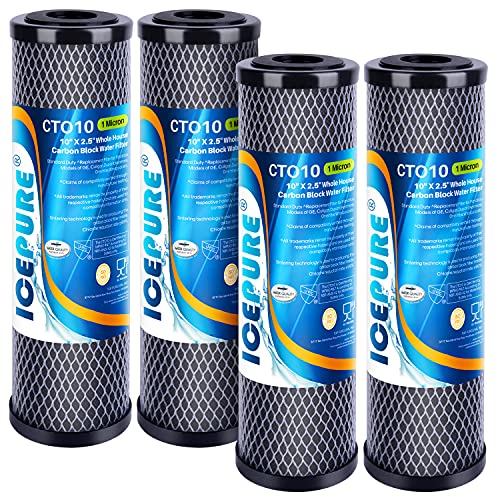 ICEPURE 1 Micron 2.5" x 10" CTO Carbon4 Count (Pack of 1)2.5 x 2.5 x 10 inches3.3 poundsCheck on Amazon
 PUREPLUS 5 Micron 10"x4.5" Whole House Sediment &2 Count (Pack of 1)4.5 x 4.5 x 9.8 inches3.5 PoundsCheck on Amazon
 iSpring F3WGB32BM 3-Stage Whole House Water Filter Replacement20 x 10 x 4.5 inches16 PoundsCheck on Amazon
 Express Water Whole House Water Filter SystemDeluxe Series29 x 8.5 x 30 inches63 poundsCheck on Amazon
The best whole house water filters in this set depend less on brand than on what is already bolted to your plumbing, because nine of the ten listings are replacement cartridges and only one is a complete three-stage system. The Express Water system is the only listing that gives you housings, gauges and media in one purchase. The rest are packs sized for existing housings: sediment filters, carbon blocks and multi-stage sets. This guide compares them using titles, published specifications and buyer reviews, and it flags where a listing’s wording leaves questions open.
Top picks at a glance
Express Water FLTWH2045CKP1 Whole House Replacement Filter Set, 3 Pack | 4.5 x 20 Inch, Carbon Block, KDF Heavy Metal Filter, Polyphosphate Anti-Scale, Made for WH300SCKP, Up to 100,000 Gallons
One of the home product options compared in this guide.
View on AmazonICEPURE 1 Micron 2.5" x 10" CTO Carbon Whole House Water Filter 4 Pack | Replacement for any 10" x 2.5" Cartridge, DuPont WFPFC8002, WFPFC9001, SCWH-5, FXWTC FXWSC WHEF-WHWC WHCF-WHWC CBC-10 RO Unit
One of the home product options compared in this guide.
View on AmazonPUREPLUS 5 Micron 10"x4.5" Whole House Sediment & Carbon Water Filter,2PACK | PP10BB-CC Replacement Cartridge for GE FXHTC,GXWH40L,GXWH35F,GNWH38S,Culligan RFC-BBSA,WRC25HD,Pentek RFC-BB
One of the home product options compared in this guide.
View on AmazoniSpring F3WGB32BM 3-Stage Whole House Water Filter Replacement Pack | Reduces Iron, Manganese, Chlorine, Sediments, 4.5" x 20" Industry-Standard Water Filter Fits WGB32BM & WHO32BM
One of the home product options compared in this guide.
View on Amazon
Aquaboon 5 Micron 10 x 2.5 Sediment Water Filter Replacement - 6 Pack | Whole House Water Filter Replacement Cartridge, Compatible with Well Water Filters - P5, AP110, WHKF-GD05
One of the home product options compared in this guide.
View on AmazonExpress Water Whole House Water Filter System, Ultimate Protection, 3-Stage | Reduces Lead, Arsenic, Chromium, Heavy Metals, Chlorine, Anti-Scale Protection, Pressure Release Buttons & 3 Gauges
One of the home product options compared in this guide.
View on Amazon
GE FXWTC Whole House Water Filter | Replacement for Water Filtration System | NSF Certified: Reduces Chlorine, Sediment, Rust & Other Impurities | Replace Every 3 Months for Best Results | 2 Filters
One of the home product options compared in this guide.
View on Amazon
5 Micron 10" x 4.5" Whole House Water Filter Compatible with GE FXHSC | GXWH40L, Plumber W50PEHD, Culligan R50-BBSA, Pentek R50-BB, W10-PR, DuPont WFHDC3001, High Flow Sediment Filters, 4 Pack
One of the home product options compared in this guide.
View on Amazon
PUREPLUS 1 Micron 2.5" x 10" Whole House CTO Carbon Water Filter,4 PACK | CTO10 Replacement for Under Sink Water Filter System,Dupont WFPFC8002,WFPFC9001,FXWTC,SCWH-5,WHEF-WHWC,WHCF-WHWC,AMZN-SCWH-5
One of the home product options compared in this guide.
View on Amazon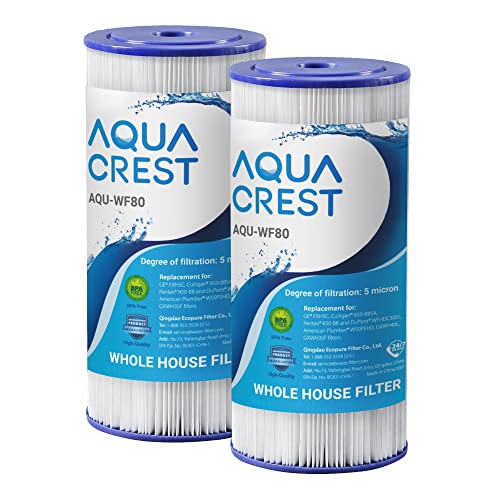
AQUA CREST 5 µm 10x4.5" Whole House Water Filter Compatible with GE® FXHSC | Replacement for Culligan® R50-BBSA, Pentek R50-BB, DuPont WFHDC3001,Plumbe® W50PEHD, GXWH40L, GXWH35F, 6 Months, 2 Pack
One of the home product options compared in this guide.
View on Amazon| Model | Key point from title | Price tier | Best for |
|---|---|---|---|
| Express Water 3-Stage System | Reduces lead, arsenic, chromium, chlorine; 3 gauges | Premium | A complete first install |
| Express Water FLTWH2045CKP1 set | 3 pack, 4.5 x 20 inch, up to 100,000 gallons | Mid-range | Owners of the matching WH300SCKP |
| iSpring F3WGB32BM pack | 3-stage, 4.5 x 20 inch, iron and manganese claims | Mid-range | iSpring WGB32BM or WHO32BM owners |
| GE FXWTC | NSF Certified claim, 2 filters, replace every 3 months | Budget | GE system owners |
| PUREPLUS 5 micron 10 x 4.5 inch | Sediment and carbon, 2 pack | Budget | GE, Culligan, Pentek 10 inch housings |
| Caehomly 5 micron 10 x 4.5 inch | High flow sediment, 4 pack | Budget | Households that change filters often |
| AQUA CREST 5 micron 10 x 4.5 inch | 2 pack, 6 months label | Budget | Light sediment pre-filtering |
| Aquaboon 5 micron 10 x 2.5 inch | Sediment, 6 pack, well water filters | Budget | Slim sediment housings |
| ICEPURE 1 micron CTO carbon | 2.5 x 10 inch, 4 pack | Budget | Slim carbon stages |
| PUREPLUS 1 micron CTO carbon | 2.5 x 10 inch, 4 pack | Budget | Slim carbon stages |
What’s changing in this category
Whole house filtration used to mean a plumber, a sizable housing and a single sediment cartridge. Today buyers can order modular systems with pressure gauges, pressure-release buttons and replaceable multi-stage packs, and more homeowners are comfortable handling cartridge swaps themselves. Installation of the housings still involves the main water line, so follow the manufacturer’s instructions and local codes, and consider a qualified plumber.
Another shift is the growing number of look-alike replacement cartridges. Many third-party listings cite long compatibility lists of model numbers from well-known filter makers. That can save money, but it also means buyers must match dimensions and part numbers carefully, since a cartridge with the right name but the wrong length will not seal properly. Titles are seller claims, so a cross-reference list is a starting point, not a guarantee.
Buyers are also more aware of the difference between filtering and softening. A filter targets particles, chlorine and certain contaminants; a softener targets hardness minerals. Our guide to high-end whole-house water softeners for hard water covers the other half of that decision. Many households end up with both, with the filter placed first to protect the softener.
Finally, certification language matters more. Phrases like “reduces lead” or “NSF Certified” are meaningful only when they match a published certification for that exact product and claim. Treat marketing wording as a prompt to read the performance data sheet, not as proof.
How we picked these
We compared ten listings by what each title states: cartridge size, micron rating, media type, pack count, compatibility numbers and any certification wording. We grouped them into relative price tiers and flagged mismatches, such as a “whole house” label on a small cartridge. Nobody on the team used or measured these units. Everything here draws on published specifications, manufacturer documentation and buyer reviews, and any number beyond a title is labeled as an estimate.
The ten listings, one by one
Express Water Whole House Water Filter System, 3-Stage
This is the only complete system in the group. The title states three stages, reductions of lead, arsenic, chromium, other heavy metals and chlorine, anti-scale protection, pressure-release buttons and three gauges. Those gauges are genuinely useful, since a pressure drop across a stage is a practical signal that a cartridge is clogged.
It suits a homeowner starting from scratch who wants one purchase instead of assembling housings and cartridges. A typical scenario is a family on municipal water who wants chlorine taste reduced at the showers and kitchen tap. Remember that “reduces” claims are seller wording, so look for certification documents tied to this exact product.
One practical point: a system with gauges lets you build a simple log. Note the pressure readings when the cartridges are new, then compare them each month, and replace stages when the difference grows. That habit costs nothing and removes much of the guesswork from replacement schedules.
Pros
- Housings, media and gauges come in one listing
- Pressure-release buttons simplify cartridge changes
- Broad list of stated reductions
Cons
- Highest price tier in the set
- Title lacks port size, flow rate and certification details
Check the listing: inlet and outlet pipe size, maximum flow rate, operating pressure limits, certifications and replacement cartridge availability. Ask before buying: will your plumbing need adapters, and do you want a professional to install it?
Express Water FLTWH2045CKP1 Replacement Filter Set
A three-pack of 4.5 by 20 inch cartridges described as carbon block, KDF heavy metal filter and polyphosphate anti-scale, made for the WH300SCKP system and rated up to 100,000 gallons. The pack appears to cover three stages, but the title does not say which cartridge does which job, so confirm the order on the listing.
This is a refill for a specific system, not a universal fit. It makes sense for an owner of the matching Express model who wants to replace all three stages in one go. A household that treats the 100,000-gallon figure as a promise should note that it is a rating, and that heavy sediment can shorten real-world life.
Pros
- Covers multiple stages in one purchase
- Large-format 4.5 by 20 inch size holds more media
- States a gallon rating you can plan around
Cons
- Tied to the WH300SCKP, so it may not fit other housings
- Does not say which cartridge sits in which position
Check the listing: housing compatibility and whether the gallon rating applies per cartridge or to the pack. Ask before buying: does your housing label match the model number exactly?
iSpring F3WGB32BM 3-Stage Replacement Pack
This pack lists claims of reducing iron, manganese, chlorine and sediments, in an industry-standard 4.5 by 20 inch size that fits the WGB32BM and WHO32BM. Iron and manganese claims are interesting for well-water households, where staining is a common complaint, though the amount of iron or manganese your water contains decides whether any cartridge is enough.
It suits an owner of the named iSpring systems, and it is a reasonable reference point for anyone comparing multi-stage replacement sets. For example, a household noticing orange staining and a metallic taste might look at iron-focused media, then confirm with a water test before buying.
Because multi-stage packs bundle different media, the order they go into the housing matters. Follow the sequence in the manufacturer’s instructions, typically coarse filtration first and finer or specialty media after it.
Pros
- Three stages in one pack
- Mentions iron and manganese, which many packs omit
- Named fit with two specific systems
Cons
- Mid-range pack price for a single refill cycle
- Claims need support from published performance data
Check the listing: which stage is sediment, which is carbon and which targets metals, and whether certification covers those claims. Ask before buying: do you know your water’s iron level from a lab report?
GE FXWTC Whole House Water Filter
The title states an NSF Certified claim for reducing chlorine, sediment, rust and other impurities, a replacement interval of every three months and a two-filter count. Because it says certified, the right move is to read the certification record for the exact model and see which specific claims it covers.
The title does not state the size. Several other listings in this set cite FXWTC as a compatible reference alongside 2.5 by 10 inch cartridges, so it may be that format, but confirm on the listing. It fits an owner of a GE system who wants a straightforward manufacturer replacement and a clear schedule.
If your water has a noticeable chlorine smell and little visible sediment, a manufacturer-branded carbon cartridge with a published certification can be easier to justify than an unnamed alternative, even when the alternative costs a little less.
Pros
- Certification claim stated in the title
- Clear three-month replacement schedule
- Lowest cost of the group
Cons
- Size and micron rating not stated
- Only two filters, about six months of supply at the stated interval
Check the listing: dimensions, which system it replaces, and the certified performance claims. Ask before buying: does your housing take this model number?
PUREPLUS 5 Micron 10 x 4.5 Inch Sediment and Carbon, 2 Pack
A two-pack of 5 micron cartridges in 10 by 4.5 inch format, described as sediment and carbon, with a PP10BB-CC code and a compatibility list naming GE, Culligan and Pentek models. The 5 micron rating suggests it catches larger particles, and the carbon element is aimed at chlorine taste and odor, though the title does not quantify either.
It fits a household with a standard big-bodied 10-inch housing that wants a combined sediment and carbon stage. Imagine a family on municipal water that notices a chlorine smell in the shower and wants a low-cost cartridge for the existing housing.
Pros
- Combines sediment and carbon in one cartridge
- Budget tier with named compatibility models
Cons
- Two cartridges supply limited months of use
- No certification or capacity rating in the title
Check the listing: media description, flow rate and capacity rating. Ask before buying: does your housing hold a 4.5 inch diameter cartridge?
Caehomly 5 Micron 10 x 4.5 Inch, 4 Pack
Another 5 micron sediment filter in 10 by 4.5 inch format, with compatibility claims for GE, Culligan, Pentek, DuPont and Plumber part numbers, and described as high flow. Four cartridges is the most generous pack count among the 4.5 inch listings, which suits a household that replaces sediment filters often.
It reads like a near-duplicate of the AQUA CREST listing below, so price and pack count may be the real differentiators. A good fit is a home on well water with moderate sediment that wants spare filters on the shelf rather than reordering every few weeks.
Pros
- Four cartridges per pack
- High flow wording suits larger households
Cons
- Sediment-only, so no chlorine reduction is implied
- Brand has less name recognition, so verify returns
Check the listing: media type, flow rating and fit with your housing. Ask before buying: do you need carbon as well as sediment?
AQUA CREST 5 Micron 10 x 4.5 Inch, 2 Pack
The title states a 5 micron cartridge in 10 by 4.5 inch format for the same GE, Culligan, Pentek, DuPont and Plumber part numbers as the previous listing, with a two-pack and a “6 months” label. The “6 months” wording is ambiguous: it may be a suggested interval for the pack, so confirm what it means with the seller.
This listing is functionally close to Caehomly’s, and the main choice comes down to pack count and price. It suits a household with a clean municipal supply that mainly wants to catch sand and rust flakes at the entry point.
Pros
- Budget price tier
- Same size and compatibility list as larger packs
Cons
- Only two cartridges
- Near-duplicate of another listing in this set
Check the listing: what “6 months” refers to and whether the cartridge is rated for your flow rate. Ask before buying: is a 4-pack at a similar price a better use of money?
Aquaboon 5 Micron 10 x 2.5 Sediment, 6 Pack
A six-pack of 5 micron sediment cartridges in the slimmer 10 by 2.5 inch size, described as compatible with well water filters and part numbers such as P5, AP110 and WHKF-GD05. The smaller diameter holds less sediment than 4.5 inch cartridges, so expect to change them sooner in dirty water.
It suits a household with a slim-format housing, or someone who wants an inexpensive pre-filter in front of a carbon stage. A scenario: a rural home with a pump that sends occasional sand into the line and a need for a cheap first-stage cartridge.
Six cartridges in one box also helps if your sediment load is unpredictable, since a heavy storm or a pump repair can clog a stage far sooner than planned. Keeping spares on hand avoids running the line without a pre-filter.
Pros
- Six cartridges per pack
- Mentions well water use
Cons
- Smaller cartridge clogs faster than a 4.5 inch one
- Sediment only, with no chemical reduction
Check the listing: your housing size and whether it is marketed as a whole house cartridge. Ask before buying: has your well water been analyzed, and what does the lab report say about bacteria?
ICEPURE 1 Micron 2.5 x 10 Inch CTO Carbon, 4 Pack
The title calls it a whole house filter, yet it is a 2.5 by 10 inch carbon cartridge with a 1 micron rating, cross-referenced to DuPont and other part numbers, and it even mentions an RO unit. That mixture suggests it is a general-purpose small-format cartridge that is also used in point-of-use setups, so the “whole house” label is a stretch.
It could work as a carbon stage in a slim whole-house housing, provided the housing takes this size and flow rate is adequate. A 1 micron rating is finer than the 5 micron sediment cartridges, so it clogs sooner if it has no pre-filter in front.
Pros
- Four cartridges per pack at a budget tier
- Fine 1 micron rating for carbon polishing
Cons
- Small format with limited capacity for whole-house flow
- Whole house wording conflicts with RO unit mention
Check the listing: intended use, flow rating and capacity. Ask before buying: does your housing and flow rate really suit a 2.5 inch cartridge?
PUREPLUS 1 Micron 2.5 x 10 Inch CTO Carbon, 4 Pack
This listing is nearly the same product class as the ICEPURE pack: a 1 micron, 2.5 by 10 inch carbon cartridge in a four-pack, with a CTO10 code and a matching list of DuPont references. The title says “Whole House” but also says it is a replacement for an under-sink system, which is contradictory.
Read it as a small-format carbon cartridge that may fit slim housings, not as a high-capacity whole-house carbon block. Picture an apartment or workshop with a single small housing, where moderate flow is enough and cartridge changes are quick.
Because the format is small, treat it as a modest-flow solution. If several showers and a washing machine run at once, a larger 4.5 inch cartridge is the safer match for flow.
Pros
- Budget price tier with four cartridges
- Named cross-references to common part numbers
Cons
- Near-duplicate of ICEPURE with the same format limits
- Conflicting whole-house and under-sink wording
Check the listing: intended application and rated flow. Ask before buying: which housing will these cartridges actually go into?
Buying guide: how to choose whole house filter cartridges
Sediment, carbon and specialty media
Sediment cartridges physically catch sand, rust flakes and silt, and they are usually the first stage. Carbon cartridges adsorb chlorine and certain taste and odor compounds, and carbon block designs are generally denser than loose carbon. Specialty media, such as KDF or iron-targeting media, address specific metals, and polyphosphate is described as managing scale rather than removing hardness. Match each stage to a problem you actually have.
Micron ratings and flow
The micron number describes the particle size a cartridge is designed to catch. A lower number means finer filtration but also faster clogging and more pressure drop. A 5 micron sediment cartridge is a common first stage, while a 1 micron carbon cartridge works best after something coarser. If you notice weak showers, check the gauges or change the cartridge before assuming a plumbing fault.
Housing size and fit
This is where most mistakes happen. Look at your housing’s label and note its diameter and length, such as 4.5 by 20 inches, 4.5 by 10 inches or 2.5 by 10 inches. The 4.5 inch formats hold more media and tolerate higher flow than 2.5 inch cartridges. Cross-reference lists in titles are seller claims; confirm them against your housing manual.
Certifications and contaminant claims
When a title states NSF certification or names lead, arsenic or chlorine, look for the matching certification record for that exact product. Claims can be narrow, covering a single contaminant at a test concentration. Remember that a filter does not turn unsafe water safe unless it is designed and certified for that purpose, and private well owners should have water analyzed by a certified laboratory.
Flow rate and household size
A whole house filter must pass water for every outlet at once, so flow capacity matters as much as filtration. Small 2.5 inch cartridges generally pass less water than large 4.5 inch ones, which can show up as weaker pressure when two showers run together. As a planning estimate, a busy household can briefly draw well over ten gallons per minute, so look for a flow rating on the listing or in the manual and compare it with your peak use.
Installation and safety
Closing the main shutoff, relieving pressure and replacing cartridges are routine tasks, but installing housings on the main line is plumbing work. Follow the manufacturer’s instructions and local codes, and consider a qualified plumber for new installations. Only use cartridges rated for the water temperature in your line, which is normally cold water, and replace on schedule to avoid bacterial growth in a stagnant housing.
Worked example: sizing replacement schedules
Assume a household of four, using roughly 75 gallons per person per day, which is a common planning figure and not a figure for your home. That is about 300 gallons per day, or about 9,000 gallons per month. A three-month swap on the GE-style schedule therefore covers about 27,000 gallons. If the Express set is rated for 100,000 gallons, the arithmetic suggests roughly 11 months at that usage, but sediment-heavy water could shorten it by a lot.
Now count cartridges. Changing a single sediment stage every three months needs four cartridges a year. A two-pack lasts about six months, a four-pack covers a year, and a six-pack covers a year and a half. These counts are illustrations with stated assumptions; your own schedule depends on gauge readings and water quality.
| Spec concept | What to look for | Why it matters |
|---|---|---|
| Cartridge size | Diameter and length match your housing | Prevents bypass and leaks |
| Micron rating | 5 micron sediment, finer for polishing | Balances clogging against filtration |
| Media type | Sediment, carbon block, KDF or iron media | Targets the problem you actually have |
| Capacity | Gallon rating or month interval | Lets you plan replacements |
| Certification | Record for the exact model and claim | Separates verified claims from marketing |
| Pressure gauges | Inlet and outlet gauges on the system | Shows when a cartridge is clogged |
| Pack count | Matches your swap schedule | Avoids running out mid-cycle |
Mistakes buyers make
Buying by the “whole house” label. Small 2.5 inch cartridges may carry that phrase, yet their flow capacity is limited. Check the cartridge size against the housing.
Trusting cross-reference lists blindly. A model number in a title is a seller claim. Compare it to your housing label.
Skipping a water test. Without a lab report, you are guessing about iron, hardness or contaminants. Private well owners especially should test.
Putting fine media first. A 1 micron carbon cartridge with no sediment stage ahead of it clogs quickly.
Ignoring replacement schedules. A neglected cartridge can restrict flow and may harbor bacteria in a stagnant housing.
Expecting a filter to soften water. Anti-scale media is not a softener.
Verdict by use case
Starting from scratch: the Express Water 3-stage system is the only listing here that includes housings and gauges, so it is the natural starting point for a first install.
Replacing an existing set: match your housing first, then choose between the Express and iSpring multi-stage packs or single-stage sediment and carbon cartridges.
Budget sediment stage: the Caehomly four-pack and the AQUA CREST two-pack are close in specification, so decide on pack count and price.
Slim housings: Aquaboon is the sediment option, and ICEPURE and PUREPLUS cover the carbon stage, although their whole-house wording is loose.
Related guides
- Indoor Electric Heaters For Large Rooms
- Electric Tankless Water Heaters
- Reverse Osmosis Water Filters
Frequently asked questions
How does a whole house water filter work?
A whole house filter sits on the main water line after the shutoff, so water passes through one or more cartridges before it reaches taps, showers and appliances. Sediment cartridges physically trap particles, carbon cartridges adsorb chlorine and some taste and odor compounds, and some media target specific metals. What a given unit does depends on its media and certification, so match the cartridges to your water report and follow the manufacturer’s instructions.
Is a whole house filter the same as a water softener?
No. A filter removes or reduces particles and certain contaminants, while a softener exchanges the minerals that cause hardness, such as calcium and magnesium. Some listings mention anti-scale media, which is described as helping manage scale rather than softening water. If hardness is your main problem, a softener is the tool designed for it, and many homes use a filter ahead of one to protect it.
How often should I replace whole house cartridges?
Follow the interval on the product listing or manual, and shorten it if flow drops. One listing here suggests every three months, another is rated for up to 100,000 gallons, and a third pack is labeled for six months. Actual life depends on how much sediment is in your water and how much your household uses, so a pressure gauge is a practical way to spot a clogged cartridge.
Will a whole house filter make unsafe water safe?
Not necessarily. Many cartridges are designed to reduce particles, chlorine, or specific metals, not to disinfect microbiologically unsafe water. If you use a private well, or your supplier issues a boil-water advisory, have the water analyzed by a certified laboratory and ask a qualified professional which treatment is appropriate. Check the listing and the product’s certification documents for the exact claims.
Can I use any cartridge in my housing?
No. Cartridge diameter and length must match your housing, such as 4.5 by 20 inches, 4.5 by 10 inches, or 2.5 by 10 inches. Titles list compatible model numbers, but they are seller claims, so compare the number against your housing’s label or manual. A cartridge that is too short can leave a gap that lets unfiltered water bypass, so check the dimensions first and buy second.
Do I need a plumber to install a whole house filter?
Replacing cartridges in an existing housing is usually a homeowner task, following the manufacturer’s instructions. Installing a new system on the main line involves cutting into plumbing, shutting off water and meeting local codes, so many people hire a qualified plumber. Check whether your area requires a permit or a backflow device, and keep the shutoff location in mind before you start.