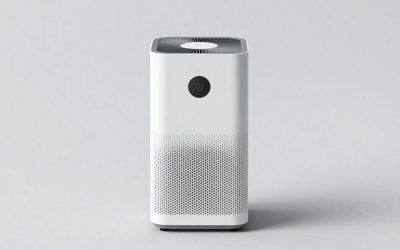
Our Top Picks
 ALORAIR 113 Pints Crawlspace Dehumidifier for Commercial19.2×12.2×13.3 in19.2 x 12.2 x 13.3 inches41.7 poundsCheck on Amazon
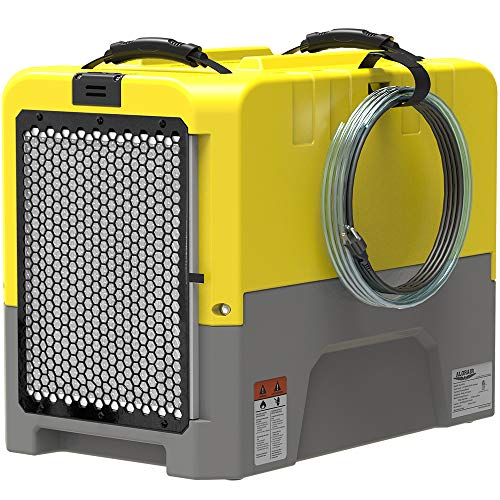 ALORAIR 180 PPD Commercial Dehumidifier with Pump180 Pints 2300 Sq. Ft22.8 x 13.7 x 17.3 inches64.3 poundsCheck on Amazon
 ALORAIR 70 PPD Dehumidifier with Pump for CrawlHD35P15.2 x 11.2 x 11.4 inches38.18 PoundsCheck on Amazon
 ALORAIR 70 Pints Crawl Space/Commercial Dehumidifier with PumpMedium16.1 x 11.8 x 13.1 inchesCheck on Amazon
 AprilAire E070W Smart Wi-Fi Crawl Space Dehumidifier2,200 Sq. ft.12.5 x 25 x 12.5 inches56 poundsCheck on Amazon
 AprilAire E080 Pro 80-Pint Whole-House Dehumidifier1600-4400 sq. ft.34 x 15.42 x 17.1 inches63 PoundsCheck on Amazon
Short verdict: for a damp crawl space, basement or restoration job where the goal is moving a lot of water at a modest purchase price, the Alorair models in this comparison make the stronger case. For a house where the dehumidifier is meant to stay in place for years, with Wi-Fi control, a MERV 11 filter and a larger stated coverage area, the Aprilaire models are the ones that justify their much higher price tier. The rest of this page explains how to tell which situation you are in.
Eight listings are compared here: four Alorair units and four Aprilaire units. Everything stated about a model comes from its listing title. Where the title is silent, this page says to check the listing rather than guess. Nobody on the team used or measured these units, so the capacity and cost figures below are labeled estimates built on published specifications.
The comparison is unusual because both brands are represented by commercial-style, crawl-space-capable machines. There are no bedroom-sized units here. That makes the choice less about features you will notice daily and more about water volume, drainage, coverage claims and purchase price.
The four-line decision
ALORAIR 113 Pints Crawlspace Dehumidifier for Commercial, Sentinel HD55 | Auto Defrost, High Capacity, 1,200 Sq. Ft., with Drain Hose, for Basement, Commercial, Industrial, 6-Year Limited Warranty
One of the moisture-control product options compared in this guide.
View on AmazonALORAIR 180 PPD Commercial Dehumidifier with Pump, 6-Year Limited Warranty | Portable Industrial Dehu, Efficient Water Damage Restoration, Basement/Warehouse/Job Sites
One of the moisture-control product options compared in this guide.
View on AmazonALORAIR 70 PPD Dehumidifier with Pump for Crawl Space and Basement | Automatic Defrost, Memory Start, Up to 1,000 Sq. Ft., with Drain Hose, cETL Listed, for Commercial Use
One of the moisture-control product options compared in this guide.
View on AmazonALORAIR 70 Pints Crawl Space/Commercial Dehumidifier with Pump(Helios MP35) | Compact, Portable, Industry Water Damage Unit, Covers Up to 1,000 Sq. Ft., 6-Year Limited Warranty,for Basement, Garage
One of the moisture-control product options compared in this guide.
View on AmazonAprilAire E070W Smart Wi-Fi Crawl Space Dehumidifier, 70-Pint Commercial Whole-House Dehumidifier for Basement, Crawlspace & Home up to 2,200 Sq. Ft. with Pump, Drain Hose, Hanging Kit, MERV 11 Filter
One of the moisture-control product options compared in this guide.
View on AmazonAprilAire E080 Pro 80-Pint Whole-House Dehumidifier, Energy Star Certified, Commercial-Grade for Basement, Crawlspace or Whole House up to 4,400 sq. ft.
One of the moisture-control product options compared in this guide.
View on Amazon
AprilAire E080W Smart Wi-Fi Whole-House Dehumidifier, 80-Pint Energy Star Commercial Dehumidifier for Basement, Crawl Space & Home up to 4,400 Sq.Ft. with Pump, Drain Hose, Hanging Kit, MERV 11 Filter
One of the moisture-control product options compared in this guide.
View on Amazon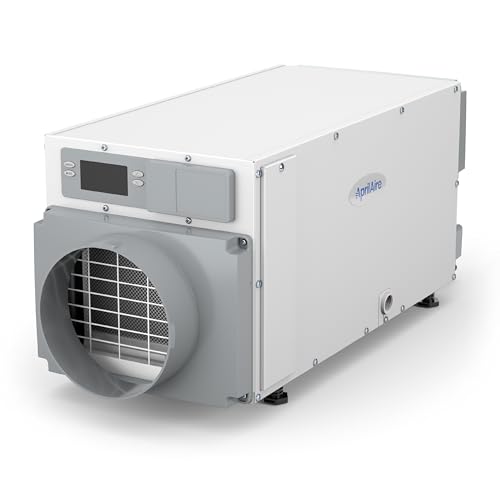
AprilAire E070 Pro 70-Pint Crawl Space Dehumidifier with Drain Hose, Commercial-Grade Whole-House Dehumidifier for Crawlspace, Basement, or Whole Home up to 2,200 sq. ft.
One of the moisture-control product options compared in this guide.
View on Amazon- Pick Alorair if the space is wet, the job is temporary or seasonal, and you want the most pints per purchase dollar.
- Pick Aprilaire if you want one machine to protect a whole house or large basement long term and you will use Wi-Fi control and a filter.
- Pick neither if your space is under about 800 square feet and only mildly damp. These are oversized for that job.
- Do not compare square-foot claims directly. Compare pints, drain method and how the seller defines the space.
Side-by-side: all eight models
| Model | Stated capacity | Stated coverage | Drain per title | Price tier | Best for |
|---|---|---|---|---|---|
| ALORAIR Sentinel HD55 | 113 pints | 1,200 sq ft | Drain hose | Budget | Wet crawl space, gravity drain |
| ALORAIR 180 PPD | 180 PPD | Not in title | Pump | Mid-range | Water damage drying, job sites |
| ALORAIR 70 PPD | 70 PPD | 1,000 sq ft | Pump and hose | Budget | Small crawl space or basement |
| ALORAIR Helios MP35 | 70 pints | 1,000 sq ft | Pump | Budget | Garage or basement, portable |
| AprilAire E070W | 70 pints | 2,200 sq ft | Pump and hose | Premium | Smart control, filtered air |
| AprilAire E080 Pro | 80 pints | 4,400 sq ft | Check listing | Premium | Large basement or whole house |
| AprilAire E080W | 80 pints | 4,400 sq ft | Pump and hose | Premium | Large home, Wi-Fi and filter |
| AprilAire E070 Pro | 70 pints | 2,200 sq ft | Drain hose | Premium | Crawl space, simple controls |
Price tiers are relative to this group of eight. All four Alorair listings sit well below all four Aprilaire listings, and the Aprilaire models cost several times as much as the cheapest Alorair units. The 180 PPD Alorair is the only mid-range entry, and it is still a fraction of any Aprilaire.
What the titles say about each brand
Read the eight titles in a row and a pattern appears. Alorair leads with capacity in pints per day and with the word commercial or crawl space. Four of its titles name a 6-year limited warranty, a cETL listing or an auto defrost feature. Aprilaire titles lead with the model code, then capacity, then the phrase whole-house, and the two W models add Smart Wi-Fi, a hanging kit and a MERV 11 filter.
Notice what is missing. No title gives a noise level, a power draw, an operating temperature range or a tank size. For crawl space machines that is normal, because they are designed to drain continuously rather than fill a bucket, but it does mean you need to open the listing for the numbers that decide running cost and placement.
A useful way to normalize the coverage claims is pints per claimed square foot, which you can compute from the titles. The Alorair 70 pint units claim 1,000 square feet, so about 0.07 pints for each square foot. The Sentinel HD55 works out to about 0.094. The Aprilaire E070 models claim 2,200 square feet, about 0.032, and the E080 models claim 4,400 square feet, about 0.018. That means Alorair is sizing for roughly two to five times the moisture load per square foot. Neither approach is wrong. One assumes a wet crawl space, the other assumes an occupied house that is only moderately humid.
The eight models, one at a time
ALORAIR Sentinel HD55 (113 pints, 1,200 sq ft)
This is the highest-capacity Alorair that also states a coverage area. The title lists 113 pints, 1,200 square feet, auto defrost and a drain hose, and says it is built for commercial, basement and industrial use. Auto defrost matters in a cold crawl space, where the coil can ice up if the unit has no defrost routine. The title also lists a 6-year limited warranty; read the terms on the listing, since this page does not describe them.
As an estimate, 113 pints per day is about 14 gallons, so a gravity drain is close to mandatory. A bucket would overflow in hours. Plan a hose route to a floor drain, sump or exterior grade before the unit arrives, and keep the hose pitched continuously downhill.
Think about where this unit would physically sit. A 1,200 square foot claim lines up with a small to medium crawl space or a single unfinished basement bay, and the pints-per-square-foot ratio computed from the title is the highest in the group, about 0.094. That ratio is a hint about intent: the seller expects heavy moisture, such as bare soil, a sump pit or seasonal seepage, rather than ordinary household humidity. If your space is merely musty, you are paying for capacity you will rarely call on, and the compressor will cycle off often.
Also consider electrical and access details that titles never mention. Crawl space outlets are scarce, extension cords add resistance, and a commercial unit may want a dedicated circuit. Confirm the plug type and amperage on the listing and look at the unit’s height against your crawl space clearance before you order.
Pros
- Highest stated capacity of the 1,200 sq ft class in this group
- Auto defrost listed for cold crawl spaces
- Budget price tier relative to every Aprilaire
Cons
- Title lists a hose, not a pump, so it needs a downhill path
- No noise or power figures in the title; check the listing
- Industrial look and sound profile is likely unsuited to living space
Who it’s for: owners of a wet, drainable crawl space or basement who want maximum water removal for the money.
ALORAIR 180 PPD Commercial Dehumidifier with Pump
The 180 PPD is the largest unit in the whole comparison by stated capacity. The title positions it for water damage restoration, basements, warehouses and job sites, and lists a pump and the 6-year limited warranty. There is no square-foot claim, which is typical for restoration gear that is sized to the wet material rather than the floor area.
Estimate: 180 pints is about 22 gallons a day at the rated condition, and real output falls as the air gets drier. If you buy this for a home, you are buying drying speed, not whole-house humidity control. Once the structure is dry, a smaller machine can hold the humidity.
The restoration framing in the title is the key to this model. Water damage contractors size equipment to the amount of wet material, not to the floor area, and they run units hard for a few days until moisture readings fall to normal. If you rent equipment for that purpose, this class of machine is what you would be renting. Owning one makes sense only if you expect recurring events, such as a basement that floods in heavy storms, or if you maintain several properties.
A practical estimate: pulling 22 gallons a day out of a room means the pump discharge needs a reliable destination. A hose that drops into a laundry sink will overflow if the sink backs up. Run the line to a proper drain or outside, secure it, and check it daily during the first week. Ask yourself, too, where you will store a large machine once the job is done.
Pros
- Largest stated capacity of all eight models
- Pump listed, so it can lift water out of a low area
- Mid-range price tier, the only Alorair above Budget
Cons
- No coverage figure in the title, so you must size it yourself
- Likely overkill and noisier than needed after drying is complete
- Larger machines usually draw more power; check the listing for watts
Who it’s for: anyone drying out after a leak, flood or major moisture event, or running a large unconditioned shop.
ALORAIR 70 PPD with Pump for Crawl Space and Basement
The title lists a pump, automatic defrost, memory start, a drain hose, a cETL listing and coverage up to 1,000 square feet. Memory start means the unit resumes after a power interruption; in a crawl space, where nobody notices an outage, that feature quietly protects you.
At 70 pints, the estimated output is about 8.75 gallons a day. The pump is the practical selling point. Most crawl spaces sit below the nearest drain, so a gravity hose is not an option and a pump line has to climb to a window well, vent or sump discharge.
The cETL listing in the title is a safety-certification mark, which is the sort of detail worth noticing in an appliance that will run unattended under a house. The title does not say what the listing covers beyond that, so look at the product page for the standard referenced. It does not tell you anything about moisture performance, only about electrical safety review.
Compare it honestly with the Helios MP35 below. The two share a 70 pint figure and the 1,000 square foot claim, and both include a pump. If their listing prices differ, look at what is bundled: hose length, mounting hardware, controls. In a crawl space, the humidistat setting matters more than the badge on the front, and a unit that remembers its setting after an outage is more valuable than one that resets to default.
Pros
- Pump and hose both listed in the title
- Memory start for unattended crawl space use
- Budget price tier with a safety listing named in the title
Cons
- Coverage claim of 1,000 sq ft leaves little margin for a wet space
- Pump lift height is not in the title; verify it
- No smart control or filter mentioned
Who it’s for: a typical crawl space under about 800 square feet where the water must go uphill.
ALORAIR Helios MP35 (70 pints with pump)
The Helios MP35 title repeats much of the 70 PPD story: 70 pints, a pump, up to 1,000 square feet, a 6-year limited warranty and use in a basement or garage. It adds the words compact and portable, which suggests it is meant to be moved between locations, though the title gives no dimensions or weight. The price tier is Budget, just above the 70 PPD but below the Sentinel.
The difference between this and the 70 PPD with Pump is not clear from the titles alone. They may differ in housing, controls or build. That is a reason to compare the two listings side by side for feature lists, rather than assume they are the same machine.
Portability is the real question mark. A machine that is easy to carry can move from a garage in spring to a basement in summer, and that flexibility has value for a household without a permanent problem. But portability also means the cabinet is probably lighter and the unit may be easier to knock over, so in a crawl space plan for a level, dry platform such as a few pavers or a shelf rather than bare soil.
For sizing, treat the 1,000 square foot claim with the same caution as its sibling. If the space is 700 square feet and moderately damp, the headroom is comfortable. If it is 950 square feet and wet, you are right at the limit. In that case consider the Sentinel, or plan to seal the space so the machine works against less incoming moisture.
Pros
- Pump listed, with a portable framing in the title
- Suitable for garage and basement as well as crawl space
- Same 1,000 sq ft claim as its sibling, so sizing is easy
Cons
- Close overlap with the 70 PPD makes the choice confusing
- Dimensions and weight are not stated in the title
- Coverage claim is the same modest figure
Who it’s for: someone who wants a moderately sized Alorair they can relocate between a garage, a basement and a crawl space.
AprilAire E070W Smart Wi-Fi Crawl Space Dehumidifier
The E070W title lists 70 pints, up to 2,200 square feet, a pump, a drain hose, a hanging kit and a MERV 11 filter, plus Smart Wi-Fi. A hanging kit suggests it can be suspended in a crawl space, which keeps it off damp ground; check the listing for hardware details. The filter is a distinguishing feature, since the Alorair titles mention none.
Estimate: at a stated 70 pints, daily output is similar to the Alorair 70 PPD, so the extra cost buys the broader coverage claim, the filter and remote monitoring rather than additional water removal. For the same stated pints, the coverage claim is more than double.
A Wi-Fi dehumidifier is only as good as the signal it can reach. A crawl space is a poor place for a router signal, with soil, joists and ductwork absorbing it. If your router is upstairs, plan for a mesh node or an extender near the access hatch, or accept that the smart features will be intermittent. Ask whether the unit still runs on its local setpoint when the network drops; the title cannot tell you.
The MERV 11 filter in the title deserves a maintenance note. A filter on a dehumidifier needs periodic cleaning or replacement, and in a dusty crawl space it will load faster than one in a finished basement. Check the listing for the replacement part number and its price tier before committing, because a filter that is hard to find turns into a hidden ownership cost.
Pros
- Wi-Fi control, so you can check humidity without crawling under the house
- Pump, hose and hanging kit all included per the title
- MERV 11 filter named in the title
Cons
- Premium price tier, several times an equal-pint Alorair
- Wi-Fi reliability in a crawl space depends on your router range
- Same 70 pints as much cheaper units
Who it’s for: owners who want remote monitoring of an out-of-sight space and will pay for the convenience.
AprilAire E080 Pro 80-Pint Whole-House Dehumidifier
The E080 Pro title lists 80 pints, Energy Star certification, commercial-grade construction and coverage up to 4,400 square feet for a basement, crawl space or whole house. It does not mention a pump, drain hose, filter or Wi-Fi, so those are listing questions. The Pro suffix appears to mark the simpler of the E080 pair, but that is an inference from the titles, not a stated fact.
Estimate: with 80 pints at about 10 gallons a day, this is tied for the lowest pints-per-square-foot claim in the comparison, which suits an occupied, lived-in house more than a flooded one.
The title offers the most ambiguity of any Aprilaire in the group. It mentions Energy Star, commercial-grade construction and the 4,400 square foot figure, but gives no information about draining. That does not mean it lacks a drain; it means you must read the product page for hose connections, pump options and condensate routing. If the page lists only a gravity outlet, your installation needs a floor drain, a sump, or a separate condensate pump.
Think about duty cycle. An 80 pint machine serving a 3,000 to 4,000 square foot basement will run for long stretches in humid months, and Energy Star certification is the one efficiency credential named in these titles. Over many summers, a modestly lower energy draw matters more than the sticker. If you can find the listed efficiency number, compare it with other Energy Star units before deciding.
Pros
- Energy Star certified per the title
- Largest stated coverage area of any model in the group
- Premium tier but without the smart features that add cost
Cons
- Drain method is not in the title; check before buying
- No filter named in the title
- The most expensive way to buy 80 pints in this comparison
Who it’s for: a large finished basement or a whole house where an efficient, Energy Star certified unit will run for many hours.
AprilAire E080W Smart Wi-Fi Whole-House Dehumidifier
This is the feature-complete version of the 80 pint line: Smart Wi-Fi, Energy Star, a pump, a drain hose, a hanging kit and a MERV 11 filter, with the same 4,400 square foot coverage claim. It is also the highest-priced listing in the group, which places it firmly in the Premium tier.
Because the hardware list includes both a pump and a drain hose, the installation choices are broad: you can drain by gravity if a floor drain is close, or lift if it is not. That flexibility is worth real money in an older house where the drain location was never planned for appliances.
With an app and a pump, this model invites a different style of ownership. You can set a target humidity, watch a graph of readings from your phone, and receive alerts if the unit stops. That is helpful if you travel or if the unit lives in a space you rarely visit. The cost is complexity: updates, passwords and a cloud service the manufacturer controls. Read the listing for what happens when the service is unavailable.
The hanging kit suggests ceiling or joist mounting is intended, which frees floor space and keeps the unit out of any standing water. Mounting a dehumidifier overhead adds weight to joists and requires level installation so the condensate drains correctly, so review the installation guidance on the listing and consider professional help if your joists are old.
Pros
- Every feature the titles in this group mention, in one machine
- Gravity or pumped drainage possible
- Energy Star and Wi-Fi in the same model
Cons
- Highest price tier of all eight models
- Smart features add an account, an app and a network dependency
- The coverage claim is generous; do not treat it as a promise
Who it’s for: homeowners who want a set-and-monitor system for a big basement and are comfortable paying for it.
AprilAire E070 Pro 70-Pint Crawl Space Dehumidifier
The E070 Pro is the simplest Aprilaire in the list: 70 pints, a drain hose, commercial-grade whole-house positioning and coverage up to 2,200 square feet. The title mentions no pump, so this one leans on gravity drainage or a separately purchased condensate pump.
It competes most directly with the Alorair 70 PPD. Same stated pints, more than double the coverage claim, and a much higher price tier. The question is whether the extra stated coverage reflects a better machine or simply a different assumption about the room.
This is the model to choose if you like the Aprilaire name on a stated coverage of 2,200 square feet but dislike the idea of an app. Simpler controls mean fewer failure points. They also mean you will set the humidistat at the unit itself, which in a crawl space means going down to check it. Many owners do that only a few times a year, so set a conservative target and leave it.
The missing pump is the real constraint. If your crawl space sits below the nearest drain, add a separate condensate pump, and budget for it in the total. Doing so narrows the price gap with the E070W, which includes a pump in the title. Run that comparison on the full installed price rather than the unit alone. Also confirm the length of the included drain hose, since a short hose forces an awkward placement near the access hatch, and check whether the cord reaches an outlet without an extension. Small installation details like these decide whether a crawl space dehumidifier gets maintained or ignored.
Pros
- 2,200 sq ft coverage claim at 70 pints
- Drain hose included per the title
- No smart electronics to fail or require a network
Cons
- No pump listed, so an uphill route needs extra equipment
- Premium tier for a unit with basic controls
- No filter named in the title
Who it’s for: a crawl space owner with a gravity drain who wants an Aprilaire without paying for Wi-Fi.
Worked example: two houses, four possible picks
These are editorial estimates using a simple rule: treat the seller’s square-foot claim as a best case and ask for about 25 percent headroom in a wet space. The rule is a rough guide, not a standard.
House A: 1,000 square foot crawl space, vapor barrier torn, water stains on the joists. With 25 percent headroom you want a claim of about 1,250 square feet or more. The Alorair 70 PPD and Helios MP35 sit exactly at 1,000, so they have no margin. The Sentinel HD55 claims 1,200, close to the target and with far more capacity. The Aprilaire E070 models claim 2,200, which clears it easily. In a wet space I would lean toward the Sentinel if a gravity drain exists, or the 70 PPD with pump if the water must rise. Fix the vapor barrier first, because any unit works better in a sealed space.
House B: 3,000 square foot house, damp finished basement, musty smell upstairs in summer. You want about 3,750 square feet of claim, and a stated 70 pints at 1,000 square feet clearly will not do. Only the E080 pair qualifies at 4,400. In that case the decision is E080 Pro versus E080W, and it comes down to drain route and whether you want remote monitoring. An Alorair would need to be one unit per zone, and four 70 pint units would be a messy way to solve a whole-house problem.
Running cost estimate, with assumptions
None of the titles list watts, so this is an estimate. Assume a 70 pint class commercial unit draws about 600 watts while the compressor runs. If it runs 12 hours a day for 30 days, that is 600 watts times 12 hours times 30 days, or 216 kilowatt hours. At an assumed 16 cents per kilowatt hour, that is about 35 dollars a month. A summer crawl space might run longer, and a winter crawl space might barely run.
The same arithmetic shows why price tier matters less than it appears. Even if an Aprilaire were 20 percent cheaper to run than an Alorair, that saving is about 7 dollars a month on this example. Over five years it would not close a purchase-price gap of several times the cost of the cheaper unit, unless the unit runs 24 hours a day in a very humid climate. Energy Star certification, named in the E080 titles, is the clearest efficiency claim in the group, and it is worth comparing the listed efficiency figures for any model you are seriously considering.
Pint ratings: why the numbers are slippery
Dehumidifier capacity is measured at a stated temperature and humidity. The current US standard rates at 65 degrees Fahrenheit and 60 percent relative humidity, while older ratings used 80 degrees and 60 percent, which produce a higher pint number for the same machine. Commercial and restoration units are often rated at warm, nearly saturated conditions that make the number look even larger. None of the eight titles say which condition applies.
The practical advice is to avoid comparing a pints-per-day figure from one brand with a figure from another unless both listings name the rating condition. If a listing does not, expect real output in a cool crawl space to be well below the headline number, since the coil extracts less water from cold air. Estimates on this page assume the headline pints at the seller’s rating point.
If you also want to improve air quality alongside moisture control, the filter question matters. Our comparison of MERV 11 vs MERV 13 furnace filters explains what the rating means in practice. A MERV 11 filter inside a dehumidifier mainly protects the coil, and it is not a substitute for your HVAC filtration.
How we picked these
This comparison draws on published specifications, manufacturer documentation and buyer reviews, gathered by the Editorial team. Nobody on the team used or measured these units, so anything that only daily ownership reveals, such as pump lift in a real crawl space, fan noise at night or long-term wear, is deliberately left to the listings.
The inclusion rule was mechanical: all eight supplied models appear, four per brand, and none was cut for looking weak. A sentence about a model is allowed only if its title supports it. Gaps are flagged as listing questions instead of being filled with guesses.
Gallons per day, headroom percentages and the monthly electricity figure are arithmetic on title data plus assumptions stated next to each number. Money appears only as a tier because the listings change often.
Checklist before you buy either brand
- Measure the actual square footage and ceiling height of the space, not the house.
- Decide where the water goes: gravity hose, pump, or a bucket you empty by hand.
- Confirm power requirements and outlet location, especially in a crawl space.
- Check the listing for noise, operating temperature range and rating condition.
- Read the warranty terms if the title mentions a warranty.
- Fix the moisture source first: gutters, grading, vapor barrier, ductwork leaks.
Related guides
Frequently asked questions
Is an Aprilaire dehumidifier worth several times the price of an Alorair?
Only if you value what the Aprilaire titles actually list: higher square-foot coverage on 70 and 80 pint units, Energy Star on the E080 models, Wi-Fi control on the W versions, and a MERV 11 filter. If you just need to dry a damp crawl space or a job site, the Alorair units move the same stated pints for far less money. Check the listing for power draw before assuming either brand is cheaper to run.
Can an Alorair crawl space unit dehumidify a whole house?
The Alorair titles claim 1,000 to 1,200 square feet for the 70 and 113 pint models and give no coverage figure for the 180 PPD unit. They are sold for crawl spaces, basements and restoration work, not for ducted whole-house service. You can place one in a basement and let it work upward, but closed rooms on other floors will not be treated evenly. Plan on one unit per floor or per zone.
Do I need a pump or is a drain hose enough?
A drain hose works only if the water can run downhill to a floor drain, sump or outdoor slope. A pump lifts water up and out when the dehumidifier sits below the drain point, which is the usual crawl space situation. Five of the eight listed models mention a pump in the title, and the others list a drain hose or do not say, so confirm lift height and hose length on the listing before you buy.
Why do the square-foot claims differ so much between the two brands?
The Alorair 70 pint titles say up to 1,000 square feet while the Aprilaire 70 pint titles say up to 2,200. That gap is mostly about assumed moisture load per square foot, not a different machine class. Treat each claim as a best case for that seller’s assumptions, and size from your actual conditions: how wet the space is, ceiling height, and whether the vapor barrier is intact.
How much will it cost to run a 70 pint class commercial dehumidifier?
As an estimate, assume a draw of about 600 watts while the compressor runs, 12 hours a day and 30 days a month at 16 cents per kilowatt hour. That works out to roughly 35 dollars a month. A wet crawl space can run longer in summer and much less in winter, so the annual figure depends heavily on climate and how well the space is sealed.