Our Top Picks
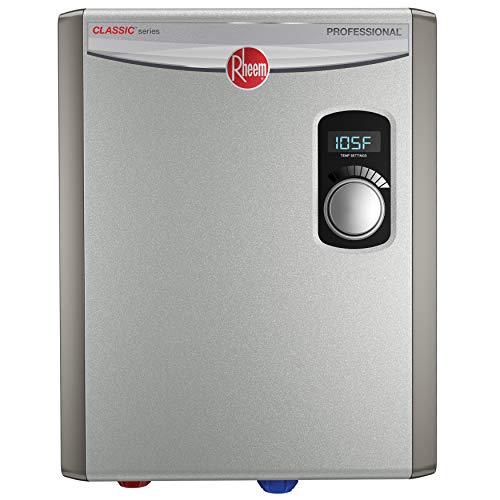 Rheem 18kW 240V Tankless Electric Water HeaterSmall18.5 x 14.5 x 3.5 inches14.78 PoundsCheck on Amazon
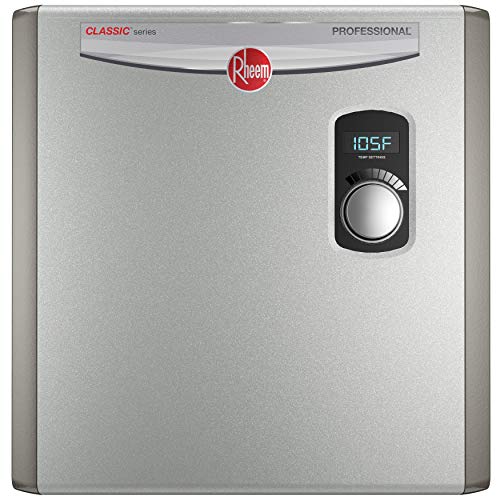 Rheem RTEX-24 24kW 240V Electric Tankless Water Heater18.25 x 14.5 x 3.5 Inches17.8 PoundsCheck on Amazon
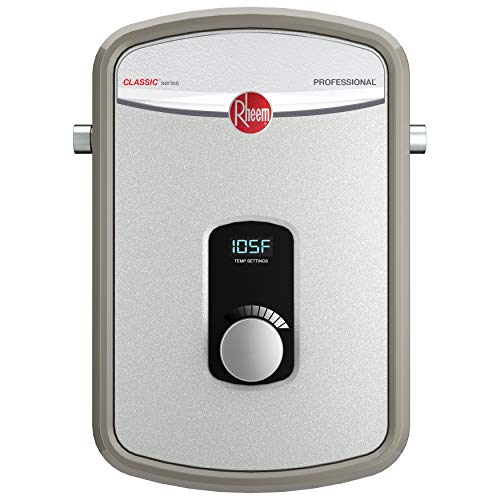 Rheem 11kW Multi Fixture Tankless Electric Water Heater12.63 x 8.25 x 3.63 Inches7.1 PoundsCheck on Amazon
 Stiebel Eltron Tempra 24 Trend Electric Tankless Water24 (kW)4.63 x 16.63 x 14.5 inches16.1 poundsCheck on Amazon
The best electric tankless water heaters for a whole home are the 24 kW and 27 kW 240 V units in this group, while the 11 kW to 18 kW models suit a single bathroom, an apartment or a small shop, and the two 120 V under-sink units serve one faucet at most. Size matters more than brand: a heater that cannot raise the water temperature enough at your flow rate will feel weak, and one that needs more amps than your panel can supply cannot be installed safely at all. The sections below start with a comparison table, then explain each listing and the sizing math.
Top picks at a glance
Rheem 18kW 240V Tankless Electric Water Heater, Gray
One of the home product options compared in this guide.
View on AmazonRheem RTEX-24 24kW 240V Electric Tankless Water Heater, Gray
One of the home product options compared in this guide.
View on AmazonRheem 11kW Multi Fixture Tankless Electric Water Heater - 240V
One of the home product options compared in this guide.
View on Amazon
18kW Tankless Water Heater Electric, NOVIEEX 240V 3s Instant Hot Water Heater, Flow Rate Max 4.9 GPM, Supply for 2-3 Points, Indoor Installation, Ideal for Apartment, Garage, Salon, Bathroom, Kitchen
One of the home product options compared in this guide.
View on Amazon
110V Tankless Water Heater Electric, 3000W Tankless Electric Water Heater Instant, Under Sink Water Heater with Digital Display, On Demand Hot Water Heaters Electric for Kitchen Washin Bathroom.
One of the home product options compared in this guide.
View on AmazonStiebel Eltron Tempra 24 Trend Electric Tankless Water Heater, 24kW, 240V | Made in Germany; 2x50A breakers, 100A draw; On-demand hot water; Eco design; Energy+cost savings up to 34% in whole-home use
One of the home product options compared in this guide.
View on Amazon
Tankless Small Water Heater Electric 120V 29.2Amp, ThermoMate 3500W On Demand Instant Hot Water Heater with Temperature Display for Kitchen Bathroom Sink Faucet, ETL Certified
One of the home product options compared in this guide.
View on Amazon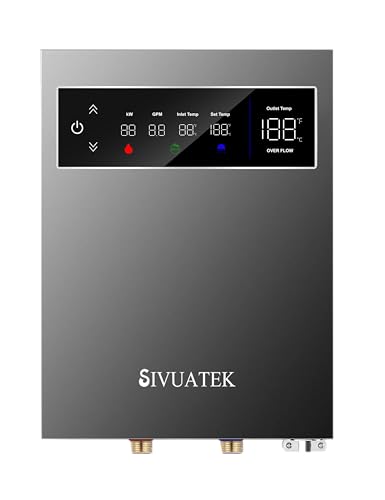
14kW Tankless Water Heater Electric 240V, Sink & Shower,Gray | ETL Certified, 3s Instant Heating, 99.8% Thermal Efficiency, LED Shows Inlet/Outlet Temp, GPM & kW, ±1℉ Precise Control
One of the home product options compared in this guide.
View on Amazon
WINTEMP 27kW Electric Tankless Water Heater 240V ETL Certified WiFi | Up to 6.5 GPM On Demand Instant Hot Water Heater, Whole House Hot Water Supply, with self-modulating temperature control
One of the home product options compared in this guide.
View on Amazon
Rheem 240V Heating Chamber RTEX-13 Residential Tankless Water Heater, GRAY
One of the home product options compared in this guide.
View on Amazon| Model | Key point from the title | Price tier | Best for |
|---|---|---|---|
| xwdzswgs 110V under-sink | 3000W, digital display, kitchen or bathroom sink | Budget | A single hand-washing sink |
| ThermoMate 120V | 3500W, 29.2 amp, temperature display, ETL stated | Budget | Small point-of-use jobs |
| Rheem 11kW Multi Fixture | 240V, 11 kW, multi-fixture wording | Mid-range | Mild climates, light demand |
| Rheem RTEX-13 Heating Chamber | 240V, “heating chamber” in the name | Mid-range | Buyers who confirm it is a complete unit |
| SIVUATEK 14kW | 240V, sink and shower, LED display, ETL stated | Budget | One bathroom |
| Rheem 18kW | 240V, 18 kW, gray | Premium | Small homes in mild climates |
| NOVIEEX 18kW | 240V, 4.9 GPM maximum, 2-3 points | Mid-range | Apartments, garages, salons |
| Rheem RTEX-24 | 240V, 24 kW | Premium | Whole-home use |
| Stiebel Eltron Tempra 24 Trend | 24 kW, 2x50A breakers, 100A draw | Premium | Whole-home, electrician-planned |
| WINTEMP 27kW | 240V, WiFi, up to 6.5 GPM, ETL stated | Mid-range | Larger homes, with panel check |
What is shifting in electric tankless
Electric tankless water heaters have become easier to find on marketplaces, and the range now runs from plug-in sink units to heavy whole-house models. That spread is useful, but it also makes titles hard to compare, because a 3 kW sink heater and a 27 kW whole-house heater are different products even though they share a category name.
Smart controls are increasingly common. One listing here advertises WiFi and self-modulating temperature control, and others show digital displays for inlet and outlet temperature. These features can be convenient, but they are secondary to power and electrical fit.
Marketing numbers have also grown more creative. Flow rates quoted as maximums, thermal efficiency figures near 100 percent and heating times in seconds can all be technically true while telling you little about performance in your home. Electric resistance heating converts nearly all input power into heat, so a high efficiency figure is expected and does not separate one heater from another.
Finally, electrical demand is the limiting factor in many homes. Older houses may have 100 or 150 amp service panels with little spare capacity, and local codes govern how large a new load can be. That constraint often decides which of these ten is realistic for a given house, before price or features come into play. This is general guidance, not advice for any specific property.
How these ten were picked
These ten were chosen from marketplace titles for electric tankless water heaters, spanning point-of-use and whole-house sizes, and compared using only the facts each title states. Price tiers are relative within the set and carry no dollar figures. Our basis is published specifications, manufacturer documentation and buyer reviews. Nobody on the team used or measured these units. Where a claim is a seller’s own, the write-up says so, and where a title is unclear, we point out the gap.
Ten listings, from point-of-use to whole-house
xwdzswgs 110V 3000W Under-Sink Tankless Heater
The title describes a 3000-watt, 110 V electric heater with a digital display, intended as an under-sink unit for a kitchen, wash area or bathroom. It is a point-of-use product, a different class from the whole-house heaters in this group, and it is the lowest tier here.
Think of a small utility sink or a workshop where only hand washing is needed and the main hot water line is far away. At 3 kW the unit raises roughly a third of a gallon per minute by a 60-degree rise, so it is not meant for showers, as the physics below shows.
The title calls it instant and on demand, but instant describes how fast the element reacts, not how much water it can warm. Expect a modest stream of warm water at a normal faucet temperature rise. Its sensible niche is a remote sink where running a long hot water line would waste time and water.
- Pros: lowest tier; plug-in class voltage; display shows settings.
- Cons: very low flow at a useful temperature rise; little in the title about certification or warranty.
Check the listing: required circuit, any safety listing mark and the plumbing fittings. Ask before buying: what size breaker and wire does it need, and is it designed for plug-in use?
ThermoMate 120V 3500W Small Water Heater
This one lists a 120 V, 29.2 amp, 3500-watt unit with a temperature display for a kitchen or bathroom sink faucet, and states that it is ETL certified. The 29.2 amp figure matters: a typical household outlet circuit is rated 15 or 20 amps, so this unit likely needs a dedicated circuit of higher rating than a standard outlet provides.
It could serve a single sink in a guest bathroom or a garage if an electrician has confirmed that a suitable circuit exists. For showers, it falls short for the same physics reasons as the other 120 V unit.
The title says ETL Certified, which is a safety listing mark, but a statement in a title is not proof. Look up the model in the certifier’s public directory if one exists. Because the draw approaches 30 amps, treat the circuit as the main cost: new wire, a breaker and electrician time can exceed the price of the heater itself, particularly in older houses.
- Pros: amp rating clearly stated; temperature readout; certification claimed.
- Cons: needs a heavy circuit for a small output; limited flow.
Check the listing: the certification record and whether it is meant to be hardwired. Ask before buying: can my panel support a dedicated circuit of this size?
Rheem 11kW Multi Fixture Tankless Electric Water Heater
The title names Rheem, 11 kW, 240 V and “multi fixture”, with no flow figure. At 11 kW the heater raises about 1.2 to 1.4 gallons per minute by a 55-degree rise, which is an estimate and not a manufacturer rating. That is enough for one low-flow shower, but two fixtures at once will pull the temperature down in cool-water regions.
It suits a small bathroom, a cabin or a mild climate where incoming water is already fairly warm and demand is low.
Units in this size range are often considered for a tiny house, a cabin or a bathroom addition. Flow depends on how cold the incoming water is, so a cold-climate buyer may get well under two gallons per minute of comfortable water in winter. The title carries no dimensions, weight or wire-gauge details, so the manual is the real source of installation facts.
- Pros: well-known brand named; 240 V; lower amp demand than larger units.
- Cons: “multi fixture” is vague; limited flow when groundwater is cold.
Check the listing: rated flow at your temperature rise and the breaker requirement. Ask before buying: how many fixtures can run together in my climate?
Rheem RTEX-13 Heating Chamber (240V)
This title says “Rheem 240V Heating Chamber RTEX-13 Residential Tankless Water Heater“. The words “Heating Chamber” raise a question: the listing may be a replacement part for a unit and not a complete heater. The title gives no kW figure, though the model number may hint at a 13 kW class, which the title does not confirm.
Treat it as an item to verify before comparing it with the complete units. If it is a replacement part, it suits only someone repairing an existing Rheem heater.
If it does turn out to be a complete heater, apply the same math as for the others: 13 kW would draw roughly 54 amps and support about 1.6 gallons per minute at a 55-degree rise. If it is a part, check which model numbers it fits and who installs it, because swapping a heating chamber is work for a qualified technician following the manufacturer’s instructions.
- Pros: brand named; 240 V; could be useful for repair.
- Cons: title is ambiguous about whether it is a whole unit; no kW or flow data.
Check the listing: the item description, what is in the box and whether controls are included. Ask before buying: is this a complete heater or a spare part, and which models does it fit?
SIVUATEK 14kW Tankless Water Heater, 240V
The title offers 14 kW, 240 V, “sink and shower” use, ETL certification, three-second heating, a “99.8% thermal efficiency” claim, an LED showing inlet and outlet temperatures, GPM and kW, and plus-or-minus one degree Fahrenheit control. The efficiency and control figures are seller claims.
At 14 kW the heater supports roughly 1.7 gallons per minute at a 55-degree rise in an estimate, so it fits one bathroom with a low-flow shower. The display of live readings is helpful for checking that it is performing as expected.
The title promises one-degree control and three-second heating. Both are seller figures, and neither tells you how the unit behaves when flow changes. A display that shows inlet temperature, outlet temperature, flow and kW is more useful than those claims, because you can see whether the heater is at its limit while someone else opens a tap.
- Pros: informative display; low tier; certification claimed.
- Cons: efficiency claim is not a differentiator; flow is limited in cold regions.
Check the listing: breaker size and wire gauge in the manual. Ask before buying: what minimum flow is needed to switch it on?
Rheem 18kW 240V Tankless Electric Water Heater
The title reads simply “Rheem 18kW 240V Tankless Electric Water Heater, Gray”. That leaves everything else, including flow rating, dimensions and controls, for the listing’s other sections. At 18 kW the unit draws about 75 amps by simple arithmetic, and installers often size breakers above that figure.
It suits a small home, a one-bath apartment or an addition in a mild climate, where about two gallons per minute at a 55-degree rise is enough.
Because the title is so short, this listing works best as a starting point for research in the manufacturer’s documentation. Look up the model line, its rated flow chart and its minimum activation flow before you buy. Set beside the NOVIEEX 18 kW unit, it carries the same power rating, so differences should come down to the documented flow chart, controls and warranty.
- Pros: known brand; mid-sized power; fewer extras to second-guess.
- Cons: premium tier for the kW; limited info in the title.
Check the listing: minimum and maximum flow, and the warranty. Ask before buying: does my panel have spare capacity for roughly 75 amps?
NOVIEEX 18kW Tankless Water Heater, 240V
Here an 18 kW, 240 V unit is described with a maximum flow of 4.9 GPM and supply for two or three points, such as an apartment, garage, salon, bathroom or kitchen. The 4.9 GPM figure is a maximum, not a rating at a given temperature rise. At 18 kW, a 55-degree rise supports only about two gallons per minute, so 4.9 GPM implies a much smaller rise.
Use it as a one-bathroom or small-shop heater, and expect the mixture of fixtures running together to be limited.
This has the same 18 kW rating as the Rheem above, yet the listing quotes a flow ceiling that the power rating alone cannot support at a normal rise. That does not make the heater poor; it means the number needs context. Ask for the flow-versus-temperature table. The words “indoor installation” in the title also suggest it is not meant for outdoor mounting.
- Pros: flow ceiling stated; versatile use cases listed; mid tier.
- Cons: flow claim is optimistic; brand name is unfamiliar, so check seller support.
Check the listing: the temperature rise at the quoted flow. Ask before buying: what is the warranty path?
Rheem RTEX-24 24kW 240V Electric Tankless Water Heater
This is a 24 kW, 240 V model from a brand named in the title. By arithmetic, 24 kW draws about 100 amps and supports roughly 3 gallons per minute at a 55-degree rise, enough for a shower and a faucet together in a mild climate. In colder regions, the flow capacity drops, as the sizing section shows.
It suits a whole home with one or two bathrooms and a panel that can spare 100 amps or more.
At a cool-region rise of 60 degrees, 24 kW supports about 2.7 gallons per minute, so a shower and a tap together may drift slightly cool. In a warmer area with a smaller rise it has more margin. Compare it directly with the Stiebel Eltron 24 kW listing: the power is the same, so the choice rests on documentation, controls, warranty and seller.
- Pros: whole-home size; recognizable brand; detailed model name.
- Cons: highest tier along with one other; heavy electrical demand.
Check the listing: breaker and wire requirements, and any minimum water pressure. Ask before buying: does my service panel have room for it?
Stiebel Eltron Tempra 24 Trend Electric Tankless Water Heater
The title says 24 kW, 240 V, made in Germany, two 50-amp breakers, 100 amp draw, on-demand hot water and “energy+cost savings up to 34% in whole-home use”. The electrical specification is helpful because it states the draw. The savings figure is a seller claim with no stated baseline, so it cannot be compared fairly.
It suits a whole-home install where an electrician has already planned two 50-amp breakers and the owner wants clear electrical requirements up front.
The two 50-amp breakers named in the title are the kind of detail that lets an electrician quote a job quickly. Ask the electrician whether the panel can carry another 100 amps alongside the dryer, range and any vehicle charger, because that load calculation is where whole-home electric heaters most often become impractical.
- Pros: explicit breaker and draw information; whole-home size.
- Cons: premium tier; savings claim lacks conditions.
Check the listing: flow at your rise and the warranty. Ask before buying: what baseline does the 34 percent savings claim assume?
WINTEMP 27kW Electric Tankless Water Heater, WiFi
The biggest unit in the set lists 27 kW, 240 V, WiFi, ETL certification and up to 6.5 GPM for whole-house supply, with self-modulating temperature control. The 6.5 GPM headline is a ceiling. By arithmetic, 27 kW supports about 3.4 gallons per minute at a 55-degree rise, so 6.5 GPM implies a rise near 28 degrees.
It suits a larger home with warm incoming water or lower flow demands. The draw is roughly 112 amps, so confirm panel capacity first.
The WiFi feature can be handy for monitoring, but it adds an app, an account and a network dependency, so check the privacy terms and whether the unit works without it. The “self-modulating” wording suggests the heater adjusts power to hold temperature, which is useful when flow changes, though the title gives no detail on how well it does so.
- Pros: highest power here; WiFi control; mid tier for the kW.
- Cons: large electrical demand; flow claim needs context.
Check the listing: the app’s reviews and the warranty. Ask before buying: what flow does it deliver at my temperature rise?
Sizing guide: kilowatts, flow and circuits
Start with temperature rise
The temperature rise is the difference between incoming water and the temperature you want. If groundwater arrives at 50 degrees Fahrenheit and you want 105, the rise is 55. A handy estimate is that one gallon per minute needs about 0.147 kilowatts per degree of rise, so required kilowatts equal flow times rise times 0.147. These are physics-based estimates and ignore losses.
Match power to fixtures
A low-flow shower runs about 2 gallons per minute, and a kitchen faucet around 1 to 1.5. Add the fixtures that will run together to find your peak flow. For most households that is a shower plus one other tap. Then check the heater’s kW against the rise in your coldest month, not the average.
Electrical service and wiring
Divide kilowatts by 240 for amps. A 24 kW heater draws about 100 amps, and an 11 kW unit about 46. Breakers and wire are often sized above that load. Many older homes do not have the spare capacity, which can mean a costly panel upgrade. Installation of electrical and plumbing equipment should be done by qualified professionals who follow the manufacturer’s instructions and local codes.
Point-of-use or whole-house?
A point-of-use heater sits near one sink and serves a single task, which suits a remote bathroom or workshop. A whole-house heater serves every fixture from one location and needs far more electrical capacity. Mixing the two ideas is the most common reason a purchase disappoints: a 3 kW plug-in unit cannot do a 24 kW job, whatever the title says about instant heat.
Climate and seasons
Groundwater temperature changes through the year, and a heater that feels generous in August can feel weak in January. Size against the coldest incoming water you expect, not the average. A neighbor, local utility or plumber can usually tell you typical winter groundwater temperatures in your area.
Flow claims and efficiency claims
Maximum flow quoted without a temperature rise is incomplete. Likewise, a “99.8 percent” efficiency figure reflects how resistance heating works, not an advantage. Compare listings by kilowatts, voltage and rise.
Hard water and maintenance
Scale can coat heating elements in hard-water areas. Read the manual for descaling intervals, and consider whether a whole-house water softener belongs in your plan.
Safety basics
Set the output temperature carefully, because hot water can scald; many safety bodies suggest keeping tap water at or below 120 degrees Fahrenheit, which is general guidance. Install in a location protected from freezing. Never bypass a safety device, and follow the manufacturer’s instructions and local codes.
Worked example: a two-bath home in a cool region
Assumptions, all estimates: incoming water at 45 degrees, target 105 degrees, so a rise of 60 degrees. A 2.0 gallon per minute shower plus a 1.0 gallon per minute kitchen tap run together, for 3.0 gallons per minute total.
Required power is 3.0 x 60 x 0.147, or about 26.5 kW. A 24 kW heater would then supply about 2.7 gallons per minute, slightly short, while a 27 kW heater would supply about 3.1. An 11 kW unit would manage about 1.2. Draw for 27 kW is roughly 112 amps. An eight-minute shower uses 16 gallons, or about 2.3 kWh, which is roughly 37 cents at an assumed 16 cents per kilowatt-hour. This example shows why a sizing check must come before a purchase.
| Spec concept | What to look for | Why it matters |
|---|---|---|
| Kilowatts | Match to peak flow times rise | Sets the hot water you can really get |
| Voltage and amps | 240 V; confirm panel space | Electrical limits can rule a model out |
| Flow rating | GPM stated at a temperature rise | A bare maximum is not a rating |
| Certification | Mark you can verify | Seller statements need confirming |
| Unit type | Complete heater, not a part | Titles can be ambiguous |
| Warranty and seller | Named manufacturer support | Repairs depend on it |
Mistakes buyers make with electric tankless heaters
Buying on flow claims. A figure such as 6.5 GPM sounds generous, yet it is a ceiling at a small rise. Do the kilowatt math with your own groundwater temperature.
Ignoring the panel. A 24 kW or 27 kW heater needs 100 amps or more of capacity. Ask an electrician before ordering, since a panel upgrade can cost more than the heater.
Choosing a 120 V unit for a shower. A 3 kW or 3.5 kW heater cannot raise a shower-size flow enough for comfort.
Assuming the listing is a complete heater. A title with “heating chamber” in it deserves a careful read.
Skipping water quality. Hard water shortens element life in many installs, so factor maintenance or treatment into the budget.
Verdict by use case
Whole home, cool region: the 27 kW WINTEMP, if the panel allows it. Whole home, mild region: either 24 kW unit, with Stiebel Eltron the clearer on electrical needs in its title. One bathroom: the 14 kW SIVUATEK, 18 kW Rheem or NOVIEEX. Light, low-demand use: the Rheem 11 kW. A single sink: either 120 V unit, after an electrician confirms the circuit. The RTEX-13: only after confirming it is a complete unit.
Related guides
- Indoor Electric Heaters For Large Rooms
- Reverse Osmosis Water Filters
- Alorair Vs Aprilaire Dehumidifier
Frequently asked questions
What size electric tankless water heater do I need?
Size it by the hot water you run at the same time and the temperature rise you need. As an estimate, each kilowatt supports about 0.12 gallons per minute at a 55-degree rise, so a 24 kW unit supports roughly 3 gallons per minute. Colder groundwater lowers that figure. A licensed plumber or electrician should confirm your numbers and local requirements.
Can I install an electric tankless heater myself?
Whole-house units draw 50 to over 100 amps and need dedicated breakers, heavy wiring and correct plumbing connections, so installation should be done by a qualified electrician and plumber who follow the manufacturer’s instructions and local codes. Even small plug-in units can overload an ordinary household circuit. Permits and inspections vary by location, so check with your local authority before buying.
Are 120V under-sink tankless heaters worth buying?
They can serve one sink for hand washing, but their power is small. At 3,000 to 3,500 watts they raise only a fraction of a gallon per minute by a useful amount, and some draw close to 30 amps, which exceeds a typical 15 or 20 amp outlet circuit. Check the listing for the required circuit and have an electrician confirm your wiring before purchase.
Do electric tankless heaters save money?
They can cut standby heat loss because they heat water only on demand, and sellers often cite savings figures, but the size of those savings depends on usage, electricity rates and the heater they replace. Electric heating of any kind is close to 100 percent efficient at the unit, so claims should be compared on the conditions stated. Whole-house units also may require a service upgrade that adds cost.
How does hard water affect a tankless heater?
Mineral scale can build up on heating elements and reduce performance over time, and the effect is stronger in hard-water areas. Check the manufacturer’s maintenance guidance, which may call for periodic descaling or filtration, and consider whether a softener fits your home. Follow the manufacturer’s instructions and local codes for any work on the unit, and keep warranty terms in mind.
Why does the water turn lukewarm when two taps run?
Each heater can raise only a fixed amount of water by a fixed number of degrees. When two taps run together, the total flow can exceed what the kilowatts support, and the outlet temperature drops. The fix is a larger unit, lower-flow fixtures or avoiding overlap. Check the manufacturer’s flow-versus-temperature chart, which is usually in the manual.