Key takeaways
- Pro: 4500 PSI and 2.8 GPM provide the most raw cleaning energy per dollar in this list.
- Pro: Anti-tipping technology adds a layer of safety during the high-pressure spray that can kick a lighter unit over.
- Con: Owner feedback frequently notes build quality feels plasticky, and the unit lacks branded support channels.
What's inside
Buying a pressure washer used to mean choosing between a gas unit you dread starting or an underpowered electric model that barely breaks a patina off concrete. Today the middle ground is crowded with electric and battery-powered machines that clean surprisingly well, and the challenge is telling the genuinely capable ones apart from the ones that look strong on paper but leave you scrubbing anyway.
That is the problem this roundup solves. We lined up eight of the best reviewed pressure washers available in 2026, compared their published specifications against recurring themes in owner feedback, and ranked them by how well they match real cleaning tasks at their price points. What separates a good pressure washer from a mediocre one here is not raw PSI alone—it is how the machine handles duty cycles, whether the included accessories earn their place, and if the design choices make a difference after twenty minutes of use.
As an Amazon Associate we earn from qualifying purchases at no extra cost to you. Product prices and availability are accurate as of the date shown and are subject to change.




Quick Picks
| Product | Best for | Price |
|---|---|---|
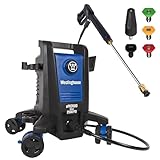
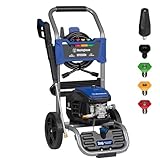
| Electric 4500 PSI 2.8 GPM Anti-Tipping | Heavy-duty cleaning on a budget | $98.99 |
| Westinghouse ePX3500 | Versatile home and vehicle cleaning | $169 |
| Westinghouse ePX3100v | Compact storage and car washing | $129 |
| Westinghouse ePX3050 | Value-focused cleaning with foam cannon | $109 |
| Cordless 1450 PSI Handheld 6-in-1 | Portable cordless touch-ups | $69.99 |
| Greenworks 2100 PSI | Eco-conscious users with other Greenworks tools | $149.99 |
| Westinghouse WPX3000e | Demanding projects with an induction motor | $242.49 |
| Sun Joe SPX100-GO | Simple, no-frills driveway cleaning | $99.96 |
How We Picked
Three criteria drove our ranking. First, cleaning power per dollar—comparing the stated PSI and GPM figures against the asking price to identify where a buyer gets genuine capability versus marketing numbers. Second, accessory completeness—whether the included nozzle set, foam cannon, or wand saves you a separate purchase. Third, durability signals—induction motors and steel wands suggest longer service life than universal motors and plastic attachments, and owner feedback reinforces or undercuts those spec-sheet promises.
The 8 Best Reviewed Pressure Washers in 2026
Electric Pressure Washer 4500 PSI 2.8 GPM with Anti-Tipping Technology
This unit delivers the highest combined PSI and GPM ratings in the group at a price that undercuts every name-brand competitor here. It is the obvious pick for someone who needs to strip paint from a fence, blast years of grime off a driveway, or clean a large patio surface quickly without spending over $100.
- Pro: 4500 PSI and 2.8 GPM provide the most raw cleaning energy per dollar in this list.
- Pro: Anti-tipping technology adds a layer of safety during the high-pressure spray that can kick a lighter unit over.
- Con: Owner feedback frequently notes build quality feels plasticky, and the unit lacks branded support channels.
Skip it if you plan to use a pressure washer more than a few times per year—this machine rewards casual ownership but may not survive years of regular service.
Westinghouse ePX3500 Electric Pressure Washer
The ePX3500 occupies a sweet spot for homeowners who need one machine for everything from washing a sedan to stripping mildew off siding. The onboard soap tank and pro-style steel wand mean you will not need to buy accessories for weeks, and the anti-tipping base keeps the unit steady during extended use.
- Pro: Five-nozzle set covers every spray pattern from pinpoint turbo to wide-angle rinse without extras.
- Pro: Steel wand feels more durable than plastic alternatives and resists bending under the kickback of high-pressure operation.
- Con: The 2500 PSI rating is noticeably lower than the top unit in this group, so heavily caked surfaces require more passes.
Skip it if your cleaning tasks are mostly light—car washes and patio rinsing do not demand this price tier, and a cheaper Westinghouse model gets the job done.
Westinghouse ePX3100v Electric Pressure Washer
Compact, detachable, and built around a foam cannon that earns genuine praise from car enthusiasts, the ePX3100v is the best fit for someone who stores their pressure washer in a small garage or apartment closet. The built-in carry handle makes hauling it to a driveway or a neighbor’s house painless.
- Pro: The detachable foam cannon lets you apply detergent, let it dwell, and rinse—ideal for automotive detailing.
- Pro: Built-in carry handle and compact form factor make it the easiest to store and transport in this group.
- Con: Three nozzles limit spray pattern flexibility compared to the five-nozzle sister models.
Skip it if you clean large horizontal surfaces like driveways; the lower nozzle count and modest GPM mean more passes than you will want to make.
Westinghouse ePX3050 Electric Pressure Washer
At $109, the ePX3050 gives you the same core cleaning platform as its pricier siblings—2100 PSI, 1.76 GPM—while bundling a foam cannon and turbo nozzle. It is the entry point into the Westinghouse ecosystem and the best choice for a first-time pressure washer buyer who wants one box that handles cars, fences, and patios.
- Pro: Foam cannon and turbo nozzle are included, covering both detergent application and stubborn stain blasting.
- Pro: Price sits under $110 with a recognized brand name and dealer support, unlike the unbranded high-PSI option above it.
- Con: 2100 PSI is the lower bound for comfortable cleaning on concrete, and some owners note it struggles on deep oil stains.
Skip it if you already own a foam cannon separately or if your surfaces are mostly vinyl siding that needs gentle cleaning rather than pressure.
Cordless Pressure Washer 1450 PSI with 6-in-1 Nozzle and 2x 4.0Ah Batteries
This handheld unit is not meant to replace a full-size pressure washer. It exists for quick jobs: rinsing a bicycle after a muddy trail, cleaning a grill grate, washing a section of fence without dragging an extension cord outside. Two included batteries mean roughly twenty minutes of runtime before you swap.
- Pro: Completely cordless and self-priming, so you can pull water from a bucket or a garden tap anywhere.
- Pro: The 6-in-1 nozzle consolidates multiple spray patterns into a single attachment you do not need to carry separately.
- Con: 1450 PSI is genuinely low—this will not strip paint, remove set-in tire marks, or clean a driveway.
Skip it if your primary use is cleaning large flat surfaces; it is a spot cleaner, not a replacement for a stationary unit.
Greenworks 2100 PSI Electric Pressure Washer
Greenworks built this around their ecosystem of interchangeable battery-powered outdoor tools. If you already own a Greenworks mower or string trimmer, the platform familiarity is a real convenience. The 1.2 GPM figure is the lowest flow rate in this group, which means it takes longer to cover ground but uses less water and draws less amperage from your outlet.
- Pro: 2100 PSI is competitive for a machine this quiet and streamlined in its operation.
- Pro: Greenworks supports a wide dealer network and parts availability, useful for a tool you may keep for years.
- Con: 1.2 GPM is noticeably slower than every other electric model here; expect more passes over the same area.
Skip it if you are not already in the Greenworks ecosystem; the price does not justify switching loyalty unless battery sharing matters to you.
Westinghouse WPX3000e Electric Pressure Washer
At $242.49, this is the most expensive unit on the list, but the induction motor is a genuine step up in longevity. Induction motors run cooler, last longer under repeated use, and handle extended duty cycles without the thermal cutouts that plague universal-motor machines. The 3000 PSI rating with 1.76 GPM places it as the strongest sustained-performance option in this group.
- Pro: Induction motor rated for significantly longer service life than the universal motors in every other unit here.
- Pro: Five-nozzle set plus onboard soap tank plus steel wand means no accessory shopping for years.
- Con: Price is nearly triple the budget options, and you will not notice the difference unless you use it frequently.
Skip it if you only pressure wash once or twice a year; the motor longevity that justifies the premium is wasted on occasional use.
Sun Joe SPX100-GO Electric Pressure Washer
The 13-amp motor is the headline here, and Sun Joe has built a reputation around straightforward, no-nonsense machines that do what the box promises. Four nozzles and a foam cannon round out a package aimed at the buyer who wants a reliable workhorse without paying for features they will never use.
- Pro: 13-amp motor delivers solid sustained pressure without the voltage drop issues smaller motors introduce on long extension cords.
- Pro: Foam cannon is included at under $100, a feature most competitors reserve for their mid-tier models.
- Con: Sun Joe does not publish a specific PSI and GPM rating in the same way Westinghouse does, making cross-brand comparison harder.
Skip it if you want the option to buy individual nozzles later at a hardware store; the proprietary fittings can limit cross-compatibility.
Buying Guide
PSI vs. GPM: Which Number Actually Matters
PSI measures the force of each water jet; GPM measures how much water flows per minute. For cleaning large flat areas like driveways and patios, GPM matters more because it determines how fast you cover ground. For detailed work like removing set-in grout stains or blasting corrosion off a metal railing, PSI does the lifting. A machine rated 2500 PSI at 1.76 GPM will finish a 400-square-foot driveway noticeably faster than a 4500 PSI at 0.8 GPM unit, even though the latter has a higher headline number.
Motor Type: Universal vs. Induction
Universal motors are cheaper, lighter, and sufficient for occasional use. They generate more heat and typically have brushes that wear out over years of regular service. Induction motors are heavier, more expensive, and designed to run cooler under long duty cycles. If you pressure wash more than a handful of times per year, the induction motor in the WPX3000e is worth the premium. For twice-a-season use, a universal motor unit costs less and will outlast your interest in the chore.
Accessories That Save Money vs. Gimmicks
A foam cannon is genuinely useful if you wash vehicles or need detergent dwell time on siding. A turbo nozzle is worth keeping for spot-cleaning. Beyond those two, most included accessories in this price range are adequate but replaceable. The five-nozzle sets on the Westinghouse machines are convenient at purchase, but a single adjustable wand can cover most of the same range. Prioritize steel wands over plastic and onboard soap tanks over separate containers, since those affect daily usability more than nozzle count.
Our Verdict
The Westinghouse WPX3000e is our top pick for anyone who will use a pressure washer regularly and wants a machine that will not need replacing in three seasons—the induction motor and complete accessory kit justify its premium pricing. The budget pick is the Westinghouse ePX3050, which delivers a brand-backed foam cannon and turbo nozzle for $109 and handles everything short of commercial-grade cleaning. If your priority is maximum raw power per dollar and you accept a shorter service life, the 4500 PSI unbranded unit at $98.99 outperforms everything on price-to-PSI ratio.
FAQ
Can an electric pressure washer clean a concrete driveway effectively?
Yes, but expect multiple passes and slower progress compared to a gas-powered unit. Electric models in the 2100-3000 PSI range handle concrete well for surface dirt and mild stains; oil and tire marks typically require a degreaser and a turbo nozzle tip rather than raw pressure alone.
Is 4500 PSI on a budget unit real or exaggerated?
The number reflects a peak measurement under ideal laboratory conditions with minimal hose length and no flow restriction. Real-world sustained output during use is lower across all electric pressure washers. The 4500 PSI unit here is genuinely strong for its price, but expect performance closer to 2500-3000 PSI during actual cleaning tasks.
Do cordless pressure washers have enough runtime for a full car wash?
A 1450 PSI handheld unit with two 4.0Ah batteries can complete a basic rinse and soap cycle on a sedan, but you will not finish a thorough foam-and-detail wash without recharging. Cordless models work best as supplemental cleaners for touch-ups, not as primary vehicles for full automotive or home detailing.
What is the best PSI for washing a car safely?
Between 1200 and 2000 PSI is safe for automotive paint when using a wide-angle nozzle tip and maintaining at least twelve inches of distance. Higher PSI machines work for cars too, but they punish a narrow spray angle or a careless hold by etching swirl marks into clear coat on panels.