Key takeaways
- Keep weighted blanket cover and inner care instructions separate. Use a two-column worksheet for labels, washing, drying and unresolved questions.
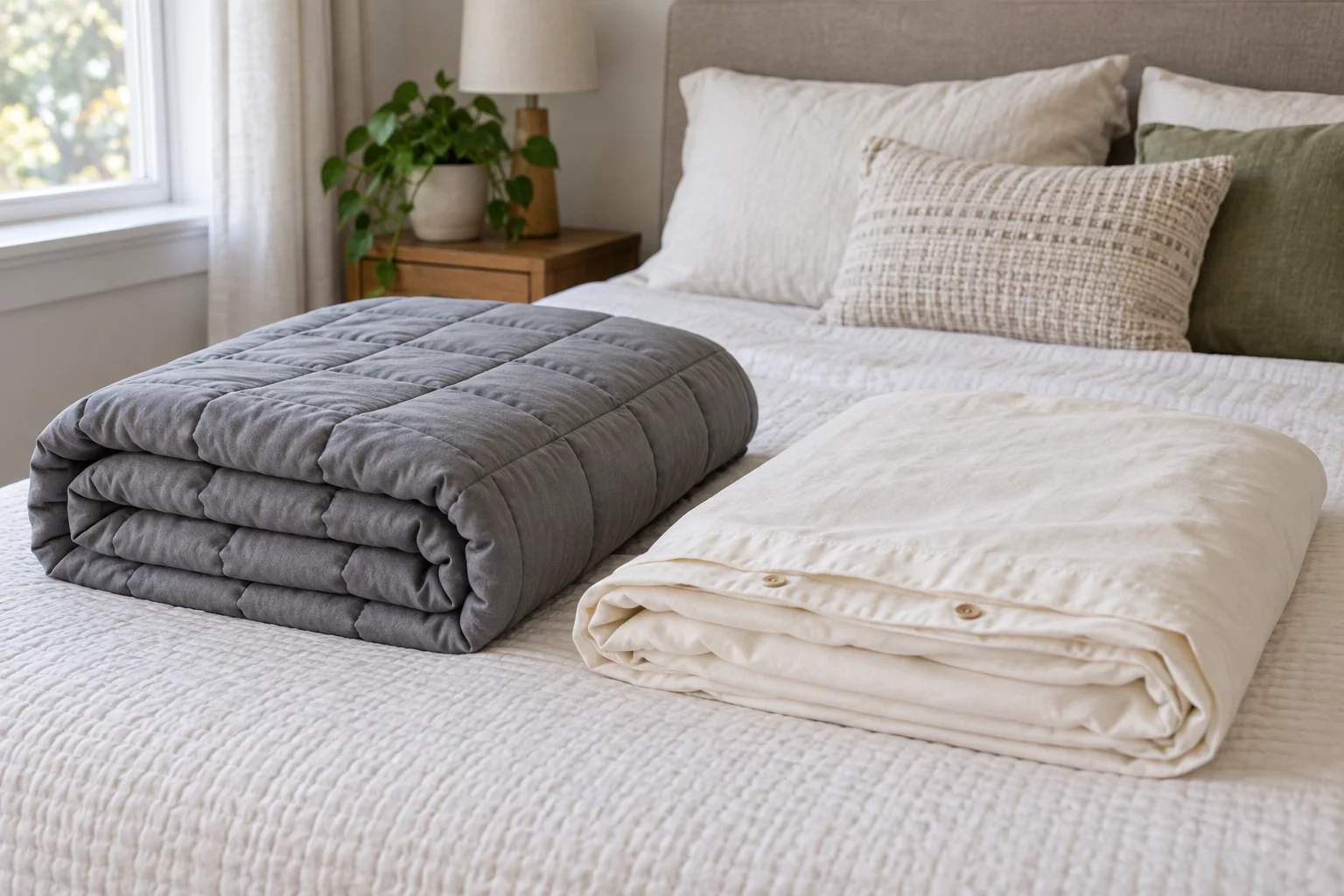
A weighted blanket’s outer cover and weighted inner can have different care instructions. Read and record the rule for each component before washing either one. A removable cover does not make the insert machine washable, and a washable insert does not automatically permit the same drying method as its cover.
This worksheet concerns non-electric weighted blankets with separately identified components. A heated or powered blanket needs its own appliance instructions; do not transfer the process below to electrical parts. The aim here is to organize existing care information, not invent a universal washing recipe.
Identify the components before separating them
Find the model, size and version from the purchase record and labels. Check whether the product actually has a removable duvet-style cover or a permanently assembled outer layer. A visible zipper may serve a particular function and is not, by itself, permission to open the item.
If removal is permitted, photograph the normal arrangement and the attachment points before following the instructions. Keep the cover and insert labels distinct in your photographs. Record whether a label belongs to the complete product, the cover or the weighted inner; an unlabeled cropped photograph can be confusing later.
Read a product example with its limits intact
Gravity’s Cooling Weighted Blanket information distinguishes machine care for its cover from hand washing and air drying for the weighted inner. The important lesson is that the two components have different rules. Those directions do not establish the correct procedure for another blanket or a different product version.
Use the instructions supplied with your exact item and resolve any conflict with the manufacturer before proceeding. A current webpage may describe a changed product. Keep the original label photograph and ask a question that identifies the discrepancy instead of choosing whichever instruction is easier.
| Field | Outer cover | Weighted inner |
|---|---|---|
| Identity | Fabric, model and label | Model, size and weight marking |
| Removal | Permitted opening and attachments | Handling instructions |
| Washing | Exact allowed method | Exact allowed method or prohibition |
| Products | Permitted and excluded agents | Separate permissions and exclusions |
| Drying | Method and relevant limits | Method and support requirements |
| Unknowns | Question for maker | Question for maker |
Check practical handling before starting
Read all the way through drying and reassembly before wetting anything. It is unhelpful to begin a permitted washing step and discover afterward that you cannot safely move or support the item. Ask the manufacturer or an appropriate laundry provider about a practical route if the handling instructions exceed what you can manage.
Where machine washing is expressly allowed, the appliance also needs to permit that load and textile type. A blanket fitting through the door does not answer the capacity or program question. Do not treat a larger commercial machine as automatic approval for an insert labeled hand-wash-only.
Keep the record free of universal temperature, detergent and drying-time values. These belong to the specific labels. The worksheet is useful precisely because it leaves two separate instruction sets visible rather than merging them into one convenient cycle.
Example: only the cover needs routine care
Imagine a fictional blanket whose cover label permits a particular machine cycle while its inner requires a different method. The cover has a small mark, and the insert appears unaffected. The owner first checks the permitted stain-care instruction for the cover rather than washing the entire assembled blanket.
After removing the cover as directed, the owner keeps the insert in its approved dry storage position and follows only the cover’s care instructions. If the mark also reached the inner, that becomes a separate task governed by its own label. The cover’s successful wash is not evidence that the weighted component would tolerate the same treatment.
Suppose the insert’s label is missing. The owner records the model and contacts the maker before cleaning it. Choosing the gentlest-looking machine setting would still be a guess; “delicate” is a program name, not permission from the blanket manufacturer.
Record damage separately from dirt
Inspect the visible condition without opening sealed compartments. Loose seams, escaping filling or an attachment that no longer works should be reported before proceeding. Washing is not a repair for a compromised inner, and this guide does not recommend restitching weighted compartments at home.
Provide photographs and the product identity when asking for help. Describe what you can see, such as an open seam, rather than assuming the cause. Keep cleaning attempts and products already used in the record so the maker can give relevant advice.
Reassemble only when the instructions are satisfied
Follow the specified drying and refitting directions for each layer. Reconnect only the designated attachment points and preserve the intended orientation. If the cover no longer fits normally, stop rather than pulling hard on ties or forcing a zipper around a damp or distorted assembly.
Store the completed two-column care sheet with the labels. Anyone handling the blanket later should be able to identify which instructions apply to which part. That separation is the main protection against turning a simple cover-cleaning task into an unsuitable treatment of the weighted inner.