Key takeaways
- Track outdoor cushion cover, lining and filling separately before drying and storage. Use a component record instead of a generic fabric-care rule.
An outdoor cushion’s cover and filling can have different washing and drying instructions. Before cleaning or storing it, make a record for each component and for the complete cushion. A removable cover does not mean the foam can be washed, and a dry-feeling outer surface does not establish that every inner layer is ready for closed storage.
Identify which instructions belong to which layer
Start with the full cushion model and the cover or filling option. Photograph accessible labels and note whether the owner instructions permit removing the cover. Do not cut a lining or open a service-only compartment to inspect hidden material.
Make separate entries for the outer cover, any padded liner and the main insert. The filling may be foam, fiber or a combination; do not infer its construction from thickness or firmness. Keep “unknown” on the record until the maker supplies an answer.
IKEA Canada’s patio-cushion care guide gives different instructions for named covers, pads and inner cushions. For example, it lists DUVHOLMEN inners as not washable or tumble-dryable, while some listed covers have separate washing and drying permissions. It also calls for cushions to be completely dry before enclosed storage. Those are collection-specific instructions, not one recipe for every patio cushion.
Separate routine cover cleaning from a soaked insert
If only an approved removable cover needs cleaning, plan how to keep the insert protected while following the cover’s instructions. Removing a cover should not automatically expand the job into washing every component. Keep the original labels and orientation notes with their matching pieces.
If rain or a spill has already reached the insert, the question changes. Ask the furniture maker for its wet-cushion drying procedure and how to judge readiness for reassembly or storage. Do not borrow a tumble-dry instruction from the cover label and apply it to the foam.
Likewise, a fabric brand’s water-resistance claim does not describe the entire cushion’s internal drainage. The shell, seams, backing and filling form a system. A replacement cover or insert can change that system, so use the care information for the current combination.
| Component | Known condition | Applicable instruction | Ready status |
|---|---|---|---|
| Outer cover | Dry, damp or cleaned as approved | Named drying method and restrictions | Confirmed or unresolved |
| Padded lining | Separate layer or construction unknown | Whether removal and drying access are allowed | Confirmed or unresolved |
| Main insert | Known exposure to rain or cleaning water | Maker’s instructions for this filling | Confirmed or unresolved |
| Complete cushion | Reassembled or still separate | Whole-item check before use/storage | Confirmed or unresolved |
| Storage place | Clean bag, box or indoor location | Product’s storage conditions | Prepared or unresolved |
Illustrative example: one layer finishes first
Imagine a cushion with an owner-removable cover and a foam insert. After a rain event, the owner follows the maker’s approved access and drying instructions. Later, the cover appears dry while the insert’s status remains uncertain. The worksheet therefore has one confirmed row and one unresolved row.
Putting the pieces together and closing a storage bag would not resolve that uncertainty. The owner continues the approved procedure or asks the maker how to assess the insert. A planned storage deadline does not override the whole-cushion requirement.
This fictional example supplies no drying time, temperature or moisture threshold. Those details depend on the product and conditions. It illustrates a decision rule: completing the easiest-to-observe layer does not automatically complete the whole job.
Prepare the drying space before starting
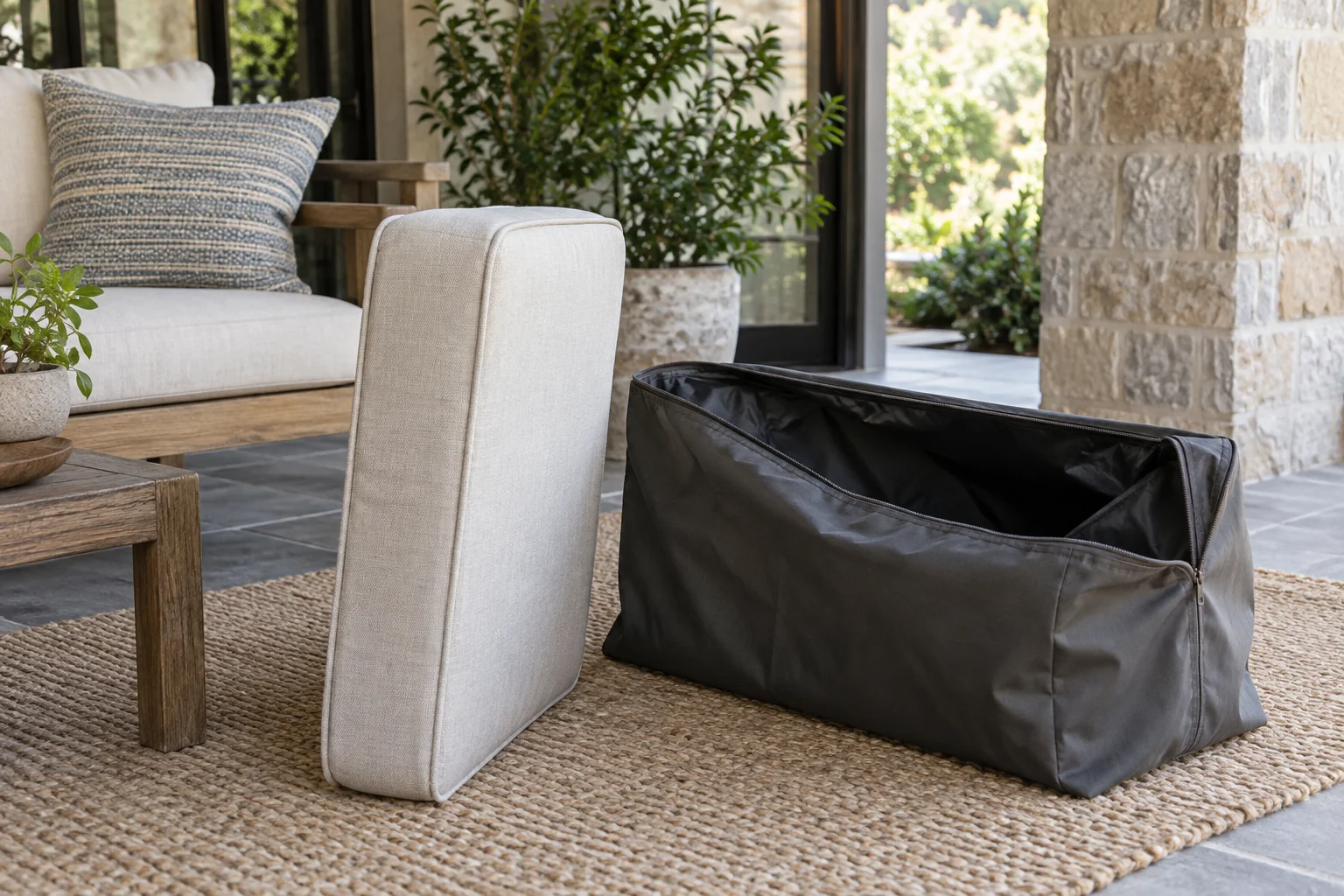
Read the required positioning and environmental conditions before cleaning. Check that the space can hold the permitted components without blocking household access or exposing them to more rain. Use only the support and orientation the maker allows; the illustration is not an instruction for your cushion.
Keep covers and inserts identifiable when several cushions are being cleaned. A simple location note such as “left seat” avoids forcing a similar-looking insert into the wrong casing. Do not attach an adhesive label directly to upholstery unless approved; keep a separate map instead.
Do not speed up the process with an improvised heater, high dryer setting or unapproved wringing. If the documented method is not practical in the available space or weather, postpone the optional cleaning or ask for another approved arrangement.
Check storage readiness and the container separately
A storage bag described as weather-resistant does not dry its contents. Confirm the cushion’s required dry condition before closing it away, then check that the bag or box itself is clean and suitable for the maker’s storage instructions. Damp packing materials should not be overlooked.
Record when the cushion was exposed, what was cleaned and which instructions were followed. If an odor, discoloration or unresolved damp area remains, contact the maker rather than masking it with fragrance or repeatedly wetting the cushion. Those observations may require an assessment beyond routine drying.
Keep the record for the next season
Save the cover and insert identifiers with their separate instructions. Update the record if either part is replaced. A new cover’s care label does not automatically revise the old foam’s restrictions, and the old care routine may not apply to a replacement insert.
The useful outcome is a complete cushion ready for its documented storage conditions, with each layer accounted for. Treating the cover and filling as separate care decisions makes that outcome clearer than relying on a generic “outdoor fabric” label.