Our Top Picks
 Tribesigns Two Person Desk with Monitor StandLarge27.56 x 78.74 x 35.83 inches83.77 poundsCheck on Amazon
 Tribesigns 79" Extra Long Desk78.74" L X 27.6" W X 29.53" H27.6 x 78.8 x 29.53 inches78 poundsCheck on Amazon
A study table for 2 people needs to be at least 60 inches wide and 24 inches deep for two laptops side by side, and 72–80 inches wide if both people use a monitor or spread out books and notebooks. The layout you choose (side by side, facing each other, or an L-shaped corner) changes how much room you need more than the table itself, so start with the floor plan and the users’ ages, then pick the table.
How Much Space Each Person Really Needs
Workspace planners usually allow about 30 inches of width per person as a bare minimum and 36–40 inches as a comfortable amount. Elbows, a mouse, and an open textbook all spread sideways, so cramped tables cause more bumping and distraction than you might expect.
Tribesigns Two Person Desk with Monitor Stand, 78.74" Long Double Computer Office Desk with Storage Shelves, Large Gaming Study Writing Table Workstation for Home Office (Rustic Brown)
Chosen because it specifies 78.74" Long Double Computer Office Desk with Storage Shelves.
View on Amazon
Tribesigns Two Person Desk with Bookshelf, 78.7 Computer Office Double Desk for Two Person, Rustic Writing Desk Workstation with Shelf for Home Office (Brown)
Chosen because it specifies 78.7 Computer Office Double Desk for Two Person.
View on Amazon
Tribesigns Two Person Desk, 79 Inch Double Desk with 2 Drawers, Large Computer Desk Long Desks with Storage Shelves, Writing Table Study Desk for Home Office, Rustic Brown (NY001)
Chosen because it specifies 79 Inch Double Desk with 2 Drawers and Large Computer Desk Long Desks with Storage Shelves.
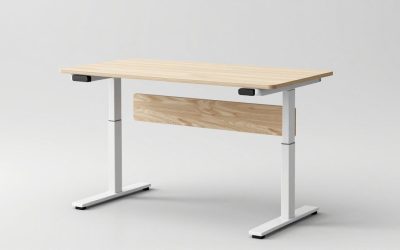
View on AmazonTribesigns 79" Extra Long Desk, Two Person Double Desk for Home Office, Oak
Chosen because it specifies Two Person Double Desk for Home Office and Oak.
View on Amazon| Use case | Width per person | Total width (side by side) | Depth |
|---|---|---|---|
| Two laptops, light reading | 30 in | 60 in | 24 in |
| Laptop plus notebooks and textbooks | 36 in | 72 in | 24–28 in |
| Each person has an external monitor | 36–40 in | 72–80 in | 28–30 in |
| Art, drafting, model building | 40–48 in | 80–96 in | 30 in |
Depth matters for screens: with a monitor, aim for 20–30 inches between eyes and screen, which a 24-inch-deep table only manages if the monitor sits at the very back edge. A 28–30 inch depth is easier when two people share a table with monitors.
Four Layouts and Where Each Fits
1. Side by side along one wall
The most space-efficient layout and the easiest for small bedrooms. Needs a wall of 6–7 feet plus about 36 inches of clearance behind the chairs so both people can stand up and push back. Downside: shared elbow line and easy distraction. A small divider shelf or a center storage tower between seats helps.
2. Face to face (back-to-back with the room)
Two people sit opposite each other at a table 48–60 inches wide and 48 inches deep or more. Good for siblings who need to be supervised, or for couples who want to talk while working. It takes the most floor: about 10 x 7 feet including chair clearance on both sides. Screens block eye contact, so it suits paper-based study best.
3. L-shaped corner
Each person gets their own leg of the L, and they sit at roughly 90 degrees with their backs partly turned. This is often the best compromise for focus. A corner table with two 60-inch legs fits a room of 10×10 feet and leaves the center of the room open.
4. Two separate desks pushed together
Two matching 36–48 inch desks give the most flexibility: different heights for different ages, and you can separate them later when kids get their own rooms. Make sure the two tops are within 1/8 inch in height, or use felt pads and a connecting bracket to stop drift.
Room Fit Cheat Sheet
| Room size | Best layout | Table size | Clear floor left |
|---|---|---|---|
| 9 x 10 ft bedroom with beds | Side by side on one wall | 60 x 24 in | 36 in behind chairs |
| 10 x 12 ft shared room | Side by side or L-shaped | 72 x 24–28 in, or 60 + 60 in L | 36–42 in walkway |
| 12 x 12 ft study or den | L-shaped or two desks | 2 x 48 in desks or large L | Room for a bookcase |
| Open living area | Face to face | 60 x 48 in or larger | 36 in on each seated side |
Getting Heights Right for Two Different People
The standard 29–30 inch desk height is designed for adults about 5’8″ to 6’0″. When two users differ in height, especially a child and a teenager, one fixed height will not suit both. The rough guide below assumes a chair that lets feet rest flat.
| User height | Ideal desk height | Ideal seat height |
|---|---|---|
| 3’9″–4’3″ (about ages 6–8) | 21–23 in | 13–14 in |
| 4’3″–4’11” (about ages 8–11) | 23–25 in | 14–16 in |
| 4’11″–5’5″ (teens, shorter adults) | 25–27 in | 16–18 in |
| 5’5″–6’0″ | 27–30 in | 17–20 in |
| Over 6’0″ | 30–32 in | 19–21 in |
If the table is fixed at 29–30 inches, the shorter person can use a height-adjustable chair and a footrest. If both users are children, a dual height-adjustable kids’ desk or two separate adjustable desks will last through more growth spurts than one fixed table.
Features That Matter for Two Users
- Split storage: two sets of drawers or a drawer unit at each end prevents arguments and keeps supplies separate.
- Power: a clamp-on power strip or built-in outlets at the center means one cable to the wall, not two cords across the floor.
- Center leg or support: a single 72-inch top in particleboard can sag when two people lean on it; a center leg or steel crossbar prevents that.
- Legroom: look for at least 24 inches of clear knee space width per seat and no crossbar at shin height.
- Hutch or shelves: a hutch keeps books off the work surface, but check the clearance under it; 16–18 inches is needed for a monitor.
Material Choices and Durability
Shared tables take double the wear: more elbows, more spilled drinks, more pen marks. Laminate over particleboard is common and inexpensive, usually $120–$350 for a 60–72 inch two-person table, and it wipes clean easily, but chipped edges cannot be repaired. Solid wood or plywood with a hardwood veneer typically costs $400–$1,200, handles wear better and can be refinished. Steel-frame tables with a thick engineered top are a middle ground and resist wobble when one person types hard.
Assembly of a 72-inch flat-pack table usually takes 1–2 hours with two people, and the box can weigh 60–90 pounds, so plan help for stairs. Consider whether the top is one piece or two; a one-piece 72-inch top will not fit in some car trunks or around tight stair landings.
Bottom Line
For most two-person homes, a 72 x 24–28 inch table along one wall, with separate drawers at each end and an adjustable chair for the shorter user, gives the best space-to-comfort ratio. Choose an L-shaped corner if focus matters more than sharing, and two separate desks if the users differ greatly in age or height.