Our Top Picks
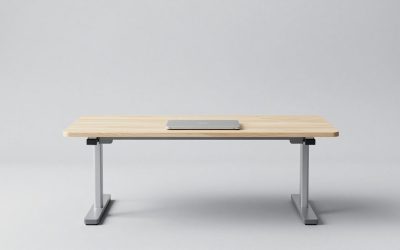
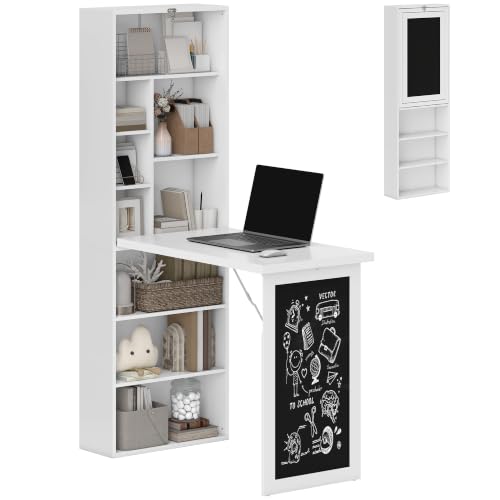 HOMCOM Foldable Desk Wall Mounted Convertible Table for38.5"x20"x60.25"20 x 38.5 x 37 inches46 PoundsCheck on Amazon
A wall mounted study table with storage should be anchored into at least two studs (or proper masonry anchors), set with its work surface 28 to 30 inches off the floor for adults, and kept to about 20 inches of depth or less so it does not become a head-height hazard when folded or a shin-catcher when open. The storage part, whether a shelf above or a cabinet behind a fold-down flap, is what decides how much weight the wall actually has to carry, so plan the mounting around the fully loaded unit, not the empty one.
This guide covers the three main designs, the mounting numbers that matter, and which type suits a small bedroom, a rental or a corner.

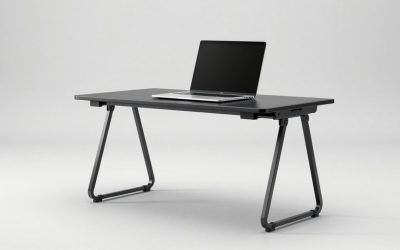
Haotian SoBuy Wall Mounted Folding Table Home Office Workstation Computer Desk with Storage Shelves Trestle Desk, Black FWT18-SCH
Chosen because it specifies Black FWT18-SCH.
View on AmazonHOMCOM Foldable Desk Wall Mounted Convertible Table for Small Spaces, White
Chosen because it specifies White.
View on Amazon
Armocity Small Folding Desk with Outlets, Fold-Out Murphy Desk Craft Table
Chosen because it specifies Fold-Out Murphy Desk Craft Table.
View on Amazon
TEAMIX Wall Mounted Folding Table, Black Floating Desk for Small Spaces
Chosen because it specifies Black Floating Desk for Small Spaces.
View on AmazonThe Three Designs and How They Differ
Fixed floating desk with shelves
A slab or box-shaped desktop screwed to the wall, often with one or two shelves or cubbies above. It stays open permanently, is the sturdiest of the three, and is the easiest to install level. Storage is usually open shelving or a shallow drawer under the top.
Fold-down (drop-leaf) cabinet desk
A shallow cabinet, typically 6 to 10 inches deep when closed, whose front flap folds down to become the writing surface. Inside are cubbies for books, a laptop and stationery. When closed it looks like a wall cabinet or a framed board. This is the classic “wall mounted study table foldable” design and the best choice when the room has to double as something else.
Folding bracket shelf desk
A plain top on spring-loaded or locking folding brackets. It drops flat against the wall when not in use. Storage is usually limited to a separate shelf mounted above. It is the cheapest and lightest option, but with the least storage and the most flex while writing.
Key Numbers Before You Drill
| Measurement | Recommended value | Notes |
|---|---|---|
| Work surface height (adults) | 28–30 in | Measure from finished floor to top of surface |
| Work surface height (ages 7–12) | 23–26 in | Remount higher later if studs allow |
| Desk depth | 16–20 in | Laptop needs about 14 in; writing plus laptop about 20 in |
| Minimum width | 30 in | 36–40 in if you want a lamp and a notebook beside the laptop |
| Shelf above desk | 15–18 in above the surface | Leaves room for a laptop screen and a desk lamp |
| Knee clearance under surface | At least 24 in high, 20 in deep | No under-desk cabinet blocking legs |
| Walkway in front when open | 30–36 in | Space for a chair to pull out |
| Stud spacing (typical US framing) | 16 in on center | Some older or nonstandard walls use 24 in |
Weight capacity varies a lot by bracket and fastener. A fold-down cabinet desk properly screwed into two studs commonly handles 40 to 70 lb on the open flap, enough for a laptop, books and forearms. Folding bracket desks are often rated 50 to 100 lb per pair of brackets, but the rating assumes lag screws into studs. Drywall anchors alone are a poor idea for anything you lean on; a person resting elbows on the front edge creates leverage far beyond the static weight of the items.
Installing It Securely: Step by Step
- Locate the studs. Use a stud finder, then confirm with a small nail or a magnet that finds drywall screws. Mark both edges of each stud.
- Mark the height. Measure up from the floor to the planned work surface height, then subtract the thickness of the top and any bracket offset given in the instructions. Draw a level line.
- Pre-drill. Drill pilot holes into stud centers. For brackets, use the screws supplied only if they are at least 2.5 inches long; otherwise substitute #10 or 1/4 inch structural screws long enough to pass through drywall and bite 1.5 inches or more into wood.
- Hang the cabinet or brackets. Use a level on every fastening. A cabinet that is even 1/8 inch out of level can make a drop-leaf flap close unevenly.
- Test the load. Lean firmly on the front edge before you put anything valuable on it. Any movement at the wall means a fastener missed a stud.
- Masonry and concrete walls. Use sleeve anchors or concrete screws sized for the bracket holes. Brick mortar joints are weaker than the brick itself, so aim into the brick face.
Storage Options Compared
| Storage type | Typical capacity | Pros | Cons |
|---|---|---|---|
| Cubbies inside a fold-down cabinet | 2–6 compartments, 6–8 in deep | Hides clutter completely when closed | Must clear the top before folding up |
| Open shelf above desk | 1–2 shelves, 8–10 in deep | Easy access to books | Visible clutter; dust |
| Shallow drawer under top | 2–3 in interior height | Pens, chargers, papers | Reduces knee height slightly |
| Pegboard or rail above desk | Unlimited small items | Flexible, renter-friendly if light | Not for heavy books |
A fold-down cabinet usually gives the most hidden storage per square foot of wall, but it forces a daily routine: everything left on the work surface must go back into a cubby before the flap closes. If you tend to leave work spread out, a fixed floating desk with a shelf above is the more realistic choice.
Which Design Fits Your Situation
| Situation | Best design | Reason |
|---|---|---|
| Kid’s bedroom that also needs play floor space | Fold-down cabinet desk at 24–26 in | Closes flat, hides supplies, remount higher later |
| Studio apartment or guest room | Fold-down cabinet desk | Looks like decor when closed |
| Renter who can only make a few holes | Folding bracket desk on two studs | Four to six screw holes, easy to patch |
| Daily all-day work | Fixed floating desk 36–48 in wide | Most rigid; no hinges to wear |
| Awkward corner | Corner floating desk with corner shelf above | Uses two walls for support and more surface |
| Hallway nook | Folding bracket desk 30 in wide, 14–16 in deep | Folds out of the walkway |
A note on corner units
A corner study table with storage mounted on two walls is noticeably sturdier than a single-wall unit of the same size, because both walls share the load. Triangular or quarter-round corner desks waste less of the corner but offer limited legroom; a rectangular desk on one wall with a return shelf on the other gives more usable surface.
Hinges, Stays and What Wears Out
On fold-down desks the weak points are the flap hinges and the support stays. Piano hinges along the full width spread the load better than two small butt hinges. Stays (the folding arms or chains that hold the flap level) should be metal, not cord. Soft-close or friction stays stop the flap slamming down onto a child’s fingers or knees. Check screws in the hinges every few months; they loosen as the flap is opened and closed hundreds of times a year.
Folding bracket desks wear at the release lever. Spring-release brackets can drop unexpectedly if the lever is bumped, so choose a design with a positive lock if children will use it.
Materials and Price Ranges
- Laminate or melamine over particleboard: usually $60–$180. Light and cheap, but screw holes for hinges strip if overloaded.
- Plywood or solid wood: usually $150–$450. Holds hinge screws far better and can be refinished.
- Steel brackets with wood top: usually $50–$150. Very strong when screwed into studs; storage must be added separately.
For a desk used every day by a teenager or an adult, plywood or solid wood is worth the extra money purely because of how it holds fasteners over time.
Common Mistakes to Avoid
- Mounting at counter height (36 in) because it “looks right” on the wall; it is too high to sit at.
- Choosing a 24-inch-deep top; at that depth a fold-down flap sticks far into the room and the cabinet becomes top-heavy.
- Ignoring outlets; plan a power strip or route the laptop charger before mounting, because moving the desk later means new holes.
- Putting the desk where the open flap blocks a door swing.