Key takeaways
- USB-C describes the connector shape, not the speed. A USB-C port may support 5Gbps, 10Gbps, 20Gbps, Thunderbolt, or USB4.
- USB 3.2 Gen 2 drives are the most broadly useful high-speed option for mixed computers.
- USB 3.2 Gen 2×2 drives need a 20Gbps host port to reach their advertised performance.
- Thunderbolt and USB4 compatibility can vary by computer and cable, so verify the drive’s specifications rather than assuming every USB-C connection is equivalent.
- A USB-C-to-A cable is useful for older computers, but the host port may limit the drive to 5Gbps or less.
The best portable SSD for most people is the Samsung T7 Shield 2TB: it combines dependable everyday performance, broad USB-C compatibility, IP65 dust and water resistance, hardware AES-256 encryption, and a genuinely portable design without requiring a specialized computer.
Best portable SSDs at a glance
| Drive | Best for | Capacities | Advertised peak speed | Useful advantages | Typical market range |
|---|---|---|---|---|---|
| Samsung T7 Shield | Most buyers and travel | 1TB, 2TB, 4TB | Up to 1,050 MB/s read, 1,000 MB/s write | IP65, password protection, compact rubberized shell | Usually $100–$330 |
| Crucial X9 Pro | Good value and everyday backups | 1TB, 2TB, 4TB | Up to 1,050 MB/s | Small, light, IP55, password protection | Usually $80–$280 |
| Crucial X10 Pro | Fast USB 3.2 Gen 2×2 computers | 1TB, 2TB, 4TB | Up to 2,100 MB/s | Very fast sequential transfers, IP55 | Usually $120–$350 |
| Kingston XS2000 | Maximum pocket portability | 500GB, 1TB, 2TB, 4TB | Up to 2,000 MB/s | Very small, removable rubber sleeve, USB-C | Usually $60–$300 |
| SanDisk Extreme PRO Portable SSD | High-speed creative work | 1TB, 2TB, 4TB, 8TB | Up to 2,000 MB/s | Aluminum core, IP65, hardware encryption on supported models | Usually $120–$700 |
These are manufacturer peak figures. Large, continuous transfers usually come closer to the advertised number than small mixed files, but the host computer, cable, file system, temperature, and remaining free space can change results substantially.
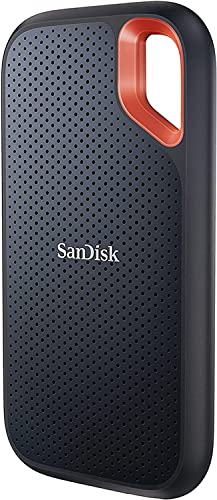
Sandisk 2TB Extreme Portable SSD, Up to 1050MB/s, USB-C, USB 3.2 Gen 2, IP65 Water and Dust Resistance, Updated Firmware, External Solid State Drive, SDSSDE61-2T00-G25
Included for 'Best Portable SSDs for Fast, Reliable Storage' because the listing specifies Up to 1050MB/s and USB-C, details this guide uses to compare options.
View on Amazon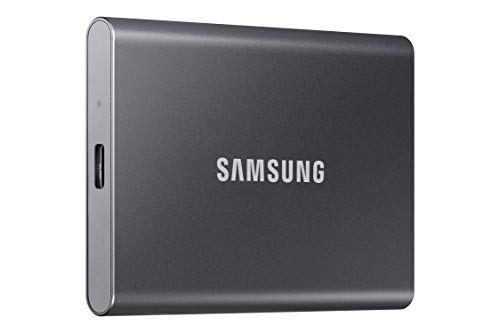
Samsung T7 Portable SSD 1TB Titan Gray, USB 3.2 Gen 2, Up to 1,050MB/s
Included for 'Best Portable SSDs for Fast, Reliable Storage' because the listing specifies USB 3.2 Gen 2 and Up to 1, details this guide uses to compare options.
View on Amazon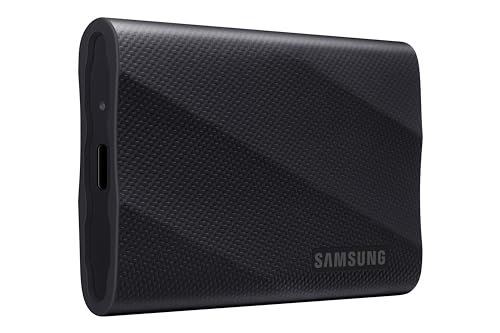
Samsung T9 Portable SSD 2TB, USB 3.2 Gen 2x2 External SSD, Up to 2,000 MB/s
Included for 'Best Portable SSDs for Fast, Reliable Storage' because the listing specifies USB 3.2 Gen 2x2 External SSD and Up to 2, details this guide uses to compare options.
View on Amazon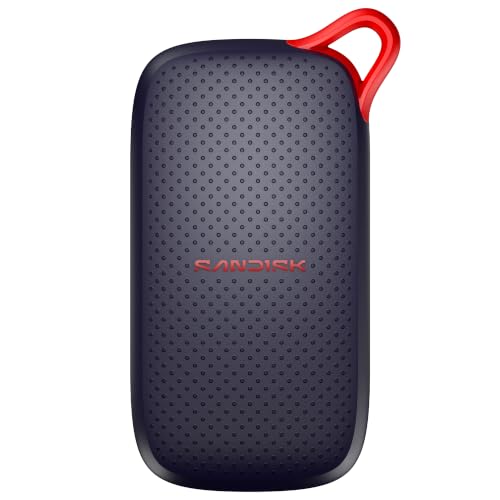
Sandisk 500GB Portable SSD, Up to 1000MB/s Read Speeds, Black (New Model)
Included for 'Best Portable SSDs for Fast, Reliable Storage' because the listing specifies Up to 1000MB/s Read Speeds and Black (New Model), details this guide uses to compare options.
View on AmazonOur picks by situation
| Your situation | Best fit | Why |
|---|---|---|
| Windows laptop with USB-C and USB-A accessories | Samsung T7 Shield | Consistent 10Gbps-class performance and broad cable support |
| MacBook, iPad, or mixed household devices | Samsung T7 Shield or Crucial X9 Pro | They avoid the compatibility penalty of USB 3.2 Gen 2×2 drives |
| Video editing on a USB 3.2 Gen 2×2 PC | Crucial X10 Pro or Kingston XS2000 | They can approach 2,000 MB/s with the correct port and cable |
| Frequent outdoor travel or a crowded work bag | Samsung T7 Shield | Rubber protection, IP65 rating, and a less slippery exterior |
| Smallest possible drive | Kingston XS2000 | It is approximately thumb-sized, though its rubber sleeve is easy to misplace |
| Several terabytes of photos or video | 4TB T7 Shield, X10 Pro, or SanDisk Extreme PRO | More working space without carrying a second drive |
Samsung T7 Shield: the safest all-around choice
The T7 Shield is the best portable SSD for a mixed-device household because it delivers roughly 10Gbps-class performance without relying on the less common USB 3.2 Gen 2×2 standard. In practical terms, a large folder may transfer at around 700–950 MB/s after overhead and cache behavior are taken into account, while many small files can be considerably slower.
Its IP65 rating means protection from dust and water jets, not submersion. The rubberized exterior helps with short drops and prevents the drive from sliding easily off a desk. Samsung includes USB-C-to-C and USB-C-to-A cables, which is useful when moving between a modern laptop and an older desktop. Hardware AES-256 encryption and password protection are available through Samsung’s software, although encryption can complicate access on unfamiliar computers.
Choose 2TB for a photo library, documents, and an active project folder. Choose 4TB if the drive will hold video footage or a large game library. An SSD is not a complete backup: keep another copy somewhere else.
Crucial X9 Pro: value without giving up useful protection
The X9 Pro is a strong choice when the lowest price per terabyte matters more than peak speed. Its advertised 1,050 MB/s performance places it in the same broad class as the T7 Shield, and its compact body is convenient for a laptop sleeve or desk drawer. It also offers IP55 protection and password management through Crucial’s software.
The main compromise is physical feel. It is designed to be portable and durable, but it does not have the same thick, grippy protective exterior as the T7 Shield. It is better for commuting and home backups than for being left loose with tools, camera equipment, or outdoor gear.
Crucial X10 Pro and Kingston XS2000: fast only with the right connection
The X10 Pro and XS2000 can reach approximately 2,000–2,100 MB/s because they use USB 3.2 Gen 2×2. That sounds like a major upgrade, but the computer must also have a 20Gbps USB port. Many Macs, iPads, game consoles, and ordinary USB-C laptops operate at 5Gbps or 10Gbps instead. On those systems, a 2,000 MB/s drive may perform like a slower 10Gbps model.
With a compatible port and sustained workload, the speed advantage is valuable for editing large video files, moving virtual machines, or cloning a nearly full internal drive. For ordinary documents and photographs, the difference is less noticeable because file size, application overhead, and storage organization often dominate.
The XS2000 is exceptionally small, but its removable rubber sleeve can be separated from the drive. The X10 Pro has a more conventional compact design. Both should be connected with their high-speed USB-C cable; a charging-only cable or slower replacement cable can reduce performance or prevent connection.
SanDisk Extreme PRO: a fast creative-work drive
The SanDisk Extreme PRO Portable SSD is aimed at photographers, videographers, and other users who regularly move large files. Its aluminum construction helps conduct heat away from the controller, while the protective exterior and IP65 rating improve resistance to dust and water. Some versions include hardware encryption features, so check the exact model before buying if confidential data is important.
Its 2,000 MB/s class performance has the same USB 3.2 Gen 2×2 compatibility issue as the X10 Pro. It may also become warm during long transfers. That is normal for a small, fast SSD, but avoid covering it with clothing or placing it on a heat-trapping surface during a multi-hour copy.
What to check before buying
Capacity and sustained speed
Usable capacity is lower than the number printed on the box because the operating system uses decimal storage units and the drive reserves space for formatting and management. A 1TB drive is suitable for documents, phone backups, and a modest photo collection. A 2TB drive is the practical starting point for active creative projects. A 4TB model is worthwhile when replacing several smaller drives, but the cost rises sharply.
For a single 100GB video file, a 10Gbps-class SSD might finish in roughly two to three minutes under favorable conditions. A 20Gbps model can reduce that time, but only with matching hardware. Small folders containing thousands of files can take much longer than their total size suggests.
USB compatibility and cables
- USB-C describes the connector shape, not the speed. A USB-C port may support 5Gbps, 10Gbps, 20Gbps, Thunderbolt, or USB4.
- USB 3.2 Gen 2 drives are the most broadly useful high-speed option for mixed computers.
- USB 3.2 Gen 2×2 drives need a 20Gbps host port to reach their advertised performance.
- Thunderbolt and USB4 compatibility can vary by computer and cable, so verify the drive’s specifications rather than assuming every USB-C connection is equivalent.
- A USB-C-to-A cable is useful for older computers, but the host port may limit the drive to 5Gbps or less.
Ruggedness, encryption, and portability
IP ratings protect against dust and water under defined test conditions; they do not make a drive invulnerable to drops, crushing, heat, or lost cables. A rugged enclosure is valuable for travel, but it cannot protect data from accidental deletion or theft. Use password protection or hardware encryption for sensitive files, and keep a second backup disconnected when possible.
Most portable SSDs weigh roughly 40–80 grams and occupy less space than a deck of cards. That makes them easy to carry but also easy to lose. A short tether, labeled cable pouch, and a dedicated pocket can matter more than a small difference in weight.
Bottom line
Buy the Samsung T7 Shield 2TB if you want the least complicated recommendation. Choose the Crucial X9 Pro for value, the Crucial X10 Pro or Kingston XS2000 for a computer with a genuine 20Gbps port, and the SanDisk Extreme PRO when rugged, high-speed creative storage is the priority. Whatever you choose, match the capacity to your working files, confirm the host port and cable, and treat the portable SSD as fast storage—not as your only copy.