Key takeaways
- Height listed only as “standard.” Standard covers a 4-inch spread. Get the exact number.
- A table more than 2 inches taller than your compressed seat height unless it is a lift-top you plan to use closed most of the time.
- Lift-top tables with no load rating on the raised top. A laptop and a dinner plate together can exceed 15 pounds.
- C-tables under 8 pounds. They tip with a full mug at the far edge.
- Glass tops under 8 millimeters (about 0.3 inch) without a tempered rating.
- Legs screwed directly into particleboard with no metal plate. They loosen within a year.
- Behind-sofa consoles taller than your sofa back. Measure the back; a 32-inch table shows above a 30-inch back.
Coffee table height is the spec most people never check and most often regret. The three usual mistakes: buying a table that is 3 or 4 inches taller than the sofa seat so it looms over your knees, buying a low-slung 12-inch table for a standard 18-inch sofa so you have to bend double to reach a mug, and forgetting that sofa cushions compress 1 to 2 inches, which changes the relationship after the first month. A fourth mistake is assuming height is fixed. Lift-top tables, adjustable C-tables, and behind-sofa consoles each change the math, and knowing which one your room needs is half the decision.
Decide These 3 Things First
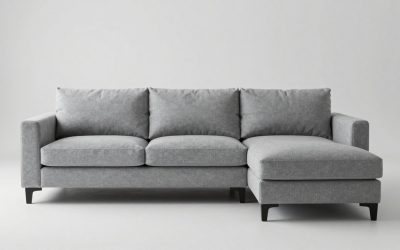
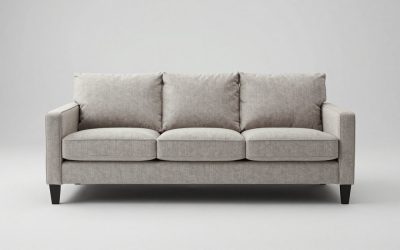
1. Your sofa’s real seat height. Sit down, then measure from the floor to the top of the compressed cushion at the front edge. Most sofas land between 17 and 19 inches; deep lounge sofas can drop to 15 or 16, and firm mid-century designs can reach 20. The number printed in the sofa listing is uncompressed and usually 1 to 2 inches high.
Our top picks


As an Amazon Associate we earn from qualifying purchases at no extra cost to you.
2. What the table is for. A table used mostly for drinks, remotes, and books should sit level with or 1 to 2 inches below the seat, at 16 to 18 inches for a standard sofa. A table you eat at or work at from the sofa can run 1 to 2 inches above the seat, or you can buy a lift-top that rises 6 to 8 inches on demand. A purely decorative table can go lower, at 12 to 15 inches, to open up sight lines.
3. The layout. If the sofa floats and you want a surface behind it, a behind-couch console at 28 to 32 inches tall replaces or supplements the coffee table. If the room is too tight for a coffee table at all, C-shaped side tables at 22 to 30 inches slide under the sofa arm and put a surface at elbow height instead.
Height Rules by Table Type
Standard coffee tables are 16 to 18 inches tall, and that range matches the majority of sofas. The working rule is table height equals seat height minus 0 to 2 inches. For a 17-inch seat, buy a 15-to-17-inch table; for a 19-inch seat, buy a 17-to-19-inch table.
Lift-top tables sit at 17 to 19 inches closed and rise to 24 to 27 inches open. The LYNCOHOME 43.3-inch fluted lift-top oval table, around $160, is typical of the category: closed, it reads as a regular coffee table; open, the top tilts toward the sofa to become a laptop or dinner surface. Lift-tops need the full 18 inches of clearance from the seat edge because the top swings toward you as it rises.
C-shaped side tables are adjustable by design. The VASAGLE adjustable C side table, about $34, and the Kitstorack adjustable C-shaped end table with a thickened metal frame, roughly $30, both slide their base under the sofa and let you set the top somewhere between roughly 22 and 30 inches, which puts a plate or laptop at lap height. They replace a coffee table entirely in small rooms.
Behind-sofa consoles run 28 to 32 inches tall so they hide just below the sofa back. The Huuger 102.4-inch sofa table with power outlets, around $80, is built for this: it sits 1 to 3 inches under a typical 32-to-34-inch sofa back and puts lamps and chargers behind the seating, which lets the coffee table in front be lower and lighter.
Length and Depth Relative to the Sofa
Height is only right if the footprint is right too. Length should be roughly two-thirds of the sofa length: 54 to 60 inches for an 84-inch sofa, 40 to 48 inches for a 66-inch loveseat. Depth should be 18 to 24 inches for rectangular tables so the far edge is reachable from the seat. Round tables of 30 to 40 inches in diameter are the exception; their center is unreachable, but their edges are close all the way around.
Keep the front edge 14 to 18 inches from the sofa seat edge. A taller table needs the longer end of that range because knees ride higher relative to it; a lower table can sit closer.
Material and Weight
Material changes how a given height reads. A 17-inch table with a 1.5-inch-thick solid oak top and chunky legs looks taller and heavier than a 17-inch glass-and-steel table with a 0.4-inch top. In small rooms, choose thin tops, open bases, or glass to keep a correctly sized table from feeling bulky.
Weight is a practical tell. Engineered wood tables with laminate or veneer weigh 30 to 60 pounds and cost $80 to $200. Solid wood tables weigh 60 to 120 pounds and cost $250 to $800. Stone-topped tables can exceed 150 pounds. Heavier tables stay put when you push a plate across them; lighter ones scoot on hard floors unless they have rubber feet.
Construction and Stability
Any table you might lean on or put your feet on should not rack. Look for leg attachments that use metal plates and bolts rather than screws driven into particleboard. A lower stretcher or shelf adds rigidity and storage at the cost of legroom. Lift-top mechanisms should be steel with a gas or spring assist and a rated load of at least 20 to 30 pounds on the raised top; cheaper mechanisms bind or slam.
For adjustable C-tables, the frame gauge matters more than height range. A base tube of 1 inch or larger and a total table weight of 12 pounds or more indicates a frame that will not tip when a full plate sits at the far edge. Under 8 pounds, expect wobble.
Comfort in Daily Use
Test the height with the tasks you actually do. Setting down a drink is comfortable when the table is 0 to 2 inches below the seat. Putting feet up is comfortable at seat height or up to 2 inches above. Eating from a plate works at 2 inches above the seat or higher, which is why lift-tops and C-tables exist. Watching TV is unaffected as long as the table top stays below 20 inches, so it does not enter the sight line to a screen mounted at a standard 42-inch center height.
Price Tiers
Under $100 buys engineered wood or metal-and-wood tables in fixed heights of 16 to 18 inches, plus adjustable C-tables at $30 to $40. Expect one-year warranties and 20 to 40 minutes of assembly. From $150 to $300 you get lift-top mechanisms, solid wood tops on engineered bases, and better hardware; assembly is similar, warranties stretch to two or three years. Above $400, tables are typically solid hardwood or stone, ship assembled or nearly so, weigh 80 pounds or more, and often carry five-year or lifetime frame warranties. Custom heights are only common in this tier.
Delivery and Assembly
Most tables under $200 arrive flat-packed in one box of 40 to 70 pounds. Legs attach with four to eight bolts; lift-top mechanisms come pre-mounted. Budget 30 to 60 minutes and a second person to flip a table longer than 44 inches. Solid wood and stone tables often ship via freight with curbside delivery, so measure your doorway (a 40-inch-wide table needs a 32-inch clear opening turned on edge) and ask whether in-home placement is available.
Spec Checklist
| Spec | Budget (under $100) | Mid ($150 to $300) | Premium ($400 and up) |
|---|---|---|---|
| Height range | Fixed 16 to 18 in; C-tables adjust 22 to 30 in | Fixed 16 to 19 in, or lift-top 18 to 27 in | Fixed or custom 14 to 20 in |
| Top material | Laminate or veneer over MDF | Solid wood top or thick veneer | Solid hardwood, stone, or tempered glass |
| Top thickness | 0.6 to 0.75 in | 0.75 to 1.25 in | 1.25 to 2 in |
| Leg attachment | Screws into board | Metal plates and bolts | Mortise-and-tenon or steel brackets |
| Table weight | 12 to 40 lb | 40 to 80 lb | 80 to 150 lb or more |
| Load rating (top) | 50 to 100 lb | 100 to 200 lb | 200 lb or more |
| Lift mechanism | Rare; basic spring if present | Steel with gas assist, 20 to 30 lb raised load | Heavy steel, soft-close, 40 lb or more |
| Warranty | 1 year | 2 to 3 years | 5 years to lifetime on frame |
| Assembly | 30 to 60 min | 20 to 45 min | None or legs only |
Red Flags
- Height listed only as “standard.” Standard covers a 4-inch spread. Get the exact number.
- A table more than 2 inches taller than your compressed seat height unless it is a lift-top you plan to use closed most of the time.
- Lift-top tables with no load rating on the raised top. A laptop and a dinner plate together can exceed 15 pounds.
- C-tables under 8 pounds. They tip with a full mug at the far edge.
- Glass tops under 8 millimeters (about 0.3 inch) without a tempered rating.
- Legs screwed directly into particleboard with no metal plate. They loosen within a year.
- Behind-sofa consoles taller than your sofa back. Measure the back; a 32-inch table shows above a 30-inch back.
FAQ
Should a coffee table be higher or lower than the sofa?
Level with or 1 to 2 inches lower for everyday use. A table 16 to 18 inches tall suits a sofa with a 17-to-19-inch compressed seat. Go higher only if you eat or work at the table regularly, and in that case a lift-top gives you both heights.
What height coffee table for a low sofa?
Low-profile sofas with 15-to-16-inch seats pair with tables 13 to 16 inches tall. Many mid-century and Japanese-inspired designs fall here. If you cannot find one low enough, a round tray table or a pair of nesting tables at 14 inches solves it.
Do lift-top coffee tables work with deep sofas?
Yes, but leave 18 to 20 inches between the seat edge and the table so the rising top clears your knees. On deep sofas people sit forward to eat, which brings knees closer to the table. A raised height of 25 to 27 inches works for most adults on a 17-to-19-inch seat.
Is an adjustable C-table a real substitute for a coffee table?
In rooms under about 130 square feet, often yes. A C-table puts a surface at 22 to 30 inches right at the sofa arm, which is better for laptops and plates than any coffee table. What you lose is a shared surface in the middle of the room and a place for feet. In 2026 many small-space layouts pair one C-table with a small round drink table and skip the coffee table entirely.