
Key takeaways
- Age Range Description: Adult
- Mount Type: Doorway Mount
- Item Dimensions W x H: 37"W x 20.2"H
The pull-up is the rare exercise that resists cheating. You either move your chin above the bar or you don’t, and no amount of momentum-hiding or partial reps fools the tape measure on your back. The bar itself, though, is where most home setups quietly fail. A bar that creaks, flexes, or shifts a quarter inch under load changes how you train — you stop hanging with intent and start bracing against the hardware. I’ve hung on rigs bolted into 2×8 joists that felt like a subway rail, and on doorway bars that wobbled enough to make kipping feel reckless.
What follows is a practical breakdown of the main categories — ceiling and wall mounts, doorway bars, and freestanding towers — plus the specific models that hold up in each. The right pick depends far less on brand than on three things: what your walls are made of, how much headroom you have above the bar, and whether you plan to do dead-hang reps only or add weight, muscle-ups, and toes-to-bar. Get those three right and the bar becomes invisible, which is exactly the point.
Our top picks
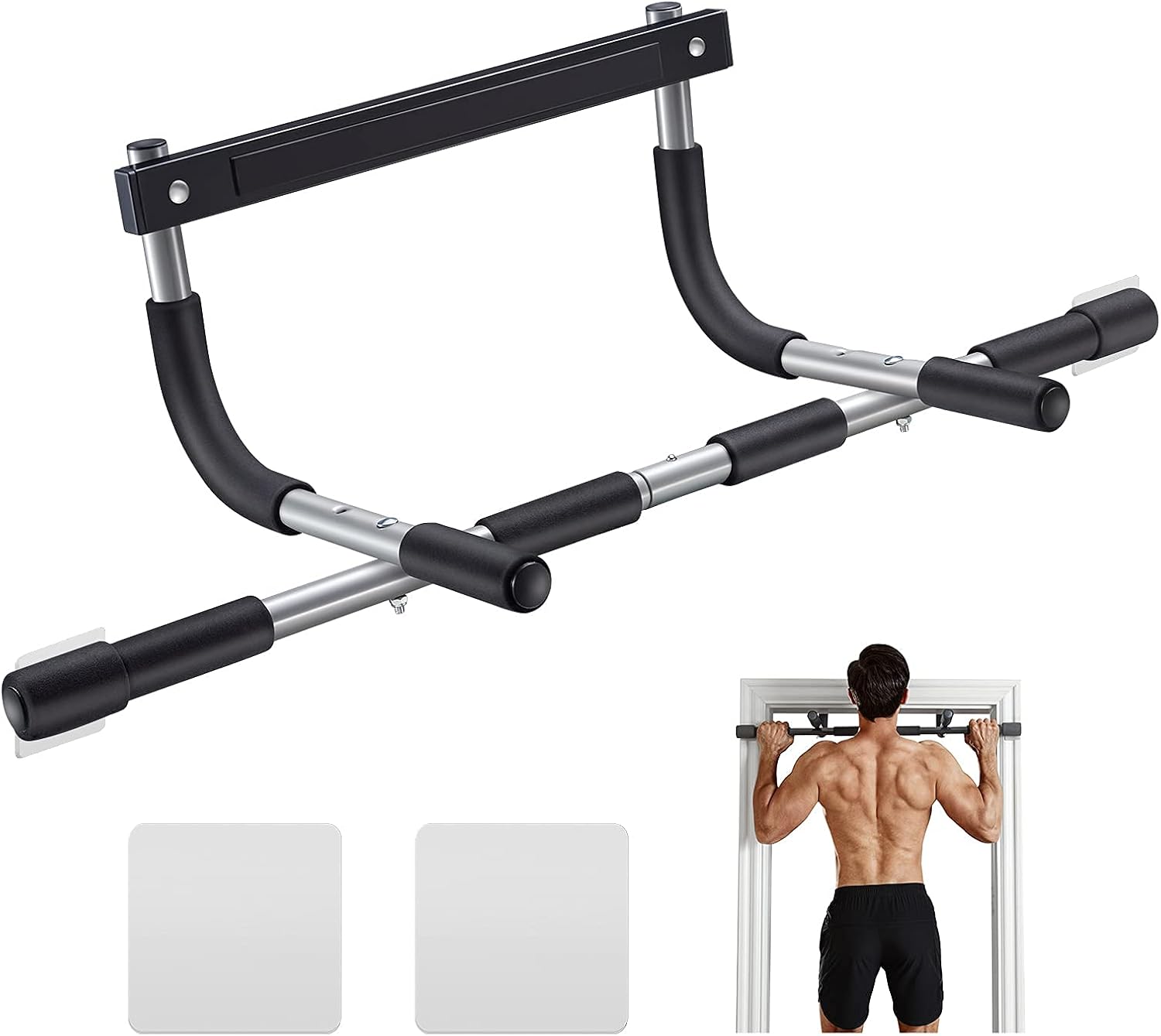 Ally Peaks Pull Up Bar for Doorway
- Age Range Description: Adult
- Mount Type: Doorway Mount
- Item Dimensions W x H: 37"W x 20.2"H
 Pooboo Power Tower Dip Station Pull Up
- Maximum Weight Recommendation: 450 Pounds
- Warranty Type: Manufacturer
- Material: Alloy Steel
 CAP Barbell Power Racks and Attachments
- Item Package Dimensions L x W x H: 47 x 12 x 6 inches
- Package Weight: 29.94 Kilograms
- Item Dimensions LxWxH: 45.67 x 50.79 x 85.43 inches
| Product | Key specs | |
|---|---|---|
| Ally Peaks Pull Up Bar for Doorway | Age Range Description: Adult Mount Type: Doorway Mount Item Dimensions W x H: 37"W x 20.2"H | Check price |
| Pooboo Power Tower Dip Station Pull Up | Maximum Weight Recommendation: 450 Pounds Warranty Type: Manufacturer Material: Alloy Steel | Check price |
| CAP Barbell Power Racks and Attachments | Item Package Dimensions L x W x H: 47 x 12 x 6 inches Package Weight: 29.94 Kilograms Item Dimensions LxWxH: 45.67 x 50.79 x 85.43 inches | Check price |
 Sunny Health & Fitness Power Tower Dip Sunny Health & Fitness Power Tower Dip | Maximum Weight Recommendation: 330 Pounds Warranty Type: Manufacturer Material: Alloy Steel | Check price |
 Mikolo Smith Machine with Weight Stack Mikolo Smith Machine with Weight Stack | Warranty Description: 2 Year Tension Supported: 264 lbs Strap Type: Cable/Pulley straps | Check price |
 pooboo Multi-Functional Machine Power Cage pooboo Multi-Functional Machine Power Cage | Warranty Description: 2 Year Warranty Time Material Type: Alloy Steel, Plastic Tension Supported: 2000 pounds | Check price |
 48'' Joist Mounted Pull Up Bar with 48'' Joist Mounted Pull Up Bar with | Age Range Description: Adult Mount Type: Wall Mount Material: Alloy Steel | Check price |
 Sportsroyals Power Tower Pull Up Bar Station Sportsroyals Power Tower Pull Up Bar Station | Warranty Description: 2-Year Warranty Maximum Weight Recommendation: 360 Pounds Warranty Type: No Warranty | Check price |
As an Amazon Associate we earn from qualifying purchases at no extra cost to you.
As an Amazon Associate we earn from qualifying purchases.
Quick Comparison
| Model | Type | Grip Options | Approx. Capacity | Best For |
|---|---|---|---|---|
| Rogue Jammer Pull-Up Bar | Wall or ceiling mount | Straight bar, wide span | ~600 lb (into studs/joists) | Weighted reps, kipping, garage gyms |
| Stud Bar Ceiling/Wall Mount | Steel mount, welded | Straight, multiple hand widths | ~600 lb | Low ceilings and permanent installs |
| Ultimate Body Press Wall Mount | Wall mount | Neutral, narrow, wide | ~300 lb | Grip variety without a full rig |
| Perfect Fitness Multi-Gym Pro | Doorway leverage | Angled, wide, neutral | ~300 lb | Renters who need zero holes |
| Iron Gym Total Upper Body | Doorway leverage | Narrow, wide, neutral | ~250 lb | Budget starters and travel setups |
| Sportsroyals Power Tower | Freestanding station | Multi-grip plus dip bars | ~330 lb | Apartments, dips, knee raises |
How to Choose
- Find your structure before you shop. A stud finder and a few test taps tell you more than any spec sheet. Drywall anchors will not hold a swinging adult. Wall mounts need to land on studs; ceiling mounts need joists, and you want lag bolts biting deep into solid wood, not into the edge of a plate.
- Measure headroom, not just wall space. You need roughly 8 to 10 inches above the bar for your hands and head. Ceiling mounts eat that budget fast in an 8-foot basement, which is where low-profile welded designs earn their keep.
- Match capacity to your heaviest future self. Add your bodyweight, a 45 lb vest or dip belt, and the dynamic load of a kip — which can spike well past static numbers. A 300 lb rating is fine for strict reps and thin for anything explosive.
- Check grip diameter and knurl. Around 1.25 inches suits most hands. Thicker bars tax your forearms before your lats, which is great for grip work and frustrating when you’re chasing rep volume. Powder-coated steel beats foam sleeves that spin loose.
- Be honest about permanence. Doorway bars and towers move with you and leave no scars. Bolted mounts feel dramatically better and require you to own the wall, or at least accept patching four holes later.
Top Picks Reviewed
Rogue Jammer Pull-Up Bar — Best Overall
The Jammer is a short list of parts done properly: heavy steel tubing, thick mounting plates, and a bar span wide enough for a genuine wide grip. Mounted into studs or joists it behaves like part of the building — no flex, no ring, no creeping bolts after a month of use. It accepts weight, kipping, and hanging rings without complaint, and the finish holds up in an unheated garage. The tradeoff is installation: this is a two-person job with a drill, lag bolts, and a willingness to commit to one wall permanently.
Stud Bar Ceiling/Wall Mounted Bar — Best for Low Ceilings
Stud Bar’s welded construction keeps the bar close to the mounting surface, which is the whole argument for it. In a finished basement with 7-and-a-half-foot ceilings, that inch or two of saved clearance is the difference between full extension and folded knees. It works ceiling- or wall-mounted, and the multiple hand positions along the straight bar cover chin-ups through wide grip. It’s spartan — no neutral handles, no accessories — but nothing on it can loosen or rattle.
Ultimate Body Press Wall Mounted Bar — Best Multi-Grip Value
This one splits the difference between a bare bar and a rig. You get neutral parallel handles, angled narrow grips, and a wide outer span, so you can rotate hand positions across a session and spare your elbows. Capacity sits well below the heavy-duty options, so treat it as a strict-rep and moderate-vest bar rather than a kipping platform. Installation is straightforward if your studs are on standard 16-inch centers.
Perfect Fitness Multi-Gym Pro — Best No-Drill Option
The leverage design hooks over your door trim and uses your body weight against the frame, so nothing gets drilled. The padded contact points are wide enough to spread load across the molding rather than crushing a single spot, and the neutral grips let you do close-grip and hammer pull-ups. It also flips onto the floor for push-ups and dips off the handles. Inspect your trim before trusting it — thin or hollow molding is the real failure point, not the bar.
Iron Gym Total Upper Body Workout Bar — Best Budget
The one that lives in a lot of college apartments, and for good reason. It assembles in ten minutes, costs less than a month of gym access, and gives you three usable grips. Expect some contact with the doorframe and a modest capacity ceiling. If you’re building toward your first ten unassisted reps, it does the job; if you’re already adding plates, size up.
Sportsroyals Power Tower — Best Freestanding
When you can’t drill and your doorframes are questionable, a tower solves the problem with mass and geometry. The wide base resists tipping through controlled reps, and you get dip bars, knee-raise pads, and a push-up station in the same footprint. Assembly takes an hour and it occupies real floor space — roughly a large armchair’s worth. Tighten every bolt after the first week of use; that single step eliminates most of the wobble complaints these stations attract.
Frequently Asked Questions
Will a doorway pull-up bar damage my door frame?
It can, and the culprit is usually pressure concentrated on a narrow strip of molding. Wide padded brackets and a quick check that your trim is solid wood, not hollow MDF, prevent most of the dents. Paint scuffs are common regardless.
How much weight capacity do I actually need?
For strict dead-hang reps, your bodyweight plus about 100 lb of margin is sensible. For kipping, muscle-ups, or weighted work, look for ratings in the 500 lb range, because dynamic force at the bottom of a swing far exceeds standing load.
Can I install a bar into brick or concrete?
Yes, with the correct hardware — sleeve or wedge anchors rated for masonry, not plastic plugs. Concrete often gives you a stronger anchor than wood framing. Old, crumbling brick and hollow block are the exceptions, and those deserve a professional’s eyes.
Are neutral and angled grips worth paying extra for?
If you have cranky elbows or shoulders, yes. Neutral grips reduce forearm rotation stress and let you keep training through irritation that would sideline you on a fixed straight bar. If your joints are happy, a single straight bar covers everything that matters.
Final Thoughts
Buy for the structure you have, not the setup you wish you had. If you own your walls and have joists to work with, a bolted mount like the Rogue Jammer or a Stud Bar is a lifetime purchase that will outlast several sets of shoes and probably the house’s paint. Renters get more from a well-padded doorway bar or a tower with a wide base — less satisfying under load, but it moves when you do. Whichever you choose, hang from it daily, even on rest days. Decompressed shoulders and a stronger grip come free with the hardware.

Best Smart Scales for Body Composition
The best smart scales for body composition are the Withings Body Comp...

Best Affordable Yoga Mat: 6 Picks Ranked by Cost Per Year
Best affordable yoga mat is a question of arithmetic rather than taste....
8 Best Rated Ab Rollers: 6 Wheels Compared for Home Workouts
Best rated ab roller listings all look identical at thumbnail size, but...
Best In House Pull Up Bar: 6 Picks for Small Home Setups
Best in house pull up bar choices are shaped by the room,...
Best At Home Pull Up Bar: 6 Picks for Renters and Owners
Most residential leases contain language about not altering the premises and about...
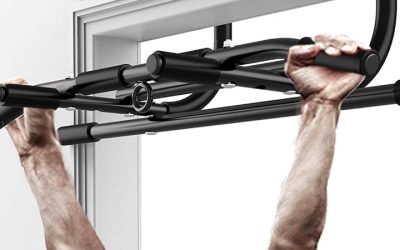
Best Home Pull-Up Bar: 7 Top Picks for Doorways & Walls
Ask someone why the pull-up bar they bought is still in the...
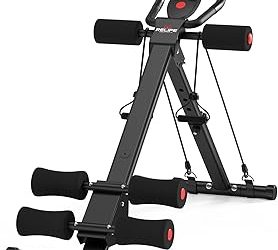
8 Best Abs Workout at Home Without Equipment: Kit Optional
Forget the fancy gym memberships and the intimidating stacks of weights. Achieving...
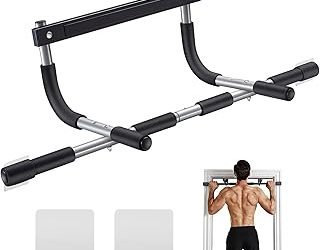
8 Best Pull Up Bars for Doorway Frames: Measure Before You Buy
If you weigh 220 lb and you are adding a weight vest,...
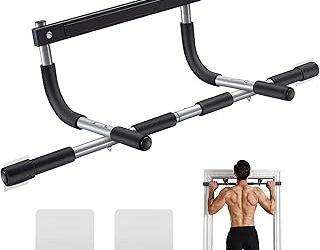
8 Best Door Pull Up Bar Picks Rateds on Fit and Frame Safety
A doorway pull-up bar lives or dies on two measurements most...
8 Best Ab Rollers: Top Picks Reviewed (2026)
An ab roller (or ab wheel) is a deceptively simple tool that...
Write Your Review
No reviews yet. Be the first to share your experience!