
Key takeaways
- Item Diameter: 17 Inches
- Item Firmness Description: Firm
- Product Benefits: Muscle Therapy
A foam roller is one of the few pieces of recovery gear that earns its shelf space every single week. The difference between a $20 log of EVA foam and a $130 vibrating cylinder isn’t marketing — it’s density, surface geometry, and how much pressure the core can absorb before it starts to sag. If you’ve ever tried to work out a knot in your peroneals with a soft, deformed roller, you already know the frustration: the foam collapses under your shin instead of pushing back, and you end up rolling air.
I’ve broken the picks below into the categories that actually matter when you’re standing in your living room deciding what to buy: a hollow-core hybrid for general-purpose use, an aggressive knobbed roller for stubborn glute and quad tissue, a soft high-loft option for beginners and older joints, a vibrating model for people who want passive assistance, a half-round for balance and calf work, and a straightforward high-density cylinder for anyone who just wants something that works and lasts. Each one solves a different problem — pick based on the tissue you’re targeting and your pain tolerance, not on the review count.
Our top picks


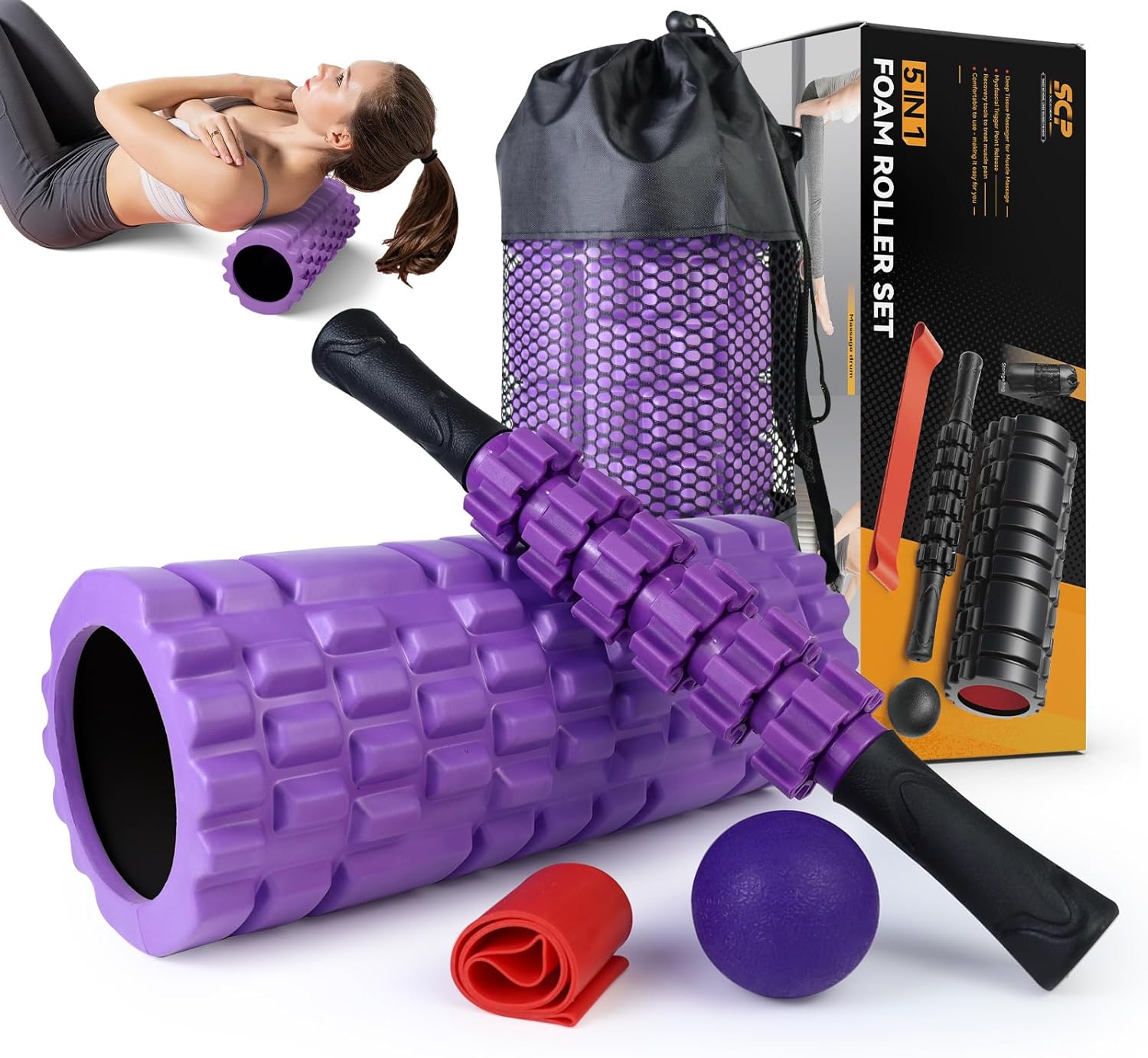
 Vulken Extra Long 17” Vibrating Foam Roller
- Item Diameter: 17 Inches
- Item Firmness Description: Firm
- Product Benefits: Muscle Therapy
 Amazon Basics High-Density Foam Roller for Exercise
- Item Dimensions: 18 x 6 x 6 inches
- Item Diameter: 6 Inches
- Item Firmness Description: Firm


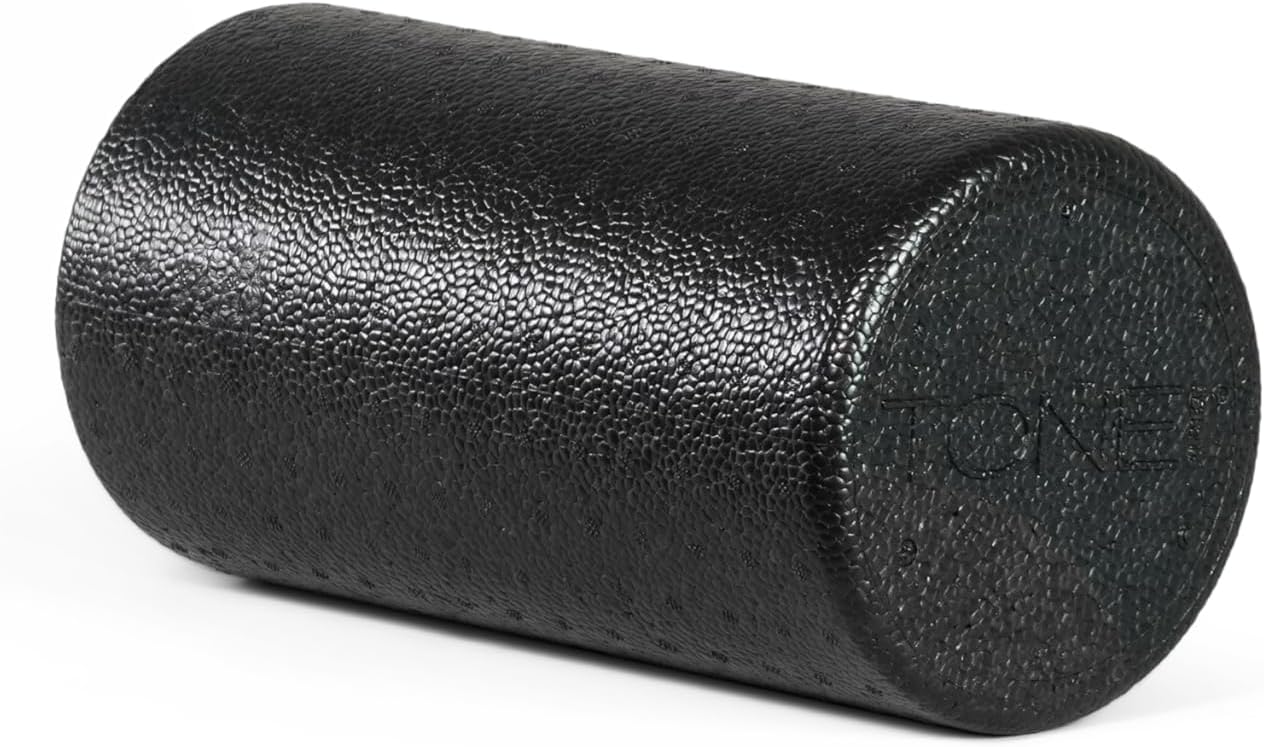 Tone Fitness High Density EPP Foam Exercise
- Item Dimensions: 5.71 x 5.71 x 11.61 inches
- Item Diameter: 5.7 Inches
- Item Firmness Description: Firm
As an Amazon Associate we earn from qualifying purchases at no extra cost to you.
Quick Comparison
| Roller | Best For | Length | Firmness | Standout Feature |
|---|---|---|---|---|
| TriggerPoint GRID | All-around use | 13 in | Medium-firm | Hollow ABS core with multi-density surface |
| RumbleRoller Deep Tissue | Glutes, quads, lats | 13 or 22 in | Very firm | Flexible knobs that dig between muscle fibers |
| OPTP PRO-Roller Soft | Beginners, sensitive tissue | 36 in | Soft | Full-body length for spine and posture work |
| Hyperice Vyper 3 | Vibration therapy | 12 in | Firm | Three-speed vibration, rechargeable |
| TheraBand Half Round | Calves, balance drills | 18 in | Firm | Flat base won’t roll away underfoot |
| Amazon Basics High-Density | Budget pick | 18 or 36 in | Firm | Solid molded EPP that resists denting |
How to Choose
- Match density to tolerance, not ego. Firm foam transmits more pressure into the tissue, which is useful for thick muscle groups like glutes and quads. But if you flinch and hold your breath, the muscle guards and you get nothing out of the session. Start medium and work up.
- Check the core, not the skin. Solid molded EPP and hollow ABS cores hold their shape for years. Cheap extruded EVA develops permanent flat spots within a few months of bodyweight loading, and once it’s dented it applies pressure unevenly.
- Length determines what you can reach. A 36-inch roller lets you lie lengthwise along your spine and work both IT bands at once. A 12- to 13-inch roller fits in a carry-on and travels to the gym. If you only buy one, 18 inches is the honest compromise.
- Textured versus smooth is about targeting. Ridges and knobs concentrate force into smaller contact points, which is what you want for trigger points. Smooth surfaces spread the load and are better for broad fascial sweeps and for anyone with sensitive skin or recent bruising.
- Vibration is a genuine assist, not a gimmick. Oscillation raises the pain threshold, which means you can hold a tender spot longer. It’s a real advantage — just decide whether it’s worth roughly five times the price of a plain cylinder to you.
Top Picks Reviewed
TriggerPoint GRID — Best Overall
The GRID’s hollow ABS core is the reason it’s still the default recommendation in physical therapy clinics. It supports well over 400 pounds without deforming, and the raised grid pattern creates channels that let you vary pressure by shifting a few degrees. The 13-inch length handles hamstrings, quads, calves, and lats comfortably, though you’ll need to work one IT band at a time. The EVA outer layer stays grippy on hardwood and doesn’t shed. It’s not the most aggressive roller here, which is precisely why it suits daily use.
RumbleRoller Deep Tissue — Best for Stubborn Knots
The knobs are made from a firmer compound than the body of the roller, so they flex just enough to contour around bone while still burrowing into soft tissue. On glutes and quads this feels closer to an elbow than to foam. Be warned: the extra-firm black version is genuinely uncomfortable on the first few sessions, and it’s the wrong tool for calves or the thoracic spine if you bruise easily. Buy the original blue density first unless you’ve already outgrown a standard roller.
OPTP PRO-Roller Soft — Best for Beginners
Most people quit rolling because they started too firm. This 36-inch soft roller solves that by spreading pressure over a wider contact patch while still holding its cylindrical shape under load. The full length makes it genuinely useful for supine thoracic extension, shoulder mobility drills, and Pilates-style work that shorter rollers can’t support. It’s also the pick I’d hand to anyone recovering from injury or managing arthritic joints, where aggressive compression is counterproductive.
Hyperice Vyper 3 — Best Vibrating Roller
Three vibration settings, a rechargeable battery good for a couple of hours, and a rigid outer shell that transmits oscillation cleanly into the muscle rather than absorbing it. The practical benefit is time: tender spots that need ninety seconds of static pressure release in closer to thirty. The tradeoffs are weight, noise at the top setting, and a 12-inch length that limits spinal work. Worth it if you roll several times a week and dread it.
TheraBand Half Round — Best Specialty Shape
The flat base makes this the most underrated item on the list. Because it can’t roll away, you can stand on it for calf and plantar fascia work, use it under your heels for squat mobility, or place it lengthwise under your spine without balancing. It’s also the safest option on a hard floor for anyone with limited core strength. Not a replacement for a full cylinder, but an excellent second purchase.
Amazon Basics High-Density — Best Budget Pick
Molded polypropylene foam, no texture, no branding, no nonsense. It resists denting far better than the discount rollers sold at big-box stores, and the 36-inch version costs less than most 13-inch premium models. The smooth surface can’t isolate trigger points the way a knobbed roller does, and it’s firm enough that beginners will wince. For general post-workout use on a budget, it’s hard to beat.
Frequently Asked Questions
How long should I roll each muscle group?
Sixty to ninety seconds per area is plenty. Slow, deliberate passes beat fast scrubbing — aim for roughly an inch per second, and when you find a tender spot, pause and breathe there for twenty to thirty seconds rather than rolling straight over it. Total sessions of five to ten minutes are usually enough.
Should I foam roll before or after training?
Both work, for different reasons. Brief rolling beforehand increases range of motion without the temporary strength loss associated with long static stretching. Afterward, it can reduce perceived soreness over the following days. If you only have time for one, roll before as part of your warm-up.
Is it supposed to hurt?
Uncomfortable, yes. Sharp or radiating pain, no. If you can’t breathe normally or you’re clenching, reduce the load by supporting more weight on your hands and free leg, or switch to a softer roller. Avoid rolling directly over bone, joints, the lower back, or the back of the knee.
Can a foam roller replace a massage gun?
They overlap but aren’t interchangeable. A roller uses body weight for broad, sustained compression across large areas — better for quads, lats, and thoracic mobility. A massage gun delivers precise percussion into small muscles like the forearms, feet, and neck. Most people who train seriously end up owning both.
Final Thoughts
If you want one roller and you’re done thinking about it, get the TriggerPoint GRID — medium-firm, well-built, and appropriate for nearly every muscle group. If you’re new to this or you’re managing sensitive joints, start with the OPTP soft roller and let your tolerance build. If you already roll regularly and standard foam has stopped registering, the RumbleRoller is the logical escalation. The best choice is simply the one you’ll actually pull out from behind the couch three times a week.
Write Your Review
No reviews yet. Be the first to share your experience!