
Key takeaways
- Age Range Description: Adult
- Mount Type: Doorway Mount
- Item Dimensions W x H: 37"W x 20.2"H
A doorway pull-up bar lives or dies on two measurements most buyers never take: the depth of the casing above the door and the thickness of the jamb behind it. I’ve watched a perfectly good leverage-style bar chew a crescent-shaped dent into 1/2-inch pine trim in three sets because the upper pads were resting on molding rather than the flat wall above it. The bar wasn’t defective. The install was 3/4 of an inch off the load path it was designed for.
So this roundup grades door pull-up bars on fit and frame safety rather than gym-bro extras. Each pick was evaluated against three doorway types — a 30-inch solid-jamb interior opening, a 32-inch opening with 3-inch decorative casing, and a 36-inch passage with only 4 inches of headroom to the ceiling. Where a bar needed shimming, padding, or a hard no, that’s noted. If your apartment lease mentions security deposits, read the fit column twice.
Our top picks
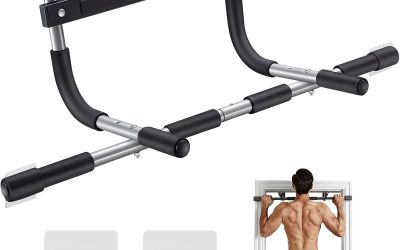
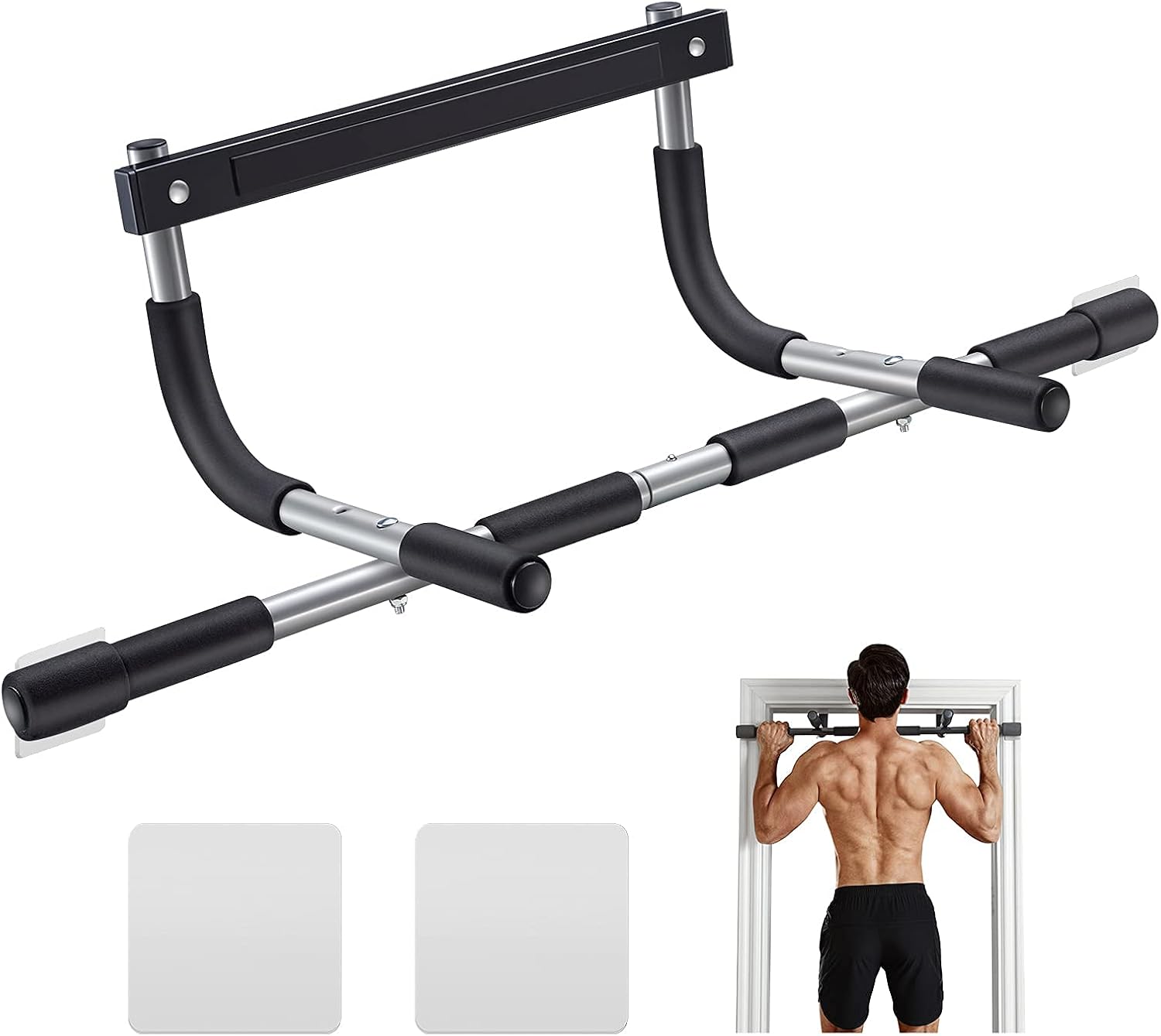 Ally Peaks Pull Up Bar for Doorway
- Age Range Description: Adult
- Mount Type: Doorway Mount
- Item Dimensions W x H: 37"W x 20.2"H
| Product | Key specs | |
|---|---|---|
| Ally Peaks Pull Up Bar for Doorway | Age Range Description: Adult Mount Type: Doorway Mount Item Dimensions W x H: 37"W x 20.2"H | Check price |
 Ally Peaks Pull Up Bar for Doorway Ally Peaks Pull Up Bar for Doorway | Check price | |
 Body-Solid Body-Solid | Check price | |
 Sportneer Pull Up Bar for Doorway Sportneer Pull Up Bar for Doorway | Age Range Description: Adult Mount Type: Doorway Mount Item Dimensions W x H: 37.01"W x 6.69"H | Check price |
 KAKICLAY 2026 Upgrade Multi-Grip Pull Up Bar KAKICLAY 2026 Upgrade Multi-Grip Pull Up Bar | Age Range Description: Adult Mount Type: Doorway Mount Item Dimensions W x H: 10.5"W x 2"H | Check price |
 TOPOKO Pull Up Bar for Doorway TOPOKO Pull Up Bar for Doorway | This barra de bar can do various exercises This indoor pull up bar is constructed of… The top of this pull-up bar is equipped… | Check price |
 EVERYMATE Wall Mount Pull Up Bar EVERYMATE Wall Mount Pull Up Bar | Check price | |
 Ally Peaks Pull Up Bar for Doorway Ally Peaks Pull Up Bar for Doorway | Check price |
As an Amazon Associate we earn from qualifying purchases at no extra cost to you.
Quick Comparison
| Pick | Mount Style | Doorway Fit Range | Where the Load Goes | Best For |
|---|---|---|---|---|
| Multi-Grip Leverage Frame | Over-door hook with counter-lever pads | 24–36 in. wide, casing under 3.5 in. | Wall above casing + top of jamb | Wide grip work, dips, rows |
| Telescoping Pressure Bar | Twist-expand, friction fit inside jamb | 26–36 in., needs square solid jambs | Both jambs, horizontal compression | Renters, zero-hardware setups |
| Slim-Profile Doorway Bar | Over-door hook, narrow footprint | 28–32 in., deep casing friendly | Upper jamb face | Tight trim, low headroom |
| Bracket-Anchored Doorway Bar | Screwed into studs beside opening | Any width with framed studs | Framing lumber, not trim | Heavier lifters, kipping |
| Padded Trainer Bar with Straps | Over-door with tension strap | 30–36 in., flat casing only | Jamb top + strap tie-down | Beginners, band-assisted reps |
How to Choose
- Measure casing depth first. Leverage bars need flat wall contact above the trim. If your molding proudly sticks out 3/4 of an inch, the upper pads will land on it and concentrate force into a thin, easily crushed edge.
- Identify your jamb construction. Solid wood jambs handle compression fine. Finger-jointed or hollow trim over a shimmed gap will flex, and telescoping pressure bars are unsafe in that scenario — full stop.
- Check headroom, then chin clearance. You need roughly 8 to 10 inches above the bar to clear your head at the top of a rep. Slim-profile bars buy you that room; bulky multi-grip frames eat it.
- Read the weight rating as a static number. A 300-pound rating assumes controlled movement. Kipping, dropping, or adding a weight vest multiplies peak load two to three times, which is when bracket-anchored designs stop being optional.
- Insist on replaceable padding. Foam compresses and hardens. Bars with swappable pads or included wall shields protect paint years longer than molded rubber that eventually rubs bare.
Top Picks Reviewed
Multi-Grip Leverage Frame — Best Overall Fit
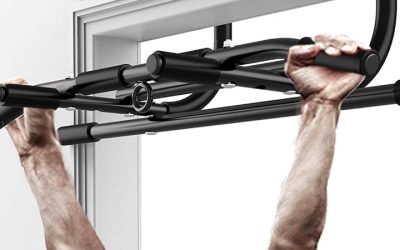
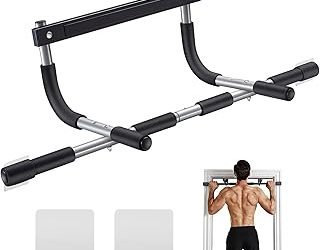
The three-grip geometry (wide, neutral, close) makes this the most versatile option, and the wide counter-lever arms spread force across roughly 18 inches of wall instead of two pressure points. On the 32-inch opening with thick casing, it needed a pair of 1/4-inch plywood shims behind the top pads to sit flush, which took four minutes and eliminated all rocking. Doubles as a dip station and floor row anchor. Downside: it protrudes 14 inches into the room, so an inward-swinging door won’t close while it’s mounted.
Telescoping Pressure Bar — Best for Strict Renters
No hooks, no screws, no marks. You twist it until the rubber end caps bite the jambs, and the friction plus your body weight pulling down keeps it locked. It passed on the solid 30-inch jamb with zero slippage across sets of ten. It failed the 36-inch opening because the extension was near maximum and the caps sat close to the jamb edge. Rule of thumb: keep at least an inch of engagement on flat, square wood, test with a hard hang before your first rep, and re-torque weekly.
Slim-Profile Doorway Bar — Best for Low Ceilings and Fat Trim
Narrow uprights let the hooks sit behind decorative casing rather than on top of it, which solved the exact dent problem described above. Only 6 inches of protrusion means it clears low ceilings and lets a door close in most cases. The tradeoff is grip variety — one straight bar, no neutral handles — and less leverage means you’ll feel a slight settle on the first pull of each set. Fine for strict reps, not for anything explosive.
Bracket-Anchored Doorway Bar — Best for Heavy or Dynamic Training
Two brackets screw into the studs flanking the opening, and the bar drops in and lifts out. Because the load transfers to framing lumber, this is the only category here I’d trust with a 40-pound vest or muscle-up attempts. It leaves eight screw holes, which is a spackle-and-paint job later. Confirm stud position with a magnet or finder before drilling; sinking lag screws into drywall alone is how ceilings become floors.
Padded Trainer Bar with Straps — Best for Beginners
Thick knurl-free padding is friendlier on soft hands, and the tension strap under the door adds a genuinely useful secondary restraint against lift-off during band-assisted reps. Requires flat casing to seat properly, and the strap must be routed on the hinge side to avoid crushing the latch plate. Not the strongest option, but the most forgiving to learn on.
Frequently Asked Questions
Will a doorway pull-up bar damage my trim?
It will if the pads land on molding instead of flat wall. Add thin plywood or hardboard shims behind the upper contact points so they meet the same plane, then check for compression rings after your first week. Rotating a folded microfiber cloth under each pad also helps preserve paint.
How much weight can a hook-style bar actually hold?
Most are rated between 250 and 330 pounds under static, controlled loading. Explosive movement can spike real forces well beyond your body weight, so if you’re near the ceiling of the rating or training dynamically, go with a stud-anchored bracket design instead.
Are telescoping pressure bars safe overhead?
They can be, but only in solid, square, well-supported jambs with correct tension and full end-cap engagement. Hollow trim, drywall-wrapped openings, and near-maximum extension are all disqualifying. Test with a dead hang and a small bounce before trusting one.
What doorway width works best?
Standard 30 to 32 inches is the sweet spot — enough shoulder room without stretching a bar’s span. At 36 inches, look for models that explicitly list that width and prefer anchored designs, since wider spans increase mid-bar flex.
Final Thoughts
Pick the bar that matches your doorway, not the one with the most handles. Grab a tape measure, note your casing depth, jamb material, and headroom, then match those numbers to the fit column above. The multi-grip leverage frame is the best all-around choice for a standard opening with modest trim, the slim-profile bar rescues awkward doorways, and the bracket-anchored option is the honest answer if you’re heavy, adding load, or training explosively. Shim what needs shimming, pad every contact point, and re-check the fit monthly — that ten-minute habit is what separates a decade of pull-ups from a repair bill.


Write Your Review
No reviews yet. Be the first to share your experience!