
Key takeaways
- Age Range Description: Adult
- Mount Type: Doorway Mount
- Item Dimensions W x H: 37"W x 20.2"H
If you weigh 220 lb and you are adding a weight vest, the marketing numbers on doorway pull-up bars deserve scrutiny. A 440 lb rating sounds like a two-to-one safety factor. It is not, because the rating describes a static load applied smoothly to the steel frame in a test rig — and pull-ups are not static. A controlled rep generates peak forces around one and a half times bodyweight at the initiation. An explosive pull or a kip can spike past three times. Add 40 lb of vest and a 220 lb lifter is momentarily loading that bar with numbers that crowd the rating uncomfortably.
Worse, the frame is rarely the failure point. What actually gives way is the door casing — the decorative trim that a leverage bar hooks over, usually attached with brad nails into softwood. That assembly has no published rating at all. So the useful approach for a heavier or loaded lifter is to pick the most rigid frame available, reinforce the trim before you load it, and eliminate the dynamic movements that produce the spikes. Here is how the six leading doorway bars stack up under that lens.
Our top picks
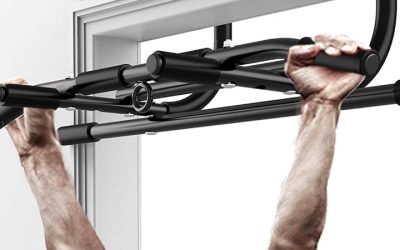
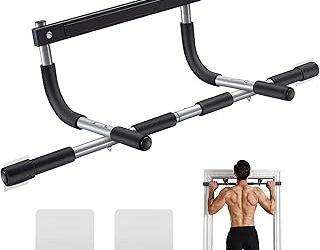
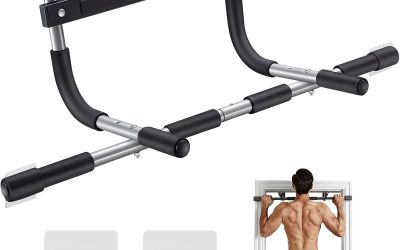
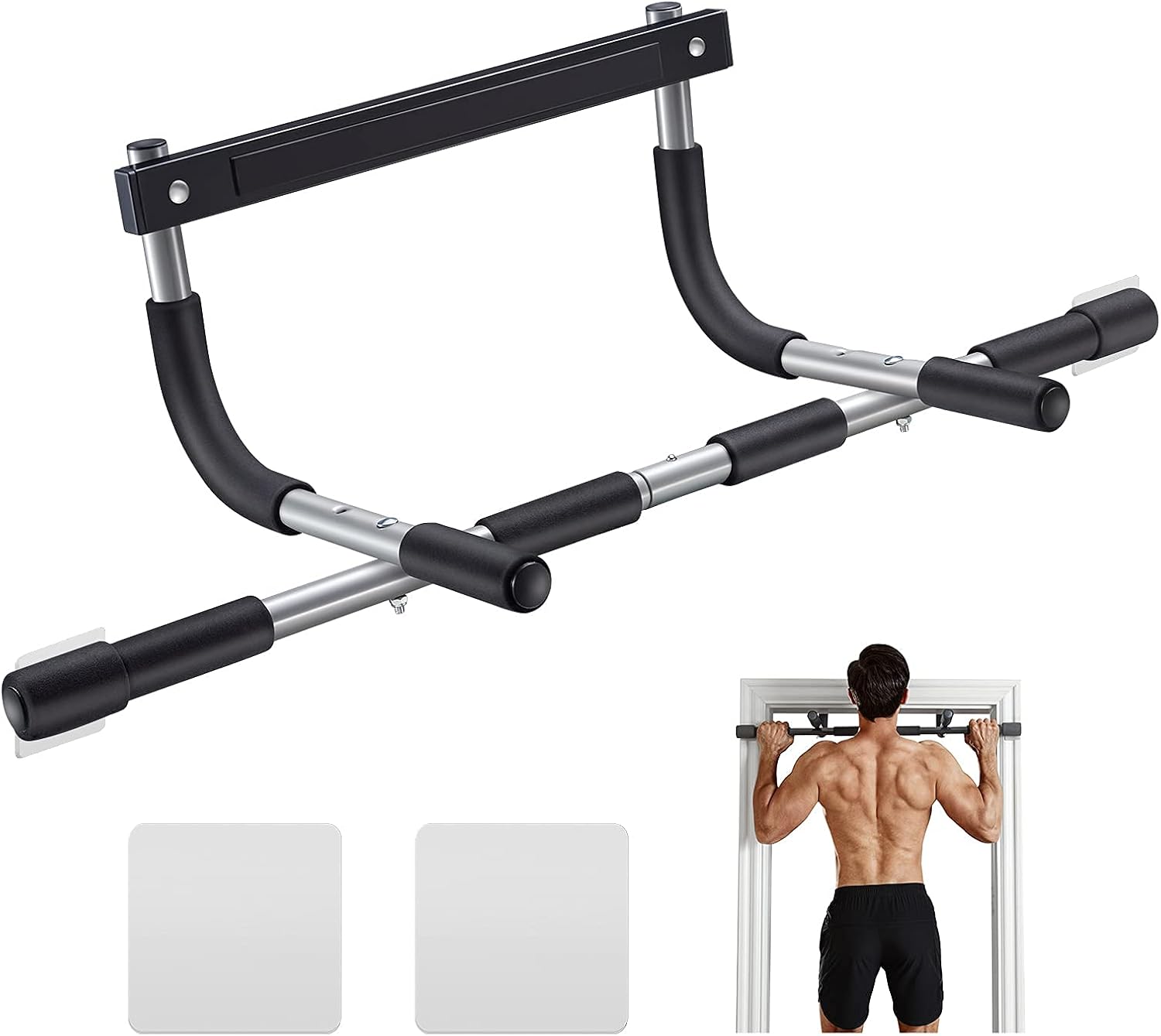 Ally Peaks Pull Up Bar for Doorway
- Age Range Description: Adult
- Mount Type: Doorway Mount
- Item Dimensions W x H: 37"W x 20.2"H


 Sportneer Pull Up Bar for Doorway
- Age Range Description: Adult
- Mount Type: Doorway Mount
- Item Dimensions W x H: 37.01"W x 6.69"H
 KAKICLAY 2026 Upgrade Multi-Grip Pull Up Bar
- Age Range Description: Adult
- Mount Type: Doorway Mount
- Item Dimensions W x H: 10.5"W x 2"H


As an Amazon Associate we earn from qualifying purchases at no extra cost to you.
Quick Comparison
| Product | Best For | Standout Feature | Watch Out For |
|---|---|---|---|
| Ally Peaks Pull Up Bar | Heavier lifters | Thickest tube wall, least deflection | Trim strength becomes the limit |
| Ally Peaks Multi-Grip Bar | Reducing joint load | Neutral grips ease elbow stress | Extra joints add flex points |
| Body-Solid PUB34 Bar | Loaded or weighted work | Commercial welds, tight tolerances | Significant price premium |
| Sportneer No-Drill Bar | Weak or hollow casing | Bypasses trim entirely | Least suited to heavy dynamic loads |
| KAKICLAY Multi-Grip Bar | Deep, solid architrave | Deep hooks spread load wider | Rocks on shallow trim |
| No-Screw Adjustable Bar | Narrow, solid frames | 360-degree lock, 29.1-37.4 in | Tension loss under heavy use |
How to Choose
- Calculate peak load, not bodyweight: Take your bodyweight plus any added weight, then multiply by two to approximate a controlled rep’s peak. If that figure is within a third of the rating, you have less margin than the number suggests.
- Reinforce the casing first: Construction adhesive behind the trim and two or three trim screws into the framing turns the weakest link into a strong one. This is a twenty-minute job and matters more than which bar you buy.
- Eliminate dynamic movement: No kipping, no dropping off the bar, no explosive plyometric pull-ups on a doorway mount. Those are the loads that break casings, and they are entirely avoidable.
- Look at wall thickness, not just diameter: Two bars of identical outside diameter can differ hugely in steel thickness. Heavier shipping weight for the same dimensions is a reliable proxy for thicker walls and less deflection.
- Spread the contact area: A larger backplate or a plywood shim behind it distributes force across more of the wall. This does not increase the bar’s rating but it substantially reduces the chance of crushing plaster or pulling trim.
Top Picks Reviewed
Best Overall for Heavier Users: Ally Peaks Pull Up Bar
The thickened steel is not marketing here — the difference in mid-span deflection compared to thin-walled competitors is obvious the first time you hang at full extension. For a heavier lifter that translates into a bar that feels solid rather than one that visibly bows.
The honest caveat is that the bar stops being the limiting factor. Once you are over 200 lb, your door casing determines the real capacity, and no bar can fix trim that is only brad-nailed. Reinforce first, then load.
Best for Joint Preservation: Ally Peaks Multi-Grip Bar
Heavier lifters accumulate elbow and shoulder wear faster because the absolute forces are larger. Rotating between pronated, neutral and angled grips distributes that stress across different tissues and is one of the few free interventions that actually reduces overuse injury.
Structurally, more handles means more welded junctions, and welded junctions are where flex appears under load. It is not a weak bar, but the single-tube design is stiffer if raw rigidity is your priority.
Best for Weighted Training: Body-Solid PUB34 Adjustable Bar
If you intend to train with a dip belt or a weight vest regularly, this is the bar to buy. The welds are commercial quality, the adjustment locks without play, and the tolerances mean the mount does not shift incrementally under repeated heavy loading the way budget bars do.
It costs considerably more than everything else here. That premium buys durability and consistency rather than a higher rating, so if you train unweighted at moderate bodyweight the value case is weaker.
Best When the Trim Is the Problem: Sportneer No-Drill Bar
Some casings genuinely cannot be trusted — hollow trim, damaged plaster, or a frame that flexes when pushed. This compression design bypasses that entirely by loading the jamb sides instead.
For a heavy lifter, though, this is the design that demands the most discipline. Compression tension decays fastest under high loads, and a slack bar under a 250 lb combined load is the worst-case scenario in this category. Check it before every single session or choose a leverage design with reinforced trim.
Best on Solid Deep Trim: KAKICLAY Multi-Grip Bar
Where a house has substantial, well-fastened architrave, the deeper hooks here actually help: they bear across more trim surface and reach the wall behind it properly, which spreads the load rather than concentrating it on an edge.
On thin flat casing the geometry reverses and the bar sits proud of the wall, increasing the moment arm on the trim. That is the opposite of what a heavier user wants, so check your casing depth carefully.
Best Narrow-Frame Option: No-Screw Adjustable Bar
Reaching down to 29.1 inches makes this viable in narrower openings, and the 360-degree locking collar holds tension more consistently than a basic threaded rod under repeated loading.
Heavy use still bleeds tension faster than light use. If you are at the upper end of the weight range, treat re-tensioning as part of your warm-up rather than a monthly task.
Frequently Asked Questions
Is a 440 lb rating enough for a 250 lb person?
For controlled, non-explosive reps, generally yes on the steel frame. The bigger question is whether your door casing can take it. Reinforce the trim with adhesive and screws before assuming the published number applies to your doorway.
Can I use a weight vest on a doorway pull-up bar?
A modest vest on a rigid, well-mounted bar with reinforced trim is reasonable. Heavy dip-belt loading is better done on a wall-mounted or free-standing bar, where the load path goes into structural framing rather than decorative trim.
Why do these bars fail?
Almost always at the mounting interface, not in the steel. Trim pulls away from the wall, plaster crushes under the backplate, or a compression bar slips because its tension was not maintained. All three are preventable.
Are kipping pull-ups safe on a doorway bar?
No. Kipping generates peak forces well beyond controlled reps and applies them dynamically, which is precisely the loading that pulls casings off walls. Save that movement for a rack-mounted or wall-mounted bar.
Final Thoughts
Heavier lifters get the most from the Ally Peaks Pull Up Bar, whose thicker tube deflects least and inspires the most confidence at the bottom of a hang. If weighted pull-ups are part of your programme, the Body-Solid PUB34 is the one built to absorb that abuse over years. And where the door casing itself is the weak link, the Sportneer No-Drill Bar moves the load into the jambs — provided you commit to checking its tension every session.


Write Your Review
No reviews yet. Be the first to share your experience!