Our Top Picks
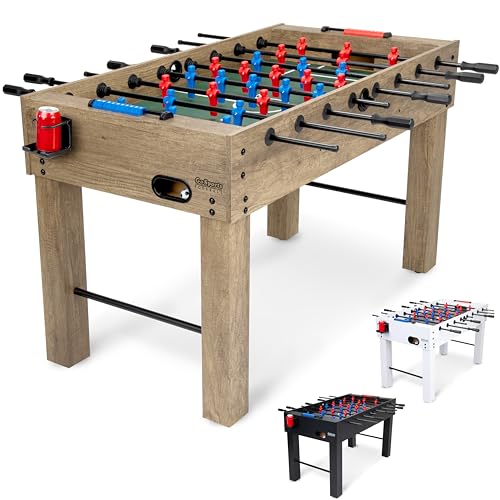 Kids, rentals and occasional useGoSports 54 Inch Full Size Foosball Table54 Inch54 x 29 x 34.5 inches75 PoundsCheck on Amazon
Pros & cons
full-size play area on a light, easy-to-move frame.
 Hathaway Primo 56-in Full-Size Foosball Table for Family56-Inch60 x 40 x 12 inches14.95 poundsCheck on Amazon
The best foosball tables for most homes are mid-weight, near-regulation tables such as the KICK Legend, while serious players are better served by a Tornado Sport II or Tournament 3000 and budget buyers by a full-size GoSports or Warrior table. The right pick comes down to three things a product photo will not tell you: how much the table weighs, what the rods are made of, and whether your room can fit the rods at full extension.
Quick picks by player type
- Families and casual play: KICK Legend 55″ – near-regulation playfield, steel rods, counterbalanced men, and a manageable weight of roughly 140 lb.
- Competitive or league players: Tornado Tournament 3000 – the US tournament standard, around 350 lb, with three-piece bearings and counterbalanced men.
- Serious home play with a tournament feel: Tornado Sport II – a heavier home version of the Tornado design, around 200 lb.
- Tournament style on a tighter budget: Warrior Professional – built around tournament rules (one-goalie setup, counterbalanced men) at a much lower price than a Tornado.
- Kids, rentals and occasional use: GoSports 54″ – full-size play area on a light, easy-to-move frame.
How the leading tables compare
| Table | Approx. weight | Rods | Men | Typical price range |
|---|---|---|---|---|
| Tornado Tournament 3000 | ~350 lb | Hollow hardened steel, 5/8″ | Counterbalanced | $2,800–$3,300 |
| Tornado Sport II | ~200 lb | Hollow steel, 5/8″ | Counterbalanced | $1,800–$2,200 |
| Warrior Professional | ~200 lb | Hardened steel, 5/8″ | Counterbalanced | $900–$1,300 |
| KICK Legend 55″ | ~140 lb | Semi-solid stainless, 5/8″ | Counterbalanced ABS | $500–$700 |
| GoSports 54″ | Under 100 lb | Steel, smaller diameter | Standard | $250–$350 |
Weights and prices vary by finish and year, but the spread is the point: a table under 100 lb will slide and rock during hard shots, while anything over 180 lb stays planted even when two adults are slamming the rods.
GoSports 54 Inch Full Size Foosball Table - Oak Finish - Includes 4 Balls and 2 Cup Holders
Chosen because it specifies Oak Finish and Includes 4 Balls and 2 Cup Holders.
View on Amazon
GoSports 54 Inch Full Size Foosball Table - Black Finish - Includes 4 Balls and 2 Cup Holders
Chosen because it specifies Black Finish and Includes 4 Balls and 2 Cup Holders.
View on Amazon
GoSports 48 Inch Game Room Size Foosball Table - Includes 4 Balls and 2 Cup Holders – Black, Oak, or White
Chosen because it specifies Includes 4 Balls and 2 Cup Holders and Black.
View on AmazonHathaway Primo 56-in Full-Size Foosball Table for Family Game Rooms | Solid Steel Rods, Counterbalanced Players, E-Z Spin Bearings, Built-In Scorers & Adjustable Levelers, Wood Grain Finish
Chosen because it specifies Solid Steel Rods and Counterbalanced Players.
View on AmazonWhat actually separates a good table from a toy
Weight and cabinet thickness
Weight is the most honest quality signal in foosball. It reflects cabinet wall thickness, leg size and bracing. Tournament cabinets use thick particleboard or MDF walls and 4″ or wider legs; budget tables use thin panels and narrow legs that loosen over time. If you can only compare one number, compare weight.
Rods: solid, hollow or telescopic
Hollow hardened steel rods (Tornado) are lighter, so they move faster for snap shots. Solid rods are heavier and stiffer, which some players prefer for control. Telescopic rods do not stick out the far side, which is safer around small children but changes the feel and is rare on serious tables. Avoid thin, soft rods that bend when someone leans on them – a bent rod is the most common reason cheap tables get thrown out.
Counterbalanced men
Counterbalanced players have weighted heads and feet so they rest horizontally when you let go. That lets you raise a row out of the way of the ball, which is essential for passing and for any real defense. On non-counterbalanced tables the men hang straight down and block every pass.
Playfield and ball
Textured or laminated playfields give the ball grip for pin and pull shots; slick printed surfaces make the ball skid. Tornado tables pair a textured surface with textured balls; mixing smooth balls on a textured field (or the reverse) noticeably changes control.
One goalie or three goalies
Tournament rules in the US use a single goalie. Many home tables use three men on the goalie rod, which makes scoring harder for kids. Tables such as the KICK Legend let you switch between the two layouts.
Room size: the measurement most buyers miss
A standard foosball table is about 56″ long and 30″ wide at the cabinet, but the rods stick out roughly 12–14″ on each side when pulled all the way in or out. That means the footprint during play is closer to 56″ x 58″, and players need standing room behind the handles.
| Clearance zone | Minimum | Comfortable |
|---|---|---|
| Behind each handle side (for players) | 24″ | 36″ |
| At each goal end | 12″ | 24″ |
| Total room width needed | ~8 ft | ~10 ft |
| Total room length needed | ~7 ft | ~8–9 ft |
In practice, a 10 x 10 ft spare room or an open corner of a 12 x 16 ft basement fits a full-size table well. In a 9 ft wide room, players at the handles will be backed against the walls. Remember that foosball is played from the handle sides, so the long axis of the room should run across the rods, not along the cabinet.
Decision matrix: match the table to your situation
| Your situation | Best fit | Why |
|---|---|---|
| Young kids under 10 | GoSports 54″ or KICK Legend with 3-goalie setup | Lower cost, lighter, easier scoring; consider rod end caps |
| Family with teens | KICK Legend 55″ | Stable enough for hard shots, still movable by two people |
| Bar-style game room for adults | Warrior Professional or Tornado Sport II | Heavy cabinet and tournament feel |
| Training for leagues or tournaments | Tornado Tournament 3000 | Same table used in many US events; skills transfer directly |
| Upstairs room or apartment | KICK Legend or lighter | 350 lb tables are hard to carry up stairs and stress floors |
Assembly and moving realities
- Box weight: Tournament tables often ship in boxes over 200 lb. Plan for two strong people, a hand truck, and a garage or driveway to unpack in.
- Assembly time: Expect 1.5–3 hours. The fiddly parts are inserting rods through bearings and pinning the men in the right order and direction.
- Doorways: An assembled table with rods installed is about 56″ across the handles side, so it will not pass through a standard 32–36″ door. Assemble it in the room where it will live, or remove the rods before moving.
- Leveling: An unlevel table makes the ball drift to one corner. Look for leg levelers and check with a level or by rolling the ball from the center.
What wears first and how to keep it playing well
- Bearings and bumpers: Rubber bumpers compress and bearings dry out. Wipe rods and apply 100% silicone lubricant every few weeks with regular play; never use WD-40, which attracts grime.
- Men: Plastic men crack where the rod pin goes through after hard slams. Tornado and other established brands sell replacement men and parts, which extends a table’s life by years.
- Handles: Grips wear smooth. Replacement handles are inexpensive and change the feel more than you would expect.
- Playfield: Keep drinks off the table edges; spilled sugary drinks leave sticky spots that ruin ball roll.
Bottom line
For most households, a 130–200 lb table with 5/8″ steel rods and counterbalanced men is the sweet spot, and the KICK Legend hits that mark at a mid-range price. If anyone in the house plays seriously, go straight to a Tornado or a Warrior rather than upgrading twice. And before ordering, tape out a roughly 8 x 10 ft rectangle on the floor – if players cannot stand comfortably behind the handles, the best table on paper will not feel right in your room.