A budget ratcheting screwdriver set is worth buying when its bits fit your fasteners and the handle lets you drive comfortably. Start with the Husky 99515 for common repairs. Spend less on a stubby if access is the problem, or buy a boxed assortment when you regularly need Torx, Pozidriv, or sockets.
Which budget ratcheting screwdriver set is worth buying
Set a price target of about $25 before tax and shipping, then decide what needs to come in the box. A driver stored in a kitchen drawer needs common bits and a self-contained handle. A garage kit can make better use of a larger assortment, sockets, and a designated storage spot.
| Exact set | Observed U.S. price | Best use | Check before purchase |
|---|---|---|---|
| Husky 99515 12-in-1 Quick-load | $16.97 | Everyday straight-on repairs | Check the six included double-ended blades |
| Pittsburgh 94779 34-piece | $9.99 | Occasional bench work with sockets | Piece count includes accessories and duplicate sizes |
| Pittsburgh 96733 26-piece | $13.99 | Furniture and mixed metric hardware | Check fastener profiles against the supplied list |
| Doyle 64843 11-in-1 | About $15–$16 | Portable screwdriver and nut-driver coverage | Verify the exact ratcheting model |
| Husky 00582 12-in-1 Stubby | $10.97 in one listing | Shallow straight-on access | Check grip clearance and bit fit |
| DEWALT DWHT69233 | $24.13 | Removable bar and common bits | Buy it when the bar solves a recurring task |
How the price target was applied
The prices are U.S. retail snapshots for exact sets. They give you a benchmark for comparing similar choices before tax and shipping. Check the full cash price at your store or at checkout, especially when an offer is temporary or the seller lists multiple variants.
The point of the $25 ceiling is to distinguish everyday value from a specialized premium tool. It leaves enough room for a full-size handle and a useful starter assortment. Someone replacing a cupboard pull can spend nearer $10 if the chosen tool reaches the screw. Someone repairing multiple projects can use the additional money for a wider range of bits or for a design that keeps the bits with the handle.
Some packages cost about the same on the shelf and very different amounts to complete. If you need a PZ2 bit, a recessed T20, and an 8 mm socket, look for the actual sizes and compatible access. A $10 set plus three separately purchased pieces can reach the price of a better-matched kit. If the kit already contains all the sizes you need, buying the larger package provides little immediate benefit. Use the first few likely projects as a shopping list.
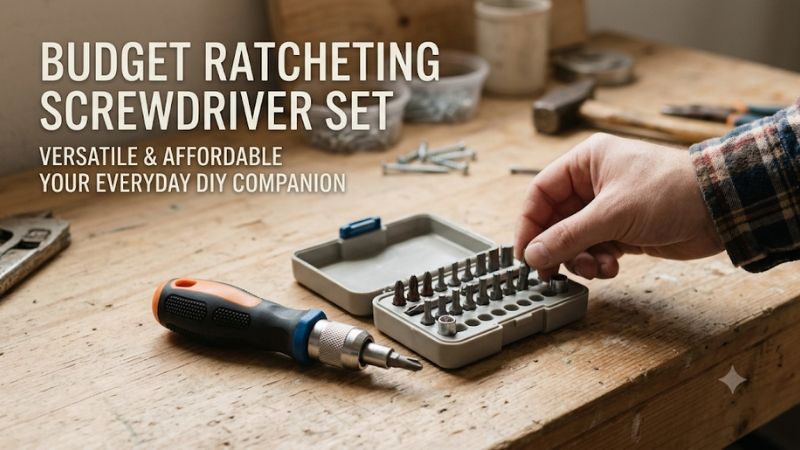
Choose between a pocket driver and a bench assortment
Self-contained drivers keep the most useful tips near the handle. Boxed kits make room for more profiles and sockets. Choose a format that matches where the tool will live, how far it must travel, and whether you can put all its parts away after a repair.
Imagine replacing cabinet knobs in three rooms. The same two tips often cover the job, and a single driver with captive storage is easy to carry. For a used bike accessory that combines a Torx screw and small metric hex hardware, a box with the correct profiles can save trips to the tool cabinet. A loose cardboard package can become messy when opened repeatedly. Look for a rack, pouch, or holder with a stable spot for each component.
Double-ended pieces make a compact assortment possible. Find out whether the driver also accepts the standard insert bits you own, and whether their length allows you to remove them easily. Packaging often lists functions that include an empty shaft acting as a nut driver. Read the documented list to know which parts you will hold in your hand.
Six budget sets for different repair jobs
Each set here solves a specific purchase problem. Use the Husky Quick-load for a household drawer, the two Pittsburgh sets for different assortments, the Doyle when nut driving belongs in one handle, the stubby for short clearances, and the DEWALT when the bar is likely to earn its cost.
Husky 99515 Quick-load for everyday value
The Husky 99515 is the all-around value choice at the observed $16.97 listing. Its six double-ended blades store in the handle, and the quick-load holder is designed for 1/4-inch blades. It suits light household repairs where a conventional straight handle fits.
For a door catch, seat a fitting bit, check the ratchet direction, and keep your palm behind the handle. You can then walk to the next door with the bits still stored. This is the reason to pick the Husky over a similarly priced kit in a large box. The advertised 12 functions come from the six double-ended blades. Check the tip list if your work regularly uses an uncommon square or security profile.
The disadvantages follow from the same arrangement. The main handle takes up more room than a small stubby, and the onboard storage is useful only for blades that fit its slots. A long recessed screw may require another compatible bit even when the set contains the right tip profile. Buy this model for common fasteners and easy storage. Check a few of your actual screws and practice releasing the bit with the tool supported before taking it into a cramped job.
Pittsburgh 94779 for the lowest kit price
The Pittsburgh 94779 is a 34-piece assortment with driver bits, inch and metric sockets, and a base to hold the contents. It was listed at $9.99. Its most convincing use is an inexpensive permanent bench kit for light work on several common fastener sizes.
The set includes repeated PH2 bits, which can be handy for a size that gets frequent use. A large total also reflects sockets and other accessories. Look up the exact list if coverage matters. For a light bracket with a small hex nut and a Phillips screw, being able to switch between both tools using the same handle saves room in a basic garage drawer.
A tabletop base is practical if the tool stays near a work surface. If you carry it on a ladder or routinely move between rooms, decide how securely the loose pieces travel. Pick it for light fasteners that fit the exact sockets and bits. Use an appropriate wrench or torque tool when the job calls for firm controlled tightening or a stated setting. If the included base never leaves the bench, it becomes a straightforward way to spot a missing bit.
Pittsburgh 96733 for Pozidriv and metric nut-driving sizes
The Pittsburgh 96733 was listed at $13.99. It includes a driver, a nylon case, and 24 accessories. The documented assortment covers Phillips, slotted, Torx, and Pozidriv, plus six metric nut-driver sizes from 5 mm through 10 mm for common light maintenance.
The Pozidriv bits are useful if a cabinet hinge or flat-pack fastener uses that profile. Match the size and recess before turning. A Phillips point can feel plausible at first and still rock under load. Having both profiles in the same pouch avoids a guess. The higher Torx coverage also helps if small household covers use T27 or T30. Check for a center pin when working with security screws, and buy the appropriate hollow-tip bit if needed.
This kit is a good step up for someone who expects a wide spread of profiles. Read the list carefully if you routinely need square drive or larger hex sockets. Their absence can require an extra trip and purchase. If your household repairs need only Phillips and slotted, the handle-storage model may still be easier. The nylon pouch earns its place when you need to carry a predictable assortment across several projects.
Doyle 64843 for one-tool light maintenance
The Doyle 64843 is an 11-in-1 ratcheting multibit screwdriver, with listings around $15 to $16. It includes screwdriver and nut-driving functions in a portable package. Check the item number carefully, since other Doyle 11-in-1 tools share its general name.
This is a practical choice when a light maintenance stop needs a common screw and then a small hex head. Review the exact fastener sizes on site before relying on a multifunction shaft. The driver works best where the interchangeable components can be reached and changed easily. A thick nut-driver section may stop at a deep hole before the correct end reaches the bottom.
Inspect replacement options if the set will be used often. The interchangeable system is one reason it packs several tasks into a single tool. A particular bit or sleeve may need a compatible replacement if it wears or gets lost. A narrow plain shaft can still make sense for recessed hardware. Buy the Doyle when portability is worth more than a broad box of sizes and the included nut-driving options match the fasteners on hand.
Husky 00582 Stubby for shallow access
The Husky 00582 is a ratcheting stubby with six double-ended bits and an observed listing of $10.97. Its compact shape helps behind exposed cabinet hardware and under shelves when the screw allows straight access but there is little depth for a full-size driver.
To decide whether it will solve your problem, measure from the face of the screw to the obstruction behind the tool. Include the installed tip and space for your fingers. The short handle may clear the shelf while its diameter still collides with a hinge arm. Try the location with a rough outline, and leave enough space for the fastener to back out during removal.
Buy it as a low-cost second shape if your main driver already covers most jobs. Its short handle also suits a compact apartment kit when you mostly work with accessible face screws. For deep recesses it may stop before the bit reaches the head, and for long batches the shorter grip may fatigue your hand. Specialty geometry is the value here. If most screws are out in the open, the standard Husky offers a more natural grip.
DEWALT DWHT69233 for removable-bar versatility
The DEWALT DWHT69233 was observed at $24.13. It includes twelve bits, onboard storage, and a removable bar. The retailer also describes the bar as compatible with power drills. Its main value is the ability to use the holder in more than one working setup.
Consider a person assembling shelves who uses a drill on straightforward runs and a hand tool near finished surfaces. A removable bar can move between those supported setups. Verify the exact fit for your drill, use the appropriate bit for the fastener, and start at low speed where finish matters. Use the hand driver when you need precise control near the final seat or when a small screw would be awkward to start under power.
This pick sits at the top of the budget. Choose it if the bar and twelve-bit storage remove a repeated change of equipment. If you only want six common tips in a drawer, the Husky Quick-load leaves money for a spare bit. If you need the largest affordable assortment of mixed sockets, a boxed set is a better match. The DEWALT is strongest when you use its particular configuration regularly.
How to avoid extra costs on a budget ratcheting screwdriver set
An inexpensive tool earns its place when the tips fit, the selector is easy to use, and the kit can be maintained with readily available pieces. Check fit first, sort out storage second, and compare the price of the complete setup against a basic alternative you can buy locally.
Prioritize bit fit over the piece count
A well-fitting tip protects the screw recess and reduces slipping. Start by identifying the fastener profile, then select the size that seats fully and moves least. Read the accessory list when a set is called 12-in-1 or 34-piece so you know what the total includes.
For a normal Phillips #2 screw, compare two nearby tips with the driver held square. If a bit rests high or turns noticeably in the recess before the screw moves, change it. A Torx bit also needs the right size and working depth. A T15 in a T20 head can produce enough movement to damage the screw under load. A spare correctly sized bit costs less than repairing a damaged recess in a finished surface.
Use the published contents as your first filter. If your project calls for two Torx sizes, count those by name. If it uses only one square size, add that specific spare where needed. Broad coverage can be convenient, especially for secondhand furniture, but it pays off only when the extra shapes match the hardware you actually own.
Test the ratchet with a loose and a firm screw
A ratchet should advance cleanly in the chosen direction and reset without making the screw undo the last stroke. Test a free-running screw and one with light resistance. Use the same tip to see how the selector and ratchet respond when screw resistance changes.
Set the selector to tighten and try a small movement. If the screw backs up during the return, use locked mode or steady the accessible shaft while you reset the grip. Where the tool feels loose at a firm screw, check the bit and holder before assuming the mechanism is at fault. The simplest test uses a clean spare screw and no delicate material.
Notice where your fingers land. A selector you repeatedly bump may cost more time than the ratchet saves. For a homeowner doing a handful of screws, a straightforward handle with obvious direction changes can be more valuable than extra functions. Check that the kit is comfortable with the grip you will actually use.
Compare the checkout total and the storage you need
Two kits can share a shelf price while including very different ways to keep parts together. Check the price with any bits you must add and any shipping charge you cannot avoid. Then decide whether you want the complete assortment within reach or just a few stored in the handle.
One buyer may keep a $10 boxed set at a bench and rarely need to replace anything. Another may buy a similarly priced stubby for a specific cupboard and already own a full-size driver. Those purchases solve different problems. Before paying more, identify which task the cheaper kit would leave unfinished. The answer will often be a missing bit or the wrong shape instead of ratchet quality.
Give each set a permanent place. A handle, labeled case, or magnetic tray makes missing pieces easier to spot. A low initial price stays low when the correct bit is available and easy to identify the next time a screw needs attention.
Spend the rest of the budget on the missing shape
A low-price driver is often a better purchase when you leave room for one extra bit or one very different handle. Review your likely repairs and identify the first task the base set cannot finish. The answer may be a narrow shaft or short reach rather than another large assortment.
For example, a household could buy the $16.97 Husky first and reserve the remainder for an individual long bit. That makes sense when the correct tip is already on hand but the holder will not clear a recessed screw. Someone whose routine includes an exposed screw tucked under a cabinet shelf can price a basic stubby separately. Check the complete cost first because carrying two shapes can exceed the original ceiling. The added tool should serve a specific opening or fastener you already know.
Think about inventory as well as access. If two people share the kit, place the spare PH2 or the common slotted tip in an obvious slot. Mark a cup or small container for hardware removed from the job so it does not get mixed with bits. A kit with every essential tip easy to locate makes a better starting point for routine work than one with a large mix of unfamiliar sizes.
Finally, consider when you can buy a single replacement nearby. If you can match one common insert economically, the base driver can stay in use. For a multifunction shaft, check whether replacing a missing piece would require a complete assembly. That difference matters more for a tool carried from job to job than for an occasional bench spare.
Conclusion
Choose the Husky 99515 for everyday repairs around $17. Pick Pittsburgh for a low-cost assortment, Doyle for portable nut driving, Husky 00582 for shallow straight access, or DEWALT when you will use its removable bar. Compare the total price with the exact bits your jobs require.
More from Amazon
Programs that pair well with the guide above. Offers and eligibility are set by Amazon and may change.
Collect the home and kitchen items you want in one registry that guests can shop from.
Create a wedding registrySet up recurring deliveries of everyday items on eligible products. Terms and savings are set by Amazon.
Explore Subscribe & SaveFree shipping on eligible items, Prime Video and more. Eligible new members can start with a free trial.
Start a Prime free trialAudiobooks and podcasts to listen to on the go. Eligible new members can start with a free trial.
Try Audible freeAs an Amazon Associate we earn from qualifying purchases.