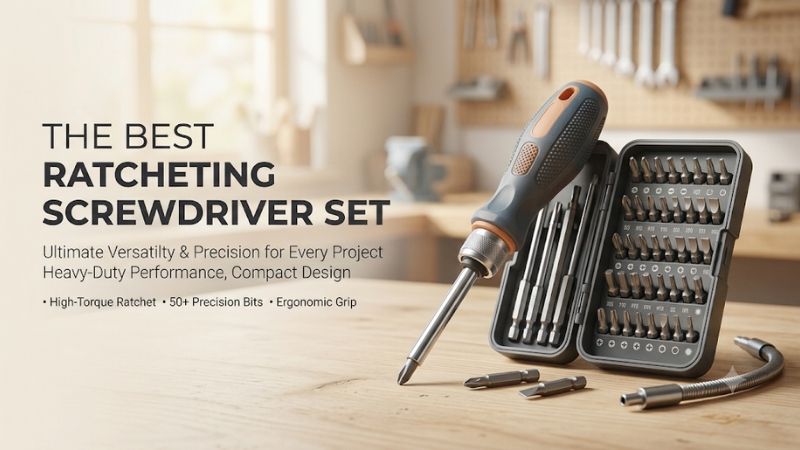
The best ratcheting screwdriver set for most home repairs is the Milwaukee 48-22-2903. Its removable holder, onboard bits, and full-size grip make it useful across several jobs. Choose a low-profile kit for screws under shelves, or a driver with lighter return resistance for bench work and loose machine screws.
The best ratcheting screwdriver set for each job
A household driver needs the tips you reach for often and a handle that feels stable through dozens of turns. A narrow-service driver has a different job, such as fitting above a screw or keeping a small screw engaged on the return stroke. The seven picks below cover those different needs.
| Model | Best use | What sets it apart | Main limitation |
|---|---|---|---|
| Milwaukee 48-22-2903 | General household repairs | Removable holder and onboard bits | The main grip still needs room |
| Klein Tools 32305 | Fixtures and mixed maintenance | Combo tips and a 1/4-inch nut driver | Match replacement bits to the shaft |
| Megapro Original 211R2C36RD | Frequent repairs around the home | Pullout cartridge and rotating palm cap | Check bit format before buying spares |
| Wera Kraftform Kompakt 27 RA 1, 05051517001 | Furniture with Pozidriv hardware | Magnetic holder and six 25 mm tips | Add square or Torx bits separately |
| LTT Ratcheting Screwdriver | PC builds and recurring bench work | Low return resistance and magnetic holder | Storage favors short bits |
| Klein Tools 65200 | Very shallow overhead clearance | Low-profile bit ratchet with 5-degree sweep | Small selection of included tips |
| Wera Tool-Check PLUS 05056490001 | Mixed screws and metric hex hardware | Bit ratchet, sockets, and compact case | Straight screwdriver handle is fixed |
How the best ratcheting screwdriver set picks were chosen
The picks are based on published kit contents, tool configuration, and the setups each design can handle. A removable holder earns credit when it changes the reach. A case earns credit when it carries useful sizes together. Grip and ratchet comments describe intended use and documented features.
Start with the screw and the space around it. A door-hinge screw can usually accept a conventional driver held straight ahead. A screw beneath a fixed countertop may allow little space above its head and enough room to bring a lever in from the side. A small screw inside a PC case presents another problem. Even with clear access, a lightly threaded screw may turn backward while a stiff ratchet resets. Those jobs reward different designs.
The comparison also looks at what comes in the exact package. A driver supplied with six tips in its handle is a complete carry option for common jobs. A boxed assortment has advantages if you need hex bits and sockets on the same visit. One physical bit can have two working ends, and an empty shaft might count as a nut driver. Compare the included sizes and the way they mount before using the advertised function or piece count as a deciding factor.
Choose a straight handle or a low-profile bit ratchet
A straight driver lets you push along the screw axis with your palm. A low-profile bit ratchet moves most of the handle to one side and leaves extra clearance above the screw. Check the actual approach and the hand space before treating either shape as a universal choice.
For drawer slides and cabinet hinges, a straight handle usually gives the best control when the opening is clear. It lets you push the bit into a Phillips head as you start a stuck screw. A sideways bit ratchet can help with a tucked-away mounting screw if you can push a finger on the back of the head. A stubby straight driver is a third option when the screw needs steady axial pressure and there is room for a shorter grip.
A 5-degree nominal sweep describes how little the mechanism needs to move between engagements under its design assumptions. Actual movement can be greater because of slack in the bit holder, looseness in the recess, and where your fingers sit. Before buying for a very tight job, use a cardboard outline or your current tool to check the arc. A small head with a long lever can still hit the next obstruction.
Seven ratcheting screwdriver sets worth considering
These sets range from everyday carry drivers to compact bit-ratchet kits. The inline picks suit regular access and axial pressure. The low-profile options suit work with a shallow ceiling and usable side clearance. Read the exact model name before comparing similar-looking listings.
Milwaukee 48-22-2903 for everyday repairs
The Milwaukee 48-22-2903 combines onboard storage, an all-metal ratchet, and a removable holder. Milwaukee lists 13 bits and a 1/4-inch nut-driver function. The holder can come out so compatible bits seat directly in the main handle for a shorter approach.
For a homeowner assembling a shelving unit and replacing a hinge on the same day, the Milwaukee offers a useful balance. Keep the holder installed for a screw past the face of the cabinet. Remove it when a shelf limits the distance behind an accessible fastener. Bits already in the handle save a trip to a case, and the full-size grip is easier to hold steadily than a small metal lever when you can work straight on.
The short configuration still needs room for the body and your hand. Below a sink rim or beside a door frame, a side bracket can prevent a full grip even when there is no collision at the shaft. If you mostly work under closely spaced surfaces, buy a low-profile companion. The Milwaukee is the first pick when you need one straight driver for mixed hardware and want two useful reach options in the same package.
Klein Tools 32305 for fixtures and maintenance
The Klein Tools 32305 groups common Phillips, slotted, square, and Torx profiles with two combo tips and a 1/4-inch nut driver. Its oversized cushion grip and handle storage suit a bag that sees both typical household screws and mixed light maintenance hardware.
Combo tips matter when a fastener has a recess made for that profile. The bit can seat more positively than a slotted blade resting in a single part of the head. At a workbench, compare the fit before turning. The correct tip fills the recess and rocks less than an approximate match. Identify the screw visually and use the labeled tip supplied for that pattern.
The onboard assortment is a good fit for maintenance rounds where you can predict most fasteners. Its size and bit system matter if you prefer a slim shaft or expect to use short generic insert bits in each position. Buy this exact model for the tips and grip it supplies. If one size wears out frequently, check the correct replacement designation first. This standard screwdriver suits general mechanical work on disconnected equipment. Use the appropriately rated tool where electrical work requires one.
Megapro Original 211R2C36RD for a grab-and-go kit
The Megapro Original 211R2C36RD pairs a 28-tooth ratchet with a pullout bit cartridge and a rotating rear cap. The exact set includes common Phillips, square, slotted, and Torx profiles. It suits someone who wants to keep a useful assortment inside one driver.
The cap lets the handle turn without requiring the same amount of rubbing against your palm. That can help when you maintain forward pressure through a series of turns. The cartridge keeps each included piece in a known slot. If you take a Torx bit out to service a door latch, its empty spot makes it easier to see which part still needs to go back before you leave the room.
The original version uses double-ended bits. Megapro sells other versions, so verify the exact bit fit and replacement options before borrowing parts across models. If you already own a broad set of generic insert bits and use them frequently, a driver with documented compatibility and easier spare storage may fit your routine better. Choose the Megapro when carrying and returning a predictable set of tips takes priority.
Wera Kraftform Kompakt 27 RA 1 for cabinet hardware
The Wera Kraftform Kompakt 27 RA 1, item 05051517001, combines a magnetic 1/4-inch holder, handle storage, and a selector for either direction or locked operation. This exact assortment includes six 25 mm Phillips, Pozidriv, and slotted bits in two sizes per family.
Pozidriv is a practical reason to buy this version for furniture. Many crosshead screws look alike until you inspect the extra markings and check how deeply a tip seats. A Pozidriv screw takes a matching Pozidriv bit. For a cabinet hinge with a shallow recess, try the correct profile and size with the driver locked. A stable fit gives you better control when you start the screw or make a short adjustment.
The small included assortment is focused. If your projects use square drive or Torx, buy those sizes separately and decide which bits deserve a place in the handle. Keep unfamiliar tips in a labeled sleeve until you need them. The exact item number matters because similar Kraftform packs can have different assortments. Pick this kit when you want an inline driver with standard-size replaceable bits and hardware coverage that suits the screws in front of you.
LTT Ratcheting Screwdriver for PC and bench work
The full-size LTT driver is designed around low return resistance, a magnetic holder, and onboard storage. The brand specifies twelve positions for its 20 mm bits or six positions for longer bits up to 42 mm. Its standard bundle includes eleven driving tips and a magnetic retrieval accessory.
A loose PC case screw can turn with very little resistance. When you move the handle to reset the ratchet, resistance inside the mechanism can rotate the screw backward and erase part of your progress. A light return stroke is valuable in that specific situation. You can also steady the shaft with a finger where safe and accessible, or use locked mode as the screw approaches its seat.
The premium makes more sense if you do this kind of light fastening frequently. The magnetic holder helps retain compatible steel screws and bits. For a tiny recessed screw, check the tip format and the thickness of the shaft before relying on the full-size driver. A precision driver with a narrow shaft is often the right companion. Decide which lengths fit the storage before ordering an extra assortment, since the cavity holds fewer longer pieces.
Klein Tools 65200 for low-profile access
The Klein Tools 65200 is a slim bit ratchet with a published 5-degree sweep and a short set of Phillips and slotted tips. Its side handle and low-profile head are useful when an overhang leaves too little room for the body of an inline ratcheting screwdriver.
Think of a retaining screw tucked beneath a fixed shelf. There may be enough height for a flat bit ratchet and a short bit, with room beside the screw to swing the handle. Test the setup with the actual bit. A longer tip can undo the clearance advantage. Make sure you can also push on the head to keep the bit seated before trying to turn a tight screw.
The kit includes an adapter for a socket and integrated 1/4-inch and 5/16-inch nut-driving sizes. Its screwdriver assortment is small. Add the exact Torx or hex tips you need before going to the worksite. Stick with the low-profile arrangement where it solves a physical access problem. For repeated assembly at an open bench, a full-size handle gives the palm more support and takes less effort to keep aligned.
Wera Tool-Check PLUS for screws and metric sockets
The Wera Tool-Check PLUS 05056490001 is a 39-piece compact kit with a 1/4-inch bit ratchet, a separate fixed bit-holding screwdriver, and metric sockets. It suits a repair bag that covers both ordinary screwdriver fasteners and small metric hex heads in a single visit.
You might remove a cover held by Torx screws, then find a small metric hex nut beneath it. The ratchet is useful when side approach is possible, and the fixed bit handle gives a straight grip for accessible screws. Organizing the accessories together makes it easier to judge what is missing. The 05056490001 is the metric-socket assortment, so check the exact pack when you need inch sizes.
This kit works well when the range of fasteners justifies carrying a case. The straight handle has a fixed drive. If the job needs dozens of turns on inline screws, choose a dedicated ratcheting driver and bring the Wera as a compact backup when access calls for it. Count the sockets and bits you would actually use. A small kit earns its space when it saves a second trip for a different drive size.
How to buy the best ratcheting screwdriver set
Choose by the first three jobs you expect to do. Note each screw profile, the angle where the driver can approach, and whether the screw takes many turns. Those observations tell you what should come in the kit and where you can save money on features you rarely need.
Check bit retention and realistic replacement options
A magnetic holder can keep a steel screw or bit in place during work, while a mechanical detent keeps a compatible insert from pulling free. Retention varies with the geometry of the bit and holder. Check whether the specific replacement you want locks in and seats to the right depth.
A double-ended bit can save storage room. A common single-ended insert can be easier to find in a replacement pack. The kit may accept a standard size in one configuration while requiring a certain length to store the bit or extract it easily. Check the tool body, holder, and storage requirements separately. If using a very short bit, confirm it remains easy to pull out after insertion.
A short trial can expose problems early. Seat a known tip and apply gentle hand pressure in locked mode with the screw loose. Pull the driver back straight to see if the tip stays attached. Repeat with a common longer bit, if supported. A thin holder can be convenient in a recess but may still be wider than a plain shaft. Check this before purchasing for a specific bracket or appliance cover.
Decide where the ratchet will pay for itself
A ratchet is especially useful when you can drive a screw continuously through several turns and keep the bit aligned. It earns less time on a single quarter-turn adjustment. The right choice depends on screw resistance, repeat count, and the room available to reset the handle.
A dresser with sixteen accessible fasteners can justify using a comfortable inline ratchet for most of the run. Start the threads by hand where practical, use the ratchet after they engage, and move to a controlled finish. For a hinge that needs a slight adjustment, a fixed driver of the correct size is generally quick to pick up and position.
If almost every project brings both conditions, a ratcheting driver with a locked position handles many of them with the same bit. Keep one dedicated precision size or a slim fixed driver if the common screw sits too deep for any removable holder you own. Check what you already have before buying two tools for the same set of screws.
Make the first job a fit check
Check the selector direction, bit fit, and axial clearance before using a new tool on a finished fastener. Start with a spare screw and a piece of scrap or a loose mechanical assembly. The test should reveal how much room your hands need and whether the chosen bit stays seated.
Try one loose screw and one that has enough resistance to reset the ratchet easily. Twist a little in both directions with the mechanism locked, then compare the felt play with the same bit held in ratchet mode. If the tip rocks in the screw head, change the tip before blaming the ratchet.
Finally, reproduce the orientation that matters most. Test above a simulated overhang for a low-profile driver. For a premium bench driver, use the bit and screw sizes you expect to use inside a case. If you buy a large assortment, return every item to its slot as you test. You will learn which pieces work well enough to keep close at hand.
A final comparison worth making is between the bit you expect to use most and the spare you can buy locally. If the everyday tip is easy to replace and the holder is comfortable through a full run, the kit can stay useful after the original assortment has seen some wear. Keep the first replacement in its own marked space so it is available when needed.
Conclusion
Buy the Milwaukee 48-22-2903 for all-around home repairs. Choose the Klein 32305 or Megapro for onboard coverage, the Wera inline kit for Pozidriv, or LTT for light bench work. Pick the Klein 65200 or Wera Tool-Check PLUS when low-profile access or mixed sockets drive the purchase.
More from Amazon
Programs that pair well with the guide above. Offers and eligibility are set by Amazon and may change.
Collect the home and kitchen items you want in one registry that guests can shop from.
Create a wedding registrySet up recurring deliveries of everyday items on eligible products. Terms and savings are set by Amazon.
Explore Subscribe & SaveFree shipping on eligible items, Prime Video and more. Eligible new members can start with a free trial.
Start a Prime free trialAudiobooks and podcasts to listen to on the go. Eligible new members can start with a free trial.
Try Audible freeAs an Amazon Associate we earn from qualifying purchases.