The best laser distance meter for most remodelers is the Bosch BLAZE Pro GLM165-40. It covers ordinary room surveys and material estimates with readable controls and useful onboard math. Choose a different tool if your work regularly involves deep corners, digital plan capture, or distant targets in daylight.
The best laser distance meter picks at a glance
These six picks cover the jobs that make buyers upgrade. They include taking measurements alone, working from corners, recording linked dimensions, measuring a narrow gap, carrying a meter on rough sites, and aiming outdoors. Compare the workflow first, then use the range column to rule out a poor fit.
| Model | Best fit | Published maximum | Buying consideration |
|---|---|---|---|
| Bosch BLAZE Pro GLM165-40 | General indoor remodeling | 165 ft | Typical minimum of 6 in |
| Leica DISTO D1 | Basic readings with Bluetooth | 40 m, about 130 ft | Choose it for simple capture |
| Klein Tools 93LDM200 | Short gaps and green-dot visibility | 200 ft | Accuracy changes beyond about 33 ft |
| Bosch BLAZE Connected GLM165-27C | Connected estimates on indoor jobs | 165 ft | Confirm app workflow and model suffix |
| Leica DISTO X3 | Rugged carry and corner work | 150 m, about 490 ft | Point-to-point work needs additional equipment |
| Leica DISTO D5 | Aiming at distant outdoor targets | 200 m, about 650 ft | Range and accuracy depend on conditions |
How the best laser distance meter picks were chosen
A meter earns a place here when a specific feature removes a recurring obstacle in the field. Published manufacturer specifications and operating instructions establish the differences. Range figures describe the class of instrument and should be read with the stated conditions.
Think about the first 20 readings on a normal job. One person recording the length of a den, hallway, and laundry room benefits from a screen that stays readable and a body that seats flat at the wall. An estimator capturing dimensions across several rooms benefits from linking each reading to the correct room on a plan. A contractor aiming at a garage facade in sunlight has to identify the exact spot before taking the reading. These differences can matter more than a marginal improvement in the accuracy column.
The recommendations use published specifications and operating instructions. The scenarios assume the beam has a usable target and the instrument can start from a stable reference. Where those assumptions fail, expect to establish a target plane, change where you stand, or verify with a second method. That distinction matters when you are comparing tools for an open doorway, framing stud edge, or a wall covered by a curtain.
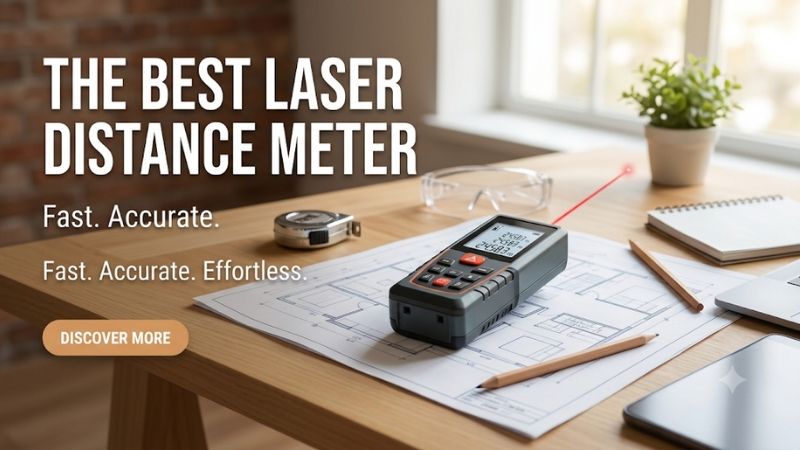
Which features earn their place in a tool bag
Room estimates benefit from continuous distance and onboard area math. Cabinet and trim jobs put more weight on reference surfaces and the ability to reach corners. Repeated field surveys can justify digital transfer when the software lets the crew identify and correct readings before leaving the site.
A distance meter starts its measurement at an assigned point on the instrument. Rear reference is convenient when the back rests against a wall. Front reference, where available, can help when placing the nose against a known edge. An extended endpiece can put the starting reference into a narrow corner. Check the reference icon whenever a job involves several positions, especially after using someone else’s meter or changing a setting to suit one unusual measurement.
Area and volume features speed up calculations for simple rectangles and boxes. They still depend on the geometry of the measurements. A 12-by-14-foot rectangular room gives 168 square feet. An L-shaped space can be split into rectangles, and a flooring quote needs to account for cut waste, product packaging, and layout. A computing mode can save effort while your notes explain what the number covers. Pay for the function when it appears in routine jobs and you can use it in the right sequence.
Six laser distance meters for different jobs
A compact red-beam meter is enough for many interior projects. The upgrades here solve specific problems. A green dot can be easier to locate in suitable conditions, Bluetooth transfers values, a foldout endpiece reaches corners, and a camera helps you align the beam at long distance.
Bosch BLAZE Pro GLM165-40 for indoor remodeling
The Bosch BLAZE Pro GLM165-40 is the first pick for a buyer who wants broad indoor capability without depending on a phone. Bosch lists typical accuracy of about ±1/16 inch, a typical range from 6 inches to 165 feet, and onboard storage for up to 10 readings.
The useful combination is continuous distance, several calculation modes, and dedicated onboard operation. Imagine planning paint for a basement with a main room, an office, and a connecting corridor. You can hold the rear of the device against a wall, take the opposite wall reading, capture a second side, and use the area mode for the floor footprint. You can then write down the height for a volume estimate or calculate wall area separately. Tie each measurement to its room before you move.
The same design works for one-person pre-bid visits. A helper is useful when the opposite wall is interrupted by shelving or a doorway, but most closed rooms give an adequate return surface. Ten memory slots provide a brief buffer, so assign a simple reading order and write down rooms as you go. A partly furnished house rarely presents the same clean shot from every position.
Buy it for mixed indoor work where straightforward controls and area estimates have value. Keep another method available for clearances below its listed minimum and for critical cut marks. Two AAA batteries fit a workflow in which a spare pair stays in the tool bag. The IP54 rating addresses dust and splash exposure under the rated conditions. Store the meter dry and protect the optical window from grit.
Leica DISTO D1 for simple digital capture
The Leica DISTO D1 suits a buyer who wants straightforward distance readings with Bluetooth transfer. Leica lists a 40-meter working range and nominal accuracy around 2 mm. The feature to judge is how easily a reading gets into the right place in your notes while you are still standing in the room.
A useful example is a property walkthrough for replacing several floor coverings. The meter captures straightforward dimensions while a compatible app receives numbers for the rooms you sketch. A familiar app with obvious field labels can reduce transcription. A hallway dimension entered in a bedroom field creates a different kind of error. Test the full sequence using two similar rooms, add a deliberate correction, and see whether your exported record keeps the correct labels.
A 40-meter instrument offers ample nominal reach for indoor rooms and many corridors. If your routine calls for seating a foldout tip in a recess or aiming through a camera in bright conditions, compare a different tool. Leica’s family specifications list a 0.2 m minimum for the D1, roughly 8 inches. A physical measuring tool is easier to apply to many hardware offsets and small reveals.
Buy the D1 if you want to enter readings digitally while keeping the instrument simple. Someone who already records five dimensions on paper almost as fast as they can read them may put more value on a different feature. Establish app compatibility and export preferences before spending more on the rest of the kit.
Klein Tools 93LDM200 for gaps and green-dot aiming
The Klein Tools 93LDM200 measures from about 2 inches to a published maximum of 200 feet. Its green beam, USB-C rechargeable battery, and reverse-contrast display suit mixed indoor jobs. Klein specifies about ±1/16 inch to 10 m and about ±1/8 inch beyond that threshold.
The short minimum helps when a job alternates between room width and a gap behind a fixed panel. Consider an equipment alcove where a technician wants an approximate clearance between two flat faces and then needs the length of the enclosing wall. One instrument can cover both tasks when its housing can sit securely and there is a broad target. Mark the beam height during the gap check so a repeat reading uses the same part of the opening.
A green dot may be easier to follow in some lighting, especially when aiming at a light matte target. Visibility still depends on the target, distance, and ambient light. If a long shot ends on a sunlit flat wall, it can be hard to see which patch received the beam. A camera-equipped instrument has an advantage when target identification is the hard part. Klein gives this model an IP54 rating and includes a protective case.
Choose the Klein if a genuinely short minimum and rechargeable power answer problems you encounter regularly. Its accuracy bands matter if you mix 20-foot interior work with 60-foot spans. For a tight installation, use the laser to locate the scale of the gap and confirm the final fit with a ruler, tape, or suitable gauge at the actual contact points. Plan a charging routine if it is an everyday tool.
Bosch BLAZE Connected GLM165-27C for field notes
The Bosch GLM165-27C adds Bluetooth transfer, a backlit color display, and an inclinometer to a 165-foot model. Consider it when taking the measurement is only the first step and the next person on the job needs an organized record that ties values to room names and drawing locations.
Walk into a kitchen where the plan has three similar wall runs. If every reading enters a shared note without labels, the record can be harder to interpret than paper. A connected meter is useful when you first select the wall on an annotated plan, then capture the reading, and finally confirm the new dimension in the correct field. If workers move from room widths to measurements for each cabinet run, label those two sets distinctly on the plan.
This model also appeals when display readability and angle information support repeated observations. Read the manual for the precise controls and limitations of the mode you use. Bosch flags a stakeout accuracy deviation for products with certain date codes. Buyers who expect to use stakeout should check the manufacturer’s model-specific notice against the unit they receive.
Choose this model if you can name the app, owner of the record, and export format before the job. Run a short sample from measurement through handoff to catch pairing issues. The GLM165-27C is the red-beam version. Similar-looking model suffixes can refer to different hardware or features.
Leica DISTO X3 for tough sites and inside corners
The Leica DISTO X3 pairs IP65 protection with a foldout endpiece and a 150-meter favorable-condition range. Its body is suited to crews that move between finished rooms and rough areas. The endpiece gives the meter a defined starting point for some corners and edges.
An empty garage makes it easy to brace a meter against a broad wall. A framed area with studs, plastic protection, and narrow recesses offers fewer consistent starting surfaces. A foldout reference can make the start position easier to reproduce tight to an inside corner. Check that the displayed reference matches the intended endpiece position. For a diagonal, compare where each reading starts and ends before treating two values as measurements of the same rectangle.
Leica specifies a lower range and wider tolerance for unfavorable conditions. That distinction matters in a bright loading bay or when the opposite surface returns the beam poorly. The X3 uses direct aiming. Leica offers compatible hardware for point-to-point measurement with the X3. Budget for the appropriate adapter and setup if that capability is central to the job.
Buy it when corner repeatability and the published protection rating bring value on most weeks. For estimates in finished houses with open walls and a small notebook, a simpler tool can do the bulk of the work. The X3 becomes more attractive when the conditions that make a basic instrument awkward appear often enough to cost labor.
Leica DISTO D5 for long outdoor sight lines
The Leica DISTO D5 is the outdoor-oriented pick because its digital Pointfinder lets you aim through an on-screen view. Leica lists up to 200 m in favorable conditions. That camera matters at distances and in lighting where seeing the dot on the surface with your eyes becomes difficult.
A practical case is measuring to a masonry facade across a yard without walking the whole span with another person. The Pointfinder lets you identify the portion of the facade that should take the shot. A stable position or suitable mount can make aiming easier, especially if the chosen target is narrow or framed by surfaces at different distances. Compare two readings after deliberately repositioning the beam within the target area. Check the manual’s specifications for unfavorable range and accuracy before quoting the device’s reach to a crew.
The camera helps you aim, and the instrument still needs a usable return from the target. Bare glass, shiny metal, an edge against open sky, or dark material in strong light can complicate that return. Use a properly positioned matte target where you can and check whether the reading corresponds to its actual face. Measure from a fixed point and record the start line, height, and aim where those details determine the use of the number.
Buy the D5 for recurring long or bright-condition shots that have made a simpler laser awkward. A buyer who mainly works between interior walls can redirect that budget to another part of the job. For boundary or other survey work, use the appropriate surveying equipment and procedure.
How to choose the best laser distance meter
Start with three measurements from your next job and identify what makes each hard. Measure the shortest opening that matters, the longest span you can expect to verify, and a shot that starts or ends on an awkward surface. Those three examples usually reveal which feature you need to pay for.
Match published accuracy to the work
A tool that displays thirty-seconds of an inch can still have a wider specified measurement tolerance. Read the manual’s accuracy and condition notes to establish what the reading supports. A room footprint, a countertop cutout, and a long exterior estimate can justify three very different methods.
For a rectangular room close to 12 by 14 feet, a small measurement error is unlikely to matter as much as including the right area and using the flooring manufacturer’s waste guidance. For a fixed inset shelf, approximately an eighth of an inch can change whether it seats. Repeat the reading at the front and back, compare the two faces, and then verify the planned cut with a method suited to the fit. The widest difference may come from the room geometry itself.
When checking a hallway dimension, look for a beam angled toward the far corner. The longer diagonal reading stays repeatable if the aiming stays consistent. Re-aim using a sensible target and align the beam along the intended axis. A stable sequence gives the number a meaning you can record and check later.
Choose the range you can actually use
Published range assumes a set of measurement conditions. On a shaded interior wall, the beam has a better chance of returning cleanly than it does from a sunlit or poorly reflecting surface at the same distance. The optical setup and the target plane deserve as much attention as the maximum on the carton.
Think about whether you can touch a suitable target or place a card. For a garden project with broad surfaces and no fixed panel at one end, a card attached to a post gives the beam an endpoint. Its face must line up with the intended reference line. Install a target on the wrong side of a stake and the returned distance can be consistent yet shifted by the stake thickness.
A buyer who measures indoors at 25 to 60 feet most days can prioritize the short end, screen, and reference control. A buyer who takes repeated outdoor distances across bright sites should judge aiming and target placement early. Look past an extra few dozen feet of nominal range if the available way to aim or stabilize the meter is the bottleneck.
Run a short acceptance check on your first job
Before using a meter for a purchase order or fabrication, verify the screen unit, the reference point, and repeatability on a known span. Begin on matte targets in ordinary indoor light. Then reproduce the toughest target and position you can access without making the first real measurement a rehearsal.
An easy check uses a straight, clear bench and two blocks fixed at a known separation. Establish the distance with a suitable trusted tool. Seat the meter relative to the chosen starting plane and aim at the target face. Take a reading, lift the instrument, and reseat it. Repeat for the other reference setting if you expect to use it, aligning the selected reference with the start plane. An error close to the body length is a reason to check the reference setting and starting position first.
Repeat the exercise in the units your crew actually uses. One assistant may enter a value in decimal feet while a drawing needs fractional inches. Take a sample reading through the import or handwritten handoff and ask a second person to read it back. For a purchase that will affect every job, seeing a number arrive in the intended field is as valuable as checking that the number leaves the instrument accurately.
Conclusion
Choose the Bosch BLAZE Pro GLM165-40 for most indoor remodeling and estimating. Get the Klein 93LDM200 for shorter gaps, the Leica DISTO D1 or Bosch GLM165-27C for digital records, the Leica X3 for corners and rougher sites, or the Leica D5 when outdoor aiming takes the most time.
More from Amazon
Programs that pair well with the guide above. Offers and eligibility are set by Amazon and may change.
Collect the home and kitchen items you want in one registry that guests can shop from.
Create a wedding registrySet up recurring deliveries of everyday items on eligible products. Terms and savings are set by Amazon.
Explore Subscribe & SaveFree shipping on eligible items, Prime Video and more. Eligible new members can start with a free trial.
Start a Prime free trialAudiobooks and podcasts to listen to on the go. Eligible new members can start with a free trial.
Try Audible freeAs an Amazon Associate we earn from qualifying purchases.