Key takeaways
- Substantial fastening and breakaway torque.
- Multiple operating modes for greater control.
- Compatible with the DEWALT 20V MAX battery system.
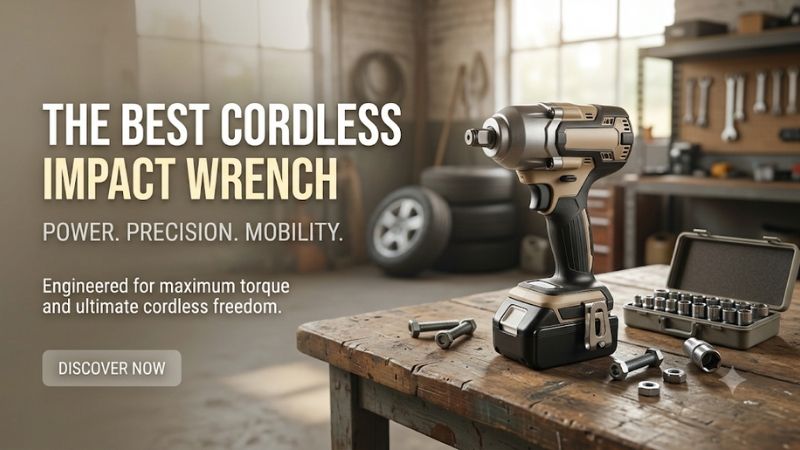
Choosing the best cordless impact wrench means balancing torque, tool size, battery compatibility, and control rather than simply selecting the highest advertised power. This guide compares seven cordless impact wrenches for wheel service, automotive repairs, demanding fasteners, and everyday garage work.
Quick Verdict: Which Cordless Impact Wrench Should You Buy?
For most home mechanics, a mid-torque 1/2-inch impact wrench offers the most practical combination of fastening capability, mobility, and manageable weight. High-torque tools are useful for severely corroded fasteners and larger equipment, while compact models provide better access around suspension components and crowded engine compartments.
The DEWALT DCF891 and Milwaukee M18 FUEL 2962-20 are particularly compelling all-around choices. Both deliver substantial manufacturer-rated breakaway capability without the bulk of the most powerful high-torque models.
For buyers prioritizing maneuverability, the Milwaukee 2855-20 and Makita XWT14Z deserve consideration. Users who regularly service heavy equipment should evaluate the Milwaukee 2967-20 or RIDGID R86212 instead.
Our recommendations are based on documented manufacturer specifications and practical design considerations, not proprietary detailed research.
Best Overall: DEWALT DCF891
The DEWALT DCF891 is a versatile choice for home mechanics who want one impact wrench capable of handling many automotive and garage tasks. Its 600 ft-lbs maximum fastening torque, 800 ft-lbs advertised breakaway torque, and multiple operating modes provide a useful balance between power and control.
Best Mid-Torque Alternative: Milwaukee 2962-20
The Milwaukee 2962-20 combines a relatively short housing with 650 ft-lbs of advertised nut-busting torque. Its four-mode control system, automatic shutoff, and bolt-removal behavior make it especially attractive to users already invested in Milwaukee M18 batteries.
Best for Tight Spaces: Milwaukee 2855-20
At approximately 4.9 inches long, the Milwaukee 2855-20 is designed for restricted access. Its 250 ft-lbs maximum advertised nut-busting torque makes it suitable for many smaller automotive fasteners, although demanding wheel or suspension work may require a stronger tool.
Best for Heavy-Duty Fasteners: Milwaukee 2967-20
The Milwaukee 2967-20 is intended for demanding applications requiring high breakaway capability. Manufacturer figures reach 1,600 ft-lbs nut-busting torque with a specified FORGE XC6.0 battery, making battery selection especially important when evaluating this tool.
Quick Comparison Table
| Model | Best For | Advertised Torque | Main Trade-Off |
|---|---|---|---|
| DEWALT DCF891 | Overall automotive versatility | 600 fastening / 800 breakaway ft-lbs | Larger than compact models |
| Milwaukee 2962-20 | Mid-torque garage work | 550 fastening / 650 nut-busting ft-lbs | Less capable than high-torque models |
| Milwaukee 2855-20 | Restricted access | 250 fastening / 250 nut-busting ft-lbs | Limited heavy-duty capability |
| Makita XWT14Z | Controlled fastening | 240 fastening / 430 nut-busting ft-lbs | Not intended for maximum torque |
| DEWALT DCF921 | Compact automotive work | 300 fastening / 450 breakaway ft-lbs | Less reserve power than DCF891 |
| Milwaukee 2967-20 | Heavy-duty fasteners | Up to 1,200 fastening / 1,600 nut-busting ft-lbs | Higher weight and greater bulk |
| RIDGID R86212 | High-torque garage work | 900 fastening / 1,300 breakaway ft-lbs | Less suitable for crowded spaces |
Torque figures are manufacturer ratings, not standardized independent test results. Performance depends on the battery, fastener, operating conditions, and impact duration.
How We Selected These Cordless Impact Wrenches
Selecting an impact wrench requires more than comparing maximum torque numbers. An oversized tool may be powerful enough to remove a difficult fastener but too cumbersome to reach it. Conversely, a compact tool might fit comfortably around suspension components yet lack the necessary breakaway capability.
The selection process emphasizes documented torque specifications, overall dimensions where available, operating modes, anvil configuration, battery compatibility, and the types of tasks each model is designed to perform.
We also considered whether each tool fills a distinct purchasing need. The recommendations include compact, mid-torque, and high-torque options rather than treating every impact wrench as interchangeable.
Manufacturer torque claims are useful for identifying intended performance classes, but values from different brands are not necessarily measured under identical conditions. These recommendations therefore emphasize application fit rather than unsupported claims about comparative real-world speed.
Detailed Cordless Impact Wrench Reviews
DEWALT DCF891 — Best Overall Cordless Impact Wrench
The DEWALT DCF891 is a strong candidate for homeowners who want a single impact wrench for wheel service, automotive repairs, and occasional demanding fastening tasks. Its mid-torque format provides considerable advertised output while remaining substantially more manageable than many high-torque alternatives.
Best For: Home mechanics, automotive maintenance, wheel service, and general garage repairs.
Key Specifications
| Feature | Specification |
|---|---|
| Battery platform | DEWALT 20V MAX |
| Drive size | 1/2-inch square |
| Maximum fastening torque | 600 ft-lbs |
| Maximum breakaway torque | 800 ft-lbs |
| Maximum no-load speed | 2,000 RPM |
| Approximate tool length | 6.95 inches |
| Motor | Brushless |
Why We Picked It
The DCF891 combines substantial torque reserves with controllable output settings. Its Precision Wrench mode is designed to help manage fastening and removal behavior, making the tool more versatile than a basic single-speed impact wrench.
Features and Practical Performance
The multiple operating modes help users select a less aggressive setting for smaller fasteners or higher output for demanding removal work. This matters because full impact power is rarely appropriate for every bolt on a vehicle.
The nearly seven-inch housing may prevent access to some recessed fasteners. Its maximum advertised torque also does not eliminate the need for penetrating oil, proper sockets, or other removal methods when corrosion is severe.
Pros
- Substantial fastening and breakaway torque.
- Multiple operating modes for greater control.
- Compatible with the DEWALT 20V MAX battery system.
Cons
- Less maneuverable than compact alternatives.
- Performance and total weight depend on battery choice.
Buy If: You want one versatile impact wrench for a broad range of automotive tasks.
Skip If: Your work primarily involves small fasteners in extremely narrow areas.
Milwaukee M18 FUEL 2962-20 — Best Mid-Torque Alternative
The Milwaukee 2962-20 offers a compelling combination of usable torque, relatively compact dimensions, and specialized control features. It is particularly suitable for garage users who already own M18 equipment and want a tool capable of handling a wide range of maintenance work.
Best For: Automotive repairs, frequent socket changes, and users seeking mid-torque power without excessive bulk.
Key Specifications
| Feature | Specification |
|---|---|
| Battery platform | Milwaukee M18 |
| Drive size | 1/2-inch square |
| Maximum fastening torque | 550 ft-lbs |
| Maximum nut-busting torque | 650 ft-lbs |
| Tool length | Approximately 6 inches |
| Control system | Four-mode DRIVE CONTROL |
| Lighting | Tri-LED |
Why We Picked It
The 2962-20 provides a useful middle ground between compact impact wrenches and heavy high-torque tools. Its short housing improves access, while its advertised torque is suitable for a broad range of automotive fasteners under appropriate conditions.
Features and Practical Performance
The fourth operating mode includes automatic shutoff and bolt-removal control. Automatic shutoff limits initial fastening torque in that mode, while bolt-removal control reduces speed after a fastener breaks loose.
These features can help limit fastener run-off and improve handling. However, they do not make the wrench a calibrated tightening instrument.
Users still need to verify final torque with a suitable torque wrench.
Pros
- Strong torque-to-size balance.
- Useful bolt-removal control.
- Compatible with Milwaukee M18 batteries.
Cons
- Not equivalent to a dedicated high-torque tool.
- Battery choice affects total weight and performance.
Buy If: You perform varied automotive repairs and prefer a maneuverable mid-torque tool.
Skip If: Your work regularly involves large, severely corroded heavy-equipment fasteners.
Milwaukee M18 FUEL 2855-20 — Best for Tight Spaces
The Milwaukee 2855-20 prioritizes short overall length, handling, and access over maximum torque. This makes it valuable for mechanics working around components where larger impact wrenches may be awkward or impossible to position correctly.
Best For: Compact working areas, lighter automotive service, and maintenance around closely spaced components.
Key Specifications
| Feature | Specification |
|---|---|
| Battery platform | Milwaukee M18 |
| Drive size | 1/2-inch square |
| Advertised nut-busting torque | 250 ft-lbs |
| Tool length | Approximately 4.9 inches |
| Motor | Brushless |
| Operating modes | Four |
Why We Picked It
A shorter impact wrench can reduce the need for extensions or extensive component removal. The 2855-20’s compact head allows better positioning around some suspension, engine, and underbody fasteners.
Features and Practical Performance
Its four-mode control system enables operators to reduce output where appropriate. The LED lighting around the anvil also assists visibility in poorly illuminated working areas.
However, its 250 ft-lbs advertised rating is considerably below that of mid-torque and high-torque alternatives. It should not be purchased solely as a replacement for a stronger wrench when stubborn wheel hardware is the principal application.
Pros
- Very short housing.
- Multiple power settings.
- Good access to restricted areas.
Cons
- Lower torque ceiling.
- Not the strongest single-tool solution for difficult automotive removals.
Buy If: Access and manageable size matter more than maximum output.
Skip If: You primarily need to remove heavily corroded or oversized fasteners.
Makita XWT14Z — Best for Controlled Fastening
The Makita XWT14Z is a practical option for people who prioritize balanced handling and adjustable fastening behavior. Its four-speed selection and multiple automatic stopping modes help users tailor the tool’s operation to different jobs.
Best For: Automotive assembly, general mechanical repairs, and users with Makita 18V LXT batteries.
Key Specifications
| Feature | Specification |
|---|---|
| Battery platform | Makita 18V LXT |
| Drive size | 1/2-inch square |
| Maximum fastening torque | 240 ft-lbs |
| Maximum nut-busting torque | 430 ft-lbs |
| Tool length | Approximately 5.63 inches |
| Speed selection | Four speeds |
| Motor | Brushless |
Why We Picked It
The XWT14Z distinguishes itself through relatively compact dimensions and its automatic stopping modes. These features are valuable for mechanics who frequently alternate between removing and installing hardware.
Features and Practical Performance
Makita provides multiple forward and reverse auto-stop configurations intended to help reduce excessive rotation or fastener loss. Users can also select among four speed settings.
The tool is suitable for many everyday fastening and removal applications, although its advertised torque is lower than more powerful mid-torque alternatives.
Its suitability for a specific wheel fastener depends on the actual breakaway resistance, available battery performance, and operating conditions.
Pros
- Compact, manageable design.
- Multiple auto-stop functions.
- Four selectable speed settings.
Cons
- Lower maximum fastening torque than some competitors.
- Battery and charger are not included with the bare-tool version.
Buy If: You value control, compactness, and Makita LXT compatibility.
Skip If: Maximum removal capability is your highest priority.
DEWALT DCF921 — Best Compact Automotive Alternative
The DEWALT DCF921 is designed for buyers who need more maneuverability than a conventional mid-torque wrench but still want substantial capability for everyday mechanical fastening. It combines a compact housing with multiple operating modes and DEWALT battery compatibility.
Best For: Home mechanics, smaller automotive workspaces, and DEWALT tool owners.
Key Specifications
| Feature | Specification |
|---|---|
| Battery platform | DEWALT 20V MAX |
| Drive size | 1/2-inch square |
| Maximum fastening torque | 300 ft-lbs |
| Maximum breakaway torque | 450 ft-lbs |
| Motor | Brushless |
| Operating modes | Four |
| Anvil | Hog ring on DCF921 version |
Why We Picked It
The DCF921 provides a useful combination of compact handling and advertised breakaway capability. Its Precision Wrench setting helps manage fastening operations, while the selectable modes allow the operator to adjust output.
Features and Practical Performance
The tool includes an integrated work light and a hog-ring anvil for quick socket changes. Its compact design is beneficial when working inside wheel wells or around mechanical assemblies.
Its limitations become more noticeable with particularly stubborn bolts. Users performing frequent heavy-duty repairs may prefer the greater reserves of the DCF891.
Pros
- Compact housing.
- Multiple control settings.
- Compatible with DEWALT 20V MAX batteries.
Cons
- Less torque than larger mid-torque tools.
- Compact size does not guarantee access to every recessed fastener.
Buy If: You already use DEWALT batteries and prefer a smaller automotive impact wrench.
Skip If: You need maximum power for demanding removal jobs.
Milwaukee M18 FUEL 2967-20 — Best High-Torque Model
The Milwaukee 2967-20 is designed for demanding applications where compact impact wrenches may struggle. Its high advertised fastening and nut-busting torque make it suitable for evaluating against heavy-duty mechanical maintenance requirements.
Best For: Large fasteners, demanding automotive work, and heavy equipment maintenance.
Key Specifications
| Feature | Specification |
|---|---|
| Battery platform | Milwaukee M18 |
| Drive size | 1/2-inch square |
| Maximum fastening torque | Up to 1,200 ft-lbs |
| Maximum nut-busting torque | Up to 1,600 ft-lbs |
| Tool length | Approximately 7.6 inches |
| Bare-tool weight | Approximately 5.9 lbs |
| Motor | Brushless |
Why We Picked It
Milwaukee specifies particularly high output for this model when paired with the appropriate battery. The available torque reserve makes it relevant to applications involving large or stubborn fasteners.
Features and Practical Performance
The highest published output depends on battery configuration. A smaller or less capable battery should not automatically be expected to reproduce the maximum advertised figures.
Its weight and physical dimensions also make it less comfortable for prolonged work in restricted positions. Buyers should consider whether their regular applications actually justify high-torque capability.
Pros
- Very high advertised torque.
- Suitable for demanding removal tasks.
- Part of the Milwaukee M18 ecosystem.
Cons
- Heavier and bulkier than mid-torque models.
- Maximum advertised output depends on battery configuration.
Buy If: You routinely handle stubborn, high-load fasteners and need substantial removal capability.
Skip If: Most of your work involves small automotive bolts or confined areas.
RIDGID R86212 — Best High-Torque Garage Alternative
The RIDGID R86212 combines high manufacturer-rated output with multiple speed settings and a cordless 18V platform. It is worth considering for buyers who want a powerful garage wrench and are evaluating alternatives to premium professional tool ecosystems.
Best For: Heavy garage work, larger automotive fasteners, and users of RIDGID 18V equipment.
Key Specifications
| Feature | Specification |
|---|---|
| Battery platform | RIDGID 18V |
| Drive size | 1/2-inch square |
| Maximum fastening torque | 900 ft-lbs |
| Maximum breakaway torque | 1,300 ft-lbs |
| Motor | Brushless |
| Operating controls | Three speeds and an automatic tightening mode |
Why We Picked It
The R86212 offers high advertised torque in a conventional cordless format. Its multiple settings allow users to moderate output rather than relying exclusively on a full-power trigger response.
Features and Practical Performance
For garage owners who regularly encounter stubborn fasteners, the available breakaway rating may provide useful headroom. However, such ratings should not be interpreted as guaranteed success with every rusted or seized bolt.
RIDGID offers certain eligible tools and kits with a Lifetime Service Agreement subject to the manufacturer’s terms and registration requirements. Buyers should verify eligibility for the exact package rather than assuming every version qualifies.
Pros
- High advertised fastening and breakaway torque.
- Multiple operating settings.
- Potential service-program benefits for qualifying purchases.
Cons
- Larger high-torque format limits maneuverability.
- Service eligibility must be checked for the exact purchase.
Buy If: Your garage work regularly requires substantial breakaway capability.
Skip If: Compact size or low tool weight is more important than power.
Cordless Impact Wrench Buying Guide
Choose the Correct Torque Class for Your Work
Cordless impact wrenches generally fall into compact, mid-torque, and high-torque categories. Compact models prioritize access and reduced weight, while mid-torque designs offer greater versatility for common automotive repairs.
High-torque models provide additional capacity for large or stubborn fasteners. However, maximum advertised torque is not the same as a guaranteed real-world removal result.
The best starting point is identifying the most demanding fasteners you regularly encounter, then selecting an appropriate tool class without sacrificing everyday usability.
Understand Fastening Torque and Breakaway Torque
Fastening torque describes the manufacturer’s claimed maximum tightening capability under specified conditions. Breakaway or nut-busting torque refers to the advertised ability to loosen resistant fasteners.
These ratings are not interchangeable, and different manufacturers may use different measurement procedures.
A tool advertising 800 ft-lbs breakaway torque should not be assumed to tighten every fastener to 800 ft-lbs or to remove every fastener previously tightened to that value.
Final tightening must be completed and verified according to the applicable manufacturer’s specifications with a calibrated torque wrench.
Decide Between 3/8-Inch and 1/2-Inch Drive
A 3/8-inch drive impact wrench is useful for smaller mechanical fasteners and situations where compact sockets are advantageous. A 1/2-inch drive is a common choice for wheel service and more demanding automotive work.
The drive size alone does not determine the torque available. Both the tool’s output and the socket’s impact rating matter.
Avoid using ordinary chrome hand-tool sockets on an impact wrench. Select appropriately rated impact sockets in the correct size and drive configuration.
Compare Battery Ecosystems Before Purchasing
Battery compatibility can substantially influence the total cost of ownership. A bare tool may appear economical until the cost of a suitable battery and charger is included.
When comparing cordless systems, evaluate battery availability, capacity, manufacturer-supported compatibility, charger requirements, and the other tools you already own.
Larger battery packs may support greater power delivery or runtime, but they also increase weight. Certain high-torque figures are achievable only with specified battery configurations.
Consider the Tool’s Dimensions and Working Clearance
Tool length, battery placement, socket depth, and available room for your hand all influence whether an impact wrench fits a particular application.
A compact impact wrench may provide better access around suspension components or machinery than a tool with considerably higher torque.
Before purchasing, evaluate the smallest working spaces you regularly encounter. The shortest bare-tool measurement alone does not account for the battery, socket, or extension.
Evaluate Speed Controls and Automatic Modes
Variable speed triggers and selectable operating modes help manage fastener engagement. Automatic shutoff and bolt-removal controls may reduce unwanted rotation or limit the risk of dropping loosened nuts.
These electronic features are operational aids, not substitutes for correct fastening procedures.
When a joint has a specified torque requirement, the impact wrench should be used only as appropriate for the preliminary operation. Final torque verification remains essential.
Choose the Appropriate Anvil Retention System
Hog-ring anvils use a friction-style retaining ring to hold compatible sockets and generally support quick socket changes. Detent-pin arrangements can provide positive retention but may require additional effort to release sockets.
Neither system is automatically better for every user. Frequent socket changes often favor a hog ring, while applications requiring more deliberate retention may justify a detent-pin configuration.
Always use sockets and retention hardware compatible with the exact tool.
Account for Safety and Maintenance
Impact wrenches can cause fasteners to spin rapidly, create reaction forces, and damage unsuitable sockets or hardware. Wear eye protection, keep loose clothing away from rotating components, and secure the workpiece.
Never rely on an automotive jack alone when working beneath a vehicle. Use correctly rated support equipment on a suitable surface.
Remove the battery before adjusting accessories or performing maintenance. Inspect the anvil, sockets, and battery contacts regularly.
Avoid applying impact power to damaged fasteners or inappropriate assemblies merely because a tool has enough advertised torque.
Frequently Asked Questions
Can a cordless impact wrench remove car lug nuts?
Yes, many cordless impact wrenches are designed for wheel service. However, successful removal depends on the nut’s actual resistance, corrosion, socket fit, battery condition, and tool capability. Use the correct impact socket and verify final installation torque using a torque wrench.
Is a 1/2-inch impact wrench suitable for home mechanics?
A 1/2-inch drive is a practical choice for many home automotive tasks because compatible impact sockets are widely used for wheel hardware and larger mechanical fasteners. Smaller tools or ratchets may still be preferable for delicate or restricted applications.
How much torque does a cordless impact wrench need?
There is no universal requirement. Compact tools may be sufficient for lighter mechanical repairs, while mid-torque and high-torque models provide more removal capability. Select a tool based on your actual applications rather than treating one advertised number as a guarantee.
Can you tighten lug nuts with an impact wrench?
An impact wrench can assist with initial installation where the vehicle manufacturer’s procedures permit it. However, it should not be used as the sole method of achieving final specified torque. Verify lug-nut torque with a suitable calibrated torque wrench.
Are brushless impact wrenches better than brushed models?
Brushless designs can offer advantages in efficiency, motor control, and maintenance requirements. Their actual performance still depends on gearing, electronics, battery capability, and tool design. A brushless motor alone does not guarantee superior torque.
Is a high-torque impact wrench worth buying for occasional repairs?
Usually not unless your repairs involve demanding fasteners. A mid-torque model often provides a better compromise between size, power, and comfort. Buyers should prioritize the actual workloads they expect rather than the largest available torque rating.
Conclusion
The best cordless impact wrench for most home mechanics is a versatile mid-torque model such as the DEWALT DCF891 or Milwaukee 2962-20. Choose the Milwaukee 2855-20 when restricted access is the priority, or the Milwaukee 2967-20 when demanding removal work justifies additional weight and torque. Battery compatibility, suitable impact sockets, and correct final tightening procedures remain essential.
More from Amazon
Programs that pair well with the guide above. Offers and eligibility are set by Amazon and may change.
Collect the home and kitchen items you want in one registry that guests can shop from.
Create a wedding registrySet up recurring deliveries of everyday items on eligible products. Terms and savings are set by Amazon.
Explore Subscribe & SaveFree shipping on eligible items, Prime Video and more. Eligible new members can start with a free trial.
Start a Prime free trialAudiobooks and podcasts to listen to on the go. Eligible new members can start with a free trial.
Try Audible freeAs an Amazon Associate we earn from qualifying purchases.