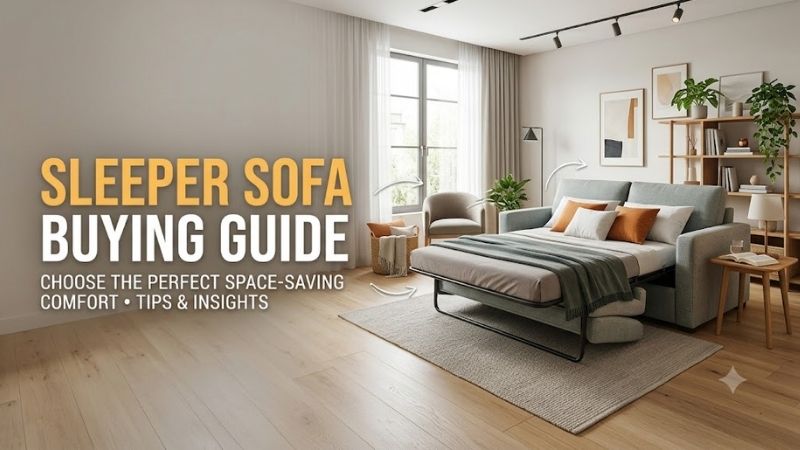
A sleeper sofa buying guide should explain how to evaluate furniture that must function as both a comfortable couch and a practical bed. Mattress construction, conversion mechanisms, seating depth, upholstery, and room clearance all affect the result. This guide helps you compare sleeper types, understand their compromises, and choose a model that matches your household’s needs.
What Is the Difference Between a Sleeper Sofa and a Sofa Bed?
The terms sleeper sofa and sofa bed are often used interchangeably, but they can describe somewhat different constructions.
Traditionally, a sleeper sofa contains a separate mattress folded inside its frame. The mattress is pulled out when the sofa is converted for sleeping.
A sofa bed may instead use the original seat and back cushions to create a horizontal sleeping surface.
However, contemporary retailers frequently apply both names across multiple designs. Product terminology alone is therefore insufficient.
The important purchasing question is how the sleeping surface is formed, supported, and stored.
Traditional Pull-Out Sleepers
A traditional pull-out contains a mattress and an unfolding support mechanism inside the sofa.
This design can preserve a relatively conventional couch appearance when closed.
However, the mattress usually needs to fold for storage, creating thickness and flexibility constraints.
The frame also adds weight and mechanical complexity.
The best versions are carefully designed around the mattress, support system, and ease of opening rather than simply adding a fold-out bed to an ordinary sofa.
Convertible Sofa Beds
A convertible design uses movable seats, backs, or platforms to create a sleeping surface.
Some use a click mechanism, while others unfold cushions or slide additional sections forward.
These systems can be relatively straightforward and may cost less than premium pull-outs.
However, the sleeping surface can contain seams or changes in firmness where components meet.
A buyer should determine whether those transitions are noticeable before choosing a convertible for frequent use.
Sleeper Sectionals
A sleeper sectional combines an L-shaped or related seating arrangement with a convertible bed.
Some also contain chaise storage.
This multifunctionality can be useful in apartments, but the chaise creates a substantial permanent footprint.
A sectional should be selected because its everyday seating layout is desirable, not simply because it provides more furniture in one purchase.
Compare the Main Sleeper Sofa Mechanisms
| Mechanism | How it works | Main advantage | Main limitation |
|---|---|---|---|
| Traditional pull-out | Unfolds stored mattress and frame | Dedicated mattress | Heavy mechanism and mattress thickness limits |
| Click-clack | Adjusts backrest into flat position | Simple conversion | May require wall clearance |
| Slide-out | Extends seat platform forward | Uses existing sofa structure | Sleeping seams and cushion variation |
| Fold-flat | Repositions cushions or back sections | Often straightforward | Surface may be firm or segmented |
| Foam fold-out | Unfolds a multilayer foam platform | Can support compact design | Foam construction varies |
| Pop-up platform | Raises and extends a support section | Alternative integrated mechanism | Requires specific operating clearance |
| Sleeper sectional | Combines seating and convertible bed | Lounging plus guest accommodation | Large footprint |
Start With How Often the Bed Will Be Used
The intended frequency of sleeping is one of the strongest factors in choosing a sleeper sofa.
A product opened several times per year faces different demands from one used every night.
For occasional guests, buyers may reasonably prioritize compactness, value, and easy operation.
For frequent overnight use, mattress comfort, support consistency, ventilation, cleaning, and mechanism durability become more important.
Occasional Guest Use
A sleeper used for one or two nights at a time may not need the same mattress construction as a permanent bedroom bed.
A compact fold-flat model can be practical when it supports the guest’s size and preferences adequately.
However, occasional does not mean that uncomfortable furniture is acceptable.
Guests still need sufficient sleeping width, length, and support.
Regular Overnight Guests
When friends or relatives stay frequently, investing in a more substantial sleeping surface may be worthwhile.
A dedicated foam or innerspring mattress can offer a different experience from a surface assembled from sofa cushions.
However, mattress thickness alone does not establish comfort. Underlying support, firmness, and body proportions matter.
Everyday Sleeping
A sleeper used every night should be evaluated as a primary sleeping surface.
The owner needs to consider both comfort and whether repeated conversion is practical.
If the bedroom can accommodate a conventional mattress with a Murphy-bed arrangement or another suitable solution, that alternative may deserve comparison.
A product described as suitable for daily use should still be assessed for the individual sleeper’s needs.
Choose the Correct Mattress Size
The actual sleeping dimensions often differ from the sofa’s exterior dimensions.
A sleeper may have wide armrests or a substantial frame while providing a relatively narrow mattress.
Conversely, an efficiently designed convertible may provide a surprisingly generous sleeping surface.
Twin Sleepers
Twin-size sleeping arrangements are useful when the furniture is mainly intended for one guest.
They are often found in sleeper chairs and compact loveseats.
However, length can be a limitation for taller adults.
Full-Size Sleepers
Full-size sleeping surfaces can suit one adult comfortably and may accommodate two people who are comfortable sharing a narrower bed.
However, a standard full mattress measures 54 × 75 inches, providing substantially less individual width for two sleepers than a queen.
Queen-Size Sleepers
A standard queen mattress measures 60 × 80 inches.
This may be preferable for adult couples and taller guests.
However, not every sleeper marketed as queen offers exactly those dimensions.
Review the actual mattress measurements for the chosen model.
Custom Sleeping Dimensions
Some sofa beds use manufacturer-specific sizes.
This can affect bedding selection and replacement mattress availability.
An unusually sized sleeper may require specialized fitted sheets or a custom mattress cover.
Mattress Thickness and Construction
A thicker sleeper mattress may provide additional cushioning, but thickness is not a universal quality score.
Support material, firmness, layering, and the structure beneath the mattress all influence comfort.
Polyurethane Foam
Polyurethane foam is widely used in sofa beds because it can be formed into different thicknesses and firmness levels.
However, density and firmness describe different characteristics.
Density measures mass per unit volume. Firmness describes resistance to compression under specified conditions.
A high-density foam is not automatically soft or appropriate for every sleeper.
Memory Foam
Memory foam generally responds more slowly to pressure and conforms around the body.
Some sleepers enjoy that contouring.
Others dislike the sinking sensation or perceived warmth of certain constructions.
A memory-foam label should not substitute for evaluating effective support.
Innerspring Mattresses
Innerspring sleeper mattresses use coils to provide support.
However, the limited space inside a folding mechanism can influence the available mattress design.
A thin innerspring mattress may feel different from a thicker conventional bedroom mattress.
The underlying support frame also matters.
Pocket Springs
Pocket springs provide individual spring units within a mattress or seating system.
Their response differs from foam, but performance depends on coil design, padding, and the finished structure.
Do not assume spring count alone determines quality.
The Importance of the Support Platform
The mattress is only one component of the sleeping arrangement.
The frame or support surface beneath it influences how weight is distributed.
Metal Fold-Out Frames
Traditional pull-out sleepers often use metal mechanisms.
Their design must support the mattress while allowing repeated folding.
A poorly designed or damaged frame may create discomfort or mechanical problems.
Wood Platforms
Some premium sleepers use a platform beneath the mattress.
This creates a different support structure from a conventional fold-out mechanism.
However, a platform does not guarantee an ideal mattress feel.
Cushion-Based Platforms
Convertible sofa beds sometimes use upholstery cushions resting on an extended frame.
That can be simple and practical, but seams between cushions may affect perceived comfort.
Evaluate the finished sleeping surface rather than assuming the mechanism type determines quality.
Seating Comfort Matters Just as Much
A sleeper sofa may spend most of its life in the closed position.
For that reason, everyday seating deserves the same scrutiny as sleeping comfort.
Seat Height
Seat height influences how naturally the feet rest and how easily a person stands.
A lower contemporary sleeper may feel relaxed but less convenient for some adults.
The actual height also changes with cushion compression.
Seat Depth
Deep seating can be attractive for lounging, but it may be uncomfortable for someone who prefers an upright posture.
Measure usable seat depth with the back cushions installed.
Published frame depth may not reflect the actual sitting area.
Back Cushions
Loose back cushions can provide a comfortable, relaxed appearance.
However, they may require fluffing and need storage when the bed is opened.
A fixed-back design can reduce cushion handling but may offer less flexibility in sitting posture.
Armrests
Wide arms can make a sofa appear substantial while reducing usable seating width.
In small living rooms, narrow arms may provide more seating space within the same overall furniture width.
However, armrest comfort and appearance remain personal preferences.
Upholstery Quality and Maintenance
A sleeper sofa experiences concentrated wear because occupants sit, move, and occasionally sleep on the same furniture.
The upholstery should suit the household’s daily habits.
Performance Fabric
Certain upholstery fabrics are designed to resist stains or abrasion.
However, performance is a broad marketing term.
Review the actual material, test information, and cleaning instructions.
Removable Covers
A removable cover can simplify cleaning, particularly when machine washing is permitted.
However, not every removable cover is washable.
Some require professional cleaning or other treatment.
Leather and Coated Fabrics
Leather and leather-look upholstery provide different maintenance characteristics from woven fabric.
Some finishes are easy to wipe, while others require more careful treatment.
Avoid assuming that every material described as leather is equally durable or easy to clean.
Mattress Hygiene
A sleeper mattress should be maintained separately from the seating upholstery.
Use suitable bedding and follow the manufacturer’s instructions for cleaning and drying.
A mattress that remains damp before folding can develop hygiene problems.
Frame and Mechanism Durability
A sleeper sofa combines furniture structure with moving parts.
This creates more potential maintenance points than many ordinary sofas.
Frame Construction
Frames may contain solid wood, plywood, engineered wood, metal, or combinations.
The quality of the joints and support design matters more than the presence of one premium-sounding material.
Hinges and Sliding Hardware
Moving mechanisms should operate according to the manufacturer’s intended sequence.
A mechanism that binds or shifts unexpectedly should not be forced.
Loose hardware or damaged components require attention.
Repeated Conversion
A mechanism used every day experiences more cycles than one opened a few times per year.
Buyers expecting frequent conversion should pay particular attention to intended use, warranty terms, and replacement parts.
Weight Capacity
A published load rating should be interpreted in the manufacturer’s specified conditions.
It does not guarantee that the furniture can safely withstand every loading pattern.
Follow the actual product instructions.
How to Evaluate a Sleeper Sofa in a Showroom
Whenever possible, test the sofa in both positions.
Begin by sitting normally. Check whether the feet reach the floor comfortably and whether the back support matches your preferred posture.
Then ask to see the conversion sequence.
Observe how many cushions must be removed, whether the mechanism requires significant force, and how much floor space the bed occupies.
Lie on the open sleeping surface in your normal position when the showroom permits it.
Notice any uncomfortable seams or transitions, while recognizing that a short showroom test cannot predict long-term durability or all-night comfort.
Finally, review the warranty and return conditions for both the sofa structure and mattress components.
Cost and Long-Term Value
Sleeper sofas range from basic budget convertible furniture to expensive custom upholstered models.
The right budget depends on use frequency and the value of the second function.
Entry-Level Convertible Sofas
These can be suitable for occasional guests and temporary apartments.
However, simpler mechanisms and mattress construction may involve comfort compromises.
Midrange Sleepers
Midrange products may provide improved upholstery choices, more substantial cushions, or different sleeping mechanisms.
The additional cost is worthwhile only when those features address actual household needs.
Premium Sleeper Sofas
Premium models may provide dedicated mattresses, platform support, custom upholstery, and additional configurations.
These can be appealing for regular guest use.
However, high prices do not eliminate the need to evaluate dimensions, comfort, and cleaning.
Total Ownership Cost
Consider delivery, assembly, special sheets, replacement mattresses, upholstery cleaning, and possible repairs.
A sleeper with a less expensive purchase price may become costly if replacement components are unavailable.
A Sleeper Sofa Buying Checklist
| Criterion | What to confirm |
|---|---|
| Intended use | Occasional guest bed or regular sleeping |
| Closed dimensions | Full exterior width, depth, and height |
| Open dimensions | Entire converted furniture footprint |
| Mattress dimensions | Actual usable sleeping width and length |
| Mattress construction | Foam, springs, or converted cushions |
| Support structure | Platform, frame, slats, or upholstered base |
| Seat comfort | Height, depth, firmness, and back support |
| Conversion | Required effort and cushion handling |
| Upholstery | Cleaning code and removable-cover rules |
| Delivery | Box sizes, weights, door and stair access |
| Warranty | Frame, mechanism, and mattress coverage |
| Repairs | Replacement component availability |
Common Sleeper Sofa Buying Mistakes
Buying Based on Mattress Thickness Alone
Thickness does not fully describe firmness or support.
Compare the complete mattress and foundation system.
Ignoring Daily Sofa Comfort
An excellent guest bed is not necessarily a comfortable couch.
Test both functions.
Assuming All Queen Sleepers Have Standard Dimensions
Some convertible surfaces are narrower than a conventional queen.
Check actual measurements.
Forgetting the Opening Mechanism
A sleeper may require moving furniture or removing heavy cushions.
Evaluate the full conversion process.
Overlooking Warranty Restrictions
Warranty terms can differ between upholstery, frame, and mechanisms.
Read the applicable coverage.
Frequently Asked Questions
Is a Sleeper Sofa Comfortable Enough for Everyday Use?
Some designs may be suitable for frequent sleeping, but comfort depends on the mattress, support, and individual’s preferences. A sofa intended for occasional guests should not automatically be assumed suitable as a permanent primary bed.
Is Memory Foam Better Than an Innerspring Sleeper Mattress?
Neither is universally better. Memory foam offers a contouring response, while innerspring constructions provide a different form of support. Mattress thickness, quality, and the frame beneath it matter.
Is a Pull-Out Sofa Better Than a Click-Clack Sofa Bed?
A traditional pull-out may offer a dedicated mattress, while a click-clack design can provide simpler conversion. The right choice depends on sleeping comfort, available space, and expected frequency of use.
How Long Does a Sleeper Sofa Last?
There is no reliable universal lifespan. Frame construction, mechanism quality, upholstery, loading, cleaning, and frequency of conversion all influence longevity.
Can I Replace a Sleeper Sofa Mattress?
Some models accept manufacturer-approved replacement mattresses. Others use integrated cushions that cannot be replaced in the same way. Replacement thickness and flexibility must match the mechanism’s specifications.
What Is the Most Important Measurement?
Both closed and opened footprints are essential. A sofa must fit the room during the day and remain accessible when converted into a bed.
Conclusion
The best sleeper sofa provides comfortable seating and a sleeping surface suited to the intended guests without creating impractical conversion or maintenance demands. Evaluate mattress construction, support design, seat geometry, open-room clearance, and delivery requirements together. For occasional guests, a simple convertible sofa may be sufficient; for frequent sleeping, mattress comfort and mechanism quality deserve greater investment. Choose the complete system rather than one attractive specification.