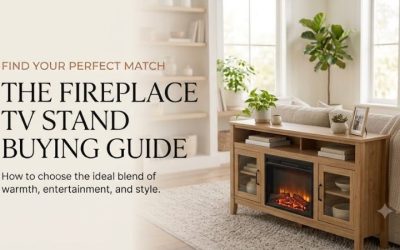
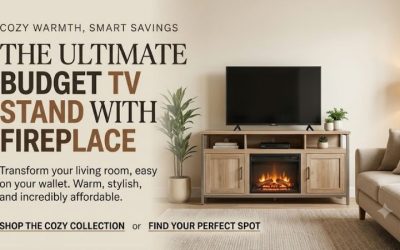
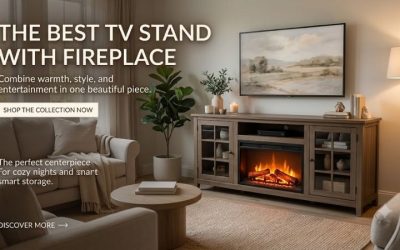
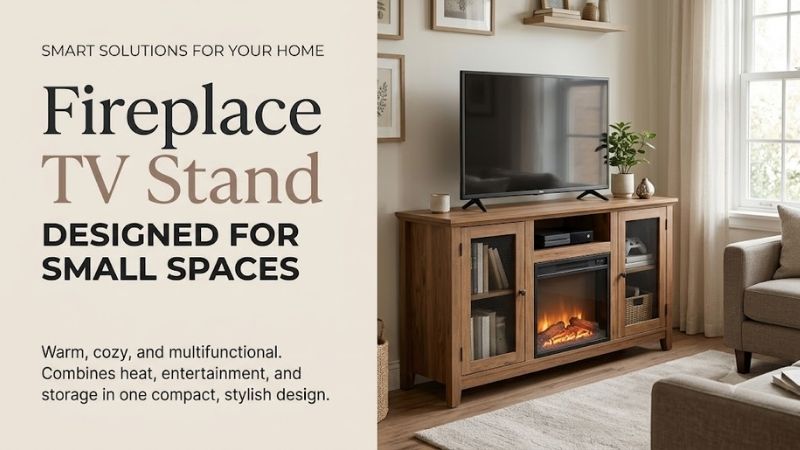
A TV stand with fireplace for small spaces can bring media storage, decorative flames, and supplemental heating into a single cabinet. But a smaller footprint does not eliminate the need for ventilation, electrical access, or correct television support. This guide explains how to choose appropriate dimensions, compare compact designs, and avoid common safety and layout mistakes.
Is a Fireplace TV Stand Worth It in a Small Room?
A combination unit can be a practical solution when the living room needs both a television cabinet and a supplemental heat source.
Instead of using a separate electric fireplace mantel and media stand, one appropriately designed unit can perform both functions.
However, this does not guarantee lower overall space consumption.
A fireplace insert occupies valuable internal storage space. Some combination cabinets also stand taller or wider than conventional compact TV furniture.
The purchase makes sense when the household actually wants the heating or flame effect, the television fits, and the unit can be operated safely.
Compare Compact Fireplace TV Stands
| Product | Cabinet size | Top capacity | Best small-space advantage |
|---|---|---|---|
| Costway 48″ Fireplace Stand | 48 × 16 × 30 in | 70 lb | Shorter cabinet width |
| Ameriwood Home Hendrix | 58 × 16.06 × 23.23 in | 120 lb | Moderate cabinet depth |
| Costway 58″ Adjustable-Shelf | 58 × 16 × 25 in | 66 lb | Enclosed media storage |
| Ameriwood Home Noble | 59.61 × 15.79 × 18.7 in | 120 lb | Low cabinet height |
| Costway 58″ LED Fireplace Stand | 58 × 16 × 32 in | 70 lb | Decorative lighting |
A 48-inch model is not automatically the best choice. The actual TV dimensions and preferred viewing height remain essential.
Step 1: Measure the Available Wall
Measure the full width of the wall section where the cabinet will stand.
Include nearby windows, doors, heating fixtures, and existing furniture.
A table that occupies almost the entire available wall may leave no practical room for cable access or rearranging equipment.
Shorter Cabinets
A 48-inch cabinet can work with certain smaller televisions.
It may be particularly useful in bedrooms, studio apartments, or compact entertainment corners.
However, the reviewed Costway 48-inch family includes differing TV-size descriptions. Confirm the precise SKU.
Mid-Size Cabinets
Models around 58 inches wide offer more tabletop space and potentially more storage.
They may fit a standard living room but overwhelm a narrow bedroom.
Larger Cabinets
A larger unit can provide better visual proportion beneath a large television.
But it should not be selected simply because it accommodates a larger advertised screen class.
Step 2: Prioritize Cabinet Depth
Depth is especially important in small rooms.
Compare two hypothetical entertainment cabinets with the same 58-inch width.
| Depth | Rectangular floor footprint |
|---|---|
| 16 inches | 928 square inches |
| 20 inches | 1,160 square inches |
The deeper unit occupies 25% more rectangular floor area.
That additional depth might improve storage or accommodate a larger television base. But it also projects farther toward the sofa.
A compact room can benefit more from reducing cabinet depth than reducing width.
Check the Television Feet
A narrow cabinet is only suitable when the TV’s feet rest fully within its approved support area.
Do not allow the television’s base to overhang an edge contrary to manufacturer instructions.
Check Cabinet Doors
Doors and drawers need space to open.
A coffee table placed close to the TV stand may interfere with storage access.
Step 3: Match Cabinet Height to Viewing Comfort
Cabinet height determines where the screen sits if the television rests on top.
A lower cabinet may make sense for a low lounge sofa.
A taller cabinet may work with higher seating or a more distant viewing position.
However, the right height depends on where the seated viewer’s eyes meet the screen.
Example: Comparing Two Designs
The Ameriwood Noble measures approximately 18.7 inches high.
The Costway 48-inch fireplace stand measures approximately 30 inches high.
That is more than an eleven-inch difference before accounting for the television itself.
A cabinet that appears compact because it is only 48 inches wide may still put the screen too high for a particular room.
Step 4: Check Heating Clearances
An electric fireplace insert must operate within its designed enclosure.
A cabinet may fit physically while still being unsuitable because of nearby curtains, furniture, or blocked vents.
Locate the Heat Discharge
Determine where the selected insert releases warm air.
Do not assume every electric fireplace has identical vent locations.
The manufacturer may require clearance above, in front of, or around certain openings.
Follow the Manufacturer’s Instructions
General portable-heater guidance recommends maintaining a three-foot separation from combustible materials.
Integrated electric fireplace inserts have their own installation specifications, which must be followed for the approved furniture configuration.
Never improvise a clearance based on the product photograph.
Avoid Obstructing Airflow
Do not put storage baskets, decorative fabric, books, or other objects across air intake or heat discharge openings.
Do not alter the fireplace insert or cabinet panels without manufacturer authorization.
Step 5: Compare Heating Needs With Room Size
Many electric fireplace TV stands use electric-resistance heaters.
A 1,400-watt unit converts approximately 1.4 kilowatt-hours of electrical energy into heat during one hour of continuous full-power operation.
That corresponds to roughly 4,777 BTU per hour.
Smaller Does Not Always Mean Better
In a small room, a high-output heater may reach the desired temperature quickly and then cycle through its thermostat.
Actual performance depends on insulation, drafts, ceiling height, and outdoor temperature.
A timer or thermostat may improve convenience, but those features do not guarantee a specific energy saving.
Flame-Only Operation
A flame-only setting can be valuable in an apartment because the visual effect remains useful during warmer weather.
Buyers in mild climates should prioritize this feature over a marginal difference in advertised heating coverage.
Step 6: Plan Safe Electrical Access
A fireplace TV stand requires a suitable electrical connection.
The heater can draw much more current than decorative LEDs.
Use an Appropriate Outlet
Connect the heater according to its manufacturer instructions, generally directly into a suitable wall receptacle.
Do not use an ordinary extension cord or power strip for an electric heater.
Consider the Circuit
Other high-demand appliances on the same circuit can create electrical overload risks.
If you are uncertain about the circuit or outlet condition, consult a qualified electrician.
Manage Media Cables
Television, console, router, and speaker cables must remain clear of heater outlets and hot surfaces.
Avoid trapping cables between cabinet panels.
Step 7: Choose Storage That Fits Real Equipment
A fireplace insert often occupies the center of the TV stand.
This leaves side areas for media equipment.
Open Shelving
Open shelves can make device access and cable routing easier.
However, they may also expose clutter and offer less protection from dust.
Closed Cabinets
Doors create a cleaner appearance.
But they can restrict airflow around gaming consoles, receivers, and other heat-producing electronics.
Adjustable Shelves
Adjustable shelving can accommodate different accessories.
Check the rated load for each shelf and the available clearance for power cables.
Example: Planning a 10-by-11-Foot Living Room
Consider a room measuring 120 by 132 inches.
Assume the sofa projects 36 inches from one wall and the fireplace TV stand projects 16 inches from the opposite wall along the 120-inch dimension.
The remaining separation is:
120 − 36 − 16 = 68 inches.
If a coffee table also occupies that space, its footprint and surrounding access must be included.
Changing to a 20-inch-deep cabinet reduces the separation to 64 inches.
That four-inch difference can matter in a compact arrangement, especially when people need to walk around the coffee table.
These are planning calculations, not prescribed accessibility or heating clearances.
Common Buying Mistakes
Choosing the Narrowest Stand Without Checking the TV
The television’s weight and foot spacing still determine compatibility.
Ignoring Cabinet Height
A shorter cabinet width does not guarantee a comfortable screen position.
Blocking Heater Vents
The insert needs its specified airflow even when installed in approved furniture.
Assuming Flame-Only Mode Uses No Electricity
Decorative lighting still consumes energy, although typically much less than the heating element.
Hiding Gaming Equipment in an Unventilated Cabinet
Gaming consoles and receivers have their own cooling requirements.
Frequently Asked Questions
What Size TV Stand With Fireplace Is Best for Small Spaces?
A 48- to 58-inch cabinet can be a useful starting range for some apartments, but the correct size depends on television compatibility, wall width, and floor space.
Can a Fireplace TV Stand Work in a Bedroom?
It can when permitted by the product instructions and room conditions. Safe clearances, suitable power, and supervision are essential.
Is a 1,400-Watt Electric Fireplace Too Powerful for a Small Room?
Not necessarily. The thermostat and room conditions affect operation, but the heater should be selected according to its intended use and the room’s needs.
Can I Put My Gaming Console Inside the Cabinet?
Only when shelf dimensions, load ratings, and ventilation allow it. Follow the gaming device manufacturer’s airflow instructions.
Is a Fireplace TV Stand Better Than a Wall-Mounted Fireplace?
A combination stand can simplify the furniture arrangement. A wall-mounted fireplace offers more layout flexibility but requires appropriate mounting and clearances.
Can I Use the Flame Effect Without Heat?
Many models support this, but the exact insert must be checked.
Conclusion
A TV stand with fireplace for small spaces is most practical when it provides useful entertainment storage and supplemental heating without compromising safe installation. Begin with TV weight, cabinet depth, height, and available wall area. Then evaluate heater clearance, electrical requirements, storage ventilation, and viewing comfort. A well-chosen unit can consolidate furniture functions, but a smaller cabinet is not automatically the safest or most useful option.