Our Top Picks
 ERGOKING Headrest for Herman Miller Classic Aeron ChairClassic Aeron5 x 15.5 x 5 Inches1.45 PoundsCheck on Amazon
 Office Chair Headrest Attachment Adjustable Height & FrontMedium14 x 5.5 x 10.6 inches1.98 PoundsCheck on Amazon
The right revolving chair with a headrest is one whose headrest adjusts at least 2 to 3 inches up and down so it lands at the base of your skull, not the middle of your neck or the top of your shoulders, and whose seat height range lets your feet rest flat with thighs level. The headrest is only useful if it fits your torso length, so start with your height and the chair’s back and headrest ranges before comparing anything else.
Who Actually Needs a Headrest
A headrest is not used while you type upright. It earns its place when you lean back: reading, calls, video watching, thinking between tasks, or reclining to unload the lower back. If you spend most of the day leaning forward toward the screen, a high back with good lumbar support helps more than a headrest. If you recline for 20 percent or more of your desk time, or have neck tension, a headrest is worth the extra cost and height.

AreShark Office Chair - Ergonomic Desk Chair Breathable Mesh Chair with 2D Headrest & Adjustable Lumbar Support - Executive High Back Rolling Swivel Computer Gaming Chair with Wheels Flip-up Armrests
Picked as a relevant option in this category.
View on AmazonERGOKING Headrest for Herman Miller Classic Aeron Chair, Adjustable Height | Height and tilt adjustable, breathable mesh, removable coat hanger. Fits Classic Aeron sizes A, B, C. Not for Remastered
Chosen because it specifies Adjustable Height and Height and tilt adjustable.
View on Amazon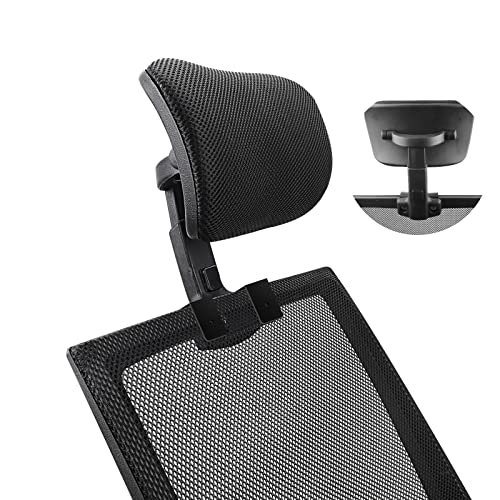
Office Chair Headrest Attachment Universal, Head Support Cushion for Any Desk Chair, Elastic Sponge Head Pillow for Ergonomic Executive Chair, Adjustable Height & Angle Upholstered, Chair Not Included
Chosen because it specifies Head Support Cushion for Any Desk Chair and Elastic Sponge Head Pillow for Ergonomic Executive Chair.
View on AmazonOffice Chair Headrest Attachment Adjustable Height & Front to Back Distance | Black Mesh Headrest is Suitable for Ergonomic Office Chairs,Attachable Headrest for Office Chair,Neck Pillow Comfort Support
Picked as a relevant option in this category.
View on AmazonMatch the Headrest to Your Height
Headrest fit is a torso-length problem. The table below gives typical values for a seated user; measure from the seat surface to the base of your skull while sitting upright for your exact number.
| User height | Seat-to-skull-base (approx.) | Seat height needed | What to look for |
|---|---|---|---|
| 5’0″–5’4″ | 23–25 in | 15–17 in | Low seat, headrest that drops low; footrest helps if desk is fixed |
| 5’5″–5’9″ | 25–27 in | 17–19 in | Most standard chairs fit; 2–3 in headrest travel |
| 5’10″–6’2″ | 27–29 in | 19–21 in | Tall back (seat-to-top 30 in+), headrest with 3–4 in travel |
| 6’3″ and up | 29–32 in | 20–23 in | Tall-cylinder option, deep seat (19–21 in), extended headrest post |
The common failure: a chair with a fixed, built-in headrest designed around a 5’9″ user. Shorter users get pushed forward at the head; taller users get it under the neck. Adjustable height and angle (tilt) are the two adjustments to insist on. Depth adjustment, moving the pad forward and back, is a bonus that helps if you sit upright with the headrest still touching.
Types of Revolving Chairs With Headrests
| Type | Headrest style | Typical price | Strengths | Trade-offs |
|---|---|---|---|---|
| Mesh ergonomic task chair | Separate adjustable mesh or foam pad | $150–$600 | Breathable, adjustable lumbar, light (35–50 lb) | Cheap mesh sags in 1–3 years |
| Premium ergonomic chair | Optional add-on headrest | $900–$1,800+ | Long warranties, fine adjustments | Headrest often costs extra |
| Executive leather chair | Built-in padded high back | $200–$900 | Plush look, wide seat | Fixed headrest, bonded leather peels |
| Gaming-style chair | Strap-on pillow plus tall back | $200–$550 | Deep recline (135–165 degrees), tall back | Bucket sides narrow the seat, firm foam |
| Recliner-style office chair | Integrated, with fold-out footrest | $150–$400 | Nap-friendly recline and leg support | Larger footprint, weaker tilt lock |
Among well-known premium chairs, the Steelcase Leap and Steelcase Gesture, and the Branch Ergonomic Chair offer headrests as add-on options, while the Herman Miller Aeron has no factory headrest and relies on third-party attachments. Gaming chairs such as the Secretlab Titan line use a magnetic or strap-on head pillow on a tall fixed back rather than a separately adjustable headrest.
Rolling vs Revolving: Base and Casters
“Revolving” refers to the 360-degree swivel; “rolling” refers to the casters. Almost every office chair with a headrest does both, but the base and wheels decide how it behaves on your floor.
- Base diameter: 26 to 28 inches is standard. Wide reclining chairs use 28 to 30 inch bases for stability when leaning back with your head on the rest.
- Base material: Nylon bases are fine for most users up to about 250 to 275 lb; aluminum or steel bases hold up better above that and resist cracking.
- Casters: Standard hard nylon casters suit carpet. On hardwood, vinyl or tile, swap to soft polyurethane wheels (usually 2.5 to 3 inches) to prevent scratches and noise. Most chairs use a common 11 mm stem.
- Gas cylinder: Look for a BIFMA-certified class 3 or class 4 cylinder. Taller users may need a tall cylinder kit to reach 21 inches or more of seat height.
Should You Get One With a Footrest?
Some revolving chairs add a fold-out padded footrest under the seat. They are popular for reclining breaks, but there are real trade-offs.
- Good for: people who nap or read at the desk, remote workers without a separate lounge chair, short legs at a fixed-height desk.
- Not ideal for: heavy daily typing, small rooms, or users over 6 feet. Fold-out footrests are usually short (about 16 to 20 inches long) and only support the calves of shorter users.
- Space: A reclined chair with an extended footrest needs about 55 to 65 inches of floor length. Check that you can roll back far enough from the desk.
- Durability: The footrest hinge and its plastic track are usually the first parts to loosen.
For shorter users who need foot support while typing, a separate under-desk footrest that is 4 to 8 inches high often works better than a chair-mounted one.
Recline and Tilt Settings That Make a Headrest Useful
A headrest works only if the chair reclines enough to lean into it and locks in place. Look for:
- Synchro-tilt: the back reclines about twice as far as the seat tilts, keeping feet on the floor.
- Multiple lock positions: 3 to 5 positions between 95 and 120 degrees are ideal for work. Gaming chairs go much further, but positions past 135 degrees are for resting, not working.
- Tension control: lets lighter users recline without forcing and heavier users stop from tipping back too fast.
Assembly and What Wears First
Most headrest chairs ship in a 30 to 50 lb box and assemble in 20 to 40 minutes: base, casters, cylinder, seat, back, arms, then headrest. Install the headrest bracket loosely first, sit in the chair, and tighten it at the right height before final adjustments.
Over time, expect these issues roughly in this order: caster wear and squeak (cheap fix), armrest pad cracking, foam compressing in the seat front edge, headrest clamp loosening, and gas cylinder sinking. A 5 to 12 year warranty on mechanism and cylinder is a reasonable sign of build quality; 1 year usually is not.
Quick Decision Guide
- Neck tension, mostly computer work: mesh ergonomic chair with 3D headrest (height plus angle).
- Tall user over 6’2″: tall-back chair with extended headrest post and a seat height reaching 21 to 23 inches.
- Short user under 5’4″: chair with low seat height (15 to 16 inches) and a headrest that drops low on its post.
- Nap and read breaks: recliner-style office chair with footrest, accepting a bigger footprint.
- Hardwood floors: any of the above with polyurethane casters.