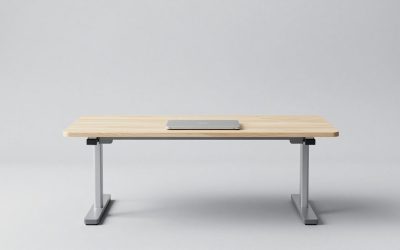
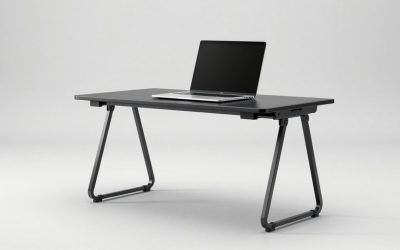
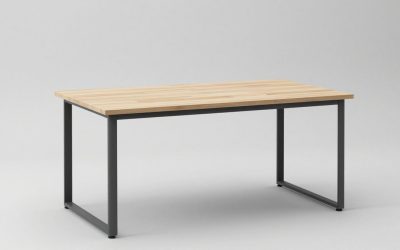
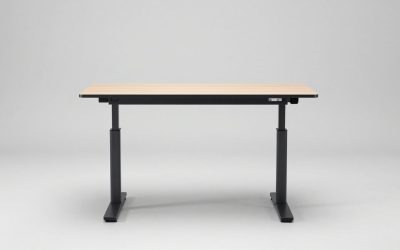
Our Top Picks
The best WFH chair and table setup is a pair chosen together: a desk surface at roughly elbow height when you sit (about 28–30 in for most adults) and a chair whose seat height adjusts so your feet rest flat while your forearms sit level on that surface. Buying the two separately is how most home offices end up with a chair that cannot go high enough or a desk that forces shoulders up toward the ears. This guide works through the numbers that make a chair and table fit each other and the room.
Start with your body, not the furniture
Two measurements decide almost everything: your seated elbow height and your popliteal height (floor to the back of the knee while seated, with shoes on). Have someone measure you sitting upright on a firm chair.

KONDOUND Lap Desk Bed Table with Wireless Charger - Foldable Large Laptop Tray with Tablet Slot and Book Shelf, No Assembly Table for Couch Chair Floor for Sturdy, Writing, Studying Eating, and WFH
Chosen because it specifies Foldable Large Laptop Tray with Tablet Slot and Book Shelf and No Assembly Table for Couch Chair Floor for Sturdy.
View on Amazon
VECELO Folding Card Table and Chair Set of 5 Portable with Padded Tabletop, No Assembly Required, Black
Chosen because it specifies No Assembly Required and Black.
View on Amazon| User height | Ideal seat height | Ideal desk height (sitting) | Standing desk height |
|---|---|---|---|
| 5’0″–5’3″ | 15–16.5 in | 23.5–26 in | 37–40 in |
| 5’4″–5’7″ | 16.5–18 in | 25.5–27.5 in | 40–43 in |
| 5’8″–5’11” | 18–19.5 in | 27–29 in | 43–46 in |
| 6’0″–6’3″ | 19.5–21 in | 28.5–30.5 in | 46–49 in |
| 6’4″ and up | 21–22.5 in | 30–32 in | 48–51 in |
Most fixed-height desks are made at 29–30 in, which suits people around 5’10” and taller. If you are shorter, either choose an adjustable-height desk or raise the chair to match the desk and add a footrest so your feet do not dangle. That second fix works but is a compromise; an adjustable table solves it properly.
Matching the chair to the table
Seat height range
Look for a chair seat range that comfortably covers your ideal seat height in the middle of its travel, not at the very top or bottom. A typical gas cylinder gives 16–21 in. Shorter users may need a short cylinder (14.5–19 in); taller users may need a tall one (18–23 in), which several ergonomic chair makers offer as an option.
Armrest height vs desk edge
Armrests should either slide under the desk or sit level with the desk surface. If fixed arms are taller than the desk, they stop the chair rolling in, and you end up perched forward without back support. Adjustable arms (often called 3D or 4D arms) solve this. Measure the space from floor to underside of desk or apron: you usually need 25–26 in for arms to clear when the seat is at your height.
Seat depth
Leave 2–4 finger widths between the front seat edge and the back of your knees. Chairs with a seat slider make one model work for several people in the household.
Desk size: how much table you actually need
| Setup | Minimum width | Minimum depth | Notes |
|---|---|---|---|
| Laptop only | 36 in | 20 in | Fine for compact corners, cramped for paper |
| Laptop + one monitor | 42–48 in | 24 in | Monitor 20–30 in from eyes |
| Two monitors | 55–60 in | 27–30 in | Depth matters more than width for eye distance |
| Monitors + paperwork or drawing | 60–72 in | 30 in | Consider an L-shape return |
Behind the desk, plan 36 in of clearance for the chair to roll back and for you to stand up; 42–48 in is more comfortable if the space is also a walkway. In a 10 x 10 ft spare room, a 60 x 30 in desk against one wall leaves ample space. In a living room corner, a 48 x 24 in desk plus a chair with a small footprint (around 25 x 25 in base) is the realistic limit.
Chair types for working from home
| Chair type | Typical price range | Strengths | Trade-offs |
|---|---|---|---|
| Basic task chair | $80–$200 | Small footprint, adjustable height | Limited lumbar, thin foam flattens in 1–3 years |
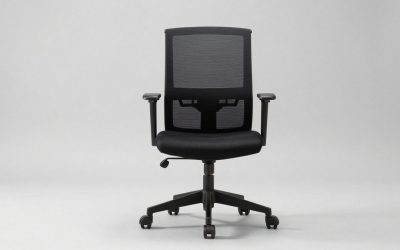
| Mesh ergonomic chair | $250–$700 | Adjustable lumbar, arms, seat depth; breathable | Mesh edge can press on thighs for some users |
| Premium ergonomic chair | $900–$1,800 | Long warranties (often 10–12 years), fine adjustment | Large upfront cost |
| Executive or “boss” chair | $150–$800 | High back, thick padding, presence in the room | Often fixed arms, limited adjustment, can run hot |
| Kneeling or saddle stool | $80–$350 | Open hip angle, active sitting | Most people cannot use them all day |
Well-known ergonomic lines such as the Herman Miller Aeron, Steelcase Leap and Branch Ergonomic Chair are popular because they combine wide adjustment ranges with long warranties. For a budget pairing, a mid-range mesh chair with adjustable lumbar is the safest choice for an eight-hour day.
About boss chairs and tables
Executive desk-and-chair sets look impressive but are often designed for appearance first. A typical executive desk is 30 in high and 30–36 in deep with a modesty panel and drawer pedestals that can block knee room. The matching padded leather chair may have arms that are too tall to slide under it. If you want that look, check three things: knee clearance under the desk of at least 24 in wide and 25 in high, arms that adjust or are low enough to clear, and a seat with real lumbar shaping rather than just thick padding.
Fixed table vs adjustable standing desk
| Factor | Fixed desk | Electric sit-stand desk |
|---|---|---|
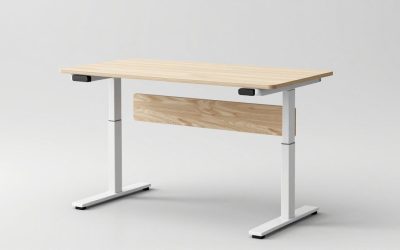
| Height range | One height, usually 29–30 in | About 24–50 in on dual-motor frames |
| Price | $100–$600 | $300–$900 for a solid dual-motor frame |
| Box weight | 40–90 lb | 70–130 lb including top |
| Wobble | Low | Some sway at standing height, less with dual-motor and crossbars |
| Fit for multiple users | Poor | Excellent with memory presets |
Standing desks from established makers such as Uplift Desk and Flexispot cover the full range of user heights in the table above. If two people with very different heights share one home office, an adjustable desk is the most reliable way to make one setup work for both.
Choosing by situation
- Small apartment, part-time WFH: 40–48 in desk, armless or flip-up-arm task chair that tucks fully under.
- Full-time remote worker: adjustable-height desk around 55–60 x 28–30 in plus a fully adjustable mesh chair.
- Shared household office: sit-stand desk with memory presets and a chair with seat-depth adjustment.
- Petite user with a standard desk: raise the chair to the desk and add a footrest 3–6 in high.
- Tall user: tall gas cylinder, desk with at least 30 in reach or adjustable frame, monitor arm to lift the screen.
Setup checklist once both arrive
- Set seat height so thighs are roughly level and feet flat.
- Adjust desk (or chair plus footrest) so elbows are at 90–100 degrees with shoulders relaxed.
- Place the top of the monitor at or slightly below eye level, about an arm’s length away.
- Set lumbar support at the small of your back, roughly at belt height.
- Route cables so the chair casters do not run over them; a cable tray under the desk keeps the floor clear.