Our Top Picks
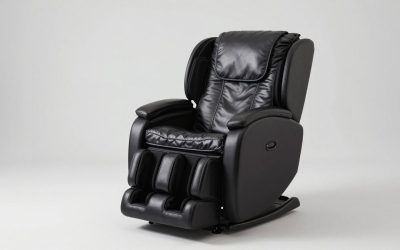
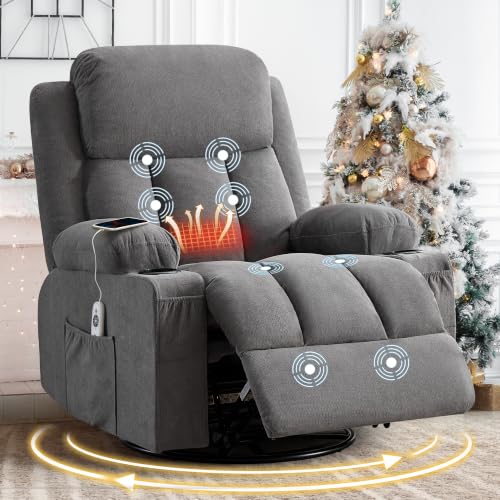 MAHOMICO Swivel Rocker Recliner Chair with Vibration Massage1 Seat29.93 x 25.99 x 20.08 inches97 poundsCheck on Amazon
A recliner with heat and vibration is a standard reclining chair fitted with a few small vibration motors and a low-wattage heating pad, usually in the lumbar zone, so it delivers gentle warmth and a buzzing, muscle-relaxing sensation rather than the kneading or rolling pressure of a true massage chair. That makes it a good fit for winding down after work, stiff lower backs and cold rooms, and a poor fit for anyone expecting deep-tissue relief. Below is what the hardware actually is, how it is powered, how much room it needs and which buyers should choose something else.
What is inside the chair
Strip the upholstery off a typical heat-and-vibration recliner and you find three add-ons bolted to an otherwise ordinary frame:

LAFWELL Rocking Recliner Chair, Massage Rocker Recliner Chair with Vibration Massage and Heat, USB and Type-C Ports,360° Swivel Faux Leather Chairs, Living Room, Bedroom, Nursery, RV, Black
Chosen because it specifies USB and Type-C Ports and 360° Swivel Faux Leather Chairs.
View on AmazonMAHOMICO Swivel Rocker Recliner Chair with Vibration Massage and Heat for Living Room,with Rocking Function and Side Pocket, USB Charge Port,2 Cup Holders
Chosen because it specifies with Rocking Function and Side Pocket and USB Charge Port.
View on Amazon
CANMOV Massage Rocker Recliner with Heat and Vibration, 360 Degree Swivel Manual Antiskid Fabric Single Sofa Heavy Duty Reclining Chair for Living Room, Dark Brown
Chosen because it specifies Dark Brown.
View on Amazon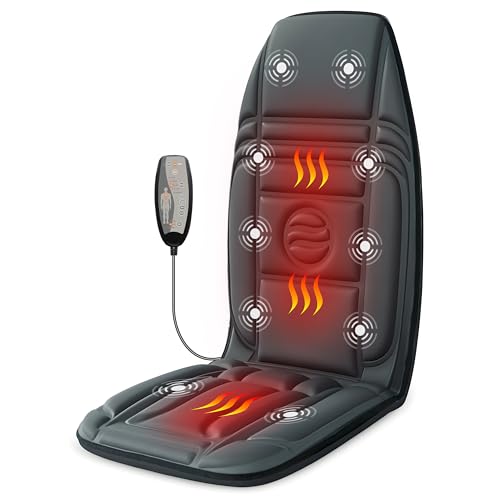
Heycool Vibration Massage Chair Pad, Back Massager with Heat, Seat Cushion | 2026 Upgraded, 10 Vibration Motors, 5 Modes & 4 Intensities, 2 Heat Settings, Gifts for Women Men
Chosen because it specifies Back Massager with Heat and Seat Cushion.
View on Amazon- Vibration motors. Small eccentric-weight motors, usually four to eight, sewn into pockets in the back, lumbar, seat and sometimes the footrest. Each one spins an off-center weight that makes the cushion buzz. Controllers cycle them through preset patterns (pulse, wave, constant) at two or three intensity levels.
- A heating element. A thin carbon-fiber or wire pad, almost always behind the lower back cushion. A few chairs add a second pad in the seat. Heat is mild by design; it warms rather than burns, and most controllers have only one setting or a high/low switch.
- A controller and power supply. A wired handset or side pocket remote, plus an external AC adapter that turns household current into low-voltage DC. Power recliners share or add to the transformer that runs the recline motor.
Nothing in this package presses on muscle. Vibration loosens tension and feels pleasant, but it does not knead knots. If that matters to you, a robotic massage chair with rollers is a different category and price bracket.
Manual, power and lift versions compared
Heat and vibration show up on three kinds of recliners. The table summarizes how they differ in practice.
| Type | How it reclines | Typical price range | Wall clearance needed | Usual weight rating |
|---|---|---|---|---|
| Manual recliner with heat/vibration | Lever or push-back; massage on separate adapter | $200–$500 | 10–14 in (wall-hugger styles 4–6 in) | 250–300 lb |
| Power recliner with heat/vibration | Button-driven motor | $400–$900 | 4–12 in depending on mechanism | 275–350 lb |
| Power lift recliner with heat/vibration | Motor tilts the whole chair forward to help you stand | $600–$1,400 | 6–12 in | 300–400 lb (big and tall models higher) |
Fully reclined, most of these chairs stretch to 62–70 inches from the back of the backrest to the end of the footrest. Plan that length plus a walkway, so a recliner in a 10×12 ft room is easiest along the 12-foot wall where the open footrest does not block the door path.
Power, cords and outlets
This is the part product pages skip. Every heated, vibrating recliner needs electricity, even if the recline itself is manual.
Where the cord goes
The adapter cord typically runs 6–8 feet from the chair. Put the recliner within that reach of an outlet, and avoid stretching the cord across a walkway. If you place the chair in the middle of a room, you will need a cord cover or a floor outlet, and the cord should exit from the back, not the side where the footrest folds.
Pinch points
The most common failure is a cord or wire chafed by the recline linkage. When you first set the chair up, run the cord along the frame rail, away from the scissor mechanism under the seat, and cycle the chair through its full motion before plugging in.
Running cost
Vibration motors and a lumbar heating pad together draw roughly the same power as a bright light bulb, so daily sessions add only a few cents a month to an electric bill. Power recline motors draw more but run only seconds at a time.
Battery packs
Rechargeable battery packs made for power recliners can free a chair from the wall. They usually cover recline cycles well; continuous heat drains them faster, so expect to recharge more often if you use the heat daily.
Features worth paying for
- Auto shut-off timer. A 15- or 30-minute shut-off on both heat and vibration is the single most important safety feature, especially if you tend to doze off. Treat a chair without one as a pass.
- Zone selection. Being able to run only the lumbar and seat motors matters more than the number of preset patterns.
- Separate heat control. Some chairs only heat while vibration runs. Independent heat lets you use warmth alone on cold evenings.
- Removable or replaceable handset. Handset cables wear at the plug. A standard connector makes a replacement easy to source.
- USB charging port. Useful but secondary; it shares the same adapter.
Upholstery and heat: material trade-offs
| Cover material | How heat feels through it | Durability concern | Best for |
|---|---|---|---|
| Bonded or faux leather (PU) | Warms fast, can feel sticky in summer | Peeling at the arms and seat edge after a few years of daily use | Easy wipe-clean, budget buys |
| Microfiber or polyester fabric | Even, gentle warmth | Pilling on the seat front | Comfort in all seasons, pet hair management |
| Top-grain leather | Slower to warm, holds heat longer | Few issues; higher cost | Long-term use, heavier users |
| Velvet or chenille | Insulates, so heat feels milder | Crushes where you sit most | Style-led rooms, lighter use |
Who should choose something else
Gentle heat and vibration are fine for most people, but there are clear cases to check with a doctor first or skip the feature entirely:
- People with pacemakers or other implanted electronic devices, because manufacturers commonly warn against vibration near them.
- Anyone with reduced sensation, such as diabetic neuropathy, who may not notice heat building up.
- Pregnancy, recent surgery, blood clots or varicose veins in the legs, where leg-zone vibration is commonly discouraged.
- Young children, who should not use the heat function unsupervised.
If your main goal is back pain relief, a power recliner with adjustable lumbar and headrest support may do more for you than vibration, and a separate heating pad can cover warmth.
Picks by situation
| Your situation | Best type | What to look for |
|---|---|---|
| Small apartment, chair near a wall | Wall-hugger power recliner with heat/vibration | 4–6 in wall clearance, seat width under 30 in |
| Older adult who struggles to stand | Power lift recliner | Lift motor rated above your weight, auto shut-off, large-button handset |
| Tall user (over 6 ft 2 in) | Big and tall power recliner | Seat depth 22 in or more, back height 42 in or more |
| Tight budget | Manual recliner with heat/vibration | Timer, separate heat switch, fabric cover |
| Pets in the house | Microfiber or leather cover | Cord routed high along the frame, no exposed wiring |
Assembly and long-term reality
Most of these chairs ship in one box of 70–110 pounds with the back detached. Assembly is usually sliding the backrest onto two metal brackets until it clicks, then connecting the massage harness plug between back and seat. Missing that connector is the most common reason a new chair’s back motors appear dead. Check that a 30-inch-wide box will clear your doorways and stair turns before ordering.
Over time, the vibration motors usually outlast the upholstery, while the cheapest heat pads and handsets are the first electrical parts to fail. Keep the manual and adapter model number; replacement adapters and handsets are often generic and inexpensive if you know the voltage and plug type.