Key takeaways
- Memory foam: molds to your shape and stays put. Lower-density foam (under 3 lb/ft³) softens noticeably in the first year; higher-density foam keeps its contour longer. Feels firmer in a cold room.
- High-resilience foam: springier and less heat-trapping than memory foam. Good for people who shift position a lot.
- Shredded foam: adjustable if the cover has a zipper, so you can add or remove fill to tune thickness.
- Polyester fiberfill or down: comfortable but flattens within weeks in a lumbar role. Better as a top layer than as support.
- Buckwheat hull: very firm and shapeable, but heavy and noisy when you move.
The best back support cushion for an armchair is one sized to fill the specific gap between your lower back and the chair’s backrest: for deep club or lounge armchairs that usually means a full-height wedge or thick backrest pillow 3–5 in deep, while for upright wingbacks and accent chairs a slim lumbar roll or half-moon pillow 2–3 in thick is enough. Most generic lumbar pillows are designed for office chairs with 17–19 in seat depths, so they often disappear into a 22–25 in deep armchair. Measuring the chair first is the step that makes the purchase work.
This is general comfort and furniture-fit information, not medical advice. Anyone with ongoing back pain should follow guidance from a doctor or physical therapist.
Why armchairs are harder to fix than office chairs
Office chairs are built around an upright posture with a seat depth around 16–19 in and a backrest angle near 100–105 degrees. Many living room armchairs are built for lounging: seat depths of 21–25 in, soft back cushions, and backrest angles of 105–115 degrees. When you sit fully back in a deep chair, your knees no longer reach the front edge, so you slide forward and your lower back loses contact with the backrest. A support cushion’s real job in an armchair is to shorten the effective seat depth and give the lower back something to rest against.
Measure your armchair before choosing
- Seat depth: from the front edge of the seat to the point where the back cushion meets the seat.
- Your thigh length: sitting on a firm chair, measure from the back of your hips to the back of your knee. Subtract about 2–3 in for comfortable clearance.
- The gap: seat depth minus that adjusted thigh length is roughly how thick your back cushion needs to be.
- Backrest height: if the back is lower than your shoulder blades, a tall cushion has nothing to lean against at the top.
- Inside width between arms: a cushion wider than this will bunch up.
| Chair seat depth | Typical user thigh length (adjusted) | Gap to fill | Cushion type that fits |
|---|---|---|---|
| 18–20 in (upright accent, wingback) | 17–18 in | 1–2 in | Slim lumbar roll or half-moon pillow |
| 21–22 in (standard armchair) | 17–18 in | 3–4 in | Contoured memory foam lumbar pillow, 3–4 in thick |
| 23–25 in (deep club or lounge chair) | 17–18 in | 5–7 in | Full-back wedge or firm 5–6 in backrest pillow |
| 25 in+ (oversized, chair-and-a-half) | 17–19 in | 6–8 in | Large reading pillow with arms, or a seat-depth insert plus lumbar pillow |
Cushion types compared
| Type | Typical size | Price range | Best for | Drawback |
|---|---|---|---|---|
| Lumbar roll | 12–14 in wide, 4–5 in diameter | $15–$35 | Upright chairs with shallow seats | Rolls out of place in soft chairs |
| Contoured memory foam lumbar pillow | 13–15 in wide, 3–5 in thick | $25–$60 | Standard armchairs and recliners | Strap may not fit around thick backrests |
| Full-back wedge | 17–20 in tall, 3–6 in thick at base | $35–$80 | Deep lounge chairs | Visible, changes the chair’s look |
| Reading or bed-rest pillow with arms | about 20 x 16 x 16 in | $30–$70 | Oversized chairs, reading in bed | Bulky, can feel soft over long sessions |
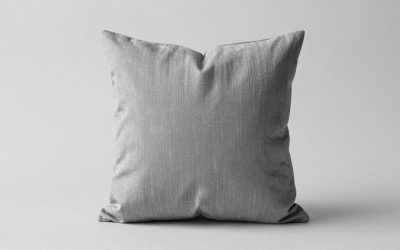
| Decorative firm-fill pillow | 18 x 12 in or 20 x 20 in | $20–$60 | Shallow gaps where looks matter | Down or poly fill compresses quickly |
Fill materials: what actually holds up
A cushion in a soft armchair has to resist being squashed against an already soft back cushion. Fill choice determines how long it keeps doing that.
- Memory foam: molds to your shape and stays put. Lower-density foam (under 3 lb/ft³) softens noticeably in the first year; higher-density foam keeps its contour longer. Feels firmer in a cold room.
- High-resilience foam: springier and less heat-trapping than memory foam. Good for people who shift position a lot.
- Shredded foam: adjustable if the cover has a zipper, so you can add or remove fill to tune thickness.
- Polyester fiberfill or down: comfortable but flattens within weeks in a lumbar role. Better as a top layer than as support.
- Buckwheat hull: very firm and shapeable, but heavy and noisy when you move.
Matching the cushion to the chair
Wingback and high-back accent chairs
These usually have firm, upright backs and shallow seats. A slim lumbar roll or a firm 12 x 20 in decorative pillow is often all you need, and it keeps the chair looking tailored.
Deep club and lounge chairs
Here a thin lumbar pillow vanishes. Choose a full-back wedge or stack a firm backrest pillow behind a smaller lumbar cushion. Some people fill the gap with a firm 20 x 20 in throw pillow plus a lumbar roll, which works and blends in visually.
Recliners and rockers
Recliners have pronounced back cushion contours of their own, so a contoured memory foam pillow with a strap is usually the best fit. Check the strap length: thick recliner backs can be 8–12 in deep, more than many straps reach. On rockers, a tie-on pad prevents the cushion from sliding as the chair moves.
Best armchairs for back support (if a cushion is not enough)
If your current chair needs a 6 in cushion just to be usable, a different chair may serve better. Look for these specifications:
| Feature | Look for |
|---|---|
| Seat depth | 19–21 in for most adults; 18–19 in for shorter users |
| Seat height | 17–19 in, so knees sit level with or slightly below hips |
| Back height | At least 30 in from seat, high enough to support shoulders |
| Back angle | 100–110 degrees for reading and conversation |
| Arm height | 7–9 in above the seat so shoulders stay relaxed |
| Seat cushion | High-density foam core (about 1.8 lb/ft³ or higher) rather than all-fiber fill |
High-back wingbacks, upright club chairs with fixed back cushions, and power lift recliners with adjustable headrests are the styles most likely to hit these numbers. Expect around $300–$900 for a well-built upholstered armchair and $700–$1,800 for a power recliner with lumbar adjustment.
Picks by situation
- Short user in a standard sofa-style armchair: contoured memory foam lumbar pillow, 4 in thick, plus a small footrest.
- Tall user in a low-back chair: skip the lumbar pillow and consider a chair with a 32 in+ back height instead.
- Shared chair: a removable wedge that each person can add or take away.
- Style-conscious living room: firm-fill decorative pillows in the chair fabric color, sized to the gap.
- Warm room or hot sleeper: high-resilience foam or a cushion with a mesh or cooling-gel cover.
Small adjustments that help
Put the cushion at belt-line height, not in the middle of your back. Sit all the way back before deciding whether it is too thick. If your feet do not rest flat, add a footstool; dangling feet push the hips forward and undo the cushion’s work. Finally, choose a cover that zips off for washing, since armchair cushions pick up body oils faster than you expect.