Our Top Picks
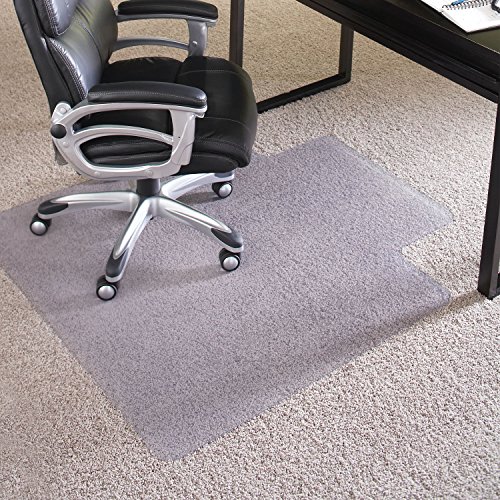 ES Robbins Extra High Pile Chair MatRectangle with Lip48 x 36 x 0.2 inches15.85 poundsCheck on Amazon
For high pile carpet, choose a chair mat that is at least 1/4 inch (about 6 mm) thick, made of rigid polycarbonate or tempered glass, and rated specifically for “high pile” or “plush” carpet; thinner PVC mats rated for low pile will cup, crack and creep across the floor within weeks. Carpet depth is the deciding factor, so measure your pile before you shop.
First, confirm what “high pile” means for your floor
Mat makers group carpet by pile height, and the labels are not always consistent. Push a ruler straight down into the carpet until it touches the backing, then read where the fibers stop.
ES Robbins Extra High Pile Chair Mat, Rectangle with Lip, 36"x48" Beveled Edge
Chosen because it specifies Rectangle with Lip and 36"x48" Beveled Edge.
View on Amazon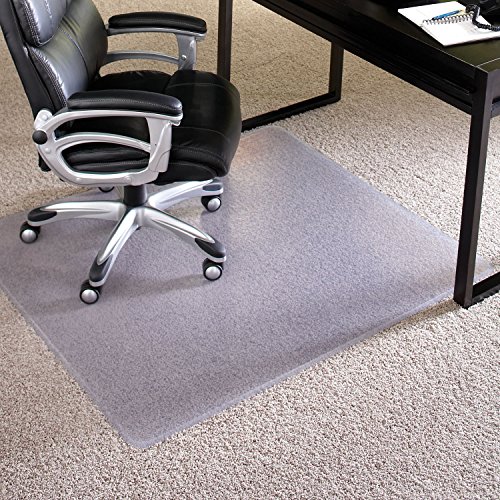
ES Robbins High Pile Carpet Chair Mat, Rectangle 46"x60" Beveled Edge
Chosen because it specifies Rectangle 46"x60" Beveled Edge.
View on Amazon
Soimeat Hard Frosted Office Chair Mat for High Pile Carpet & Hardwood Floor
Picked as a relevant option in this category.
View on AmazonSoimeat Hard Frosted Office Chair Mat for High Pile Carpet & Hardwood Floor
Picked as a relevant option in this category.
View on Amazon| Carpet class | Pile height | Minimum mat thickness | Cleat needs |
|---|---|---|---|
| Low pile / commercial | Under 1/4 in | 1/8 in (3 mm) | Short cleats |
| Medium pile | 1/4 to 1/2 in | 3/16 in (4.5 mm) | Standard cleats |
| High pile / plush | 1/2 to 1 in | 1/4 in (6 mm) or more | Long cleats or none (glass) |
| Shag or very thick pad | Over 1 in | Glass, or a 1/4 in+ polycarbonate on a firm sheet | Usually none |
Also press down with your thumb. If the carpet sinks deeply because of a thick underlay, treat it one class higher than the pile alone suggests. The pad underneath is often what defeats a mat, not the fibers.
Why thin mats fail on plush carpet
A chair with five casters puts roughly 50 to 70 pounds on each wheel when someone sits, and that load is concentrated on a contact patch smaller than a coin. On thick carpet, a flexible mat bends into the dip under each caster. Every time you roll, the mat flexes, which leads to three predictable problems:
- Dimpling and cupping: permanent dents form where the chair sits most, and the edges curl up.
- Cracking: brittle PVC and cheap acrylic split, usually from the center outward.
- Creeping: the mat walks forward a few inches per week as you push back from the desk.
Material comparison for high pile carpet
| Material | Rigidity on plush carpet | Weight (46 x 60 in) | Typical lifespan | Typical price |
|---|---|---|---|---|
| PVC / vinyl | Low; dents within weeks | 8-12 lb | Months to 1 year | $25-$60 |
| Polycarbonate | Good at 1/4 in thickness | 12-20 lb | 3-6 years | $80-$200 |
| Tempered glass | Excellent; does not flex | 40-65 lb | 10+ years | $150-$350 |
| Hardboard or plywood under a mat | Excellent as a support layer | 15-25 lb | Several years | $20-$50 for the board |
Polycarbonate: the middle ground
Polycarbonate stays clear, resists cracking far better than PVC and handles cold rooms without turning brittle. Look for a thickness listed as 1/4 inch or 6 mm or more and a rating for high or deep pile. Established mat makers such as ES Robbins and Floortex sell polycarbonate lines rated by carpet depth, which makes matching easier.
Tempered glass: the long-term fix
Glass mats do not flex at all, so they never dent or crack under normal use. They usually have rubber or felt pads underneath instead of cleats and stay put through sheer weight. The trade-offs are cost, weight and a hard edge that can catch toes. Choose one with rounded or beveled edges and a thickness of at least 1/4 inch.
The board trick
If you already own a decent mat that keeps denting, place a sheet of 1/4-inch hardboard or thin plywood under it, cut 1 inch smaller than the mat on every side. The board spreads the load and stops cupping. It is not elegant, but it works.
Choosing the right size
A mat that is too small means casters roll off the edge, which is when cracks start. Measure how far you actually roll: sit at the desk, push back to stand, and note the furthest caster position.
| Mat size | Best for |
|---|---|
| 36 x 48 in | Compact desk, little rolling |
| 45 x 53 in (with lip) | Standard desk with the lip under the knee space |
| 46 x 60 in | Most home offices; room to push back and turn |
| 48 x 72 in or larger | L-shaped desks, frequent side-to-side rolling |
A lipped mat has a tongue that slides under the desk to protect carpet where your feet rest. On high pile, the lip often bends because it overhangs the edge of the knee area, so a rectangular mat that runs fully under the desk tends to last longer.
Cleats: length and what they do to carpet
Cleats are the small spikes on the underside that grip the carpet. On high pile, short cleats float on top of the fibers and the mat slides. Long cleats reach closer to the backing. They do leave small indents, but these recover over a few days once the mat is lifted. If the carpet is new or expensive, a glass mat with non-cleated pads avoids the issue entirely.
Match the mat to your chair and habits
| Situation | Recommended setup |
|---|---|
| User over 250 lb on plush carpet | Tempered glass, or 1/4 in+ polycarbonate on hardboard |
| Renter, short-term setup | Polycarbonate rated for high pile; easy to roll up for moving |
| Gaming chair with heavy base | Glass or thick polycarbonate, 46 x 60 in minimum |
| Cold room or heated floor | Avoid PVC; polycarbonate or glass |
| Kids or pets around the desk | Polycarbonate with beveled edges; skip glass |
Upgrade the casters too
Hard plastic casters dig into a mat and leave tracks. Larger rubber or polyurethane “rollerblade-style” wheels, usually 2.5 to 3 inches across, spread the load over a wider area and roll more smoothly on mats. Most office chairs use a standard 7/16-inch stem, but check yours before ordering.
Setup tips for a mat that stays flat
- Unroll the mat and let it sit flat in a warm room for 24 hours before use; polycarbonate shipped rolled will relax.
- Place it cleats down and press firmly while walking across it to seat the cleats.
- Rotate the mat 180 degrees every few months so wear spreads evenly.
- Clean with mild soap and water; avoid ammonia cleaners, which can cloud polycarbonate.
FAQ
Will a chair mat damage high pile carpet?
It can leave temporary cleat marks, but it prevents far worse damage: matted, flattened fibers and worn backing from caster traffic.
Can I use a glass mat over shag?
Yes, glass works on very deep pile because it does not rely on cleats, though the mat may sit slightly proud of the floor. A large, heavy glass mat stays the most stable.