Key takeaways
- Keep a white cloth nearby: coloured towels can transfer dye when damp.
- Blot from the outside of a spill towards the centre to reduce spreading.
- Clean high-use armrests and cushion fronts regularly instead of waiting for visible grime.
- Empty and rinse an extractor’s dirty-water tank after use, then allow the tank, hose and nozzle to dry fully.
A sofa collects more than crumbs. Body oils, dust, drink spills, pet marks and everyday moisture can work into the fabric, leaving it dull or musty even when the surface looks tidy. The best cleaning method depends on the upholstery fibre, the type of stain and how much water the cushion can safely handle.
This guide explains how to clean a sofa without over-wetting it, setting stains or damaging the finish. You’ll learn how to read the care label, choose a suitable cleaner, treat marks, use a portable extractor effectively and dry the sofa properly. The aim is a fresher, more comfortable sofa—not simply a wetter one.
Our top picks



As an Amazon Associate we earn from qualifying purchases at no extra cost to you.
🛒 Best Price Today on Amazon
Prime members get fast, free shipping on everything above, plus member-only deals. New members get a 30-day free trial — cancel anytime.
1. Check the upholstery before cleaning
Look beneath the cushions or along the sofa frame for the manufacturer’s cleaning code. “W” usually means water-based products are acceptable, while “S” calls for a solvent-based upholstery cleaner. “WS” permits either method, and “X” generally means vacuuming or professional cleaning only. If there is no label, contact the manufacturer or test in a hidden area before proceeding.
Also identify the material. Polyester and many synthetic blends are usually forgiving, whereas velvet, silk, linen, untreated leather and some vintage fabrics need more cautious handling. Avoid saturating cushion interiors: trapped moisture can encourage mildew, cause odours and leave tide marks. Removable covers should only go in the washing machine if their care instructions specifically allow it.
2. Vacuum and prepare the sofa
Begin with a thorough vacuum using an upholstery tool. Remove cushions if possible and clean the seams, crevices, underside and area beneath the sofa. Vacuuming first prevents loose grit from becoming muddy during wet cleaning and often removes enough dust that a full wash is unnecessary.
Next, scrape away dried solids with a blunt spoon or card. Blot liquid spills with white paper towels or a clean, absorbent cloth; do not rub, as friction can spread the stain and roughen the fabric. Protect nearby flooring, loosen throws and open a window so the sofa can dry quickly.
3. Choose the right cleaning equipment
For a light refresh, a vacuum and a small amount of approved upholstery solution may be all you need. For ground-in dirt, pet accidents or repeated spills, a portable extractor is more useful because it sprays cleaning solution and immediately lifts much of it back out. That extraction step is important: applying water without removing it can leave the sofa damp for too long.
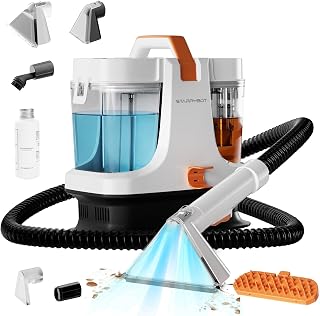
Compact machines such as the Carpet Cleaner Machine Upholstery portable shampooer are designed for furniture, car seats and other small areas. The WECLEAN C1 Portable Extractor is another option for couch and carpet work. If you want multiple brushes for different jobs, the Uwant 18Kpa Upholstery Cleaner includes brush heads and a pet-focused solution. The Shark StainStriker PX202 is worth considering when separate stain, crevice and pet-mess tools would be useful. Other compact choices include the Starrybot 18Kpa Pet Stain Extractor and the Uwant 18Kpa portable cleaner with a 2.4-litre tank.
Specifications such as suction strength and tank capacity are helpful, but they do not guarantee better results on every fabric. Prioritise a narrow upholstery nozzle, easy tank cleaning, manageable hose length and readily available compatible solution. A smaller machine is often easier to control on a sofa and less likely to encourage over-wetting.
4. Treat stains and clean in small sections
Always follow the cleaning product’s dilution instructions. Too much detergent can leave a sticky residue that attracts new dirt. Test the diluted solution on an inconspicuous patch, allow it to dry, and check for colour transfer or texture changes.
Work in small sections, beginning at the back or underside of the sofa. Apply only enough solution to dampen the fabric, then make slow extraction passes. Overlap each pass slightly, but avoid repeatedly scrubbing the same spot. For a fresh spill, blot first; for an older mark, let the approved pre-treatment sit only for the time stated on its label before extracting.
Clean an entire visible panel rather than making a tiny isolated wet patch when the fabric is prone to water marks. Keep cushions flat or positioned as recommended by the manufacturer, and never mix different cleaning chemicals—especially bleach, ammonia or disinfectant products.
5. Dry, inspect and maintain
After cleaning, make several slow passes with the machine switched to extraction-only mode if that feature is available. Pressing a clean white towel lightly against the surface can reveal whether excess moisture remains. Do not replace cushions or pile blankets on the sofa until it is completely dry.
Improve airflow with open windows, a fan or a dehumidifier. Drying time varies with fabric, room humidity and how much water was used; it may take several hours. Once dry, vacuum again to lift the pile and remove loosened residue. If a smell, watermark or stain remains, avoid repeatedly soaking the same area. The problem may require a different treatment or a professional upholstery cleaner.
Tips
- Keep a white cloth nearby: coloured towels can transfer dye when damp.
- Blot from the outside of a spill towards the centre to reduce spreading.
- Clean high-use armrests and cushion fronts regularly instead of waiting for visible grime.
- Empty and rinse an extractor’s dirty-water tank after use, then allow the tank, hose and nozzle to dry fully.
Frequently Asked Questions
How often should I clean my sofa?
Vacuum weekly in busy homes and every one to two weeks in lighter-use rooms. Deep-clean when the fabric looks dull, feels sticky, develops an odour or has visible marks. Homes with pets, children or allergies may benefit from more frequent maintenance.
Can I use a carpet cleaner on a sofa?
Only if the machine and its solution are approved for upholstery. Use the upholstery attachment, follow the fabric’s care code and apply minimal water. A carpet head can be too aggressive or deliver too much liquid for furniture fabric.
How do I clean a sofa without a machine?
Vacuum thoroughly, spot-test an upholstery-safe solution, then work sparingly with a damp white cloth. Blot rather than scrub and use a second cloth to remove residue. This approach is suitable for light soiling, but it may not lift deeply embedded dirt as evenly as extraction.
Why does my sofa smell after cleaning?
The most common reason is slow drying or detergent residue. Improve airflow, extract more moisture and allow the sofa to dry completely. If the odour persists, the source may be inside the cushion, beneath the fabric or related to a pet accident, requiring specialist treatment.
Conclusion
The best way to clean a sofa is a controlled, low-moisture process: check the fabric code, vacuum first, spot-test, clean in sections and extract as much water as possible. A compact upholstery machine can make stubborn marks easier to manage, but careful preparation and complete drying matter more than maximum power. When the care label says “X,” the fabric is valuable or the stain has penetrated deeply, professional cleaning is the safer investment.